
Reviewed · KO LANTA TOURS
Ko Lanta: Half-Day Mangrove Kayaking Tour with Lunch
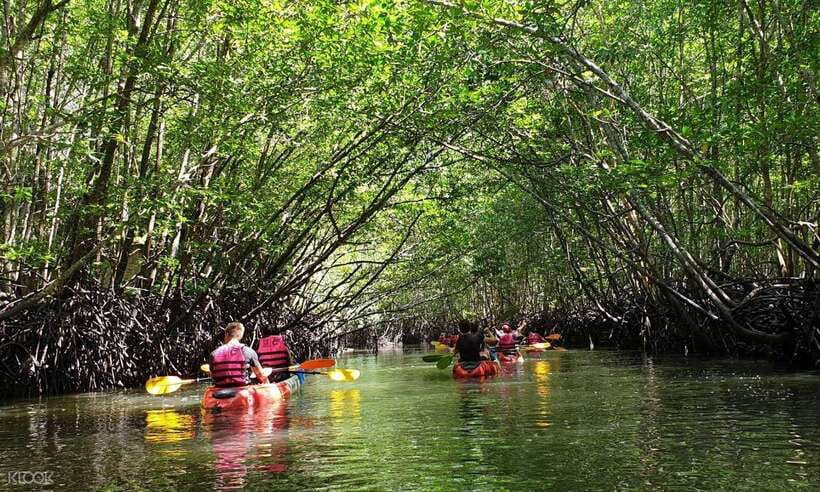
Ko Lanta’s most memorable wildlife encounter may happen in a quiet kayak, not on a crowded beach. This three-hour trip winds through the Ban Thung Yee Peng mangrove forest, where mudskippers pop across the mud, fiddler crabs scuttle between roots, and monkeys watch from the banks. Some may even climb onto the guide’s kayak.
I like the peaceful pace and the way the guide points out small creatures you could easily miss. I also like the useful mix of nature and local life: after paddling, you visit a village and fish farm, then sit down to fresh fruit and fried rice.
The main consideration is water. Your kayak will take on splashes, and several people found their shorts and the seat area thoroughly wet. Rain is also possible, so bring a change of clothes and keep passports, cash, and phones securely inside the provided waterproof bag.
Key points
- Wildlife at water level: Look for mudskippers, fiddler crabs, birds, fish, snakes, and monkeys along the mangrove channels.
- Monkey viewing is close-up: Monkeys may approach the boats, but you can stay back if you prefer, and the guides work to keep the encounter controlled.
- Karim is a frequently assigned guide: Alim, Ramadon, Kareem, and other guides also lead tours, with clear explanations and help on the water.
- Lunch is part of the outing: Expect fried rice, seasonal fruit, and a soft drink after kayaking.
- The tour suits first-time paddlers: Life jackets, kayaks, a guide, hotel pickup, and drop-off are included.
- Wet-weather planning matters: Wear swimwear or quick-drying clothes, and pack a dry change for the ride back.
Why the Ban Thung Yee Peng mangroves are worth your morning
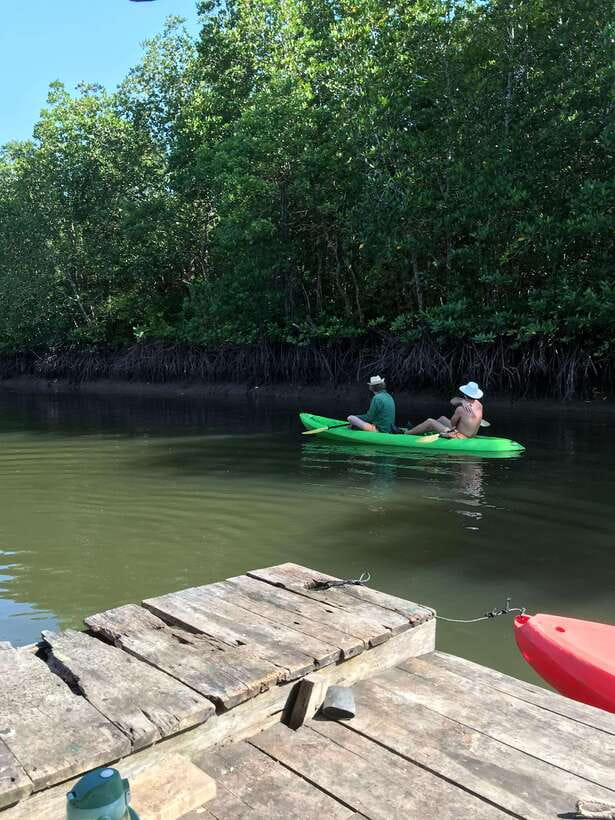
Mangroves are easy to appreciate from a boardwalk or roadside lookout. From a kayak, you see how they work at close range.
Their tangled roots create shelter for small fish and crabs, while the muddy edges become feeding grounds for mudskippers and fiddler crabs. The channels are quiet enough for you to notice small movements in the branches and mud. The route also reaches broader water near the sea, giving the trip a change of mood after the narrower forest passages.
You are not simply paddling through scenery. The guide explains the animals and the way the mangrove ecosystem functions. Karim receives especially strong praise for explaining local wildlife in a clear, friendly way, while Alim and Ramadon are also noted for keeping the trip informative and lighthearted.
The forest rewards patience. You may see eagles or other birds of prey, curlews, snakes coiled in branches, and fish that jump from the water. Sightings depend on tide, weather, and luck. One morning group saw fewer animals during a high tide, while other outings produced mud crabs, walking fish, a mangrove snake, birds, and several monkey families.
That variation is part of the deal. This is a wildlife outing, not a guaranteed animal parade. The setting itself remains the attraction, even when a particular creature stays hidden.
More paddling days around Ko Lanta:
- Ko Lanta: Mangrove Kayaking, Ko Talabeng, & Skull Island
★ 4.9 · 494 reviews - Ko Lanta: Half-Day Kayaking, Talabeng, Sea Cave & Mangrove
★ 4.6 · 153 reviews - Ko Lanta: Half-Day Kayaking Koh Phee & Koh Talabeng 2 Caves
★ 4.5 · 67 reviews
Hotel pickup keeps this a simple half-day plan
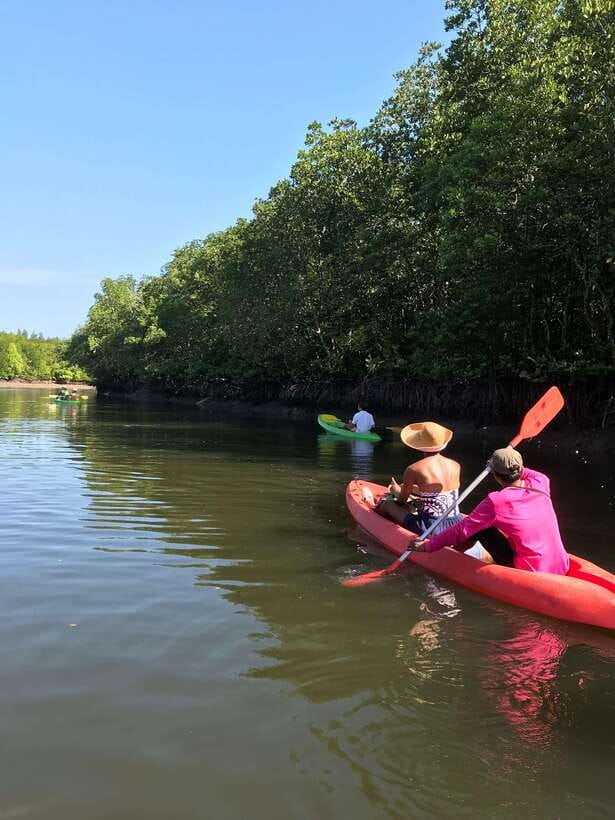
The tour begins with pickup from your hotel on Ko Lanta. You need to provide the hotel name and room number so the operator can confirm the pickup.
The ride continues to Tung Yee Peng Pier, where you board the kayaks. Several people found the transfer prompt and easy, with the ride to the mangrove area taking less than 20 minutes in at least one account. Return transport is included, which makes this a convenient choice if you do not want to arrange your own way to the pier.
The full activity lasts three hours, but the actual paddling time can vary. Reports place it at roughly one hour to two hours, depending on stops, tide, animal sightings, and the pace of the group. The time includes pauses for photographs, wildlife explanations, and the monkey area.
A few people found the return drive longer than expected because the vehicle dropped off other passengers. If you have your own scooter, you may prefer to make your own way to Tung Yee Peng Pier, but hotel transport is the easier option for most people.
Morning and afternoon departures are available, subject to the schedule for your chosen date. Morning can be a good choice if you want cooler conditions. One morning outing had high tide and fewer visible animals, so the start time affects what you see, but it cannot guarantee a particular sighting.
Getting comfortable in the kayak
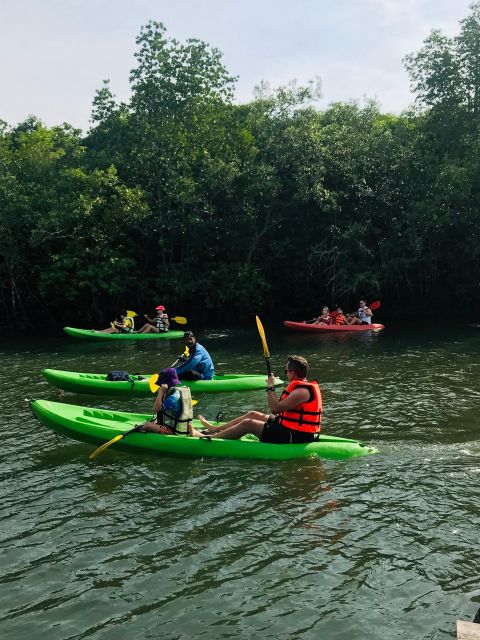
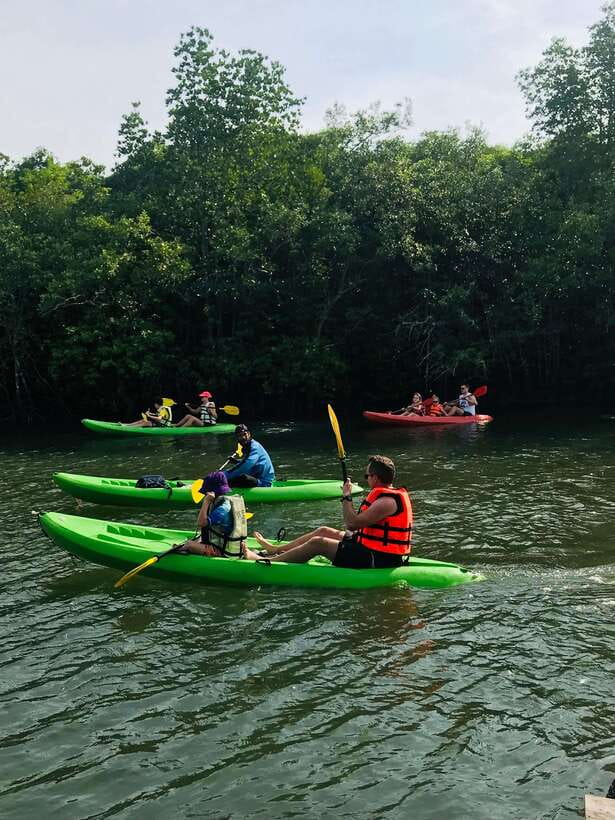
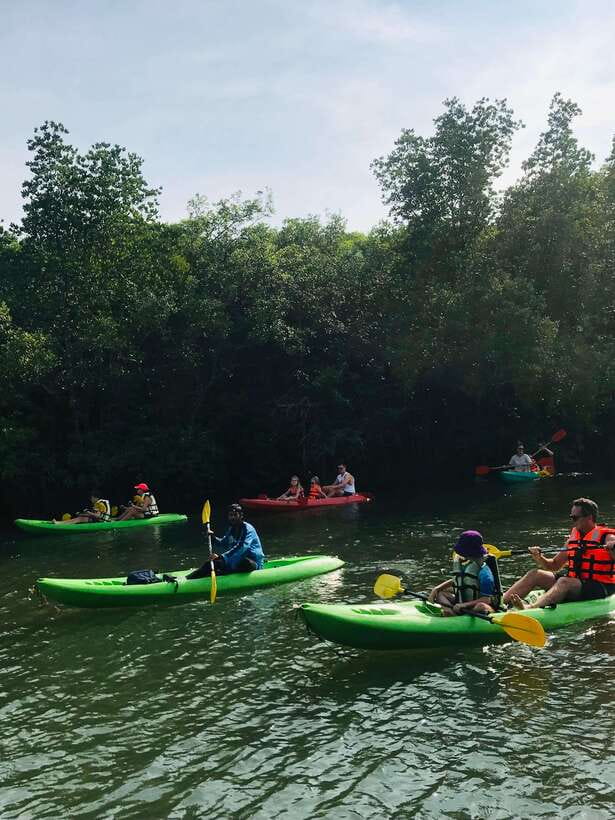
You receive a life jacket and a short introduction before setting off. The kayaks are described as easy to use, and even children aged three and five managed the paddling on one outing while wearing life jackets and having prior experience with stand-up paddleboards.
That does not mean you should treat this as a completely dry or effortless ride. Each paddle stroke can send water into the kayak, and your seat area is likely to get damp. Wear swimwear, lightweight shorts, or other quick-drying clothes. A rain jacket helps in wet weather, but it will not keep your lower half entirely dry.
The tour is guided rather than an unguided rental. That matters in a twisting mangrove system. The guide leads the route, points out wildlife, helps less experienced paddlers, and keeps an eye on anyone falling behind. Karim is often praised for making sure the whole group can hear and understand the explanations.
One small practical point: beginners should listen carefully to the first paddling briefing. One person felt the instructions for new paddlers could have been clearer at the start. If you have never used a kayak, ask for a quick demonstration before leaving the pier.
Wildlife appears in the mud, branches, and water
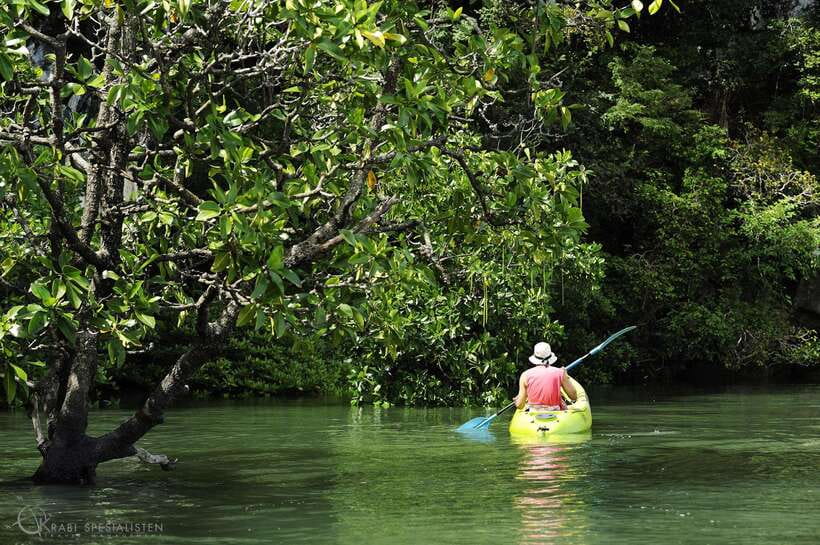
The smaller creatures may be the most satisfying part of this trip. Mudskippers, sometimes called walking fish, use their fins to move over exposed mud. Fiddler crabs show bright claws and quick sideways movement around the mangrove roots. You may also see mud crabs, birds, jumping fish, eagles, curlews, and snakes.
The guide makes the difference here. A person unfamiliar with mangroves can paddle past a camouflaged snake or a fish half-hidden in the mud. Guides such as Karim, Alim, and Ramadon know where to pause and what to look for.
Tides affect the character of the route. At higher water, the kayak can reach farther into some channels, but muddy banks may be less exposed, giving you fewer chances to spot creatures on the surface. At lower water, the mud can reveal more crabs and mudskippers, though some narrow sections may be harder to reach.
Do not arrive expecting a formal wildlife checklist. Bring patience, keep your eyes moving, and listen when the guide stops. The quiet stretches are not wasted time. They give you a chance to see how much life is packed into a small patch of mud and roots.
More lunch stops in Ko Lanta:
- Koh Lanta: Phi Phi Islands Tour w/ Maya Bay, Snorkel & Lunch
★ 4.3 · 247 reviews - 4-Island Tour from Koh Lanta to Koh Kradan with Beach Lunch
★ 4.6 · 182 reviews - Koh Lanta: Lunch Course at Lanta Thai Cookery School
★ 4.9 · 139 reviews - Ko Lanta: Half Day Tour Mangrove Boat Trip With Lunch
★ 4.5 · 88 reviews
The monkey stop needs a little care
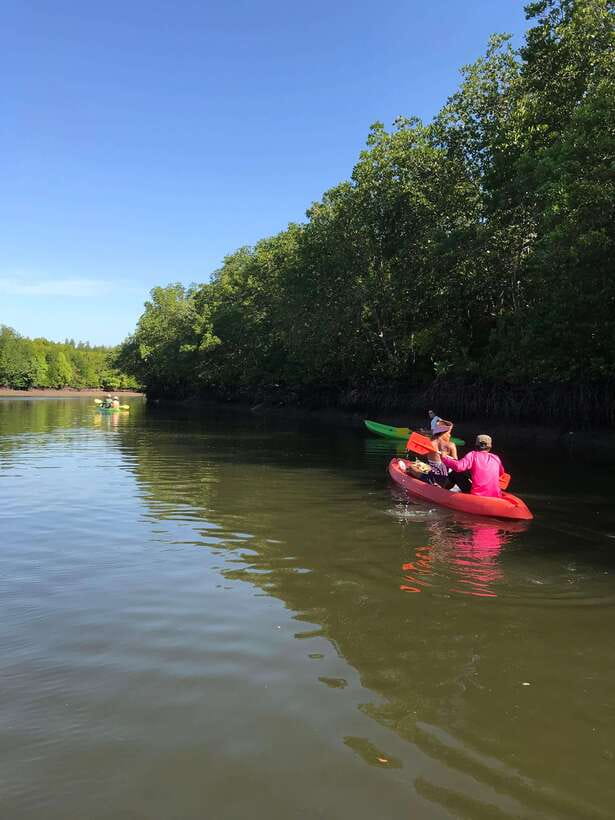
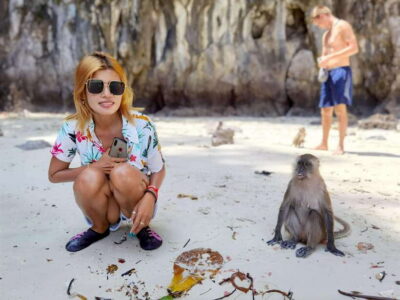
The monkey encounter is the tour’s biggest draw, and it can be memorable. The guides know where family groups live and may stop near the banks or on a wider waterway. Some monkeys approach Karim’s kayak for fresh water, while others remain in the trees.
You can watch from a distance if you are nervous. The guides ask people to keep roughly five to ten metres away, helping prevent the monkeys from jumping onto every kayak. Even with that request, curious animals may climb aboard, take water bottles, or investigate bags and shoes.
This is the one part of the trip where you need to follow instructions closely. Keep food, bottles, and personal items secured. One monkey reportedly grabbed a dry bag containing a passport and money, and the guide recovered it. That incident ended well, but it shows why you should use the waterproof bag properly and avoid leaving anything loose.
Feeding practices can vary with the guide and the situation. Some outings include the guide offering water to the monkeys, while another guide chose not to feed them in order to protect their natural behaviour. Do not bring bananas or other food for the animals. Let the guide manage the encounter, keep your hands to yourself, and never encourage a monkey to climb onto your kayak for a photograph.
This approach is better for the animals and safer for you. It also keeps plastic and other rubbish out of the mangrove. A monkey that steals a bottle can carry it into the trees or water, so secure reusable bottles before approaching the group.
Village life and the fish farm add local context
After kayaking, you visit a small village and a local fish farm. This part is less dramatic than the wildlife, but it gives the trip a useful human dimension.
The visit shows how people in the area live and work around the mangrove waterways. At the fish farm, you may see fish being fed and learn more about the local setting. The stop is not presented as a long cultural lecture. Instead, it offers a short look at a rural community after time spent seeing the forest from the water.
That change of focus helps the outing feel more connected to Ko Lanta. You are not simply transported to a nature attraction, paddled around, and sent back to your hotel. You see the relationship between the mangroves, the waterways, the village, and local work.
The exact presentation can vary. Some groups describe a small show or demonstration at the fish farm, while others focus more on the visit and feeding the fish. Treat this as a brief cultural stop rather than a full village tour.
Lunch is simple, welcome, and included
The meal comes after kayaking, when you are likely to be hungry. Fried rice, usually with chicken or a vegetable option, is served with a soft drink. Seasonal fruit follows or accompanies the meal, and the food is generally described as fresh and tasty.
This is not a destination for gourmet cooking. It is a practical meal included in a low-cost half-day outing, and it does the job well. One useful tip: lunch comes after the kayaking, so bring a small snack if you tend to get hungry early. Keep it sealed and away from the monkeys.
Fresh fruit and drinks are also included. Since the kayak portion can leave you warm, wet, or both, the break gives you time to dry off and settle down before the ride back.
Weather can change the mood, not ruin the trip
Rain is common enough that you should plan for it. Several outings continued through heavy rain, and the mangroves remained attractive under grey skies. Rain creates mist over the water and changes the sound of the forest, but it also makes clothing and bags more important.
Bring:
- A change of shorts or clothes
- Swimwear or quick-drying clothing
- A light rain jacket
- Secure sandals or water-friendly footwear
- A waterproof phone case if you want extra protection
A waterproof bag is included, but I would still keep passports and money in a sealed inner pouch. The provided bag protects against splashes, not careless handling by an inquisitive monkey.
The heat is another reason to consider an early departure. By the end of an afternoon outing, the sun can feel strong, especially if the water is calm and there is little shade. Morning tours may feel more comfortable, though tides and animal activity are never fully predictable.
What the $26 price really covers
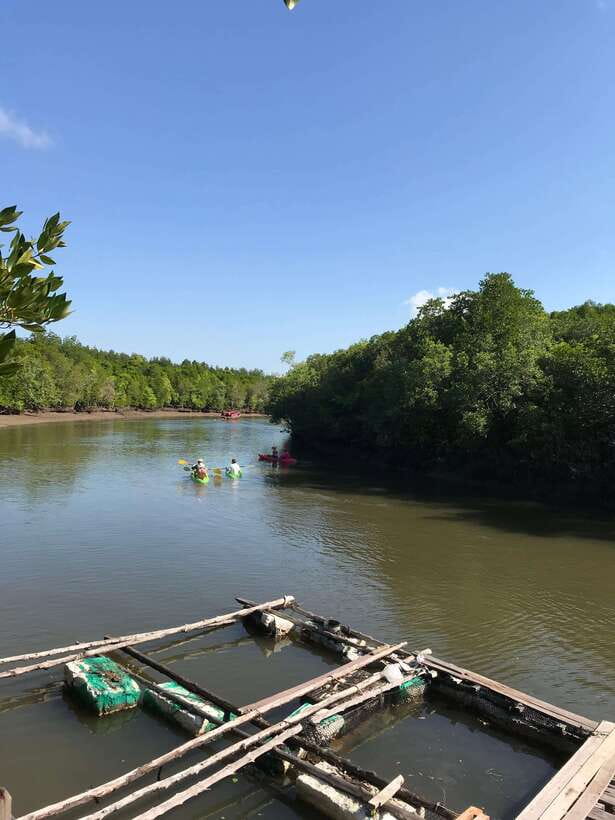
At $26 per person, this is strong value for a three-hour guided outing. The price includes hotel pickup and drop-off, a guide, kayak equipment, life jacket, waterproof bag, lunch, fruit, and soft drinks.
If you arranged these parts separately, transport alone would add time and cost. You also benefit from someone who knows the channels and can identify animals that are easy to overlook. For a first mangrove visit, that guidance is more useful than simply hiring a kayak and following a marked route.
The price is especially attractive if you want a half-day activity rather than a full-day boat trip. You still have time for the beach, a meal, or another Ko Lanta plan. The tradeoff is that this is a group outing with a set route, not a private expedition. The exact amount of time spent paddling and the number of wildlife stops depend on the day.
Free cancellation up to 24 hours before the activity and a reserve-now, pay-later option make it easier to fit into a changing island schedule. Check the available start times when booking, and provide your correct hotel details for the pickup.
Who will enjoy this Ko Lanta kayaking trip
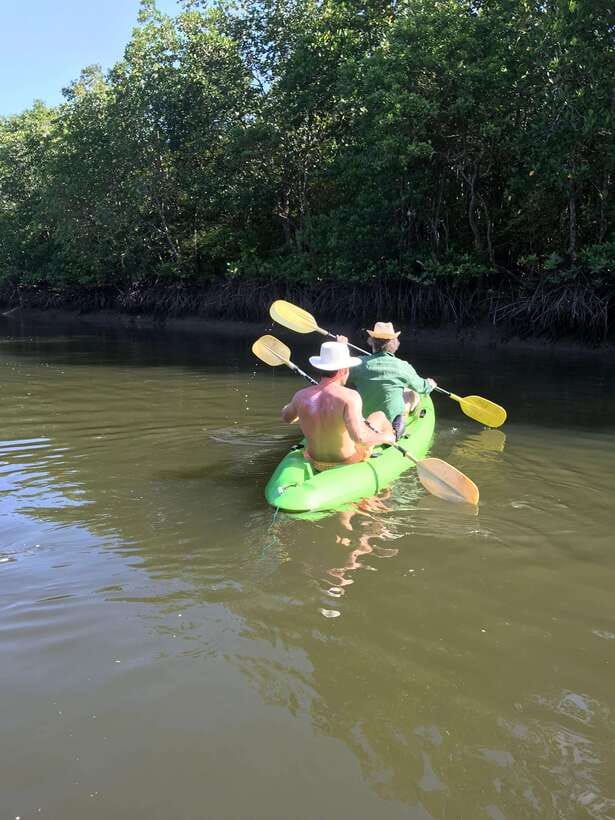
I would choose this outing if you want nature, light exercise, and a little local culture in one manageable package. It suits couples, families with children who can safely wear a life jacket, and first-time kayakers who prefer a guide nearby.
You should also enjoy it if:
- You like spotting small wildlife rather than only large animals
- You want hotel transport included
- You are happy with a simple lunch
- You do not mind getting wet
- You prefer a three-hour outing to a full-day excursion
- You want to learn about the mangrove ecosystem as you paddle
It may not suit you if you want a dry, silent trip with no close animal encounters. The monkeys can approach the kayaks, and the paddle can be active enough to leave you splashed. Anyone uncomfortable around monkeys should stay farther from the bank and tell the guide.
The experience also depends on weather and tides. A rainy day can still be enjoyable, but visibility and comfort may change. If seeing many animals is your main goal, remember that wildlife sightings are never guaranteed.
Should you book it?
Book this tour if you want an affordable, well-supported way to see Ko Lanta beyond the beaches. The combination of mangrove channels, mudskippers, crabs, birds, monkeys, a village visit, and lunch gives you a lot for three hours.
The strongest reason to go is the guide. Karim, Alim, Ramadon, and other guides are praised for explaining the animals, keeping people together, and handling the monkey stop with care. The most important preparation is equally simple: wear clothes you can get wet, secure your valuables, and respect the distance rules around the monkeys.
If that sounds like your kind of island morning or afternoon, the $26 price is easy to justify. If you want a private, dry, highly polished wildlife cruise, choose something else.
FAQ
Where does the kayaking tour take place?
The tour takes place in the Ban Thung Yee Peng mangrove forest on Ko Lanta. You travel to Tung Yee Peng Pier to begin kayaking.
How long does the activity last?
The complete activity lasts three hours, including transport arrangements, kayaking, the village and fish farm visit, lunch, and the return transfer.
Is hotel pickup included?
Yes. Pickup and drop-off are included for hotels in Koh Lanta. You need to provide your hotel name and room number so the pickup can be confirmed.
What languages does the guide speak?
The live tour guide service is available in Thai and English.
What wildlife might I see?
Possible sightings include mudskippers, fiddler crabs, mud crabs, birds, eagles, curlews, jumping fish, snakes, and monkeys. Wildlife sightings depend on the tide and conditions.
Will monkeys come onto the kayaks?
They might. Some monkeys approach the guides’ kayaks or climb onto other kayaks, but you can stay farther away and watch from the water. Follow the guide’s instructions and keep personal belongings secured.
What food is included?
Lunch, seasonal fruits, and soft drinks are included. Fried rice is served, with chicken or vegetable options mentioned during the tour.
Will I receive kayaking equipment?
Yes. Kayaks, life jackets, and a waterproof bag are included.
Should I expect to get wet?
Yes. Paddle splashes can wet your clothes, and rain is possible. Quick-drying clothing or swimwear and a change of clothes are practical choices.
Can I cancel the booking?
You can cancel up to 24 hours in advance for a full refund. A reserve-now, pay-later option is also available.
More Half-Day in Ko Lanta
- Half-Day Thai Cooking Class at Organic Farm in Chiang Mai
★ 5.0 · 19,087 reviews - Chiang Mai: Elephant Sanctuary Feeding Program Half-Day Tour
★ 4.8 · 4,527 reviews - Half-Day Railway Market and Floating Market Tour in Thailand
★ 4.5 · 3,924 reviews - Koh Samui: Half-Day Island Highlights Tour with Hotel Pickup
★ 4.6 · 3,556 reviews
Just added around Ko Lanta
- Koh Lanta: Ultimate Kradan Island Escape by Longtail Boat★ 4.5 · 19 reviews
- Koh Lanta: Sea Cave Kayaking and Talabeng Island Tour★ 4.3 · 50 reviews
- Koh Lanta: Koh Rok and Koh Haa Snorkeling Adventure★ 4.3 · 57 reviews
- Koh Lanta: Evening Course at Lanta Thai Cookery School★ 4.9 · 202 reviews
- Koh Lanta: Lunch Course at Lanta Thai Cookery School★ 4.9 · 139 reviews
- Koh Lanta: 4 Islands, Emerald Cave & Koh Kradan by Speedboat★ 4.6 · 29 reviews
- Koh Lanta Cultural Tuk-Tuk Tour: Old Town, Batik & Mangroves★ 4.7 · 64 reviews
- Koh Lanta: 4-Island Adventure Tour to Emerald Cave★ 4.6 · 128 reviews
Ko Lanta Tours, compared.
4 Islands, Emerald Cave & Koh Kradan by Longtail
Read our review →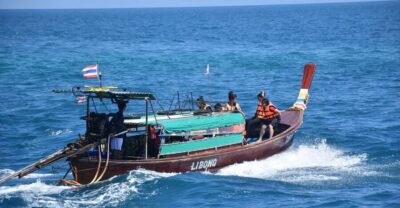
4 Islands and Emerald Cave Tour by Longtail Boat
Read our review →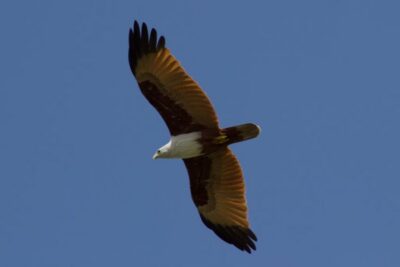
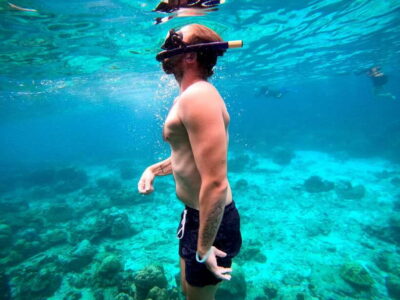
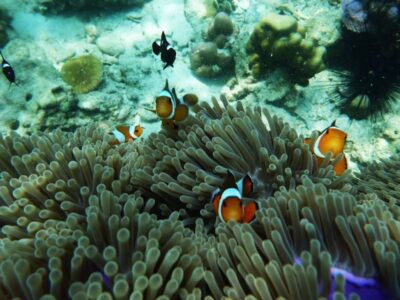
Phi Phi Islands Tour w/ Maya Bay, Snorkel & Lunch
Read our review →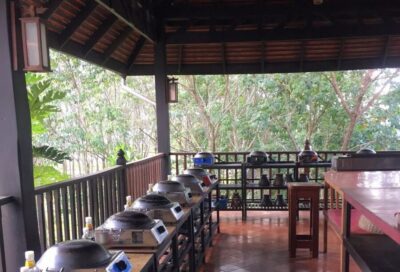
Browse the lists this tour appears in