Reviewed · BANGKOK TOURS
The Best Bangkok Hop-On Hop-Off Bus Tour
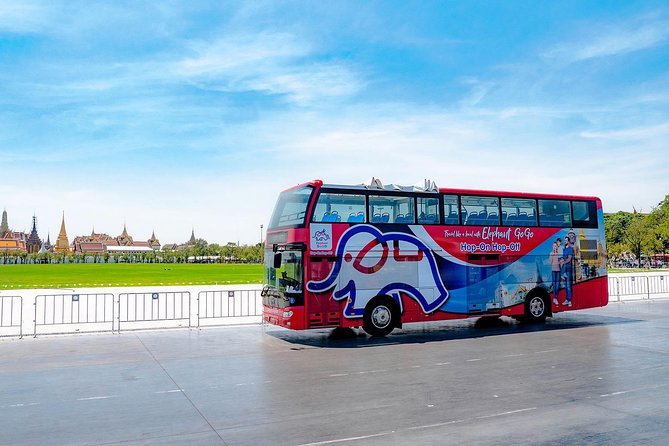
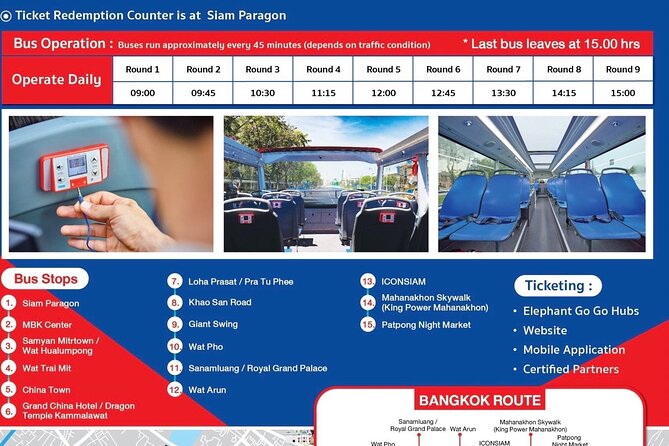
Bangkok’s 15-stop double-decker route gives you a quick look at the city’s big contrasts: royal temples, Chinatown markets, glossy malls, backpacker streets, and the Chao Phraya riverfront. It is most useful as a first orientation ride, not as a fast way to cross town.
I like the freedom to start at any listed stop, and I like the clean, air-conditioned bus with audio commentary in seven languages. The live GPS bus tracking is also a real help. The main catch is Bangkok traffic, which can turn a short ride into a long wait, especially around Chinatown and the Old City.
Key points to know before boarding
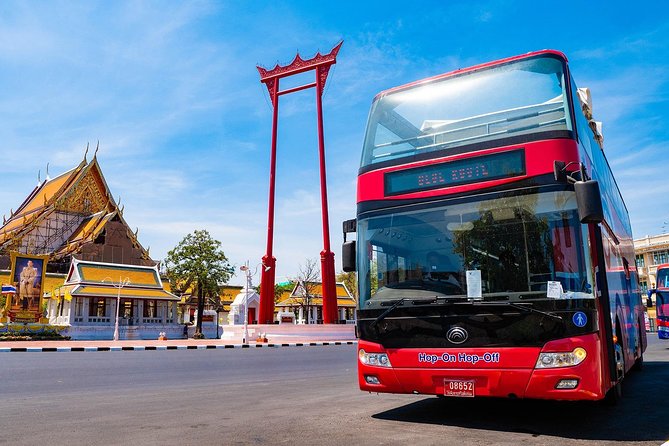
- Fifteen stops cover Bangkok’s main sightseeing districts, including Wat Pho, Wat Arun, the Grand Palace area, Chinatown, Khaosan Road, Siam, and ICONSIAM.
- The 48-hour pass is the most practical choice if you want time to get off, visit sights, and catch another bus later.
- Bangkok traffic controls your schedule, with waits sometimes reaching 45 minutes or more and rides taking over an hour between stops.
- Air conditioning is a major comfort, though the upper deck can still be hot when the bus is stopped or exposed to the sun.
- Stop locations are not always obvious, so save the route map, use the GPS tracker, and arrive at the exact address rather than relying on a generic bus sign.
- The tour works best for orientation and easy sightseeing, especially if you have limited mobility or want to avoid arranging separate rides to several districts.
What this Bangkok bus tour is really like
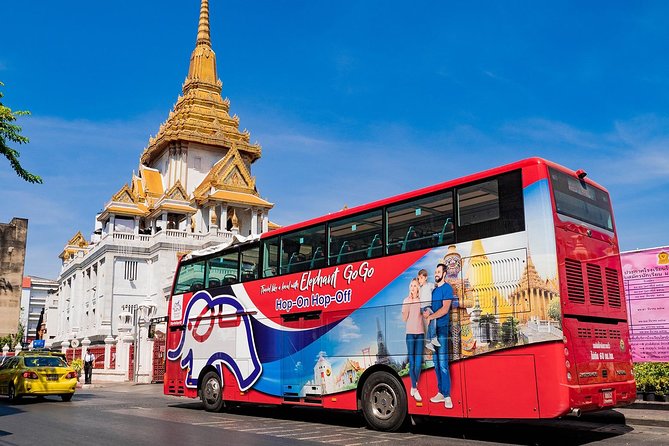
The experience is operated by Elephant Hop on Hop off Bus Tours on an air-conditioned double-decker bus. You can ride the full loop, get off at places that interest you, and board again later during the validity of your pass.
The advertised ride lasts about three hours as a full circuit, but that is an ideal estimate. Bangkok’s roads are crowded, and the route can take four hours or more in slow conditions. A few stops may come quickly, while the next bus can be far behind.
That difference matters. If you have just one day in Bangkok, you need to treat the bus as a sightseeing route rather than a dependable rapid transport service. If you have two or three days, the delays are easier to absorb.
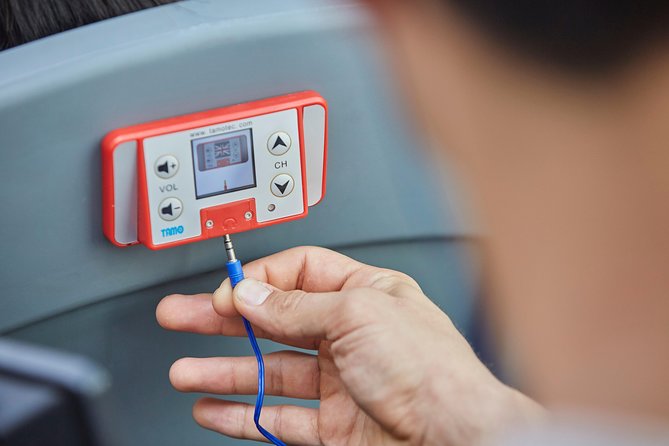
The bus includes a map or guidebook, GPS access to bus locations, and audio guides in seven languages. Some riders have found the commentary useful for getting basic background on Bangkok’s temples, architecture, and neighborhoods. Others have found the volume too low or the narration too sparse, with music taking up too much of the ride.
I would bring your own earbuds if possible and check the audio as soon as you board. Do not assume every stop will be announced clearly. Keep track of your location on the route map so you do not miss the place where you intended to get off.
A few more Bangkok half-days worth weighing up
- Bangkok: Damnoen Saduak Market and Maeklong Railway Market
★ 4.5 · 26,723 reviews - The Old Siam: Damnoen Saduak and Maeklong Railway Market
★ 4.5 · 10,992 reviews - From Bangkok: Ayutthaya Temples Guided Tour with Lunch
★ 4.7 · 10,535 reviews
Choosing between the 24-, 48-, and 72-hour passes
The price starts at about $26 per person, with 24-, 48-, and 72-hour options available. The value depends less on the number of stops than on how often you use the bus.
A 24-hour pass can work if you mainly want one full circuit and a couple of short stops. It is also a reasonable choice for your first morning in Bangkok, when you want to see the city layout before choosing which sights deserve more time.
I think the 48-hour pass is the best balance. You can ride the route once for orientation, then return to selected stops on a second day. You will not feel forced to squeeze Wat Pho, Chinatown, Khaosan Road, and the shopping districts into one slow loop.
The 72-hour pass only makes sense if the route connects well with your plans for all three days. One customer bought that option but did not use it on the final day. That is an important warning: a longer pass is not automatically better value if Bangkok’s traffic makes you switch to the BTS, river boats, or taxis.
The bus does not include hotel pickup, private transportation, meals, or a personal guide. There is no restroom on board. Think of the $26 as payment for a shared sightseeing route, air conditioning, commentary, and flexibility, not a guided temple tour.
Stops 1 and 2: Siam Paragon and MBK Center
The route begins at Paragon Department Store, at Siam Paragon’s ground floor, South Gate. Look for the area in front of LOCK BOX PLUS+, next to Bangkok Bank. This starting point can be confusing because it is by a mall entrance rather than a large, obvious coach terminal.
Siam Paragon puts you in one of Bangkok’s main shopping districts. It is a useful starting point if you are staying near Siam or want a cool indoor break before heading toward the older parts of the city.
The next stop is MBK Center, beside the public bus stop near Osotsala Pharmacy, across from MBK. MBK is known for its huge range of shops and casual food options. The stop is handy, but you should check the exact side of the road before leaving the bus.
These two stops are close to the BTS network, making them useful for starting or ending your day. They also show Bangkok’s modern commercial side before the route turns toward Chinatown and the temples.
Stops 3 to 6: Samyan and the heart of Chinatown
Samyan Mitrtown is across from the shopping complex, in front of Mandarin Hotel Bangkok and beside the Ideo Q Chula Samyan condominium. It is another modern shopping and dining area, with good access to the Sam Yan district.
The route then reaches Wat Trai Mit Witthayaram Worawihan, also called Wat Traimit, near the tourist information center between Soi Sukon 1 and Soi Sukon 2. This temple is associated with Chinatown and is one of the more worthwhile places to leave the bus. Its famous Golden Buddha makes the stop more than a simple photo opportunity.
Stop 5, at 265 Yaowarat Road, is in front of China Town Hotel, next to The Canton House and across from Shanghai Mansion. This puts you directly on Yaowarat Road, Bangkok’s Chinatown spine.
Chinatown is exciting but slow by bus. Traffic, delivery vehicles, pedestrians, and narrow streets can bring the route nearly to a standstill. If you hop off here, plan to walk and take your time rather than expect the bus to move quickly through the district.
Grand China Bangkok is stop 6, at the Grand China Hotel on Ratchawong Road, near the S&P restaurant exit. This stop can be useful for exploring the west side of Chinatown and the river-facing market area, but it is not always obvious which nearby attraction you are closest to.
The Chinatown portion is one of the strongest parts of the route for atmosphere, but one of the weakest for speed. I would get off here rather than stay seated through a long traffic jam.
Same base, a completely different kind of day out:
- Bangkok: Train Market & Floating Market with Boat Ride
★ 4.7 · 9,547 reviews - Bangkok Canal Tour: 2-Hour Longtail Boat Ride
★ 4.5 · 5,909 reviews - Bangkok: Muay Thai Boxing Tickets at Rajadamnern Stadium
★ 4.9 · 4,740 reviews - Bangkok: White Orchid Chao Phraya Dinner Cruise free Beer
★ 4.4 · 4,573 reviews
Stops 7 to 11: Bangkok’s Old City and temple district
Stop 7, Wat Ratchanatdaram Worawihan, sits in front of Katsy Café between Wat Thepthidaram and Wat Ratchanatdaram. The temple is known for Loha Prasat, the distinctive metal-spired structure nearby. This is a good stop for architecture and a quieter look at the Old City.
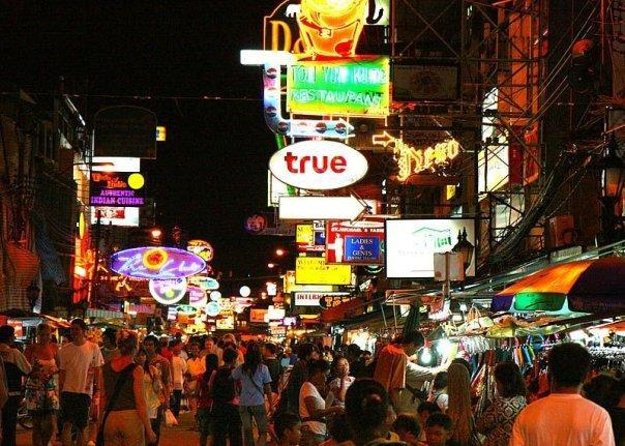
Khaosan Road, stop 8, is at the public bus stop in front of Wat Bovonnivet, across from the Banglumpoo Post Office. The bus does not stop in the middle of the famous street itself, so expect a short walk.
Khaosan Road is a major backpacker area, packed with food, shops, bars, and budget accommodation. Its character changes sharply from day to night, and the bus route gives you a simple way to reach it without arranging a separate ride.
Stop 9 is The Giant Swing, in front of Bangkok City Hall. The Giant Swing is one of the Old City’s best-known landmarks, and this stop also puts you near Wat Suthat and several older streets.
Stop 10, Wat Pho, is at the public bus stop about 100 meters before the temple, across from Saranrom Park. The official name is Wat Phra Chetuphon Wimon Mangkhalaram Rajwaramahawihan, but Wat Pho is the name you will use when asking for directions.
Wat Pho is one of the route’s essential stops. Allow proper visiting time for the temple grounds and its reclining Buddha. Do not make the mistake of getting off, taking a quick photograph, and rushing back for the next bus. The bus may not return soon.
Sanam Luang, stop 11, is the parking point for tourist buses and sits near the Grand Palace area. This is the most useful stop for the Grand Palace, although the route information does not promise a dedicated palace entrance stop.
Sanam Luang is also a good place to orient yourself around the Old City. Because the sights here are spread out and queues can vary, a 48-hour pass is much more comfortable than trying to see everything in one circuit.
Stops 12 and 13: Wat Arun and ICONSIAM
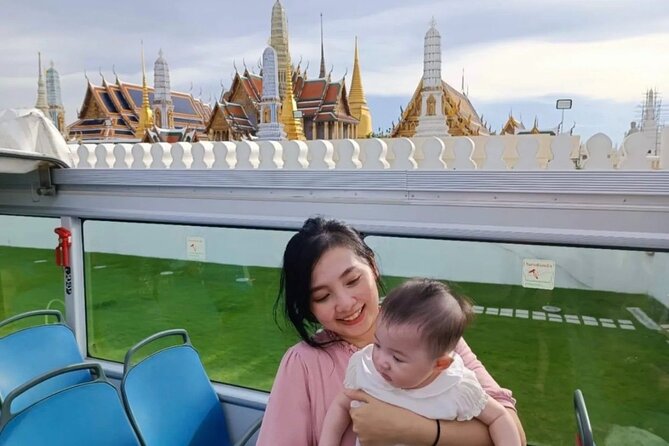
Stop 12 is Wat Arun, in front of a chicken rice restaurant about 100 meters beyond the temple entrance. The bus uses the same location as the public bus stop.
Wat Arun is across the river from Wat Pho and the Grand Palace area. Its riverside setting and tall decorated central prang make it one of Bangkok’s most memorable sights. The stop is convenient, but check the direction of the entrance before walking away from the bus.
The route continues to ICONSIAM, stopping at Gate 5 on the ground floor, shared with the ICONSIAM shuttle bus. This is a modern riverfront shopping center with restaurants, shops, and views toward the Chao Phraya.
The ICONSIAM stop has caused confusion because the pickup point is inside or right by the mall complex rather than on a simple roadside corner. Use the official map pin and confirm the gate before you leave. Do not count on general mall staff knowing the sightseeing bus location.
Wat Arun and ICONSIAM make an interesting pair: one is an old temple beside the river, the other is a large modern retail center. But crossing between the two by bus can take time. If your main goal is to move along the river, a boat may be cheaper and faster, as one rider pointed out.
Stops 14 and 15: Mahanakhon and Surawong Road
Stop 14 is King Power Mahanakhon, in front of Mahanakhon SkyWalk. The bus stop and ticket counter are near BTS Chong Nonsi, Exit 3.
This is one of the easiest stops to combine with Bangkok’s rail system. The Mahanakhon building is a major modern landmark, and the SkyWalk is a separate paid attraction, so do not assume entry is included in the bus fare.
The final stop, Tawana Bangkok, is in front of The Tawana Bangkok Hotel on Surawong Road, across from Soi Tantawan. It places you near the Silom and Patpong area. Patpong Night Market is listed among the nearby sights, though the bus stop itself is on Surawong Road.
These final stops are more useful for city orientation than for a single must-see monument. They link the historic center with the commercial and nightlife districts, giving you a sense of how spread out Bangkok really is.
Finding the stops is the hardest practical detail
The tour allows you to board at any listed stop, but finding the exact boarding point takes preparation. Several stops share space with ordinary public buses, and some have little or no clear signage.
At Siam Paragon, go to the South Gate and look for LOCK BOX PLUS+ on the ground floor. At MBK, find the public bus stop near Osotsala Pharmacy. At ICONSIAM, go to Gate 5. At Mahanakhon, use BTS Chong Nonsi Exit 3 as your landmark.
Save screenshots of the route map and the addresses before leaving your hotel. The GPS tracker on the website can show estimated bus locations, but it may need frequent refreshing and may not always be exact.
Arrive early at the stop and stand where the bus driver can see you. The bus does not wait long for boarding. If you are standing in the wrong place, you may watch it pass even when you are near the listed address.
Comfort, weather, and the upper deck
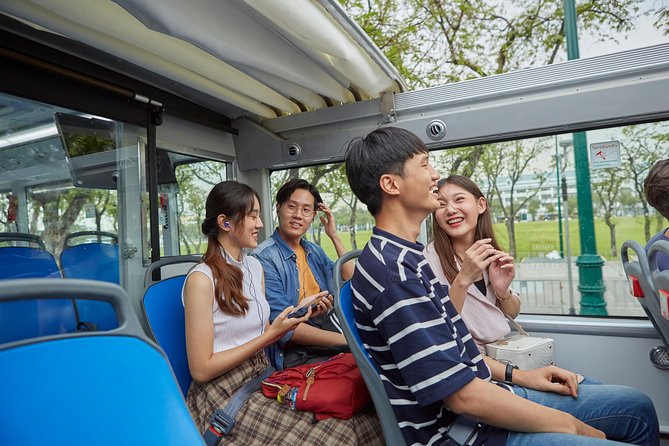
The bus is air-conditioned, and that is a real advantage in Bangkok. The lower deck is the safer choice when you want stable temperature and protection from sun or sudden rain.
The upper deck gives you a better view for photographs and street scenes, but it can be hot when the bus is stopped. Some sections have sun blinds or enclosed areas, and one rider even found the air conditioning cold enough to need a cardigan.
You should carry water, but do not expect a complimentary bottle. Water may be available for a small charge. Since there is no restroom, use facilities at the malls, temples, or restaurants before boarding a long stretch.
The bus itself has generally been comfortable and clean. Drivers have been described as friendly, but communication about stops can be inconsistent. Keep your route map open instead of depending only on spoken announcements.
How to use the bus without wasting half your day
I would not try to visit every stop on one day. Choose two or three main targets, then use the bus for the ride between them.
A practical first day could begin at Siam, continue through Chinatown, and finish with Wat Pho or Wat Arun. A second day could focus on the Old City, Khaosan Road, and ICONSIAM. This plan gives traffic room to disrupt your schedule.
Use the full loop as an orientation ride only if you have enough time. The route can take about three hours in good conditions and four hours or more when roads are clogged. Bangkok traffic is not a minor inconvenience here. It is the central factor shaping the experience.
If the bus is delayed, check the GPS tracker before abandoning the stop. If the wait is becoming too long, the BTS or river boat may be a better choice for that particular leg. The tour is most valuable when you use it selectively, not when you insist on staying aboard through every jam.
Who should book this tour?
I would recommend it to you if you want a simple introduction to Bangkok, prefer air-conditioned transport, enjoy sightseeing from an upper deck, or want to reach several districts without negotiating taxis.
It suits a first visit, a short stay, and anyone who likes to get a broad view before returning to favorite sights independently. It can also help if your hotel is outside the main sightseeing area and you want one organized route into the center.
I would be cautious if you have only one free day and need to visit several temples on a strict schedule. The bus is not the fastest way around Bangkok, and the gaps between buses can be long.
The tour also demands more planning than its name suggests. You must locate stops, monitor the bus, and allow for delays. If that sounds like too much work, the BTS, river boat, taxis, and tuk-tuks may serve you better for individual journeys.
Final booking advice
At $26, this can be good value if you use a 48-hour pass for several rides and meaningful stops. The clean bus, air conditioning, seven-language audio, route map, and GPS tracking add useful structure to a sprawling city.
Book it for orientation and flexible sightseeing, not speed. Start with the exact stop addresses, save the route map, and plan only a few major sights each day.
I would choose the 48-hour option for most visitors, the 24-hour pass for a single overview ride, and the 72-hour pass only if you already know you will use the bus on all three days. Free cancellation is available up to 24 hours before the start time. Within 24 hours, the fare is not refundable.
FAQ
How long does the full Bangkok bus route take?
The listed duration is about three hours, but traffic can make the full circuit take four hours or more. Delays are especially likely around Chinatown and the Old City.
How many stops does the bus have?
The route has 15 stops, covering areas including Siam, Chinatown, Khaosan Road, the Old City, Wat Arun, ICONSIAM, Mahanakhon, and Surawong Road.
What pass durations are available?
You can choose a 24-hour, 48-hour, or 72-hour pass.
What languages are available for the audio guide?
Audio commentary is available in seven languages. The supplied information does not name all seven languages.
Does the tour include hotel pickup?
No. Hotel pickup is not included. You must reach one of the listed stops independently.
Is there a restroom on the bus?
No. There is no restroom on board.
Can I track the bus?
Yes. GPS access to bus locations is included, and real-time tracking is available through the route map on the operator’s website.
Where does the bus stop at ICONSIAM?
The bus stops at ICONSIAM Gate 5 on the ground floor, at the same location used by the ICONSIAM shuttle.
Can I cancel for a full refund?
Yes, if you cancel at least 24 hours before the experience start time. Cancellations made less than 24 hours before the start time are not refundable.
Just added around Bangkok
- Bangkok to Ayutthaya Lopburi Monkey Temple, Largest Buddha Tour★ 5.0 · 62 reviews
- Baiyoke Sky Dinner Experience with Observation Deck Access★ 3.5 · 57 reviews
- Bangkok Luggage Delivery from Hotel to Airport★ 5.0 · 25 reviews
- Living Green Elephant Sanctuary Tour from Bangkok and Pattaya★ 5.0 · 88 reviews
- Bangkok Luggage Storage★ 4.5 · 37 reviews
- Living Green Elephant Sanctuary Experience near Bangkok & Pattaya★ 5.0 · 76 reviews
- Ethical Elephant Watching Tour From Bangkok & Pattaya★ 4.5 · 9 reviews
- PRIVATE Floating Market + DRAGON Temple + DO like a Local★ 5.0 · 33 reviews
Bangkok Tours, compared.
Damnoen Saduak Market and Maeklong Railway Market
Read our review →
The Old Siam: Damnoen Saduak and Maeklong Railway Market
Read our review →
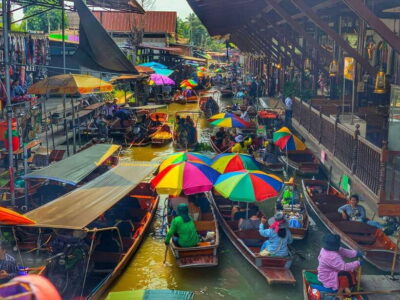
Train Market & Floating Market with Boat Ride
Read our review →
Bangkok Canal Tour: 2-Hour Longtail Boat Ride
Read our review →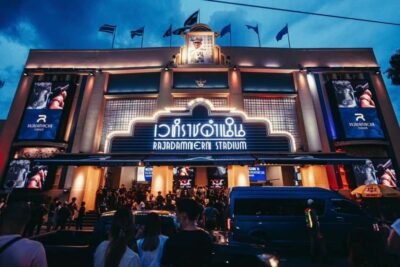
Muay Thai Boxing Tickets at Rajadamnern Stadium
Read our review →
White Orchid Chao Phraya Dinner Cruise free Beer
Read our review →