
Reviewed · BANGKOK TOURS
Backstreet Bangkok Exploring the Cradle of Thai Cooking
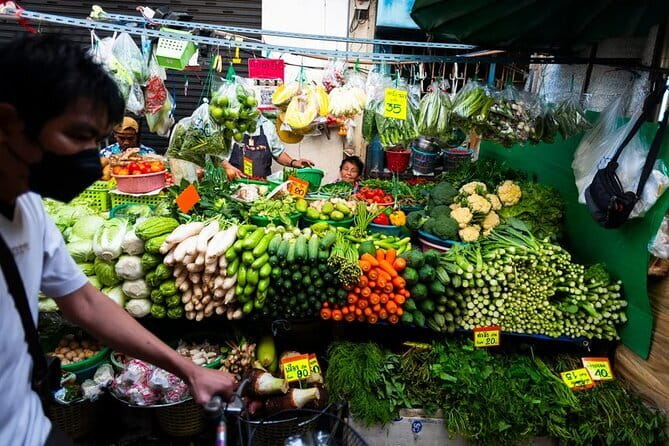
Bangkok’s food story begins in its old neighborhoods, not just in polished restaurants. This five-hour walk links temples, markets, street stalls, restaurants, factories, and a mall, showing how Thai cooking grew from many cultural influences. I especially like the mix of food and place and the chance to see parts of the city many visitors pass by.
I also like the small group, capped at seven people. Guides such as Lek and Anna bring personal knowledge of Bangkok, and the tour can sometimes feel almost private when few people book. Dinner, snacks, bottled water, and alcoholic drinks are included, which gives the $125 price more weight.
The main drawback is the cost. At $125 per person, this is not a cheap way to grab dinner in Bangkok, and private transportation is not included. The listed start time is 9:00 am, while the description refers to an afternoon-into-evening outing, so confirm the timing when you book.
Key points
- Bangkok’s oldest quarters: Explore Wang Burapha, Rattanakosin Island, Chinatown, and Little India in one food-focused outing.
- More than a meal: Temples, markets, factories, restaurants, and cultural sites explain where Bangkok’s flavors come from.
- Small-group format: The maximum is seven people, with occasional private departures when bookings are light.
- Several food moments: Dinner, snacks, bottled water, and alcoholic drinks are included in the price.
- Strong local guiding: Lek and Anna are named guides associated with especially personal and informative outings.
- Easy city access: Meet at Sam Yot MRT station and finish back at the same meeting point.
Bangkok cooking begins in the old quarters
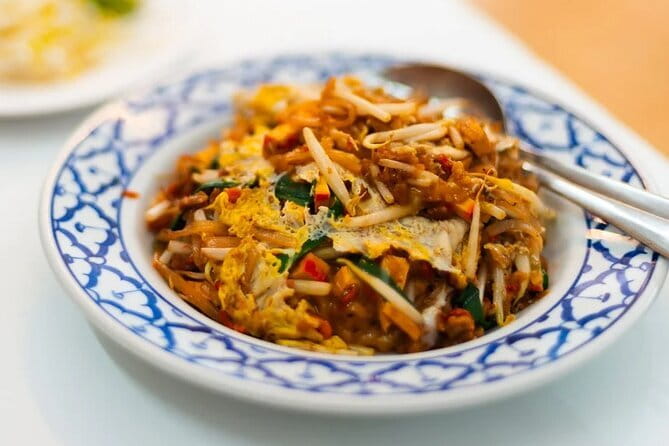
The title of this experience is accurate in the broadest sense: you are not simply moving from one food stall to another. You are tracing the places where Bangkok’s cooking took shape.
The route connects Wang Burapha with nearby Rattanakosin Island, Yaowarat, Phahurat, and Sampeng Market. These districts reflect different strands of Bangkok life, including Thai royal history, Chinese trade, Indian commerce, old markets, textiles, street food, and working neighborhoods.
That context matters. A plate of food tastes different when you know why a market exists, who settled in the area, or how a dish fits into the city’s past. I like tours that use food as a doorway into a city rather than treating it as a checklist of dishes.
You should expect a full outing with plenty of stops and a steady amount of walking. The experience lasts about five hours, and the small group makes it easier to ask questions, adjust the pace, and speak with your guide.
More Cooking Classes in Bangkok
- Bangkok: Hands-on Thai Cooking Class and Market Tour
★ 4.9 · 1,614 reviews - Bangkok: Tingly Thai Cooking School Half-Day Cooking Class
★ 4.9 · 1,191 reviews - Bangkok: Maliwan Thai Cooking Class with Market Tour
★ 4.9 · 1,133 reviews
Starting near Wat Ratchaburana
The meeting point is Sam Yot MRT station, Exit 3, on Thanon Unakan in Wang Burapha Phirom. That is a useful start because you can reach it by Bangkok’s public transit rather than arranging a private car.
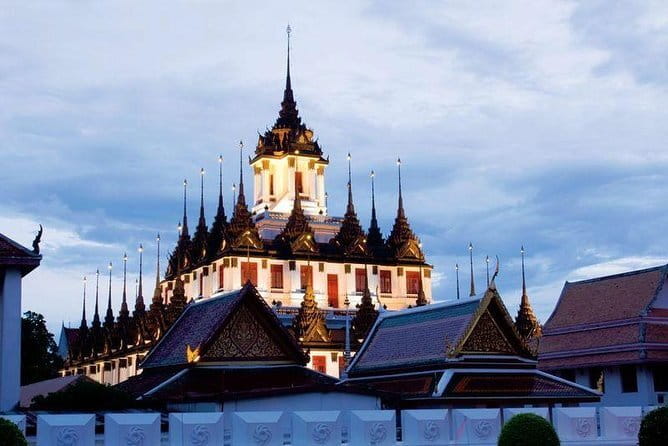
The first listed stop is Wat Ratchaburana Ratchaworawihan, an ancient temple built in the 15th century. It is known for its architecture and historical importance, and it gives the tour a quiet cultural opening before the food stops gather speed.
You receive free admission here, so there is no extra temple fee to budget for. The temple stop is listed at about one hour, which suggests that your guide will explain the setting rather than rush you through for a quick photograph.
This is also a good reminder about clothing. The supplied information does not give a formal dress code, but Thai temples commonly expect respectful dress. You should be prepared for a temple visit at the beginning of the outing and wear comfortable shoes for the rest of the walk.
Rattanakosin Island puts the food in context
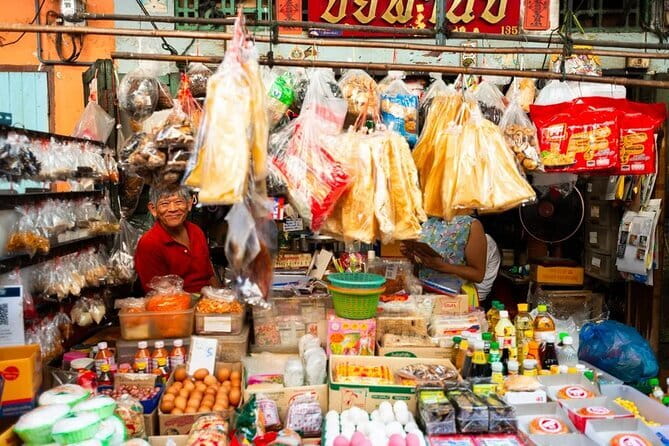
Rattanakosin Island is the historic center of Bangkok and includes major sights such as the Grand Palace, Wat Phra Kaew, and Wat Pho. This tour does not list admission to those attractions, so do not assume you will enter them as part of the experience.
Instead, the area helps explain Bangkok’s older civic and royal center. Your guide can connect the surrounding streets and institutions to the development of Thai food and city life. The listed time here is about one hour, making it one of the more substantial cultural portions of the outing.
I like this balance. A food walk can become a blur of bites if every stop is only about eating. Spending time in Rattanakosin gives you a wider picture, so the dishes are tied to real neighborhoods and historical settings.
The trade-off is that food-focused visitors expecting constant tasting may find this section slower. That is not a flaw, but it is important to know what you are buying. This is a cultural walk with food, not a nonstop eating contest.
Phahurat Market and Bangkok’s Indian connection
Phahurat Market is often called Little India. It is known for Indian culture, textiles, jewelry, and food, and it offers a different side of Bangkok from the nearby temple district.
The market stop is listed at about one hour. That gives you time to look at the goods as well as taste something connected with the neighborhood. The point is not only to sample Thai dishes, but to see how different communities and cooking traditions have helped shape Bangkok.
For you, this may be one of the most useful parts of the route if you have already seen the city’s best-known temples. Phahurat adds social and commercial history to the day. Textiles and food share the same setting, and the market feels like a place where people work and shop, not just a stage built for sightseeing.
The description does not promise a fixed menu. That is worth noting. The exact foods can vary, and you should think of the tour as a guided introduction to local food districts rather than a set tasting course with every dish announced in advance.
More Thai cooking classes in Bangkok:
- Hands on Thai Cooking Class and Market Tour
★ 5.0 · 660 reviews - Tingly Thai Cooking Class with Morning Market Tour
★ 5.0 · 589 reviews - Hands-on Thai Cooking Class & Market Tour in Sukhumvit
★ 5.0 · 571 reviews - Pink Chili – Thai Cooking Class and Market Tour in Bangkok
★ 5.0 · 416 reviews
Sampeng Market takes you into Chinatown’s narrow lanes
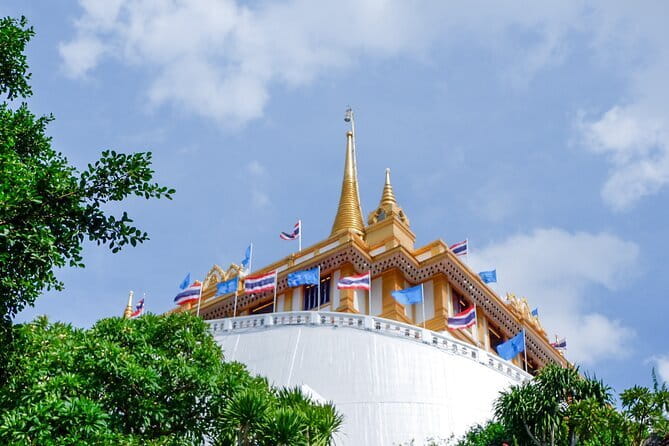
Sampeng Market is part of Bangkok’s Chinatown market area. The lane is narrow and packed with goods ranging from textiles to electronics, with a long commercial past behind it.
The planned visit is shorter, about 30 minutes. That makes sense for a tight market alley where the point is to get a feel for the trade and movement of the area rather than spend half the day browsing.
Sampeng also changes the rhythm of the tour. After the open cultural spaces around the temple districts and the broader market feel of Phahurat, you move into a more compressed commercial environment. Keep your belongings secure and stay close to the group in narrow passages.
Yaowarat is also included in the broader route. This is Bangkok’s Chinatown district, known for food stalls, markets, and cultural sights. The supplied route description places it near Wang Burapha, but does not assign it a separate duration or list specific eateries, so you should not expect a guaranteed stop at a named stall.
Food stalls, restaurants, factories, and more
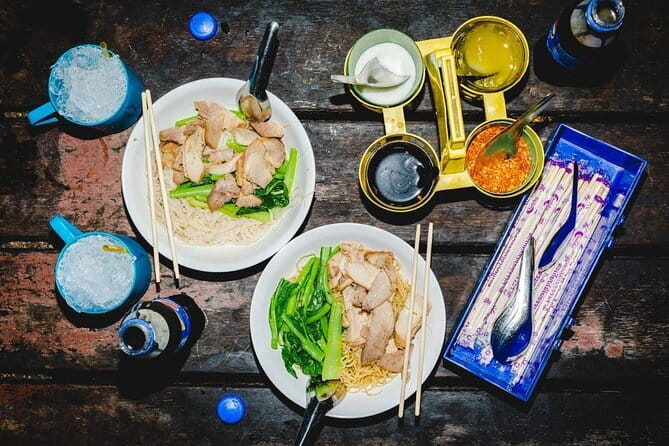
The appeal of this tour lies in the range of settings. You may move between food stalls, restaurants, factories, markets, a mall, and older cultural sites instead of spending the entire day at one type of venue.
That variety can teach you more than a restaurant-only food tour. A factory or market can show how ingredients and goods move through the city. A stall can show the quick, practical side of Bangkok eating. A restaurant can offer a slower taste and a chance to talk about preparation and custom.
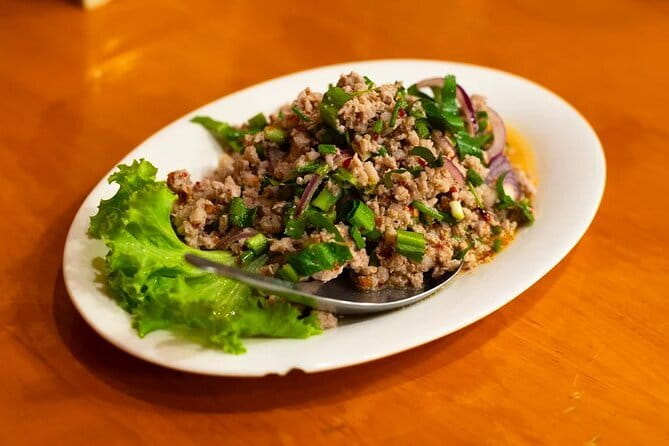
The experience includes dinner and snacks, along with bottled water and alcoholic beverages. That is a useful package for a five-hour outing. You are not paying only for guide time, and you should not need to buy every tasting separately.
Still, keep an open mind about portions and timing. The information does not provide a dish-by-dish menu, and the reviews describe eating a great deal. You may want to arrive hungry, but not so hungry that you rush the early cultural stops.
One practical tip is to pace yourself. The food is spread over several hours, and the value comes from sampling across districts rather than filling up at the first stop. If you have allergies, dietary restrictions, or strong dislikes, ask about them before booking because the available information does not explain how special diets are handled.
What the guides add to the day
The guide may be Anna, Lek, or another member of the local team. Anna is described as warm and generous with food, encouraging people to keep eating and try more. Lek is associated with especially personal outings and has been described as a long-time Bangkok resident of Thai descent.
Those details matter because a route like this depends heavily on the guide. The same market can feel confusing or meaningful depending on how well someone explains it. A good guide helps you understand what you are seeing, keeps the meal pace comfortable, and makes unfamiliar foods less intimidating.
Lek has also led tours that became private when only one booking was made. The normal maximum is seven people, but a small booking may give you a more tailored experience. You should treat that as a possible benefit, not a promise.
The strongest part of the guiding style here is the blend of food and local background. You are not only told what something is. You can ask why it is sold in that district, how the neighborhood developed, and what makes the food part of Bangkok life.
Is $125 a fair price?
The price is $125 per person. That is high compared with simply eating your way through Bangkok on your own, where street food can be inexpensive.
The better comparison is a five-hour guided experience that includes dinner, snacks, bottled water, and alcoholic drinks. You are also paying for a small group, neighborhood interpretation, and access to places you may not find easily on your own.
I would consider the price reasonable for someone who wants structure and context, especially on a first visit or during a short stay. It is also a fairer deal if you expect to make full use of the food and drinks included.
The value is weaker for an independent eater who already knows Bangkok well, speaks Thai, and enjoys building a route alone. You may spend less and wander longer without a fixed schedule.
That said, repeat visitors can still find something useful here. The route covers several districts, and one review describes the tour as introducing new places and foods even after many visits to Bangkok. That makes it more than a beginner-only outing.
Timing, transport, and group size
The activity lasts approximately five hours and ends back at the meeting point. The listed start time is 9:00 am, although the descriptive text refers to an afternoon-into-evening tour. Because those details do not fully match, check the confirmed start time before setting your day around it.
Private transportation is not included. You meet at Sam Yot MRT station, Exit 3, and the location is near public transit. Plan to make your own way there and back.
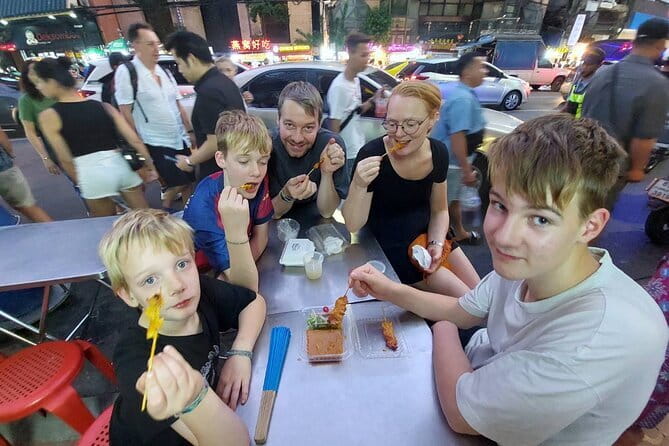
The group has a maximum of seven participants. That is a strong number for market lanes and food stops. You should be able to hear the guide, ask questions, and avoid the slow shuffle that comes with a large coach group.
Most people can take part, according to the supplied information. The experience is best suited to anyone comfortable spending several hours moving through city streets, eating multiple times, and visiting a temple and markets.
If you need a fully private experience, do not assume the small-group maximum means private booking. Ask the operator directly. A private outing may happen when demand is low, as it did for some departures, but it is not listed as a standard feature.
Who should book this food walk?
I would choose this experience if you want Bangkok explained through its neighborhoods. It suits first-time visitors who want more than the Grand Palace and a restaurant meal, as well as repeat visitors looking for new food districts.
It is a good match for people who enjoy trying unfamiliar foods and asking questions. The combination of dinner and snacks also works well for anyone who wants a substantial food outing rather than a short tasting session.
You may want to skip it if you prefer to control every meal, dislike walking through crowded markets, or want a clearly published menu. The lack of private transportation also means you must handle the journey to Sam Yot MRT station yourself.
The tour is also not the best choice if you only want famous Bangkok landmarks. The focus is on old quarters, markets, food businesses, and cultural background. The temples and historic areas support that theme rather than replace it.
Final call: book it for context, not just calories
I recommend Backstreet Bangkok: Exploring the Cradle of Thai Cooking if you want to understand how food fits into Bangkok’s old districts. The best reasons to book are the seven-person limit, the broad route through Wang Burapha, Rattanakosin, Phahurat, Chinatown, and Sampeng, and the chance to have a guide such as Lek or Anna shape the day around local knowledge.
At $125, you should expect more than a few cheap bites. You are paying for a half-day of guiding, cultural stops, dinner, snacks, drinks, and a route that would take effort to plan alone.
Confirm the start time, arrive hungry but pace yourself, and tell the operator about dietary needs before you go. If that sounds like your kind of Bangkok day, this is a strong choice.
FAQ
How long does the Bangkok food tour last?
The experience lasts approximately five hours.
How much does the tour cost?
The listed price is $125 per person.
What food and drinks are included?
Dinner, snacks, bottled water, and alcoholic beverages are included.
Where does the tour start?
The meeting point is Sam Yot MRT station, Exit 3, at 3111 Thanon Unakan in Wang Burapha Phirom, Phra Nakhon, Bangkok.
Where does the tour end?
The activity ends back at the meeting point.
How many people can join the tour?
The maximum group size is seven people.
Is private transportation included?
No. Private transportation is not included, though the meeting point is near public transportation.
Just added around Bangkok
- Bangkok Luggage Delivery from Hotel to Airport★ 5.0 · 25 reviews
- Bangkok to Ayutthaya Lopburi Monkey Temple, Largest Buddha Tour★ 5.0 · 62 reviews
- Baiyoke Sky Dinner Experience with Observation Deck Access★ 3.5 · 57 reviews
- Living Green Elephant Sanctuary Tour from Bangkok and Pattaya★ 5.0 · 88 reviews
- Bangkok Luggage Storage★ 4.5 · 37 reviews
- Living Green Elephant Sanctuary Experience near Bangkok & Pattaya★ 5.0 · 76 reviews
- Ethical Elephant Watching Tour From Bangkok & Pattaya★ 4.5 · 9 reviews
- King Power MahaNakhon SkyWalk at Bangkok Admission Ticket★ 4.0 · 37 reviews
Bangkok Tours, compared.
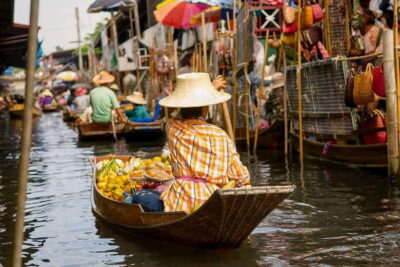
Damnoen Saduak Market and Maeklong Railway Market
Read our review →
The Old Siam: Damnoen Saduak and Maeklong Railway Market
Read our review →
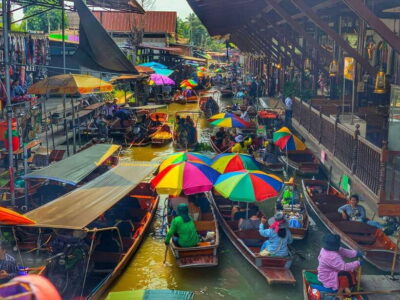
Train Market & Floating Market with Boat Ride
Read our review →
Bangkok Canal Tour: 2-Hour Longtail Boat Ride
Read our review →
Muay Thai Boxing Tickets at Rajadamnern Stadium
Read our review →
White Orchid Chao Phraya Dinner Cruise free Beer
Read our review →
Bangkok by Private Guide: Full Day Tour In and Around
Read our review →Browse the lists this tour appears in