
Reviewed · BANGKOK TOURS
Private Tour: Damnoen Saduak Floating Market and Bangkok City Temples
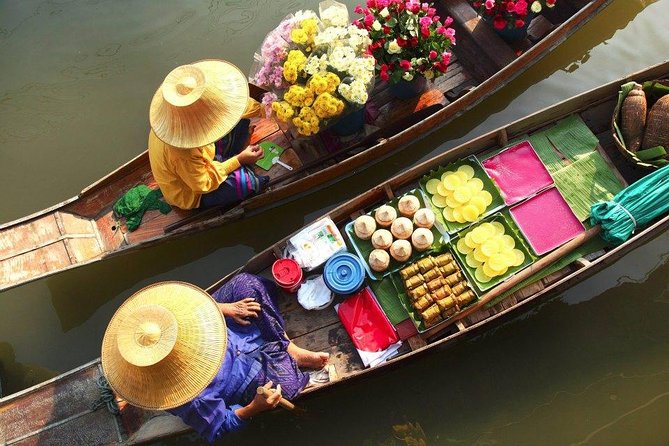
The best part of this private Bangkok day tour is its sharp change of scene. In the morning, you are beyond the city among rice paddies, salt fields, canals, and coconut palms. At Damnoen Saduak, vendors move through the waterways in narrow wooden boats loaded with produce and local goods. By afternoon, you are back among Bangkok’s gold, marble, Buddha images, and saffron-robed monks.
I like two things right away: the private guide can shape the day around your interests, and the tour links rural Thailand with Bangkok’s major temples instead of treating them as separate trips. Guides including Kat, May, Parichat, Mr Moo, and Tony have been praised for clear explanations and a warm approach, especially with families.
The trade-off is time. Eight hours covers a lot of ground, and the drive to the market takes you about 110 kilometers west of Bangkok. You may be tired by the final temple, and some visitors have chosen to drop one temple or add the railway market instead. Agree on any changes before you set off.
Key points to know before booking
- A country-and-city split: Rice paddies, salt fields, coconut sugar, and canals fill the morning, followed by three important Bangkok temples.
- A truly private outing: Your party has its own guide and air-conditioned minivan, with hotel pickup and drop-off included.
- Damnoen Saduak is colorful and commercial: You will see boats selling produce and specialty goods, with time to browse and bargain.
- The temple route is substantial: Wat Benchamabophit, Wat Pho, and Wat Traimit each offer a different style of Thai religious art.
- Lunch is included: A typical Thai meal breaks up the long return drive and afternoon sightseeing.
- Flexibility is useful: Guides such as May and Kat have adjusted stops to match the group, but ask clearly before replacing a planned temple.
Why the countryside makes this Bangkok tour worthwhile
Bangkok can feel like one continuous wall of traffic, concrete, shops, and towers. This tour gives you a very different view of Thailand before you return to the capital. The road west passes through rice-growing country, salt fields, and plantations, giving you a practical look at how food is produced outside the city.
The visit to a farmhouse adds more value than a quick photo stop. You can watch workers extract coconut sugar and learn about a small part of Thailand’s agricultural economy. It is a modest, working place rather than a grand attraction, which is exactly why it helps put the floating market into context.
The ride takes time, so bring water, a light layer for the air-conditioning, and patience. The private minivan makes the journey easier than handling several buses or taxis yourself, especially when you have only a couple of days in Bangkok.
You start at about 7:00 am. That early departure matters. Damnoen Saduak is roughly 65 miles, or 110 kilometers, from Bangkok, and the tour still needs to return to the city for lunch and temple visits. A late start would leave very little room for the afternoon.
More floating market mornings near Bangkok:
- Bangkok: Damnoen Saduak Market and Maeklong Railway Market
★ 4.5 · 26,723 reviews - The Old Siam: Damnoen Saduak and Maeklong Railway Market
★ 4.5 · 10,992 reviews - Bangkok: Train Market & Floating Market with Boat Ride
★ 4.7 · 9,547 reviews
Entering Damnoen Saduak Floating Market
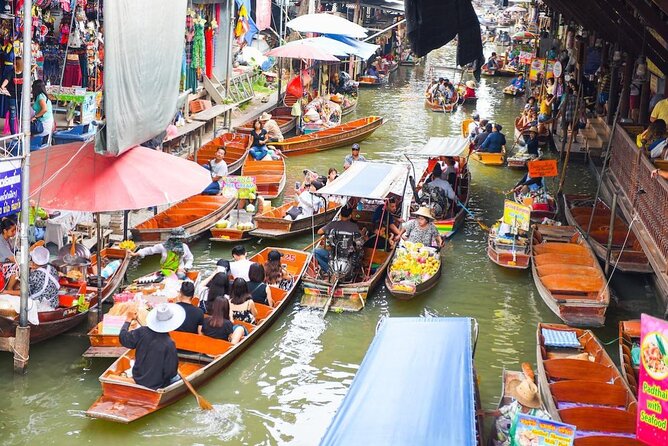
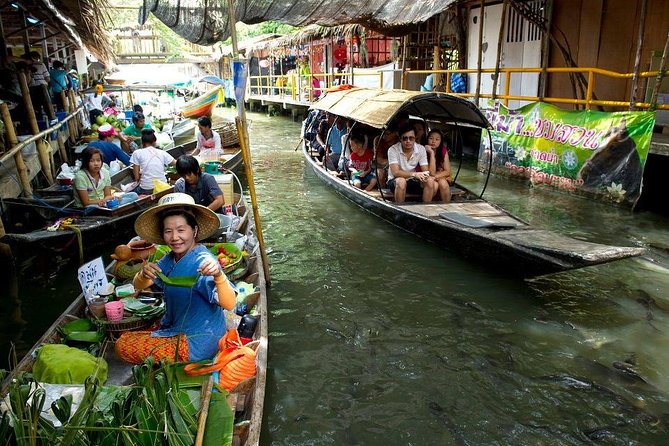
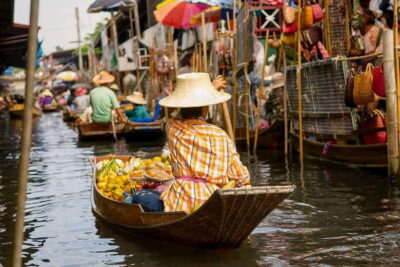
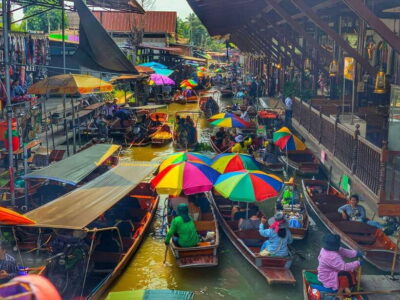
Damnoen Saduak is Thailand’s best-known floating market, built around a network of canals in Ratchaburi province. The main scene is easy to understand: vendors sit in or beside traditional wooden boats, selling fresh produce, prepared food, and specialty goods while buyers move along the water and walkways.
The market is visually busy in the best sense. Bright fruits, vegetables, cooking ingredients, painted boats, and canal-side stalls give you plenty to look at. Your guide can explain the market’s background, help you understand how the waterways function, and offer advice if you want to bargain or buy something.
The boat portion is a major reason people choose this trip. A ride through the canals lets you see the market from the water, not just from a roadside entrance. It also gives you a closer look at the wooden boats and the daily trade that made this place famous. Since the market is a working commercial setting, expect sales pitches and tourist-oriented goods alongside local produce.
I would not book this outing expecting a quiet, untouched village market. Damnoen Saduak is famous and prepared for sightseeing. The reward is the chance to see an unusual form of commerce in action, with a guide who can help separate useful context from simple shopping.
You will have about three hours for the market portion. That is enough time to take the boat ride, walk around, examine the stalls, and stop for food or photographs without racing through the canals. If you are not interested in shopping, tell your guide early so more time can go toward the water and local details.
Lunch and the road back to Bangkok
After the market, the route returns toward Bangkok for a typical Thai lunch. The meal is included, which makes the day easier because you do not need to stop and negotiate a restaurant while watching the clock.
Lunch also arrives at a useful point in the schedule. The morning requires an early start, and the afternoon includes three temples, so a proper break is welcome. Food preferences and menu details are not specified, so tell the guide about any needs as soon as you meet.
The tour also includes a stop at a wood-carving factory. This offers a look at Thai craft production and gives the day another link to local work beyond the major sights. It is not one of the headline attractions, but it helps vary the pace between the market and temples.
The countryside and craft stops are part of what makes this more than a temple shuttle. If you want only Bangkok monuments, a shorter city tour would be more efficient. If you want a broad first look at the city and its surroundings, these stops justify the longer drive.
Wat Benchamabophit and Bangkok’s marble architecture
The afternoon begins, or may begin depending on the route, at Wat Benchamabophit, commonly called the Marble Temple. Its white Carrara Italian marble columns give it a cooler, more formal appearance than Bangkok’s many gold-covered temples.
The temple is also known for its red-and-gold tiered roof. That contrast makes the building easy to remember: pale marble below, strong red and gold above. Your guide can explain the design and the role of the temple within Bangkok’s religious life.
Allow about an hour here. That gives you time to take in the main structure, see the Buddha images, and listen to the background without turning the visit into a hurried photo stop.
Temple etiquette matters throughout the afternoon. Cover your shoulders and knees, and choose smart-casual clothing that works in the heat. You should also be ready to remove shoes in areas where that is required. Dress correctly from the start, since changing clothes between temples wastes precious time.
More market mornings in Bangkok:
- Bangkok: City Highlights Temple and Market Walking Tour
★ 4.5 · 3,990 reviews - Half-Day Railway Market and Floating Market Tour in Thailand
★ 4.5 · 3,924 reviews - Bangkok: Damnoen Saduak, Train Market & Mahanakhon Day Trip
★ 4.7 · 2,162 reviews - From Bangkok: Damnoen Saduak Floating Market Guided Tour
★ 4.4 · 2,020 reviews
Wat Pho and the enormous reclining Buddha
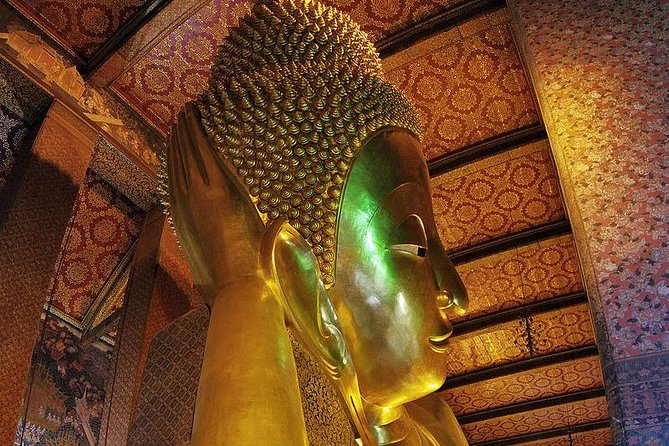
Wat Pho, formally Wat Phra Chetuphon, is one of Bangkok’s oldest and largest temples. Its precinct covers about 80,000 square meters, so the one-hour stop gives you a focused introduction rather than time to inspect every corner.
The main draw is the reclining Buddha, described as 151 feet, or 46 meters, long. The scale is impressive, but the details matter too. Look closely at the feet and surrounding decoration while your guide explains the image and the temple grounds.
Wat Pho is a good place to have the religious meaning explained rather than simply taking pictures. The complex contains courtyards, decorative structures, and many Buddha images, and a guide helps you understand how the pieces fit together.
The drawback is simple: one hour goes quickly. If you like temple architecture and want quiet time for photographs, you may wish the schedule were slower. This is one reason some groups have decided to skip the final temple after seeing how much they already covered.
Wat Traimit and the solid-gold Buddha
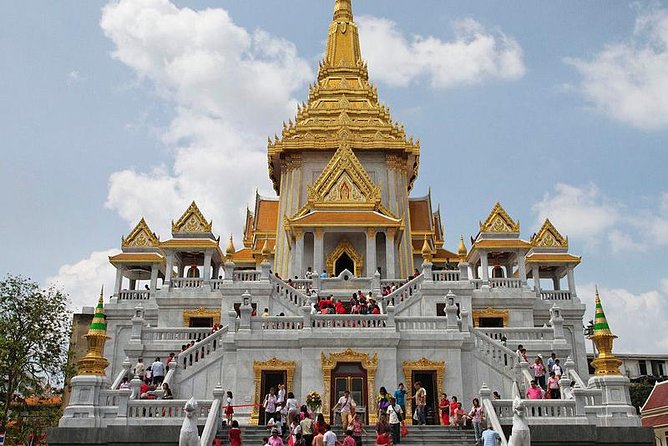
Wat Traimit, the Temple of the Golden Buddha, gives you a very different experience from Wat Pho and Wat Benchamabophit. Its central image is a 5.5-ton solid-gold sitting Buddha, found during the expansion of Bangkok’s port. The statue dates back more than 200 years.
The story of the statue is part of its appeal. Its value was not always obvious, and its discovery adds a human element to what could otherwise be another grand religious stop. Your guide can connect the image to Thai Buddhist practice and the city’s development.
The visit is planned for about an hour. Wat Traimit is near distinctive Bangkok neighborhoods, so the drive between temples also gives you brief glimpses of different parts of the capital. Do not expect a full neighborhood walk, but pay attention outside the windows. The movement between sites is part of the city introduction.
Taken together, the three temples work well because they are not duplicates. Wat Benchamabophit gives you marble and refined rooflines. Wat Pho gives you scale, courtyards, and the reclining Buddha. Wat Traimit gives you a remarkable gold image and an unusual discovery story.
A private guide changes the pace
The private format is the strongest practical feature of this experience. You do not have to match the pace of a large bus group, and your guide can spend more time on the subjects that interest you.
The guides named in the feedback include Kat, May, Parichat, Mr Moo, and Tony. Their reported strengths differ slightly, but the useful pattern is clear: the best guides explain Thai history and Buddhism in plain English, keep children involved, and respond to requests during the day.
That flexibility can work in your favor. One group added the railway market and removed a temple. Another decided not to visit the last temple because the day had already been full. Those changes can make sense, but you should treat them as choices, not automatic improvements.
One person felt pressured when the planned temple visit was replaced. The lesson is practical: tell your guide exactly which stops matter most before leaving Bangkok, and confirm any proposed change before agreeing. Private does not mean every possible attraction fits comfortably into eight hours.
Is $174.95 per person a fair price?
At $174.95 per person, this is not a budget sightseeing day. The price includes a private guide, private air-conditioned minivan, hotel pickup and drop-off, lunch, and admission to the listed temples. You are paying for transport, planning, interpretation, and the ability to adjust the day, not simply for entry tickets.
The value improves when you have limited time. If you have only two days in Bangkok, arranging Damnoen Saduak, a rural stop, lunch, three temples, and return transport on your own would take careful planning. The private van also removes the need to piece together long-distance transport and city taxis.
The value is weaker if you prefer a slow, independent schedule. You will cover a great deal in one day, and the long road journey leaves less time at each temple. Couples and families who want to see many headline sights may find the price reasonable. Independent visitors with several days in Bangkok may prefer separate day trips and public transport.
Group discounts are available, so the per-person cost may make more sense for a small family or group than for one or two people. Personal expenses are not included, so budget separately for souvenirs, drinks beyond the included meal, and optional purchases at the market.
Who should book this full-day route?
I would choose this tour if you want a broad first taste of Bangkok and nearby Thailand without spending time on transport planning. It suits families, first-time visitors, and anyone staying in Bangkok for only a short visit.
It is also a strong fit if you want explanations at the temples. The religious details can be easy to miss when you visit alone, and a good private guide can make the Buddha images, buildings, and customs easier to understand.
You should think twice if you dislike early starts, long drives, markets built for sightseeing, or tightly packed days. The schedule is active, and the final temple may feel like one stop too many after the countryside excursion.
Dress with temple rules in mind: shoulders and knees must be covered. The tour is suitable for most people, and service animals are allowed. Pickup and drop-off are offered at your hotel, with the day beginning around 7:00 am.
Should you book it?
Book this private tour if you want maximum sightseeing in one day, especially with a flexible guide and your own vehicle. The blend of coconut sugar production, canals, wooden boats, Thai lunch, and three very different temples gives you a much fuller picture than a city-only outing.
I would book it for a short Bangkok stay, a family group, or anyone who values clear guidance and easy transport. I would skip it if you want long, unhurried temple visits or have enough time to split the market and city sights across separate days.
Free cancellation is available if you cancel at least 24 hours before the 7:00 am start time. That gives you some protection, but changes or cancellations inside that window are not accepted.
FAQ
What is included in the tour price?
The price includes a private guide, lunch, hotel pickup and drop-off, transport in a private air-conditioned minivan, and admission to the listed temples.
What time does the tour begin?
The tour begins at approximately 7:00 am.
How long does the tour last?
The tour lasts about eight hours.
Is the tour private?
Yes. Only your own group participates in the activity.
Which temples are visited?
The planned temple stops are Wat Benchamabophit, Wat Phra Chetuphon, also called Wat Pho, and Wat Traimit, the Temple of the Golden Buddha.
What should I wear?
Wear smart-casual clothing that covers your shoulders and knees for the temple visits.
Can I cancel for a full refund?
Yes. You can receive a full refund if you cancel at least 24 hours before the experience start time. Cancellations or changes made less than 24 hours before the start are not accepted.
More Shopping in Bangkok
- Bangkok: Hands-on Thai Cooking Class and Market Tour
★ 4.9 · 1,614 reviews - Damnoen Saduak Floating Market and Maeklong Railway Market Tour
★ 4.5 · 1,588 reviews - Day Trip to Bangkok Floating Market & Maeklong Railway
★ 5.0 · 1,528 reviews - Bangkok: Railway and Floating Market Tour with Dragon Temple
★ 4.6 · 1,225 reviews
Just added around Bangkok
- Bangkok to Ayutthaya Lopburi Monkey Temple, Largest Buddha Tour★ 5.0 · 62 reviews
- Baiyoke Sky Dinner Experience with Observation Deck Access★ 3.5 · 57 reviews
- Bangkok Luggage Delivery from Hotel to Airport★ 5.0 · 25 reviews
- Living Green Elephant Sanctuary Tour from Bangkok and Pattaya★ 5.0 · 88 reviews
- Bangkok Luggage Storage★ 4.5 · 37 reviews
- Living Green Elephant Sanctuary Experience near Bangkok & Pattaya★ 5.0 · 76 reviews
- Ethical Elephant Watching Tour From Bangkok & Pattaya★ 4.5 · 9 reviews
- King Power MahaNakhon SkyWalk at Bangkok Admission Ticket★ 4.0 · 37 reviews
Bangkok Tours, compared.
Damnoen Saduak Market and Maeklong Railway Market
Read our review →
The Old Siam: Damnoen Saduak and Maeklong Railway Market
Read our review →
Train Market & Floating Market with Boat Ride
Read our review →
Bangkok Canal Tour: 2-Hour Longtail Boat Ride
Read our review →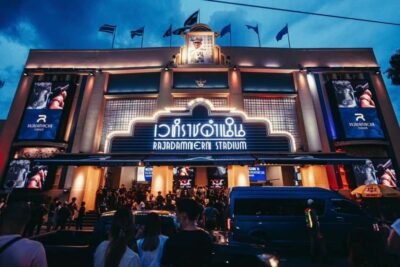
Muay Thai Boxing Tickets at Rajadamnern Stadium
Read our review →
White Orchid Chao Phraya Dinner Cruise free Beer
Read our review →
Bangkok by Private Guide: Full Day Tour In and Around
Read our review →Browse the lists this tour appears in