
Reviewed · BANGKOK TOURS
Bangkok: Guided Tour in a Typical Thai Tuk-Tuk
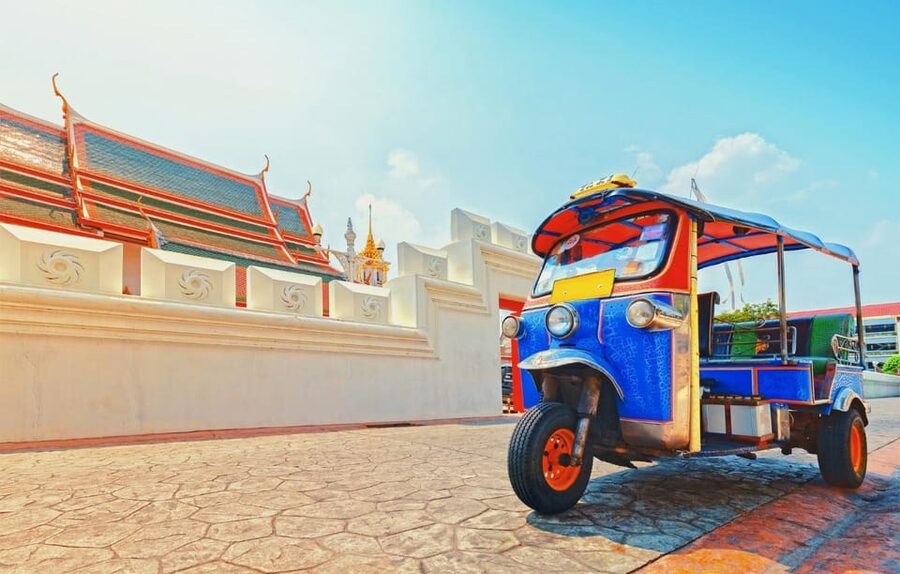
Bangkok reveals itself quickly from the open sides of a tuk-tuk. You hear the engine, feel the warm air, and slip through streets that are far more interesting than a view from a tour bus. This two-hour city sampler links temples, the flower market, the river, and Chinatown without asking you to haggle with a driver.
I like the route’s variety, especially the stop at Pak Khlong Talat flower market and the finish in Yaowarat. I also like the guides’ personal touch. Anna, Ana, Johan, Yohan, Ken, and Enjoy are among the guides praised for clear English, humor, and stories about Thai life. The main drawback is simple: you see the major temples from outside only, so this is not a substitute for a full Grand Palace or Wat Pho visit.
Key points to know before you book
- A fast Bangkok orientation: See several major sights in two hours, with short photo stops rather than long temple visits.
- Your tuk-tuk is part of the experience: You ride in a traditional three-wheeled vehicle instead of being moved between sights in a standard van.
- A strong first-day choice: The route helps you decide which places deserve a longer return visit.
- The flower market adds local color: You get more than a temple checklist, including a lotus-folding activity.
- The tour ends in Chinatown: Plan to stay for food after the ride, particularly if you choose the 4 p.m. departure.
- Meet at the right Museum Siam exit: Go to MRT Sanam Chai, outside the Museum Siam exit on the front side, not the rear road exit.
Why a tuk-tuk is the right way to see Bangkok quickly
Bangkok is too spread out for a short walk between its best-known sights, yet a standard vehicle can leave you feeling sealed off from the city. The tuk-tuk gives you a close view of street life while a local guide explains what you are passing.
The ride is not quiet or polished. The engine is part of the soundtrack, traffic is part of the show, and the open cabin leaves you exposed to heat and road noise. That is precisely why it feels like Bangkok rather than a transport link between attractions.
The route is designed for orientation, not detailed sightseeing. You stop for about 10 minutes at several landmarks and about 20 minutes in Chinatown. Much of the value comes from the guide’s commentary during the short rides and from knowing what to return to later.
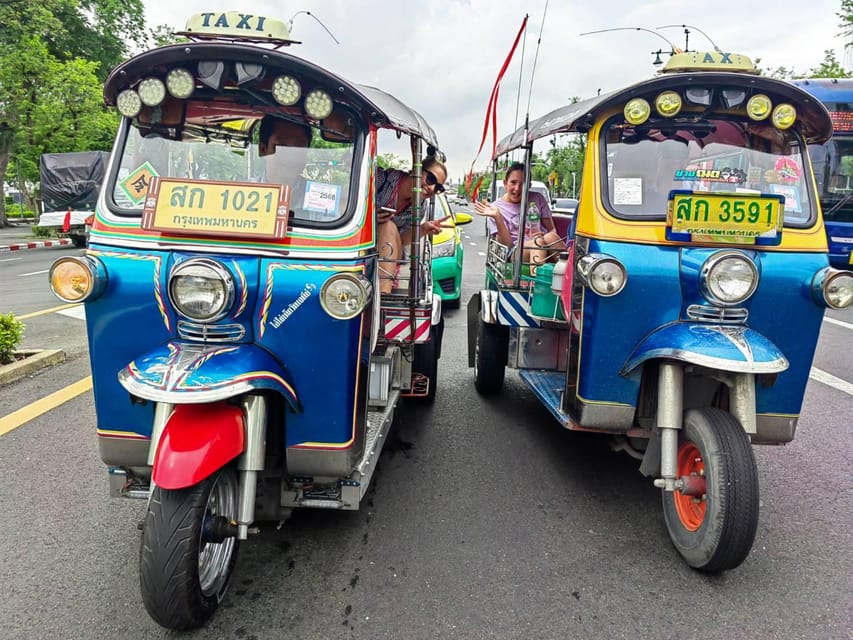
The tour is often arranged with two people in each tuk-tuk, although the exact group arrangement can vary. One useful feature is that the guide can explain what you are about to see before each ride, then meet the group at the next point. That keeps the trip organized without taking away the informal feel.
More Tuk Tuk Tours in Bangkok
- Bangkok by Night: Temples, Markets and Food Tuk-Tuk Tour
★ 5.0 · 3,752 reviews - Bangkok Midnight Food Tuk Tuk Tour
★ 5.0 · 2,542 reviews - Bangkok: Michelin Guide Street Food Tour by Tuk Tuk
★ 4.4 · 1,274 reviews
Starting at Museum Siam and Sanam Chai
The meeting point is outside MRT Sanam Chai at the Museum Siam exit. This is a practical starting place because the metro avoids the road congestion that can slow a taxi or car in central Bangkok.
Pay close attention to the exit. Museum Siam has a front exit and another opening toward a back road. You want the front exit, outside the museum, where the guide will be waiting. Allow a few extra minutes to get oriented if you are unfamiliar with the station.
The first tuk-tuk ride lasts about five minutes. It is a short introduction, but it gives you time to settle into the vehicle and see how the open-air ride feels before the main stops begin.
The Grand Palace: an outside look at Bangkok’s royal center
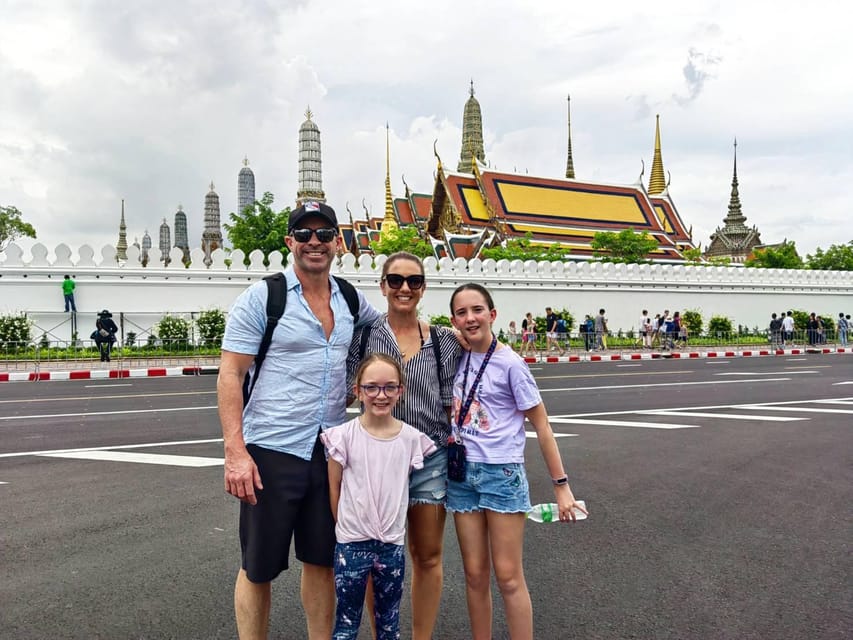
The Grand Palace is one of Bangkok’s essential sights, and it makes sense to include it early in the route. You get a photo stop and an explanation from the guide, but you do not enter the palace grounds on this tour.
That limitation matters. The Grand Palace complex deserves much more than a quick look if you want to see its courtyards, ceremonial buildings, and temple details. This ride gives you the outside view and the basic setting, then lets you return on another day if the palace becomes a priority.
Keep your camera ready, since the stop is short. The guide’s role here is less about guiding you through rooms and more about giving the landmark context before the tuk-tuk moves on.
The Giant Swing and Wat Suthat in ten minutes
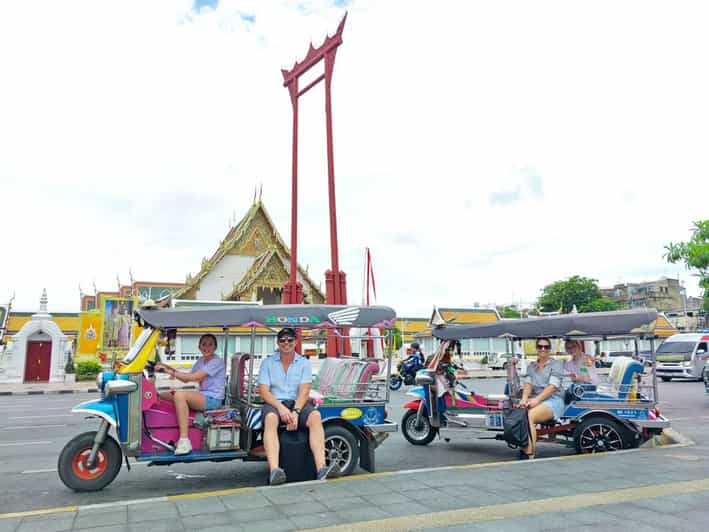
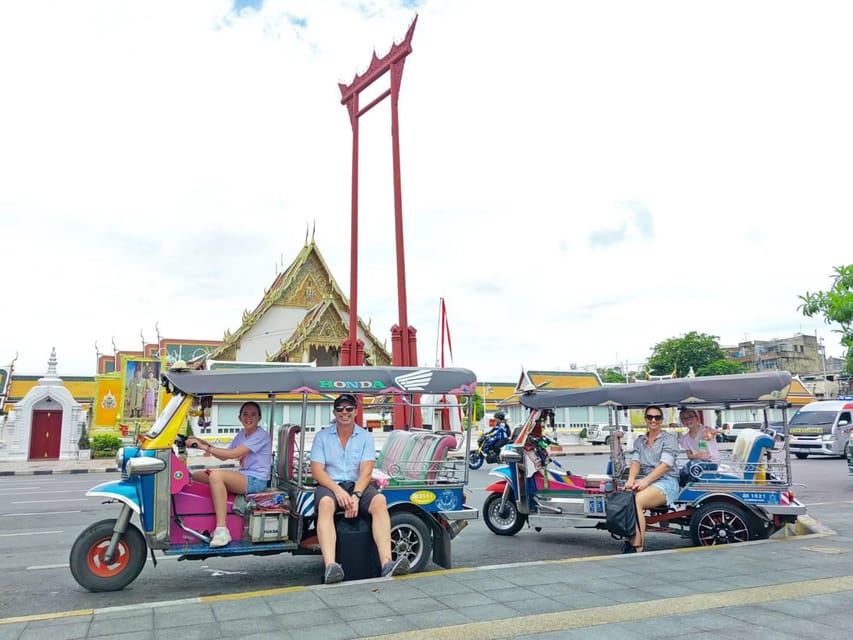
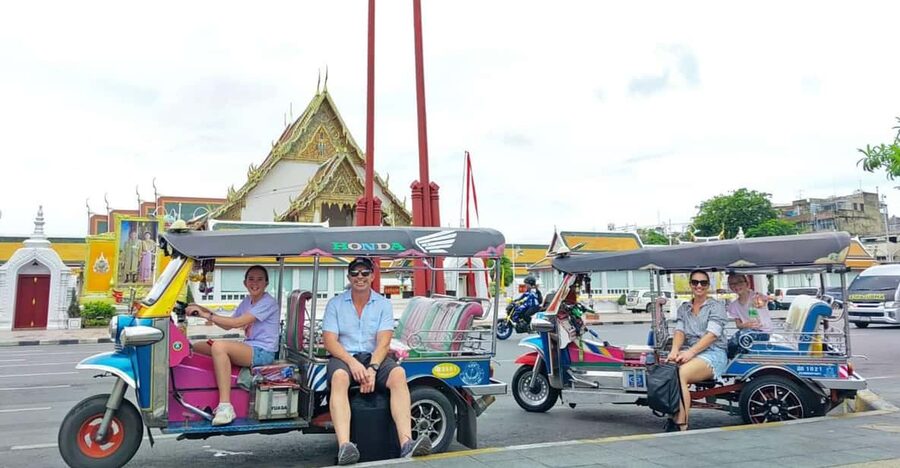
The next stop brings you to Wat Suthat and the Giant Swing. The Giant Swing is one of Bangkok’s most recognizable urban markers, while Wat Suthat provides the temple setting behind it.
You have roughly 10 minutes for photographs and a short explanation. That is enough to understand why the area matters and to take a few useful pictures, but not enough for a full temple visit.
This stop works well as part of a first look at the old city. You see how royal and religious landmarks sit close to ordinary streets, rather than being isolated attractions. If you care about temple architecture, note the details that catch your eye and return later with more time.
More tuk tuk rides around Bangkok:
- Bangkok: Tuk Tuk Adventure Chinatown Michelin Food & Temples
★ 4.3 · 725 reviews - Bangkok: Evening Tour with Wat Arun, Wat Pho & Tuk Tuk Ride
★ 4.6 · 701 reviews - Bangkok Tuk-Tuk Tour by Night with Chinatown Street Food Meal
★ 5.0 · 635 reviews - Bangkok: Tuk Tuk Day Pass App & Boat Chao Phraya River
★ 4.2 · 593 reviews
Wat Ratchanatdaram and Loha Prasat from outside
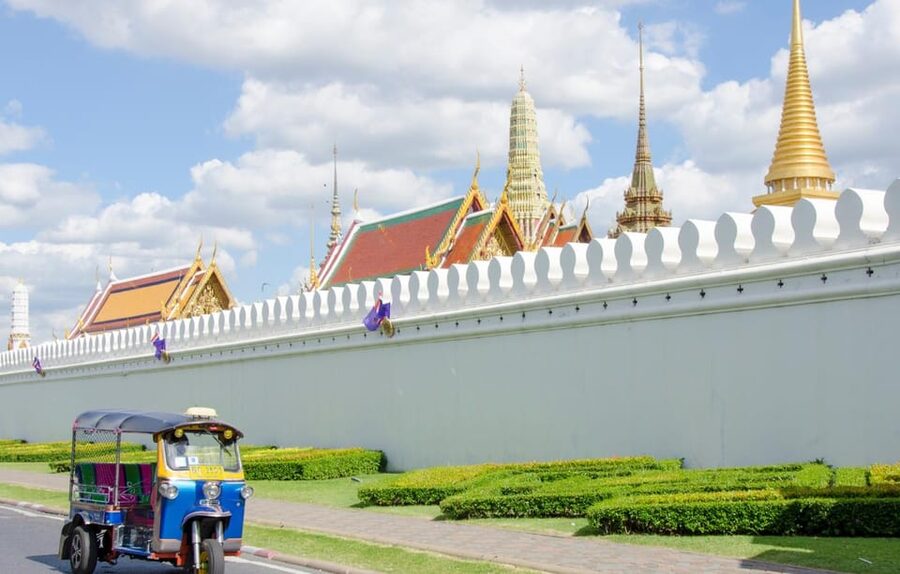
Wat Ratchanatdaram is included as another photo stop, with about 10 minutes to look around. The nearby Loha Prasat is one of the distinctive sights associated with this part of Bangkok, but you do not go inside it.
The value here is visual contrast. After the royal scale of the Grand Palace and the strong silhouette of the Giant Swing, this stop adds another architectural form to your quick tour of the old city.
Again, set your expectations correctly. You are getting a guided introduction, not an extended examination of the buildings. The guide can point out features and share stories, while you get a sense of which places deserve a longer visit.
Wat Pho and the river view toward Wat Arun
Wat Pho receives another short outside stop of around 10 minutes. You do not enter the temple complex, so you will not see its interior features or the famous reclining Buddha as part of this experience.
This is one of the clearest reasons to treat the tour as a sampler. If Wat Pho is high on your Bangkok list, plan a separate visit. The tuk-tuk ride helps you locate it and understand how it fits into the old-city route, but the stop itself is brief.
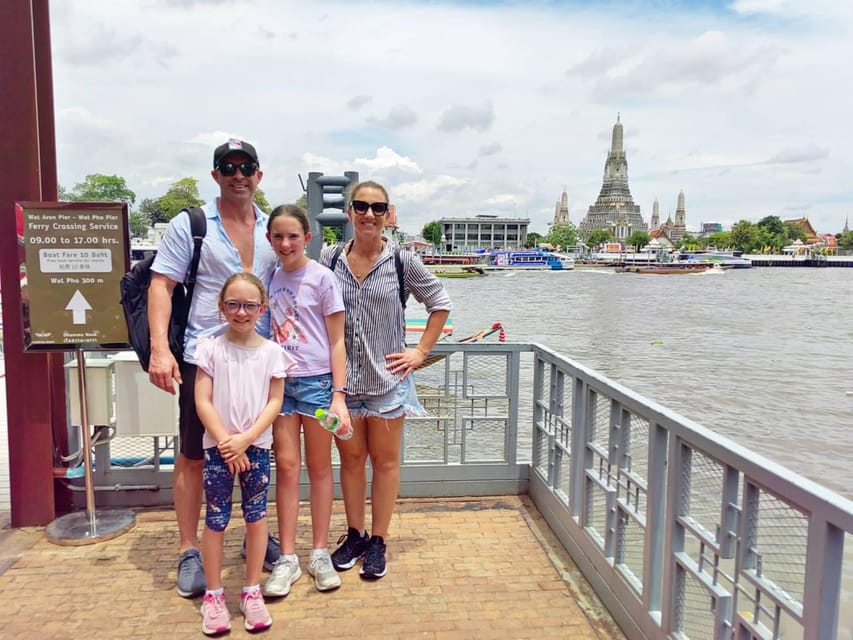
Wat Arun is part of the broader route as a view from the opposite side of the river rather than an interior visit. The sight gives the tour a useful change of scene, shifting your attention from streets and temple walls toward the river corridor. The view may be quick, so do not expect a long riverside pause.
Pak Khlong Talat, where the route feels most local
The flower market is a highlight for many people because it breaks up the temple sequence. Pak Khlong Talat is a working market, and the flowers give you a different way to understand Bangkok’s daily life and religious customs.
This is also where the included folding activity comes in. You receive a lotus flower and learn how to fold it, a small hands-on moment that gives the tour more character than a series of photo stops.
You should not expect a long market walk or a shopping session. The activity is compact, but it gives you something to do and remember. I find this more useful than adding another landmark viewed only from the curb.
The market can also be a good place for photographs, with flowers providing color and detail after the larger stone and plaster structures of the old city. Listen closely to the guide here, since the cultural explanation is as important as the market itself.
Chinatown: the best finish for food and atmosphere
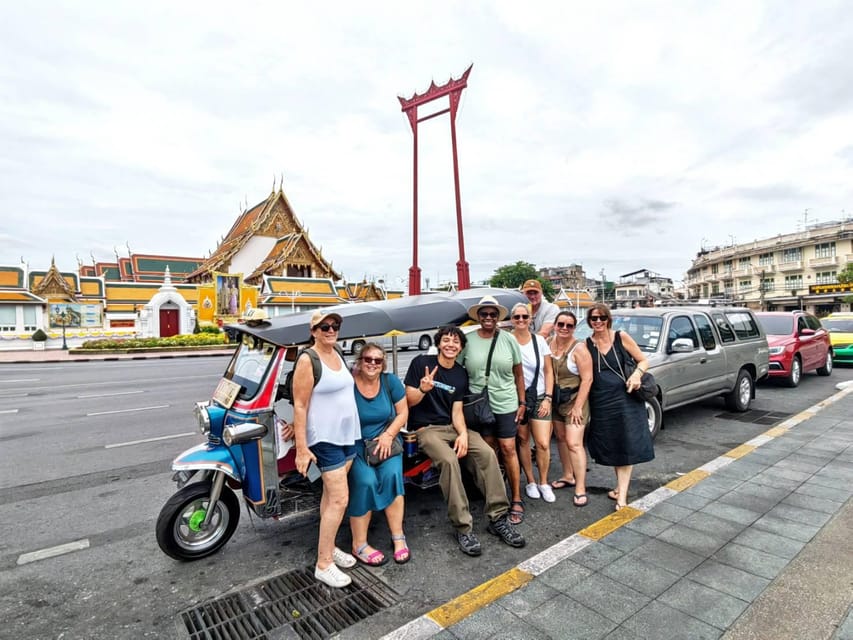
The tour ends in Chinatown, around Yaowarat Road, after about 20 minutes devoted to the area. This is the longest stop, and the timing works in your favor because you can continue into the evening afterward.
Chinatown is a strong finish because it gives you choices. You can take more photos, walk a little farther, or sit down for a meal at one of the area’s street vendors and restaurants. One useful plan is to take the 4 p.m. departure and arrive around 6 p.m., when you can turn the tour into the first part of your evening.
Do not confuse the Chinatown stop with a full food tour. Food is not listed as part of the experience, and personal expenses are not included. The guide brings you to the area and helps you understand where you are, then you decide how long to stay and what to eat.
This ending also gives the trip a better rhythm than returning to the starting point. You finish in a district that feels different from the old-city temples and can continue exploring under your own plans.
The guides make the short format work
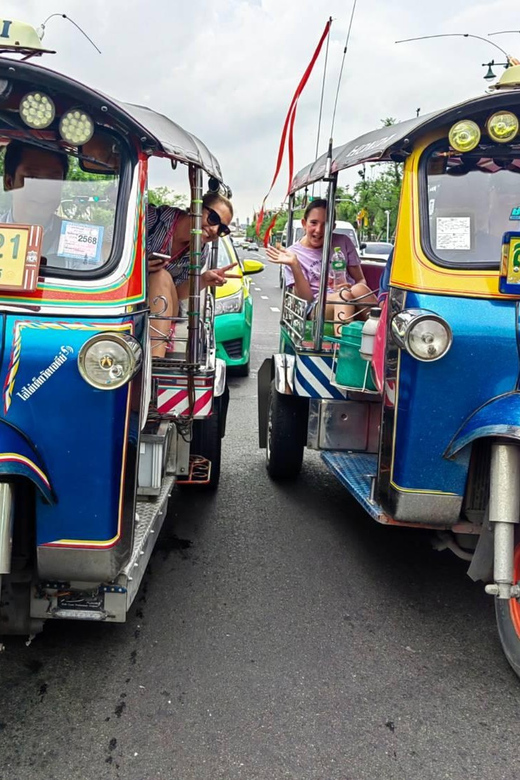
A two-hour tour can easily become a rushed list of names. The guide determines whether it feels useful or merely hurried. The strongest part of this experience is the emphasis on stories, questions, and practical explanations rather than only pointing at buildings.
Anna and Ana are frequently praised for warmth, clear English, humor, and care with the group. Johan and Yohan are also noted for friendly explanations and patience with questions. Ken has guided a private tuk-tuk experience, while Enjoy and Bella are also named as engaging hosts.
Guide assignments can change, so you should not book on the assumption that one specific person will lead your departure. Still, the repeated pattern is clear: the guide is expected to explain each stop, talk about Thai life and customs, and help with photos when needed.
The lotus-folding activity is another sign that the tour aims for interaction. It is brief, but it gives the guide a chance to explain a tradition in a simple, memorable way.
What the $28 price gets you
At $28 per person, the tour is not the cheapest way to move around Bangkok. A local taxi, metro ride, or independently hired tuk-tuk can cost less for simple transport, though those options do not include a licensed English-speaking guide, a planned route, or the flower activity.
The fair comparison is with a short guided city tour. You are paying for the tuk-tuk, the guide, bottled water, organized stops, and the ease of avoiding price negotiations with a driver. For a first day in Bangkok, that can be good value, especially if you have only a few hours.
The value drops if you want to enter the Grand Palace, Wat Pho, Loha Prasat, or Wat Arun. You will still need separate admission and time for those places. It also may feel slightly expensive if you already know Bangkok well and only want a ride.
I would see the price as reasonable for a compact introduction, not as an all-day sightseeing bargain. The experience works best when you use it to plan the rest of your stay.
Timing, comfort, and practical limits
The tour lasts two hours, with starting times subject to availability. An evening departure has a special appeal because Bangkok’s streets and Chinatown change character after dark, and the tuk-tuk lights add to the sense of occasion.
The vehicle is open, so dress for heat and movement rather than formal temple sightseeing. The supplied information does not give detailed seating, weather, or accessibility rules, so contact the provider if you have mobility needs or require a particular arrangement.
You receive a bottle of water, but personal expenses are your responsibility. Bring what you need for the rest of your outing, especially if you plan to eat in Chinatown after the tour.
The cancellation policy is flexible: you can cancel up to 24 hours ahead for a full refund. You can also reserve now and pay later, which helps if your Bangkok schedule is still changing.
Who will get the most from this ride
I would choose this for a first visit, a short stopover, or a final afternoon when you want to get outside without committing to a full day. It suits solo visitors, couples, and anyone who wants a guide to handle the route and explain the sights.
It is also useful if you prefer seeing places before deciding where to spend more time. The compact stops help you mark the Grand Palace, Wat Pho, Loha Prasat, the flower market, and Chinatown for later.
I would not choose it as your main temple tour. You will not enter the major sites, and the 10-minute stops are too short for a serious architectural or religious visit. Families and older visitors should also consider the noise, heat, and open sides of the tuk-tuk before booking.
Should you book the Bangkok tuk-tuk tour?
Book it if you want a lively two-hour introduction, enjoy local transport, and like having a guide explain the city while you move between sights. The route covers a lot without turning into an all-day commitment, and the flower market plus lotus activity add something beyond the usual temple circuit.
Skip it if your main goal is to explore the Grand Palace or Wat Pho inside. In that case, spend your money on a longer temple visit and arrange a tuk-tuk ride separately.
For most first-time visitors, I would choose an afternoon or evening departure, meet carefully at the front Museum Siam exit, and finish with dinner in Chinatown. At $28, it is a practical way to get your bearings fast while enjoying one of Bangkok’s most distinctive rides.
FAQ
How long is the Bangkok tuk-tuk tour?
The tour lasts two hours. Starting times depend on availability when you book.
Where does the tour begin?
It begins outside the Museum Siam exit at MRT Sanam Chai station. Use the Museum Siam exit and meet the guide outside.
Which sights are included?
The route includes the Grand Palace, Wat Suthat and the Giant Swing, Wat Ratchanatdaram, Wat Pho, Chinatown, and views connected with the flower market and Wat Arun from across the river.
Do you enter the Grand Palace or the temples?
No. The tour sees the Grand Palace, Loha Prasat, Wat Arun, and Wat Pho from outside only. It is a photo and orientation tour rather than an interior visit.
Is the tour conducted in English?
Yes. A licensed English-speaking guide leads the experience.
Is a tuk-tuk ride included in the price?
Yes. A typical Thai tuk-tuk ride is included, along with the guided tour.
Is the lotus-flower activity included?
Yes. Folding a lotus flower is included in the experience.
What is not included?
Personal expenses are not included. Food, drinks beyond the provided bottle of water, and any other personal purchases are your responsibility.
More Tuk Tuk Rides in Bangkok
- Bangkok Tuk Tuk Tour – Hotel-pickup & Dinner
★ 5.0 · 373 reviews - Authentic Thai Cooking with the Largest market visit &TukTuk ride
★ 5.0 · 350 reviews - Bangkok Tuk-Tuk by Night with Chinatown Street Food Meal
★ 4.6 · 263 reviews - Bangkok Evening Street Food Tuk Tuk Adventure
★ 5.0 · 158 reviews
Just added around Bangkok
- Bangkok to Ayutthaya Lopburi Monkey Temple, Largest Buddha Tour★ 5.0 · 62 reviews
- Baiyoke Sky Dinner Experience with Observation Deck Access★ 3.5 · 57 reviews
- Bangkok Luggage Delivery from Hotel to Airport★ 5.0 · 25 reviews
- Living Green Elephant Sanctuary Tour from Bangkok and Pattaya★ 5.0 · 88 reviews
- Bangkok Luggage Storage★ 4.5 · 37 reviews
- Ethical Elephant Watching Tour From Bangkok & Pattaya★ 4.5 · 9 reviews
- Living Green Elephant Sanctuary Experience near Bangkok & Pattaya★ 5.0 · 76 reviews
- King Power MahaNakhon SkyWalk at Bangkok Admission Ticket★ 4.0 · 37 reviews
Bangkok Tours, compared.
Damnoen Saduak Market and Maeklong Railway Market
Read our review →
The Old Siam: Damnoen Saduak and Maeklong Railway Market
Read our review →
Train Market & Floating Market with Boat Ride
Read our review →
Bangkok Canal Tour: 2-Hour Longtail Boat Ride
Read our review →
Muay Thai Boxing Tickets at Rajadamnern Stadium
Read our review →
White Orchid Chao Phraya Dinner Cruise free Beer
Read our review →
Bangkok by Private Guide: Full Day Tour In and Around
Read our review →Browse the lists this tour appears in