
Reviewed · BANGKOK TOURS
Small-Group: Unseen Bangkok’s Chinatown Walking Tour
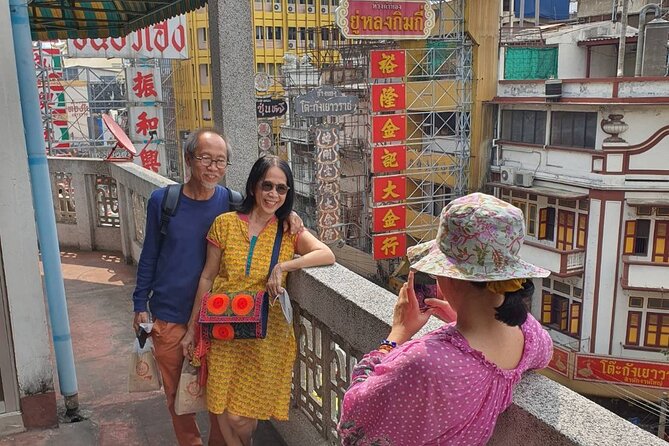
Bangkok’s Chinatown is best understood on foot, and this tour takes you beyond Yaowarat’s famous food streets into narrow lanes, old buildings, a Chinese shrine, a 150-year-old fresh market, and parts of the community that are easy to miss alone. The local stories and back-lane route are the main reason to book it.
I like the personal scale, with the tour designed for a small group, and I like the useful mix of history, temple visits, street snacks, coffee, shopping, and lunch. Guides including Bobby, Aom, Mai, Eng, Gee, Pat, and George have each earned praise for warmth and local insight. The main consideration is that the tour is more about Chinatown’s past and daily life than a dedicated shopping trip, and the walking can feel demanding in Bangkok’s heat.
Key points
- Sampeng Market’s narrow lanes: Browse wholesale shops and bargain goods in one of Chinatown’s most crowded, practical market areas.
- A quieter side of Chinatown: See old buildings, a former red-light district, a Chinese shrine, and a historic Chinese house.
- Food included: Sample Chinese street snacks, stop for local coffee or another drink, and finish with Thai-Chinese food at a long-running restaurant.
- Guides who personalize the walk: Bobby, Aom, Mai, Eng, Gee, Pat, and George have been praised for storytelling, patience, and friendly conversation.
- A useful starting point: Meet at 10 a.m. near MRT Hua Lamphong, with local transport costs during the tour included.
- A history-first experience: Choose this for community stories and less familiar corners, not for a market-only shopping excursion.
What this Chinatown walk is really about
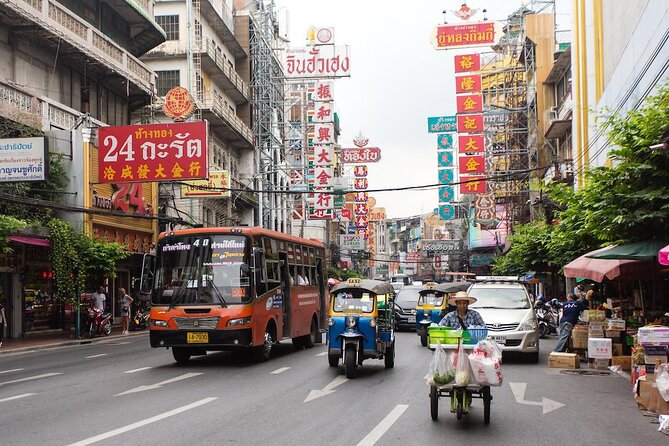
This is a three to four-hour introduction to Bangkok’s Chinese community, with most of the time spent walking through older sections of Chinatown and nearby Talat Noi areas. You are not simply taken from one major sight to another. The appeal lies in the links between them: an old building leads to a local story, a market reveals how people shop and work, and a shrine opens a window onto Chinese religious life in Bangkok.
The route includes Sampeng Market, but it is not built around shopping alone. That distinction matters. If you want a guide to the best bargains, you may find the historical focus less useful. If you want someone to show you small lanes, local businesses, temples, and places you might pass without noticing, the format makes good sense.
The tour is advertised as a small-group experience, limited to eight people, while the practical information also lists a maximum of ten. Either way, this is far more intimate than a large city walking tour. A small group allows you to ask questions and stay close to the guide when the alleys tighten.
More walking tours in Bangkok:
- Bangkok: City Highlights Temple and Market Walking Tour
★ 4.5 · 3,990 reviews - Bangkok: Grand Palace and Wat Phra Kaew Guided Walking Tour
★ 4.4 · 2,417 reviews - Bangkok: Wat Pho and Wat Arun Guided Walking Tour
★ 4.6 · 1,720 reviews
Meeting at Hua Lamphong at 10 a.m.
The starting point is Better Coffee Building, at 320 Tang Hua Pak near Hua Lamphong, with the guide meeting you at street level by MRT Hua Lamphong Exit 1. The meeting time is 10 a.m. The area is close to public transport, which is helpful because hotel pickup and drop-off are not included.
Arrive ready to walk. Comfortable shoes are important, and loose clothing suited to Bangkok’s weather will make the morning easier. The tour operates in all weather, so rain protection is sensible during wet conditions. You should also have a moderate level of fitness. The pace includes breaks, but this is still a walking tour through crowded market lanes and busy streets.
The experience ends back at the meeting point according to the provided details. Some routes described by participants have included local transport during the outing, and that fee is included. The exact transport used can vary, so think of this as a walking experience with occasional local movement, not a private vehicle tour.
Old lanes, temples, and the stories behind the buildings
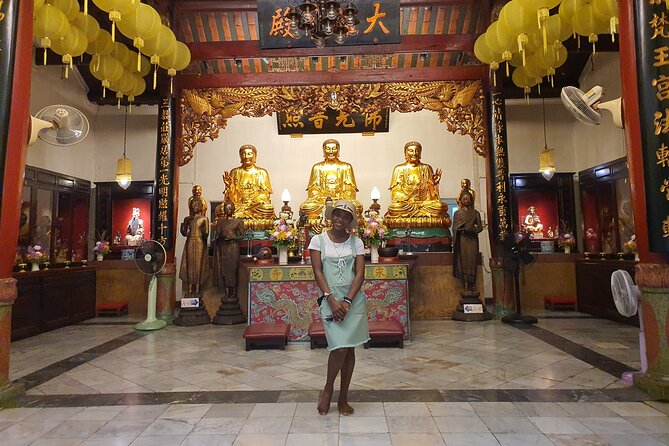
The first part of the walk introduces Chinatown through its older structures and Chinese religious sites. You visit ancient Chinese temples, a shrine, and a former school. One particularly unusual stop is described as a hidden school, an appealing detail for anyone interested in how local institutions fit into the neighborhood rather than just its grand monuments.
The guide’s commentary is important here. Several guides have been praised for explaining Thailand’s wider culture as well as Chinatown itself. Bobby, in particular, has been singled out for clear storytelling and for spending extra time with the group. Aom has been praised for keeping a comfortable pace and explaining Thailand in a wider context. Mai, Eng, Gee, Pat, George, and Buoy have also been noted for their local knowledge and easy conversation.
Do not expect every temple visit to receive the same level of detailed architectural explanation. One account specifically wished for more commentary about the major temples. That is a fair warning. The strength of this walk is the neighborhood story and access to less obvious places, not a formal art-history lecture at each shrine.
A local coffee stop adds a welcome pause. The supplied details do not promise a specific drink, but coffee, iced tea, and other nonalcoholic drinks appear as part of the experience or are available for purchase. This break matters in Bangkok, where a short sit-down can make the rest of the walk much more comfortable.
Street art, a Chinese shrine, and an old Chinese house
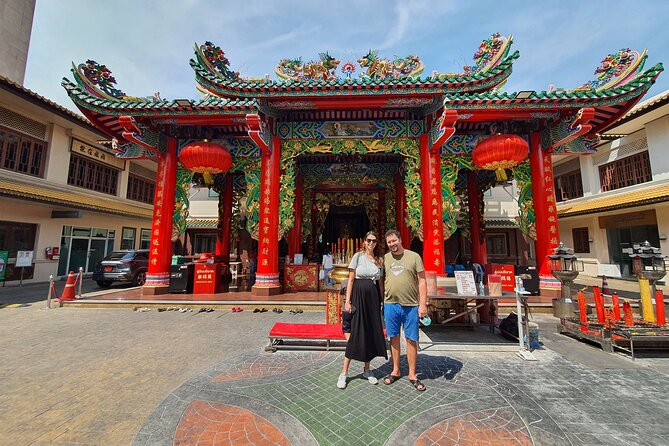
The route then moves toward a street-art area and a Chinese shrine. You are given time to look around and take in the setting, with admission included for the listed stops. The walk also visits what is described as the oldest Chinese house in Bangkok.
That house is one of the more distinctive parts of the tour because it gives the neighborhood a human scale. Chinatown can seem like a wall of signs, shopfronts, wires, and traffic when you first arrive. An old residence helps you see the area as a long-standing community rather than simply a food district.
The tour also brings you into contact with local Chinese community life. That does not mean a staged performance or a special show. It means walking through places still used by local people, with the guide explaining what you are seeing. This is where the small group helps. You can stop briefly, ask a question, and continue without the delays that often come with a large party.
The street-art section is a change of mood from the temples and older buildings. It gives you a more recent view of the neighborhood and creates a good contrast between old community spaces and newer creative work. The stop is brief, about 20 minutes in the supplied schedule, so treat it as part of a wider portrait rather than a full street-art tour.
A few more Bangkok half-days worth weighing up
- Bangkok: Damnoen Saduak Market and Maeklong Railway Market
★ 4.5 · 26,723 reviews - The Old Siam: Damnoen Saduak and Maeklong Railway Market
★ 4.5 · 10,992 reviews - From Bangkok: Ayutthaya Temples Guided Tour with Lunch
★ 4.7 · 10,535 reviews - Bangkok: Train Market & Floating Market with Boat Ride
★ 4.7 · 9,547 reviews
A former red-light district with a less obvious past
One stop focuses on the former red-light district of Chinatown and lasts about 15 minutes. This is a short visit, but it adds an important layer to the neighborhood’s past. Chinatown was not shaped by temples and markets alone. Commercial districts change, and the guide uses this area to explain a less polished side of the city.
This stop will appeal to you if you like urban history that includes working districts and social change. It may feel too brief if you want a detailed account of the area. The value comes from seeing the place and hearing its basic story as part of a larger walk.
The route’s strength is this range. In one morning, you move from religious buildings to community spaces, from street art to former entertainment streets, and then into the market system that still drives much of Chinatown’s daily business.
The 150-year-old fresh market
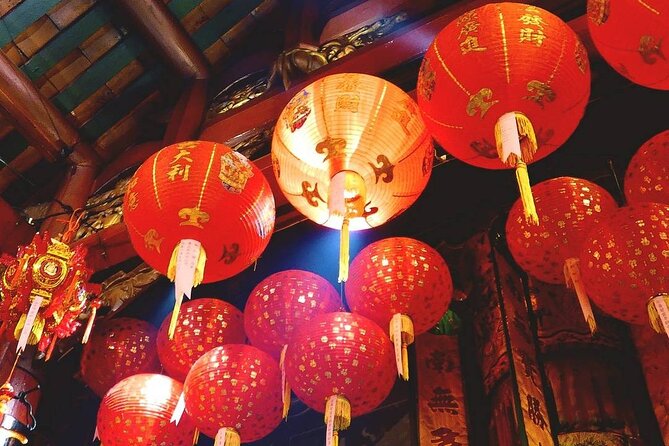
The walk continues to a fresh market described as 150 years old. This is a good place to watch the practical side of Chinatown. Markets tell you how a district feeds itself, where ingredients move, and how local shopping differs from a food street aimed mainly at visitors.
Expect a close, active setting. Markets can involve wet floors, strong smells, tight passages, and people focused on work rather than sightseeing. Stay near your guide and follow instructions when crossing streets or moving through shop areas. The tour is designed to take you through such places, but it does not turn them into a photo set.
The market visit also helps explain why the tour is not best viewed as a standard sightseeing loop. You are given a look at everyday commerce and wholesale activity, not just the famous Chinatown frontage. If you want a polished route with wide sidewalks and quiet galleries, this will not be your morning. If you enjoy seeing how a city functions, it is a strong part of the experience.
Sampeng Market and bargain hunting
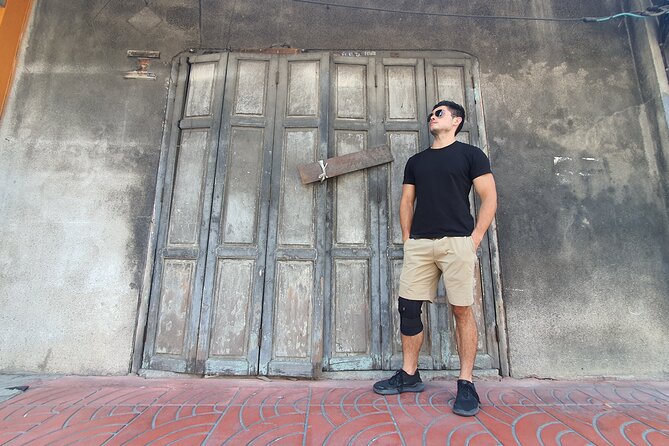
Sampeng Market is the shopping centerpiece. Its small alleys are lined with wholesale shops and bargain goods, and the guide leads you through the tightest sections. You can browse, look for purchases, and get help understanding the market’s layout.
The word wholesale is useful here. Sampeng is not presented as a neatly arranged souvenir mall. Shops and stalls can be packed closely together, and the market experience is more about movement, variety, and price hunting than relaxed browsing. You may find bargains, but the tour does not promise a particular product or a set amount of shopping time.
This is also the part most likely to disappoint someone who books expecting a shopping-focused excursion. The guide’s role is to show you the market as part of Chinatown’s history and daily life. Shopping is included, but it shares the morning with temples, shrines, old buildings, and food.
I would keep your purchases light until you know how much walking remains. A crowded market is easier to manage without bulky bags, and you may want both hands free for navigating the narrow lanes.
Snacks first, then a Thai-Chinese lunch
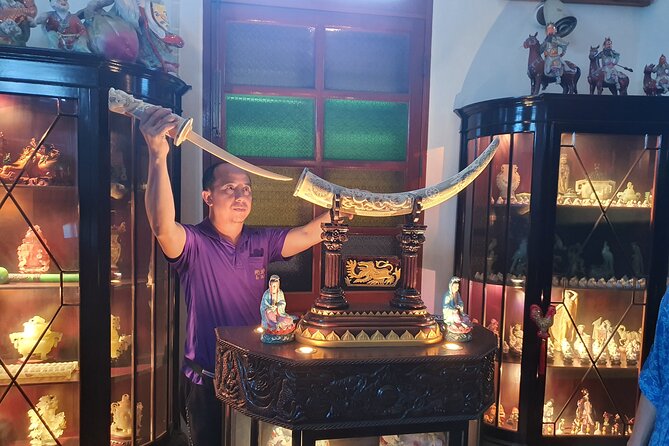
Food is woven into the walk rather than saved for a single restaurant stop. You receive samples of Chinese street-vendor snacks, then finish with a sit-down lunch featuring typical Thai-Chinese dishes. Drinks are available for purchase, and alcoholic beverages are not included.
The food makes the cultural explanation easier to grasp. Chinatown’s identity is not just Chinese transplanted into Bangkok. Its food reflects the meeting of Chinese traditions and Thai ingredients, habits, and tastes. A shared local meal also gives the guide a relaxed setting for questions.
The restaurant has been open for 30 years, according to the tour details. The lunch stop is listed as about 20 minutes, though the overall experience lasts around three hours and some outings have run longer. Do not assume a long restaurant meal. This is a compact walking tour, so lunch is best viewed as a representative local meal rather than a full food tour.
Specific food experiences can vary. Past outings have included noodle soup, dim sum, fried oysters, and other street snacks, but no fixed tasting menu is promised. Tell the guide about dietary concerns before ordering if possible. The available information does not specify vegetarian, vegan, allergy, or religious-diet arrangements, so you should confirm those needs in advance.
How the guides shape the experience
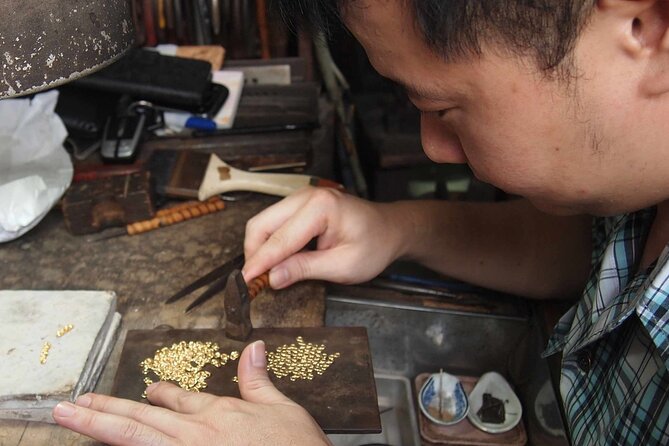
The strongest part of this tour is the guide. Names attached to especially positive experiences include Bobby, Aom, Mai, Eng, Gee, Pat, George, and Buoy. Their styles differ, but the common thread is personal attention and a clear connection to the neighborhood.
Bobby has been praised for staying longer than planned, taking photos and videos, and making the walk feel unusually personal. Aom is noted for a comfortable pace and broad explanations about Thailand. Mai is described as professional, kind, and passionate about the city’s heritage. Eng is praised for balancing temples, markets, coffee, and lunch with plenty of breaks.
Gee has been singled out for explaining local culture, community life, and the Talat Noi area. Pat’s route included temples, an old school, a shrine above a police station, Thai coffee, a Michelin-recommended street-food stop, markets, and riverside coffee. George is associated with history, local places, iced tea, coffee, and noodle soup.
Those details show what a good guide can add: not just directions, but connections between places. Guide assignments can change, so you cannot book with certainty around one specific person unless the operator confirms it. Still, the range of praised guides suggests that the experience depends heavily on who leads your walk and how willing you are to ask questions.
Price, pace, and what you receive for $52.14
At $52.14 per person, this is not the cheapest way to see Chinatown. You can walk the main streets for free, visit many public areas independently, and buy food as you go. The price makes more sense if you place a value on guidance, local transport during the tour, food samples, a sit-down meal, and access to places you might not identify on your own.
The small-group format is the key value. A private tour would normally cost more, while a large group would offer less room for questions and slower stops. Here, your payment is buying structure and interpretation as much as admission or food.
The average booking lead time is 28 days. That suggests you should reserve ahead if your Bangkok dates are fixed, especially if you want the smallest group size. Confirmation is provided at booking, and free cancellation is available up to 24 hours before the 10 a.m. start time. Cancellations or changes made inside that window are not refunded or accepted.
Who should book this walk
I would choose this experience if you want to understand Chinatown rather than simply photograph its main road. It suits first-time visitors who want a local introduction, repeat visitors who have already seen Yaowarat, and anyone who prefers small lanes, markets, shrines, and neighborhood stories over major attractions.
It is also a good fit if you enjoy trying food in small portions and sharing a meal with a guide. The walk has enough breaks to keep it manageable, but you still need moderate fitness and comfortable shoes.
You may want another option if your main goal is shopping, if you want a formal temple tour, or if you dislike crowded markets and warm-weather walking. The temple commentary may not satisfy someone seeking detailed architectural analysis, and the route can feel less focused than a dedicated food or retail tour.
Should you book the Unseen Bangkok Chinatown walk?
Book it if you want a guided look at Chinatown’s quieter corners, local institutions, old buildings, markets, and food culture. The best reason to go is not one headline attraction. It is the way a good guide, such as Bobby, Aom, Mai, Eng, Gee, Pat, or George, can connect small details into a clearer picture of the community.
Skip it if Sampeng shopping is your only priority or if you expect a long, fixed list of major temples. For most visitors who want a personal, history-first morning with food built in, $52.14 is a fair price for three hours of useful orientation and places that are easy to miss alone.
FAQ
How long does the Chinatown walking tour last?
The tour lasts approximately three to four hours, with the main description calling it a three-hour walk.
Where does the tour begin?
Meet at 10 a.m. at Better Coffee Building, 320 Tang Hua Pak, near MRT Hua Lamphong Exit 1 at street level.
Where does the tour end?
The activity ends back at the meeting point.
Is hotel pickup included?
No. Hotel pickup and drop-off are not included.
How large is the group?
The tour is advertised as limited to eight people. The additional information lists a maximum of ten travelers, so confirm the final group limit when booking.
What food is included?
You receive food and drink samples, including Chinese street-vendor snacks, followed by a lunch of typical Thai-Chinese dishes. Drinks are available for purchase, and alcoholic beverages are not included.
Is local transportation included?
Yes. The local transportation fee during the trip is included.
What should I wear?
Wear comfortable walking shoes and dress appropriately for the weather. The tour operates in all weather conditions, and a moderate level of physical fitness is recommended.
Can I cancel for a full refund?
Yes. You can cancel at least 24 hours before the local start time for a full refund. Cancellations or changes made less than 24 hours before the start are not accepted or refunded.
Just added around Bangkok
- Wonderful Pearl Cruise with Private Hotel Transfer★ 4.6 · 24 reviews
- Bangkok: Wonderful Pearl Dinner Cruise at River City Pier★ 4.3 · 13 reviews
- Twilight Firefly Bangkok Bicycle Tour★ 5.0 · 24 reviews
- Yoga in the Park Thailand★ 5.0 · 12 reviews
- re:leaf spa and massage★ 4.0 · 10 reviews
- White Orchid Sunset Dinner Cruise Calypso Ladyboy Cabaret Show★ 4.0 · 10 reviews
- Wonderful Pearl Dinner Cruise★ 3.5 · 27 reviews
- Visit temples in and around Bangkok with a former monk of 10 years★ 5.0 · 30 reviews
Bangkok Tours, compared.
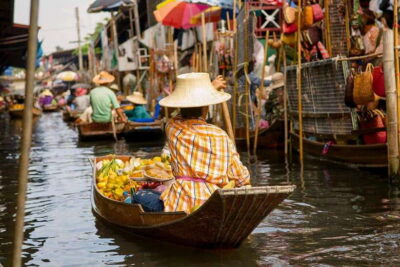
Damnoen Saduak Market and Maeklong Railway Market
Read our review →
The Old Siam: Damnoen Saduak and Maeklong Railway Market
Read our review →
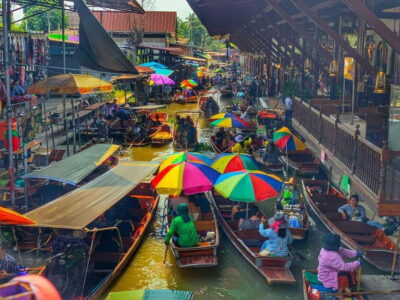
Train Market & Floating Market with Boat Ride
Read our review →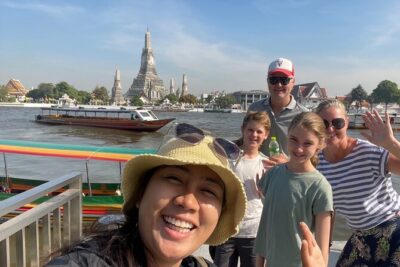
Bangkok Canal Tour: 2-Hour Longtail Boat Ride
Read our review →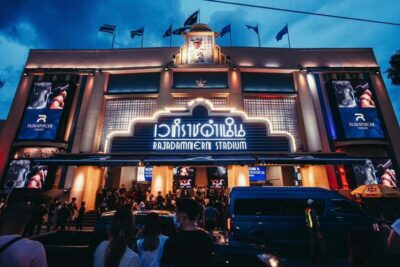
Muay Thai Boxing Tickets at Rajadamnern Stadium
Read our review →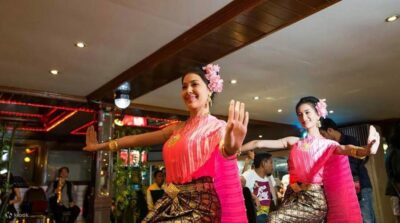
White Orchid Chao Phraya Dinner Cruise free Beer
Read our review →
Bangkok by Private Guide: Full Day Tour In and Around
Read our review →Browse the lists this tour appears in