
Reviewed · BANGKOK TOURS
Bangkok: Chinatown & Taladnoi Street Art Guided Walking Tour
Bangkok’s Chinatown is at its best when you leave the main Yaowarat Road behind. This walking tour threads through temples, food markets, charitable foundations, old Chinese neighborhoods, and Talad Noi’s painted lanes before ending beside the Chao Phraya River. The route gives you far more context than a quick street-food stroll.
I like the mix of Thai-Chinese history and everyday life, especially the stop at Thailand’s first Chinese charitable hospital and the story behind Wat Traimit’s Golden Buddha. I also like the finish at River City Bangkok, where you can stop for lunch or continue by boat. The main drawback is the heat: four hours on foot, often on busy streets and in open areas, can be hard work without light clothing, sunscreen, and water.
Key points at a glance
- Start at Wat Mangkon MRT: Meet at Exit 3 and head straight into the heart of Yaowarat.
- See more than the main road: The route includes markets, shrines, temples, narrow lanes, and old community streets.
- Follow Chinese-Bangkok history: Learn how immigration, trade, charity, and metalwork shaped these neighborhoods.
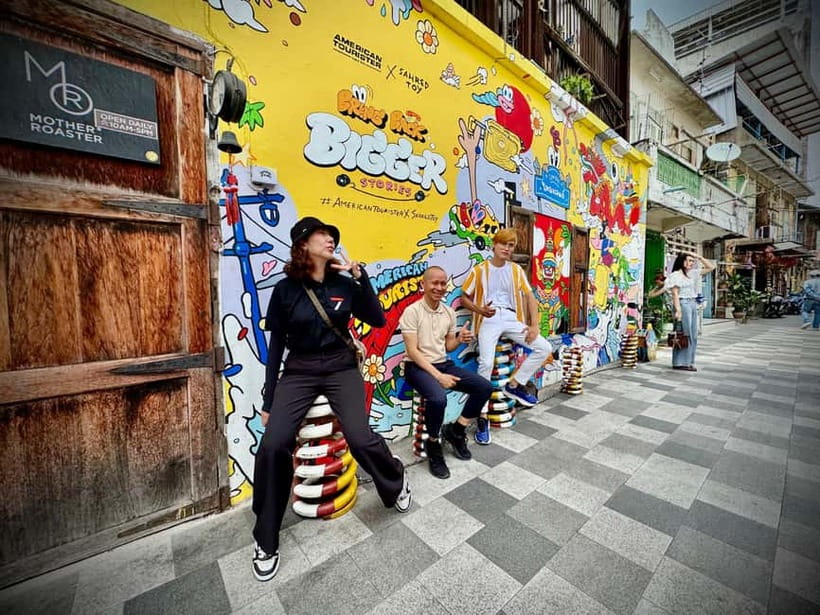
- Talad Noi adds a different mood: Old ironworks alleys, colorful street art, hidden shrines, and a community museum replace Chinatown’s busy market streets.
- Guides make the difference: Jenny, Nok, Mai, Jib, Ploy, Mariyah, and others have been praised for clear explanations, kindness, and flexible pacing.
- Finish by the river: River City Bangkok is a useful end point for lunch, art, shopping, or a Chao Phraya boat ride.
Why this Chinatown walk is more than a food stop
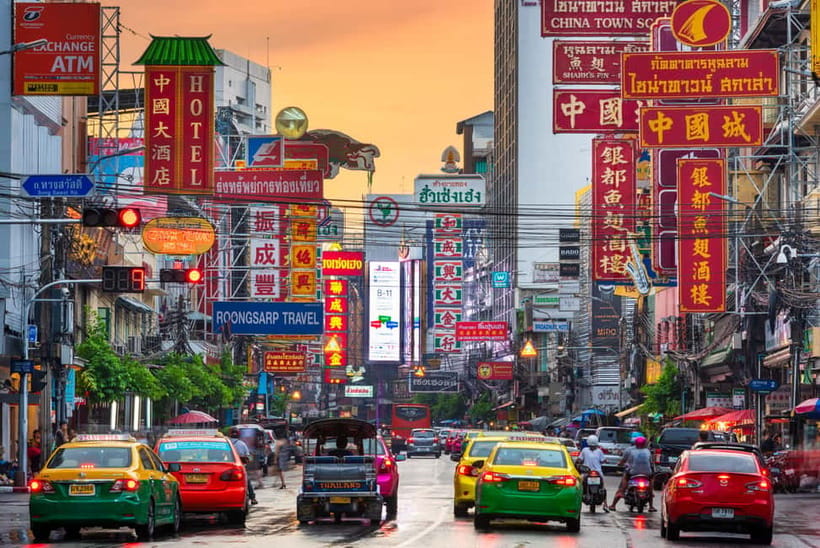
Many first visits to Bangkok’s Chinatown stay on Yaowarat Road. That is understandable. The signs, smells, gold shops, shrines, and food stalls make the area easy to enjoy without a plan.
This tour takes a more layered approach. You still see the energy of the market district, but you also walk through places where the story is less obvious. A local guide can explain why a shrine sits in a narrow lane, how Chinese migration shaped commerce, and why a quiet temple may matter to the Thai royal family.
That context is the real value here. At $19 per person, the tour costs about the same as a modest Bangkok meal, yet it gives you four hours of guided orientation. Meals and personal spending are not included, so you should still budget for snacks, drinks, or lunch. The price is particularly good if you want a first look at two central neighborhoods without arranging several separate visits.
The route is also useful early in a Bangkok stay. You finish with a better sense of where Chinatown, Talad Noi, the river, and nearby transport connections fit together.
Other Bangkok days people book on the same trip:
- Bangkok: Damnoen Saduak Market and Maeklong Railway Market
★ 4.5 · 26,723 reviews - The Old Siam: Damnoen Saduak and Maeklong Railway Market
★ 4.5 · 10,992 reviews - From Bangkok: Ayutthaya Temples Guided Tour with Lunch
★ 4.7 · 10,535 reviews
Meeting at Wat Mangkon and entering Yaowarat
The standard meeting point is MRT Wat Mangkon Exit 3. This is a practical start because the subway puts you close to Chinatown, avoiding the uncertainty of finding a guide in the middle of a crowded market street.
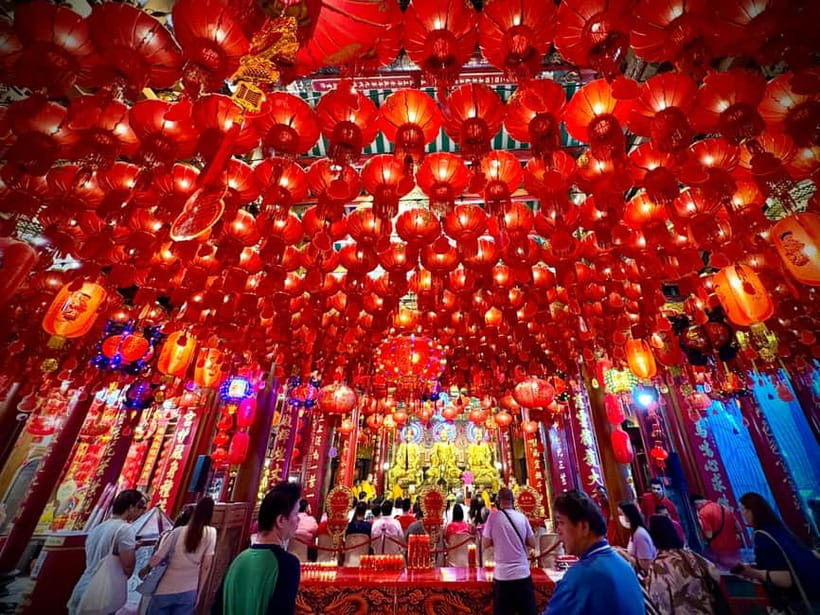
Your guide leads you toward Wat Mangkon Kamalawat, one of the area’s major Chinese Buddhist temples. The temple is a hub of Chinese spiritual life, and it gives you an immediate sense of how religion remains tied to neighborhood identity. Incense, worshippers, shrines, and detailed decoration make this a strong opening stop.
Dress with respect. Light clothing is sensible in Bangkok, but shoulders and knees should be covered enough for temple visits. Comfortable walking shoes matter more than fashionable ones. This is not a tour for shoes that pinch after the first hour.
The guide’s role is important here. Jenny has been praised for clear explanations and patience with families, while Nok has been particularly good at explaining Thai-Chinese culture and the area’s trade connections. The guide is not simply pointing at buildings. You get the background that helps the details make sense.
The morning market, Tian Fah, and the Golden Buddha
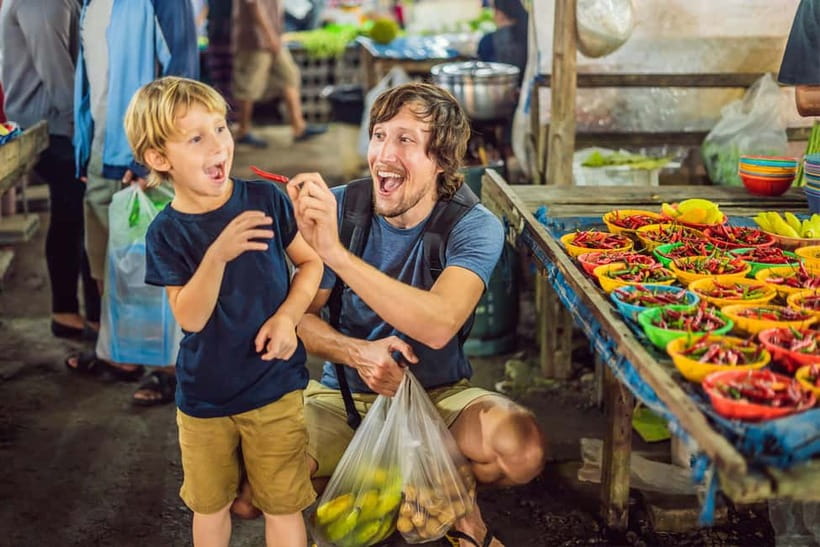
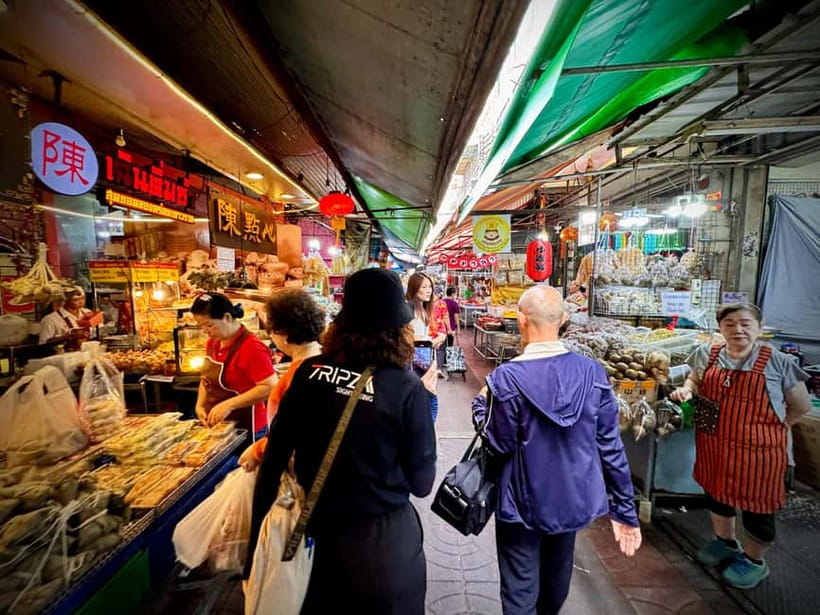
From Wat Mangkon, the walk continues through a local market. This part gives you the strongest sense of ordinary Chinatown life. Expect food, incense, shopfronts, and the practical business of buying and selling rather than a polished sightseeing zone.
I like this section because it keeps the tour grounded. You are not only looking at old buildings. You are watching a neighborhood work. If you want photographs, ask before taking close pictures of people or market stalls, and stay alert in narrow passages.
The route then reaches the Tian Fah Foundation Hospital, Thailand’s first Chinese charitable hospital. Its importance is not just medical. It reflects the way Chinese communities built institutions to care for their own people and support the wider neighborhood.
This is one of the stops that benefits most from a guide. Without an explanation, a hospital may seem like a quick pass-by. With the story of its charitable purpose and Chinese community roots, it becomes part of the larger account of immigration and settlement.
The Wat Traimit section centers on the famous Golden Buddha. Your guide explains the story surrounding the image and why it has become one of Bangkok’s best-known religious attractions. The stop adds a major landmark to an otherwise local route, though the experience is more about the story and setting than simply taking another temple photograph.
Keep your expectations practical. The tour includes visits and sightseeing, but entrance fees are not listed as a separate inclusion. If a particular temple area requires payment, confirm the arrangements when booking or with the operator.
Wat Pathum Khongkha and the quieter side of Chinatown
Wat Pathum Khongkha brings a calmer pause after the market streets. It is described as peaceful and connected with royalty, giving you a different view of Bangkok’s religious architecture and social history.
This change of pace is welcome. Chinatown can be noisy, crowded, and visually intense. A quieter temple allows you to listen, look closely, and take a breath before the route moves toward Talad Noi.
The tour does not treat Chinatown as a single culture frozen in time. Thai and Chinese influences overlap through worship, family businesses, commerce, and neighborhood customs. That is a useful way to understand the area. The story is about people adapting to a new city while keeping familiar practices alive.
The walking pace can be adjusted to some extent. Guides including Mai, Jib, and Mariyah have been praised for kindness, patience, and flexibility. One guide even continued patiently after a major pickup delay, while another customized the route around personal interests. Those details suggest a personal style, though guide assignments and group size can vary.
More walking tours in Bangkok:
- Bangkok: City Highlights Temple and Market Walking Tour
★ 4.5 · 3,990 reviews - Bangkok: Grand Palace and Wat Phra Kaew Guided Walking Tour
★ 4.4 · 2,417 reviews - Bangkok: Wat Pho and Wat Arun Guided Walking Tour
★ 4.6 · 1,720 reviews - Bangkok Authentic Tasting Thai-Chinatown Walking Food Tour
★ 4.9 · 852 reviews
Crossing into Talad Noi’s ironwork lanes
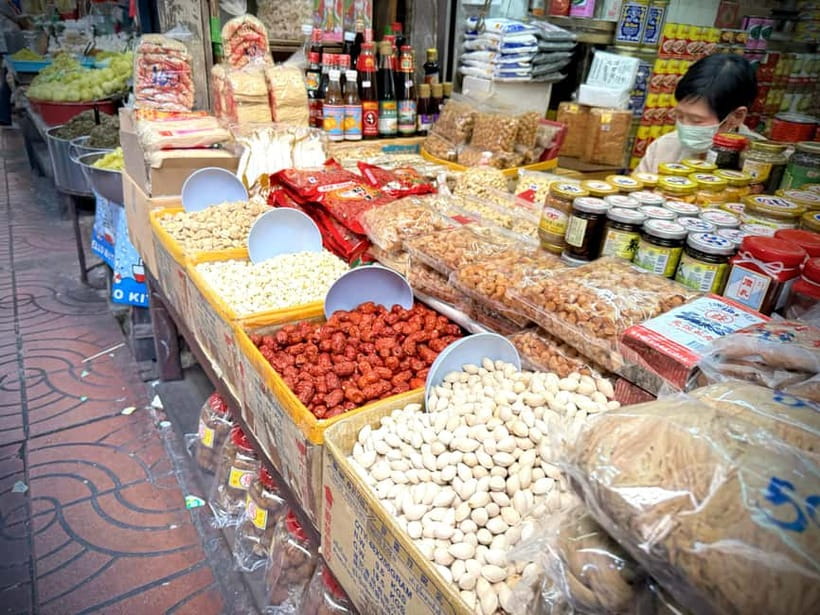
Talad Noi changes the visual rhythm. The route enters old alleys linked with Chinese metalworkers who once forged tools and other iron goods. These lanes show a working neighborhood rather than a grand monument district.
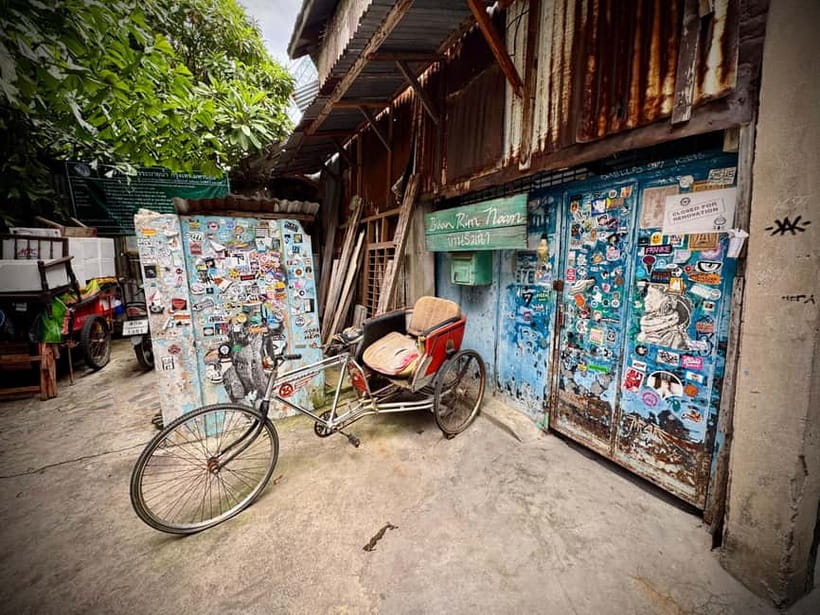
That past matters because Talad Noi’s identity grew from skilled labor and trade. The narrow streets, old buildings, workshops, shrines, and family businesses all fit into a story about making a living in a dense riverside quarter.
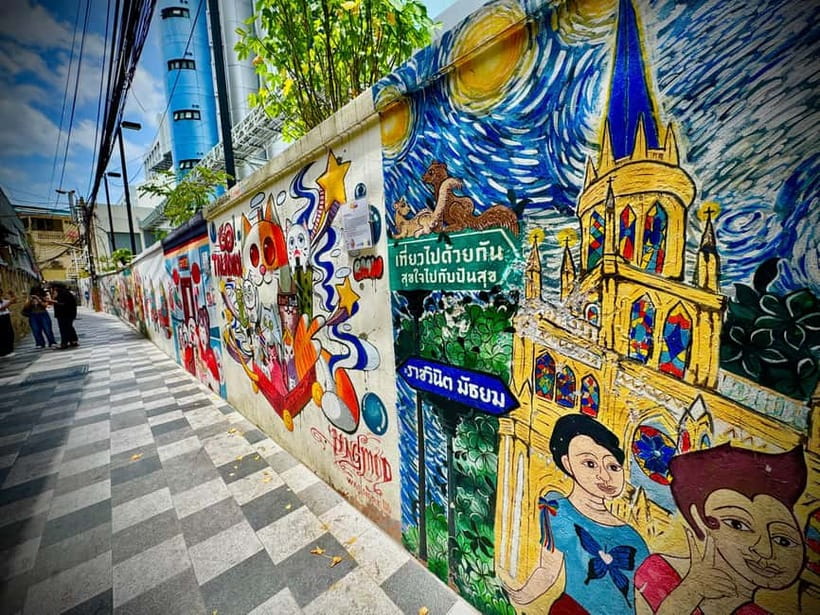
The area is also known for street art. Colorful paintings appear on walls and around older structures, giving you plenty of photo stops. The art is enjoyable on its own, but the stronger experience comes from seeing it beside aging homes and industrial traces. Talad Noi does not feel like a purpose-built art quarter. It feels like a real community where creative work has become part of the streetscape.
You should be ready for uneven surfaces, narrow lanes, and occasional interruptions from local activity. Stay close to the guide and keep your belongings secure. This is a walking tour, not a bus tour with regular seats and air conditioning.
The Talad Noi Community Museum and hidden shrines
The Talad Noi Community Museum adds structure to the neighborhood story. After walking through the lanes, you have a place to connect what you saw with the district’s past.
The route also includes small shrines tucked between old buildings. These are easy to miss if you are walking alone. A guide can point out their meaning and explain how spiritual life fits into a neighborhood shaped by migration and commerce.
This is where the tour feels most personal. You may pass through spaces that are too small or too ordinary for a standard sightseeing route. The reward is not one spectacular monument. It is the collection of small details: a shrine, a painted wall, an old workshop lane, a family shop, or a building that carries traces of an earlier generation.
The museum and alley sections are also good for visitors who want more than a checklist of famous sights. You will still get photographs, but the emphasis is on understanding how the district developed.
Ending at River City Bangkok
The tour ends at River City Bangkok, beside the Chao Phraya River. This is a useful finish rather than an awkward drop-off in the middle of nowhere.
You can stop for a riverside lunch, browse the complex, or arrange your next activity from the river. A scenic boat ride is a natural continuation, especially if you want to see Bangkok from the water after spending the morning in its older neighborhoods.
The ending also gives you flexibility. You are not required to return to the MRT starting point, which saves time if your next plan is near the river. If you have a hotel pickup option, ask exactly where the tour finishes, since pickup and the walking route are separate parts of the arrangement.
Guides, language, and the human side of the tour
The experience includes a licensed English-speaking guide. Several guide names appear in the operating team, including Jenny, Nok, Mai, Jib, Ploy, Mariyah, and Toto. Their individual styles vary, but the strongest pattern is clear explanation, friendliness, and willingness to adjust.
Jenny has been especially well received by families and first-time visitors. Nok has focused on Thai-Chinese culture, trade, and immigration. Mai has handled customized walks, and Jib has been praised for detailed temple explanations and practical help in the market.
Some departures may feel almost private. One booking became a solo walk, while another included two guides because one was training. Do not assume that will happen on your date, but it shows that the format can feel personal rather than like a large crowd following a flag.
The English level has been described as very good, with guides able to explain culture and history clearly. If you have a specific interest, tell your guide early. The route already includes a lot, and a little direction can help the conversation match what you care about.
Timing, comfort, and what to bring
The stated duration is four hours. The Chinatown and Talad Noi portions are each described as substantial walking sections, so plan for a full half-day rather than a quick orientation. The available start times vary, and a morning departure makes sense because the market is part of the experience.
Bring:
- Comfortable walking shoes
- A hat and sunscreen
- Water, in addition to the bottle supplied
- Light clothing suitable for Bangkok’s heat and temple visits
- Small personal funds for food, drinks, and other expenses
The tour includes one bottle of water and the licensed English-speaking guide. It does not include meals or personal purchases.
The route is not suitable for pregnant women or wheelchair users. That is worth taking seriously because the walk includes markets, narrow streets, alleys, and changing surfaces. If you have limited mobility but are not using a wheelchair, ask the operator about the current route before paying.
Optional hotel pickup is available for an additional cost. If you choose it, wait in your hotel lobby at least five minutes before the scheduled time. The guide will hold a sign with your name. Pickup has generally been handled well, but one booking experienced a long delay, so the MRT meeting point is the simpler choice if you are staying near Wat Mangkon.
Cancellation is flexible: you can cancel up to 24 hours ahead for a full refund. You can also reserve now and pay later, which helps if your Bangkok plans are still shifting.
Who will get the most from this walk?
I would choose this tour if you want history tied to real streets. It suits first-time Bangkok visitors who want a clear introduction to Chinatown, as well as repeat visitors who have already seen Yaowarat Road and want a less familiar side of the district.
Families can do well here, especially with a patient guide such as Jenny. Children may respond to the Golden Buddha story, street art, market sights, and narrow lanes, though the heat and four-hour duration require realistic planning.
This is also a good fit if you enjoy photography, local architecture, religious sites, and food markets but do not want a food tour alone. You get plenty to look at without paying for a long list of tastings that may not match your diet or appetite.
I would skip it if you dislike walking in heat, need step-free access, or want a relaxed river cruise rather than an active neighborhood tour. The tour ends at the river, but the cruise is not included.
Should you book the Chinatown and Talad Noi walk?
At $19, this is a strong-value introduction to two of Bangkok’s most characterful central districts. You get a guide, water, temples, markets, community history, street art, and a useful riverside finish for a modest price.
Book it if you want the stories behind the streets and like exploring on foot. Pick the MRT meeting point for a simpler start, wear proper shoes, and keep your schedule open for lunch or a boat ride at River City Bangkok. If you want the most personal experience, request a guide known for patient explanations, such as Jenny, Nok, Mai, or Jib, though assignments cannot be guaranteed.
FAQ
Where does the tour begin?
The standard meeting point is MRT Wat Mangkon Exit 3. Hotel pickup is available as an optional paid extra.
Where does the tour finish?
The walk ends at River City Bangkok on the Chao Phraya River.
How long does the experience last?
The stated duration is four hours. Availability depends on the selected starting time.
What language is the tour conducted in?
The tour is conducted in English with a live English-speaking guide.
What is included in the price?
A licensed English-speaking guide and one bottle of water are included.
Are food and drinks included?
No. Meals and personal expenses are not included, so bring money if you want market food, drinks, or lunch.
What should I wear and bring?
Wear comfortable shoes and light clothing. Bring a hat, sunscreen, and a water bottle. Clothing should also be suitable for temple visits.
Is the tour suitable for wheelchair users or pregnant women?
No. The experience is listed as unsuitable for wheelchair users and pregnant women.
Just added around Bangkok
- Bangkok to Ayutthaya Lopburi Monkey Temple, Largest Buddha Tour★ 5.0 · 62 reviews
- Baiyoke Sky Dinner Experience with Observation Deck Access★ 3.5 · 57 reviews
- Bangkok Luggage Delivery from Hotel to Airport★ 5.0 · 25 reviews
- Living Green Elephant Sanctuary Tour from Bangkok and Pattaya★ 5.0 · 88 reviews
- Bangkok Luggage Storage★ 4.5 · 37 reviews
- Living Green Elephant Sanctuary Experience near Bangkok & Pattaya★ 5.0 · 76 reviews
- Ethical Elephant Watching Tour From Bangkok & Pattaya★ 4.5 · 9 reviews
- King Power MahaNakhon SkyWalk at Bangkok Admission Ticket★ 4.0 · 37 reviews
Bangkok Tours, compared.
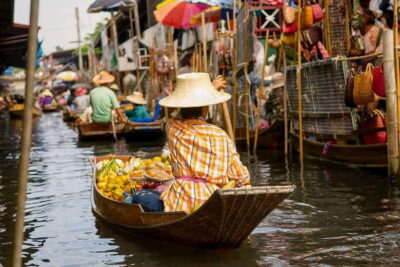
Damnoen Saduak Market and Maeklong Railway Market
Read our review →
The Old Siam: Damnoen Saduak and Maeklong Railway Market
Read our review →
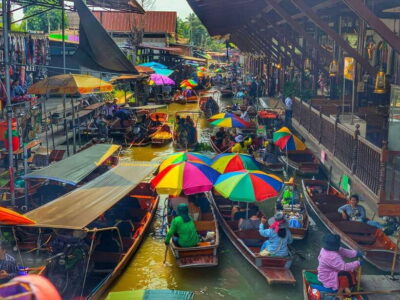
Train Market & Floating Market with Boat Ride
Read our review →
Bangkok Canal Tour: 2-Hour Longtail Boat Ride
Read our review →
Muay Thai Boxing Tickets at Rajadamnern Stadium
Read our review →
White Orchid Chao Phraya Dinner Cruise free Beer
Read our review →
Bangkok by Private Guide: Full Day Tour In and Around
Read our review →Browse the lists this tour appears in