
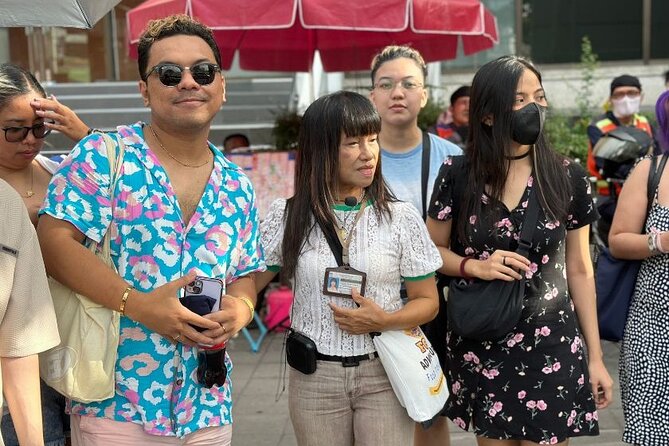
Reviewed · BANGKOK TOURS
Bangkok Food Tour By Night
Bangkok’s Chinatown is best approached with an appetite and a guide who knows which alleyway to take. This evening walk brings you to six food stops, with tastings included, and adds glimpses of temples and local neighborhood life along the way. It is less about sitting down to one large meal and more about building a dinner from many small bites.
I like the simple meeting point at MRT Wat Mangkon, which saves you from fighting Chinatown’s heavy traffic. I also like the guide-led access to small local eateries, where you can try dishes you might skip on your own. The main caution is that this is not a strictly Thai menu: Chinese and Indonesian influences are part of the route, and the tour may not suit strict vegetarians, vegans, gluten-free diners, or people with several food allergies.
Key points to know before you book
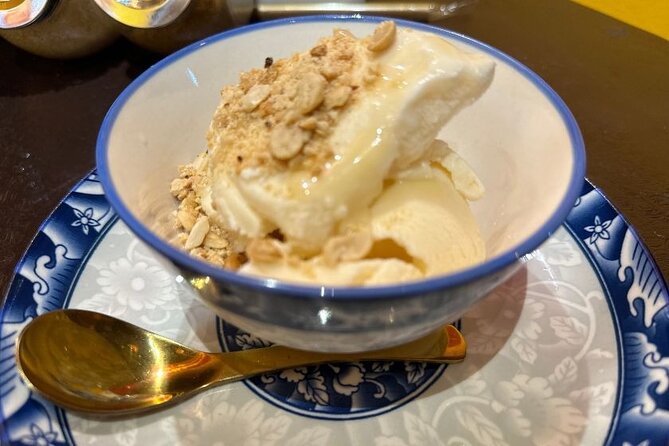
- Six stops, many tastings: Expect a substantial evening meal, with past routes offering roughly 9 or 10 individual items across five or six places.
- Chinatown after dark: The walk takes place at 7pm, when Yaowarat and its side streets are at their most active.
- Guides make the difference: Peach, Sophie, Jan, Kay, Alex, and other guides have been praised for their food explanations, local tips, and ability to keep groups together.
- MRT is the smart arrival plan: Meet outside Exit 3 at Wat Mangkon Station rather than relying on a taxi through crowded streets.
- Small-group format: The maximum is 12 people, though some departures may feel more private if bookings are light.
- Bring a serious appetite: Dumplings, satay, soup, savory dishes, sweets, and other samples can add up quickly.
Why Bangkok Chinatown works so well at night
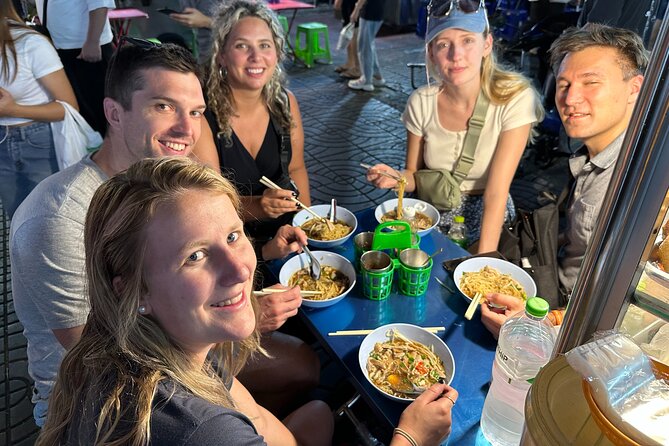
Chinatown is not a polished food district arranged for easy sightseeing. It is a working neighborhood of narrow lanes, old shopfronts, food carts, Chinese temples, restaurants, markets, and streets where several cuisines overlap.
That makes it exciting, but it can also be confusing. A guide helps you avoid spending the whole evening deciding where to eat. You follow someone who can order, explain, and keep the group moving through the crowds.
The route begins near Charoen Krung Road and finishes around Charoen Krung Panit 50 and Plaeng Nam Road. That point-to-point design is useful. You are not simply returning to the place you started, and you finish in an area where you can continue exploring Chinatown on your own.
The tour lasts about two and a half hours, beginning at 7pm. That is enough time for a proper sampling of the neighborhood without consuming an entire night. I would avoid booking a late dinner afterward. The food is plentiful, and several people have found themselves too full for much at the final stop.
More Food Tours in Bangkok
- Bangkok: Backstreets Food Tour with 15+ Tastings
★ 4.9 · 2,880 reviews - Bangkok Backstreets Food Tour with 15+ Tastings
★ 5.0 · 1,926 reviews - Bangkok: Michelin Guide Street Food Tour by Tuk Tuk
★ 4.4 · 1,274 reviews
Meeting at Wat Mangkon Station
The meeting point is outside Exit 3 of MRT Wat Mangkon Station, on ground level near Wat Mangkon Kamalawat. Look for the guide at the exit marked for the temple.
This is one of the strongest practical features of the tour. Bangkok traffic around Chinatown can be slow, especially in the evening, so the MRT is the sensible choice. The directions specifically advise avoiding a taxi because of congestion.
Try to arrive a little early. One guide, Peach, has been praised for greeting people before the official start, introducing members of the group, and making sure nobody feels stranded in the first few minutes. That matters in Chinatown, where a group can stretch out quickly once the walking begins.
The meeting area is near public transportation, and the tour ends at a different point in Chinatown. Plan your onward route before you set off. You will have a mobile ticket and booking confirmation, but the useful detail is the exit number, not just the station name.
Stop one: getting into the food rhythm
The first stop usually helps you understand how the evening works. Food is ordered in advance or selected for the group, then shared so you can try several things without committing to a full plate.
The exact menu can change with the season, public holidays, or availability. The listed examples include savory dumplings, sweet pastries, spicy dishes, soup, satay, and other street food. Reviews also describe a mix of Thai, Chinese, and Indonesian items.
That blend is important. Bangkok Chinatown is shaped by migration and exchange, so a meal here is not a neat lesson in food labeled only Thai. You might eat Chinese-style dumplings, Indonesian chicken satay, and Thai dishes on the same evening.
If you expect only pad Thai, curry, and mango sticky rice, adjust your expectations. The strength of this tour is the neighborhood’s mixed food culture. The weakness, for some people, is that the menu may feel less focused than a tour devoted solely to classic Thai dishes.
Stop two: small bites and local ordering
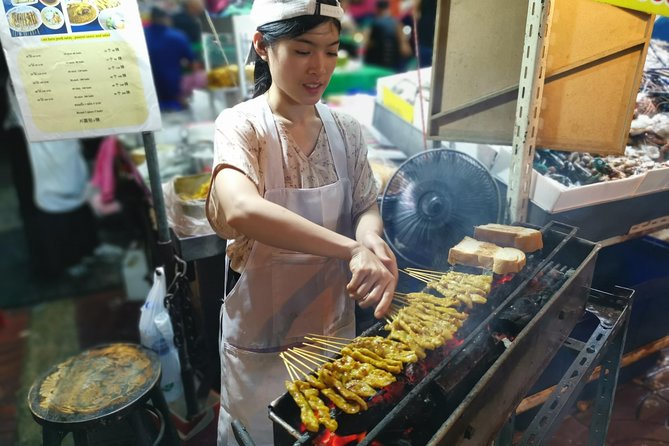
At the next food stop, your guide’s role becomes clearer. You are not just being led from one address to another. The guide explains what has arrived, how to eat it, and which flavors or textures to notice.
Sophie has received particularly strong praise for her food knowledge and enthusiasm for Bangkok’s past. Jan has been appreciated for taking people to less obvious local places and explaining both the dishes and the area. Kay has also been praised for preparing a generous route and adding landmarks to the food walk.
Those differences show why the guide matters so much. The food itself may be inexpensive street fare, but the explanation gives it shape. Without that context, a plate can arrive looking unfamiliar and leave without teaching you much.
There is a limitation here. Guide quality and communication can vary. Most reported experiences describe friendly, capable English-speaking guides, but some people have found accents or language gaps difficult. If you need lengthy, detailed explanations at every stop, this experience carries more risk than a formal culinary class.
More street food walks in Bangkok:
- Old Siam Bangkok Food Tour with 15+ Tastings
★ 5.0 · 867 reviews - Bangkok Authentic Tasting Thai-Chinatown Walking Food Tour
★ 4.9 · 852 reviews - Bangkok Tuk-Tuk Tour by Night with Chinatown Street Food Meal
★ 5.0 · 635 reviews - Bangkok: Old Siam Food Tour with 15+ Tastings
★ 4.9 · 559 reviews
Stop three: Chinatown’s Chinese side
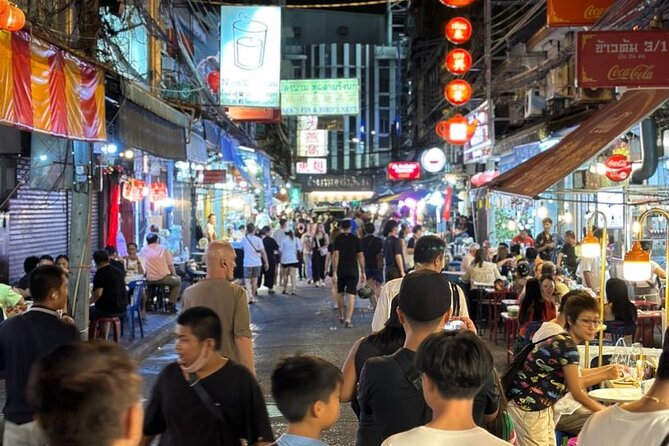
The middle of the route is likely where the Chinatown setting feels most distinct. You may pass Chinese temples, old commercial streets, and food businesses that have served local residents for years.
The tour is designed to take you into places you might not choose from a map. You do not need to know which stall has the best reputation, how to order, or where there is room to sit. The guide handles much of that practical work.
Several menu items are described as Chinese-influenced or associated with Chinatown’s food culture. Dumplings and pastries fit naturally here, but the exact dishes are not guaranteed. The operator notes that some menu items may be unavailable when a season ends or on a public holiday.
That uncertainty is normal for a street-food walk. You gain freshness and variety, but you lose the fixed menu of a restaurant reservation. If one particular dish is your reason for booking, do not assume it will appear.
Stop four: soup, spice, and savory dishes
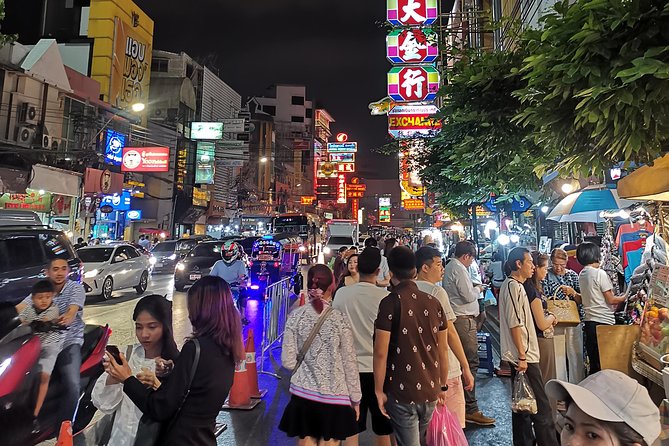
A later stop may bring the stronger flavors. Tom yum soup is one dish singled out as a favorite, and the route can include spicy salads or other savory plates.
This is where you should pace yourself. The tour includes enough food that trying a small portion of everything is wiser than filling up at the first restaurant. You can always return to a favorite stall later, but you cannot make room in your stomach by wishing for it.
One practical criticism concerns the order of the meal. On at least one route, sweets appeared before two more spicy or savory dishes. That can feel awkward if you prefer dessert at the end, especially after several rounds of food.
Still, a food walk is not always arranged like a Western three-course dinner. Stops operate according to their own kitchens and schedules. The variety is the point, but the sequence may not be perfect for every palate.
Stop five: satay and the wider Chinatown menu
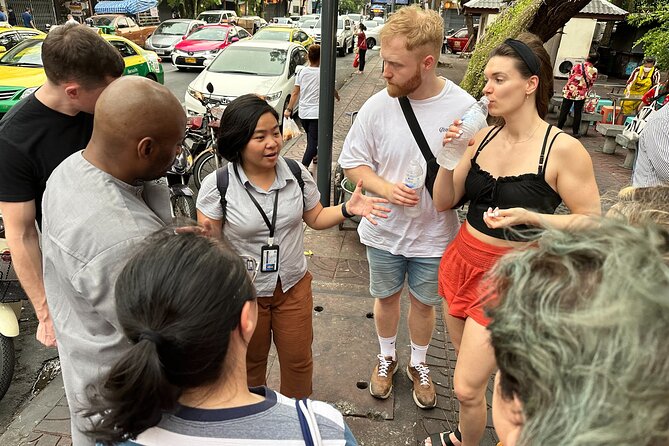
Indonesian chicken satay has been highlighted as a particularly good stop. Its presence also reinforces the broader lesson of the tour: Chinatown’s food culture is connected to Southeast Asia, not sealed off from it.
You may find that one or two dishes become personal favorites, while others are simply interesting to try. That is a good result for a first evening in Bangkok. You leave with a short list of foods to seek out again rather than a single restaurant recommendation.
A guide can also help with small practical matters. One guide assisted someone with tickets for a local performance, and another gave tips on finding your way around Chinatown. Those extras are not guaranteed parts of the formal itinerary, but they show how the evening can become a useful orientation walk.
The tour is not meant to replace a serious restaurant meal. It is a moving series of tastings, with some standing and walking between locations. You get more variety than at one restaurant, but less control over portion size, seating, and menu choice.
Stop six: sweets and the finish
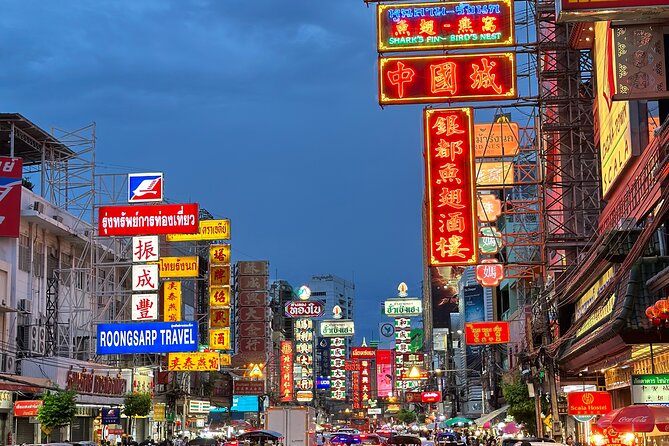
The final stop completes the food count and may include sweet pastries, doughnuts, or other desserts. One birthday guest received a small candle surprise arranged by the guide, a thoughtful touch that made the evening feel personal.
The finish is around Charoen Krung Panit 50 and Plaeng Nam Road. From there, you can continue around Yaowarat or make your way back by public transportation.
Do not judge the tour only by the last plate. The value comes from the full sequence: introductions, walking, ordering, tasting, and learning how the streets connect. If dessert arrives before the last savory dish, treat it as part of the route’s informal rhythm rather than expecting a tightly staged meal.
What the $55 price really buys
At $55 per person, the tour is not the cheapest way to eat in Bangkok. You can buy individual street dishes for very little, and confident visitors can certainly create their own Chinatown food crawl.
The price makes more sense if you value the service around the food. Your guide chooses the route, organizes the tastings, helps with ordering, provides bottled water, and keeps you moving through a difficult area. Insurance, taxes, and the guide’s services are included.
You are also paying for reduced guesswork. A first-time visitor may walk past a crowded stall without knowing what to order, or choose a place based only on appearance. The tour gives you a ready-made introduction in one evening.
I would call it fair value for someone new to Bangkok, short on time, or uneasy about navigating Chinatown alone. It is less compelling for an experienced Bangkok eater who enjoys researching stalls and prefers to spend $55 on a long list of individual dishes.
Alcohol is not included. If you buy beer or another alcoholic drink, pay for it separately. Hotel pickup and drop-off are also excluded, so budget time and transport for reaching Wat Mangkon and leaving the finishing point.
Dietary restrictions need careful attention
This is the area where you should read the conditions closely. The operator warns that the tour may not suit people following vegetarian, vegan, or gluten-free diets, or people allergic to shrimp, peanuts, pork, or dairy.
Some individual experiences have been more flexible. Sophie accommodated a diner who avoided seafood while the diner’s wife ate it, and one person with celiac disease reported receiving gluten-free alternatives at every stop. Another person found that a vegetarian request was not handled properly, and a request for halal chicken was also reported as unclear.
The practical advice is simple: do not assume a restriction can be handled because one guide managed it on another evening. Contact the operator before booking and get a clear answer. If your allergy is serious, the stated warning means this may not be the right tour.
Even if you only dislike one ingredient, tell the guide as soon as you meet. The menu is shared and the stops may be busy, so last-minute substitutions are not guaranteed.
Group size, walking, and guide style
The maximum group size is 12 people. That is small enough for a guide to keep an eye on the group, but it is not a private tour by definition. Some departures have had only one person or a very small party, while others have been larger.
A compact group helps in narrow lanes and crowded food areas. It also makes shared dishes easier to manage. On a full departure, stay close to the guide and avoid stopping abruptly for photographs.
The tour description calls the guide professional, licensed, experienced, and friendly. The strongest guide reports name Peach, Sophie, Jan, Kay, Alex, and Sophia. Their praised qualities include clear food explanations, local stories, help with navigation, and care with group timing.
But do not book this as a lecture. The tone is informal and practical. One negative experience described plates arriving with little explanation, while other experiences praised the guide for explaining each dish and the culture behind it. Your experience can depend heavily on who leads the departure and how well you communicate with that person.
Who should book this night walk
I would recommend it to a first-time visitor who wants a quick, guided introduction to Chinatown without spending hours planning. It suits adventurous eaters who enjoy sampling several foods and learning what they are eating as they go.
It is also useful for people arriving in Bangkok with only a few nights. The 7pm start leaves the day free for temples, markets, or a river outing, then gives you a structured evening in Chinatown.
Families and mixed groups can benefit from the shared format, provided everyone is comfortable with unfamiliar ingredients and walking through crowded streets. A large appetite helps. A light meal earlier in the day is sensible.
I would hesitate if you want a strictly Thai food itinerary, need firm control over ingredients, dislike shared plates, or expect upscale restaurants. I would also hesitate if you are paying mainly for a large quantity of food. Bangkok’s street food remains cheaper on your own.
Useful planning details for your evening
The tour starts at 7pm and lasts about 2 hours 30 minutes. Wear comfortable shoes and carry an umbrella in case of rain. Bottled water is included, but other drinks are not.
Your meeting point is outside MRT Wat Mangkon Exit 3, near Wat Mangkon Kamalawat. The route ends in Chinatown rather than returning you to the station, so check your transport plan before the tour begins.
The booking includes free cancellation up to 24 hours before the local start time. Cancellations made within 24 hours are not refunded, and changes in that period are not accepted. If the operator cancels because the minimum number is not reached, you are offered another date or experience, or a full refund.
Should you book Bangkok Food Tour By Night?
Book it if you want a guided introduction to Chinatown’s food culture, not simply the cheapest possible dinner. The best parts are the six-stop structure, the range of Thai, Chinese, and Indonesian flavors, and the chance to let a local guide handle the ordering and route.
The $55 price is justified by convenience and guidance, especially on a first Bangkok visit. Go with an open mind, arrive by MRT, eat lightly beforehand, and confirm dietary needs before paying.
Skip it if you want a tightly controlled menu, flawless English explanations at every stop, or only traditional Thai dishes. For confident eaters, a self-guided Chinatown crawl may offer better food-to-baht value. For everyone else, this is a practical way to get your bearings, sample widely, and finish the night with a full stomach.
FAQ
Where does the Bangkok Food Tour By Night meet?
Meet outside Exit 3 of MRT Wat Mangkon Station, at ground level near Wat Mangkon Kamalawat. The stated starting address is 449 Charoen Krung Road in Bangkok.
What time does the tour start?
The tour starts at 7pm local time.
How long does the food tour last?
The experience lasts approximately 2 hours and 30 minutes.
How many food stops are included?
Six different food stops are included. Some descriptions of past routes mention five or six locations with roughly 9 or 10 sampled dishes, but individual menus can change.
Is transportation included?
No. Hotel pickup and drop-off are not included. The recommended way to reach the meeting point is the MRT, because taxi traffic around Chinatown can be heavy.
Can people with dietary restrictions join?
The operator warns that the tour may not be suitable for vegetarians, vegans, gluten-free diners, or people with allergies to shrimp, peanuts, pork, or dairy. Some guides have accommodated certain requests, but you should confirm your needs before booking.
What is the cancellation policy?
You can cancel up to 24 hours before the start time for a full refund. Cancellations or changes made less than 24 hours before the tour are not accepted or refunded.
More Evenings Out in Bangkok
- Bangkok by Night: Temples, Markets and Food Tuk-Tuk Tour
★ 5.0 · 3,752 reviews - Bangkok:The Planet Sunset&Dinner Cruise on Chao Phraya River
★ 4.3 · 812 reviews - Bangkok: Night Bike Tour with Temples & Flower Market Visit
★ 4.8 · 751 reviews - Bangkok: Evening Tour with Wat Arun, Wat Pho & Tuk Tuk Ride
★ 4.6 · 701 reviews
Just added around Bangkok
- Bangkok to Ayutthaya Lopburi Monkey Temple, Largest Buddha Tour★ 5.0 · 62 reviews
- Baiyoke Sky Dinner Experience with Observation Deck Access★ 3.5 · 57 reviews
- Bangkok Luggage Delivery from Hotel to Airport★ 5.0 · 25 reviews
- Bangkok Luggage Storage★ 4.5 · 37 reviews
- Living Green Elephant Sanctuary Tour from Bangkok and Pattaya★ 5.0 · 88 reviews
- Living Green Elephant Sanctuary Experience near Bangkok & Pattaya★ 5.0 · 76 reviews
- Ethical Elephant Watching Tour From Bangkok & Pattaya★ 4.5 · 9 reviews
- King Power MahaNakhon SkyWalk at Bangkok Admission Ticket★ 4.0 · 37 reviews
Bangkok Tours, compared.
Damnoen Saduak Market and Maeklong Railway Market
Read our review →
The Old Siam: Damnoen Saduak and Maeklong Railway Market
Read our review →
Train Market & Floating Market with Boat Ride
Read our review →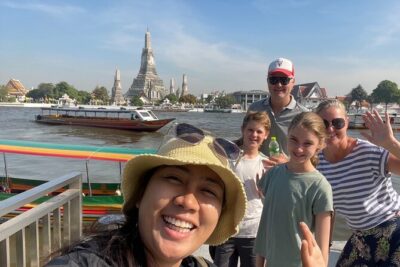
Bangkok Canal Tour: 2-Hour Longtail Boat Ride
Read our review →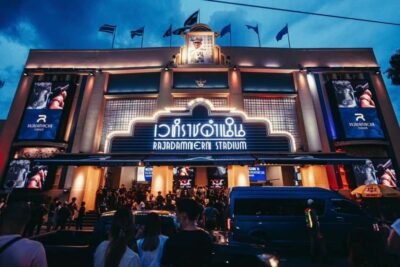
Muay Thai Boxing Tickets at Rajadamnern Stadium
Read our review →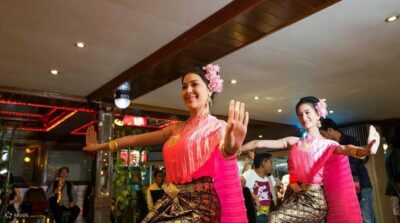
White Orchid Chao Phraya Dinner Cruise free Beer
Read our review →
Bangkok by Private Guide: Full Day Tour In and Around
Read our review →Browse the lists this tour appears in