
Reviewed · BANGKOK TOURS
Bangkok Hidden Gems: Talad Noi, Chinatown & Street Food Tour
Bangkok’s old Chinese quarter makes its best impression on foot. This small-group walk leads you from River City into Talad Noi’s narrow lanes, where painted walls, old Chinese homes, a Portuguese church, shrines, cafés, and food stalls sit close together. You finish near Chinatown and Wat Mangkon, with enough local food in you to call it dinner.
I like the mix of food and neighborhood history. Turnip cake, chwee kueh, duck noodle soup, and pad Thai give you a taste of several local traditions, while the Holy Rosary Church and Chow Sue Kong Shrine explain how varied this part of Bangkok has always been. I also like the small group, capped at 12 people, since guides such as Nana, Pam, and Gof have room to answer questions and help you through crowded lanes.
The main drawback is that the meeting point can take some effort to reach, and two and a half hours goes quickly. This is also a walking tour covering about 2 kilometers, with periods of standing and crowded streets. If you want a long, leisurely look at market stalls, you may feel hurried.
Key points to know before booking
- Talad Noi comes first: Explore a Chinese neighborhood with more than 300 years of community history before reaching Chinatown.
- Food is included: Try Chinese and Thai samples such as turnip cake, chwee kueh, duck noodle soup, and Uncle Pom’s pad Thai.
- The group is small: A maximum of 12 people allows for personal help with food choices, directions, and questions.
- The route includes major contrasts: See Holy Rosary Church, a Hokkien shrine, old Chinese houses, street art, and modern Chinatown.
- The 4 pm start works well: The walk moves from late afternoon toward evening, when Chinatown begins to come alive.
- Plan for about 2 kilometers on foot: Wear comfortable shoes and expect narrow lanes, uneven walking conditions, and time on your feet.
Starting at River City near Si Phraya Pier
The tour begins at River City Bangkok, at Gate 1 on the first floor, in front of Starbucks. The address is 23 Soi Charoen Krung 24, in the Talat Noi area. The stated start time is 4 pm.
This location makes sense for the route, since Si Phraya sits near the Chao Phraya River and Talad Noi. It may not be the easiest place to reach from every hotel, though. One booking party had trouble getting there by taxi, and another found the meeting point inconvenient before the walk even began. Give yourself extra time and show the driver the full River City address rather than relying only on the neighborhood name.
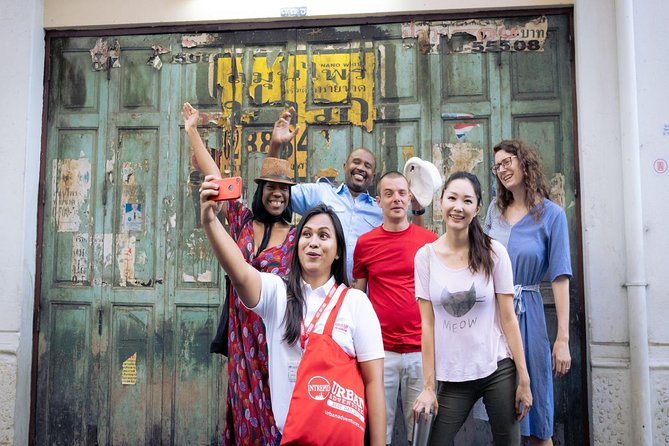
Your guide meets you there, checks the group, and sets off on foot. The group can include up to 12 people, though it may be much smaller. Small groups of three, four, or five have been common, and the format can feel almost like a private walk when numbers are low.
The guide’s role matters here. This is not a route where you simply follow a map from one food stall to another. Guides including Pam, Nana, Gof, Joe, Dong, and Nop have been singled out for friendliness, care, humor, and practical help. English ability can vary, but the strongest guides make the history easy to follow and adjust the pace when the streets become crowded.
More Food Tours in Bangkok
- Bangkok: Backstreets Food Tour with 15+ Tastings
★ 4.9 · 2,880 reviews - Bangkok Backstreets Food Tour with 15+ Tastings
★ 5.0 · 1,926 reviews - Bangkok: Michelin Guide Street Food Tour by Tuk Tuk
★ 4.4 · 1,274 reviews
Talad Noi reveals Bangkok’s older Chinese side
Talad Noi is the heart of the walk. The neighborhood has been home to Chinese communities for more than 300 years, and its character comes from ordinary streets rather than one grand sight. You move through narrow lanes lined with old homes, small businesses, market activity, painted walls, and traces of local religious life.
This is where a guide earns the fee. On your own, you can walk through the same lanes, but you may not know why a building matters or how the Chinese community shaped this corner of Bangkok. Your guide adds the local context, points out details you might miss, and suggests other places to eat and visit during your time in the city.
Street art adds a younger note to the old neighborhood. It is not the main reason to book the tour, but it gives Talad Noi a pleasant contrast. Weathered buildings and working lanes share space with colorful artwork and cafés. You get a sense of a district adapting to new tastes without losing its older identity.
The first hour includes food tasting, so expect the route to stop often. You may need to eat while standing or in simple surroundings. That is part of the appeal, but this is not a polished restaurant meal with a fixed menu.
Holy Rosary Church adds a Portuguese chapter
The Holy Rosary Church is one of the route’s most useful pauses. Founded in 1787, it is a European-style Roman Catholic church built in the Gothic Revival style by Portuguese settlers.
After the close-packed lanes of Talad Noi, the church offers a change in scale and mood. It also reminds you that Bangkok’s old river neighborhoods were shaped by more than one culture. Chinese communities, Portuguese settlers, Thai traditions, and later commercial influences all appear within a short walk.
The planned stop lasts about 15 minutes. That is enough to admire the building and hear its basic story, but not enough for a long architectural visit. Site access can change, and the route may use an alternative if a location closes for reasons outside the operator’s control.
Food stops make the walk worthwhile
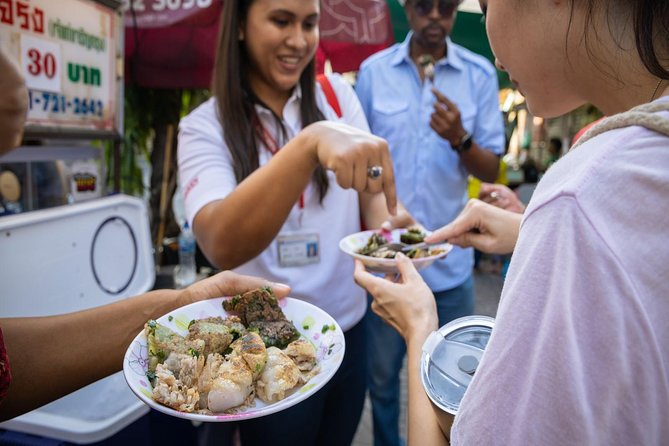
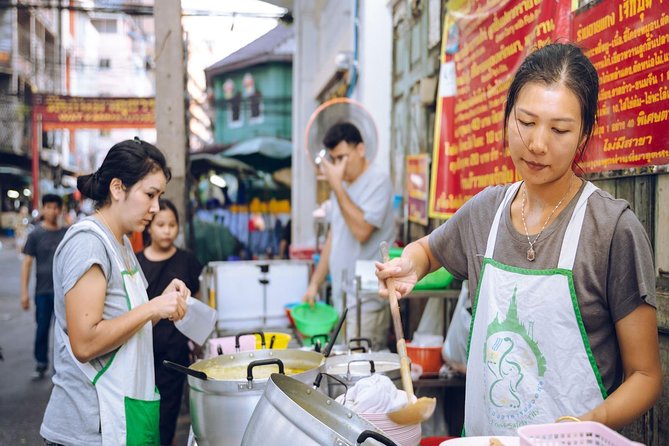
Food is included, and it is the tour’s strongest practical feature. You are not just being shown a market and then left to decide what to order. The guide helps you try local items that might be difficult to identify or choose on your own.
The listed samples include:
- Turnip cake, a Chinese dim sum dish
- Chwee kueh, a steamed rice cake served with preserved radish
- Chao Tha duck noodle soup
- Pad Thai from Uncle Pom
The selection gives you several textures and styles. Turnip cake is savory and filling. Chwee kueh is softer and lighter, with preserved radish adding a salty note. Duck noodles provide a more complete bowl, while pad Thai offers a familiar Thai favorite in a local setting.
You should arrive ready to eat, but do not expect a single large dinner. The food comes as samples from more than one place. For some people, it may become a full evening meal by the end. For others, it is a useful introduction followed by a separate dinner.
Vegetarian requests can be accommodated if you provide the information at least 24 hours before the tour. Other dietary requirements are not listed as available, so you should contact the provider before booking if you have allergies or strict restrictions. Do not assume every dish can be changed.
A guide such as Nana may also help you choose what you can eat and answer questions about unfamiliar dishes. That personal help is one reason the food portion has more value than simply buying snacks at random.
More street food walks in Bangkok:
- Old Siam Bangkok Food Tour with 15+ Tastings
★ 5.0 · 867 reviews - Bangkok Authentic Tasting Thai-Chinatown Walking Food Tour
★ 4.9 · 852 reviews - Bangkok Tuk-Tuk Tour by Night with Chinatown Street Food Meal
★ 5.0 · 635 reviews - Bangkok: Old Siam Food Tour with 15+ Tastings
★ 4.9 · 559 reviews
Chow Sue Kong Shrine and old Chinese homes
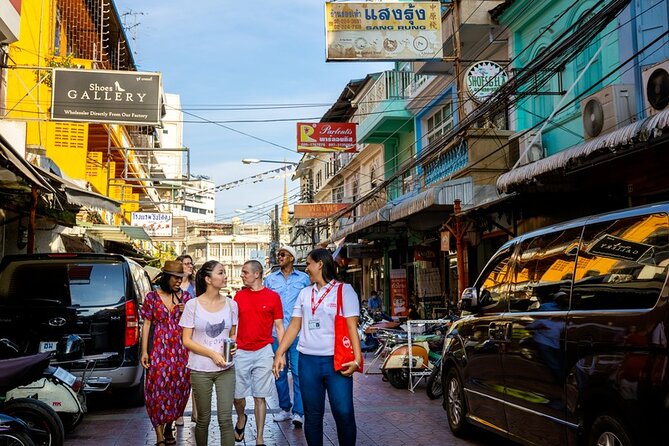
After eating, the route visits Chow Sue Kong Shrine, a Hokkien shrine more than 200 years old. It is a quiet place for blessings related to well-being, protection, and guidance.
The shrine gives the walk a religious and community focus. Chinatown is not only a shopping and food district. Shrines remain part of daily life, and a short stop here helps explain the beliefs woven into the neighborhood.
The planned visit lasts around 15 minutes. Dress and behavior should be respectful, as you would at any active religious site. The guide can explain what you are seeing and help you understand the purpose of the shrine without turning the visit into a long formal lesson.
The route also passes Sol Heng Tai Mansion, described as one of Bangkok’s last remaining traditional Chinese houses. This is an important stop in concept, since it points to the domestic architecture that once filled more of the area. The schedule does not give it a separate fixed duration, so your view may be brief.
Hong Sieng Kong mixes old buildings with new Bangkok
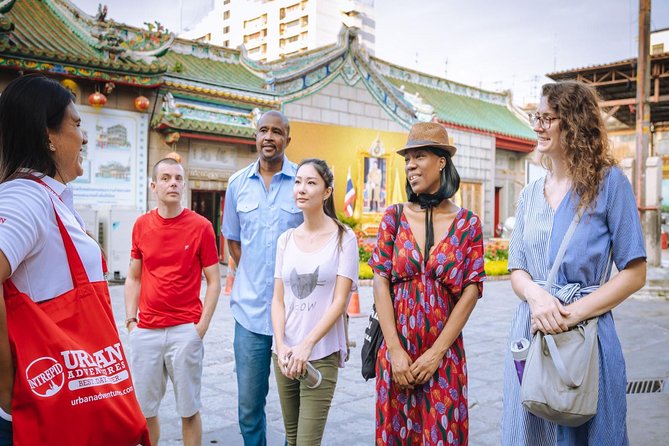
Hong Sieng Kong brings the route back toward the river and the present day. Here you visit a local artist’s gallery and stop at a café beside the Chao Phraya River. The café occupies a building dating to the reign of King Rama II and the Rattanakosin era.
The stop lasts about 30 minutes, making it one of the longer pauses. You can relax with coffee or tea, look at local artwork, and take a break from the walking. This is welcome after the food stops and narrow lanes.
I see this as a thoughtful part of the route because it gives you time to slow down. The tour is not only a sequence of quick photographs and bites. It also shows how older buildings can be used for art, drinks, and modern social life.
Still, the experience depends on your guide and the day’s conditions. If the group is delayed, if rain hits, or if a venue changes its opening arrangements, this part may be shortened or replaced. The provider says alternatives may be used if a planned site is closed.
Crossing into Chinatown changes the mood
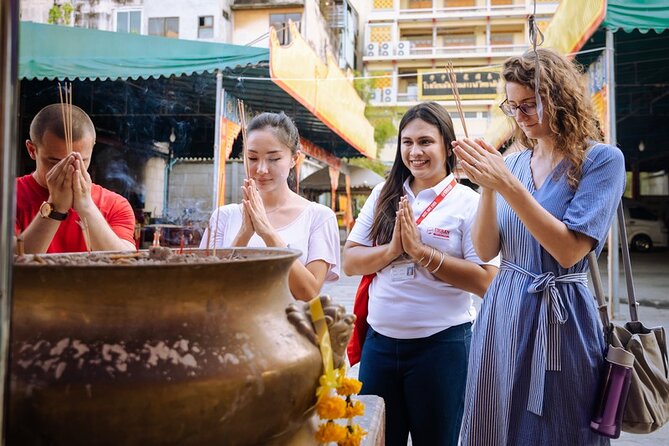
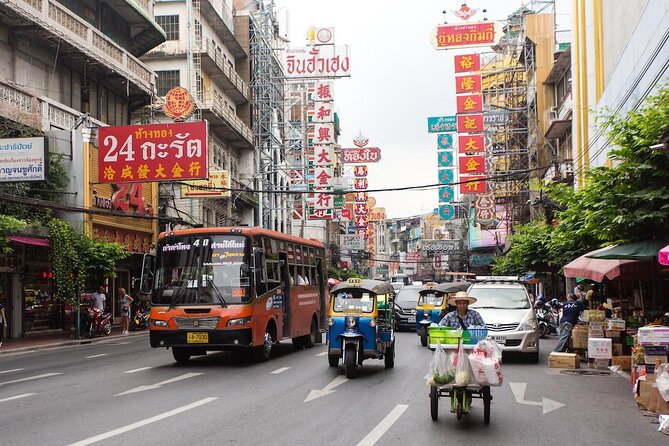
The final neighborhood is Bangkok’s Chinatown, where the old Chinese quarter meets modern commerce. The route takes about 15 minutes here, so think of it as a guided introduction rather than a full Chinatown exploration.
The streets can become extremely crowded, especially around festivals and major public events. One guide had to lead a group carefully through heavy Chinese New Year crowds, while another route was changed because streets were closed for the King’s birthday. These situations can affect the balance of the tour. You may get more food and less sightseeing if access changes.
The reward is the feeling of the district at the end of the day. Shops, food sellers, signs, and pedestrians fill the streets, and modern businesses sit alongside old Chinese religious and commercial traditions. The route moves quickly, though. If you want to stop at every stall, compare prices, or shop for gifts, tell your guide early and accept that you may not see everything.
The walk ends near Wat Mangkon Kamalawat. Your guide can help you connect back to central Bangkok, and the stated end point allows access toward the MRT at Wat Mangkon. The tour information also lists River City as the end point, so confirm the final meeting arrangement with the operator before setting up an evening reservation.
How the $42.48 price works out
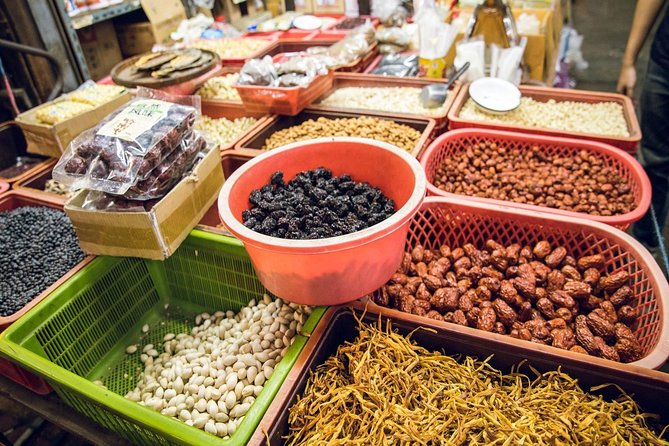
At $42.48 per person, this is not the cheapest way to wander Chinatown. You could walk through the area independently and buy small portions from food stalls for less.
The price makes more sense if you value guided access to unfamiliar foods and side streets. You receive several samples, an English-speaking local guide, neighborhood background, help with ordering, and a route linking Talad Noi, the church, shrine, riverside café, and Chinatown. For a first afternoon in Bangkok, that saves planning time and reduces the uncertainty of choosing food in an unfamiliar area.
The small-group limit also improves the value. A large tour can turn narrow lanes into a slow-moving line, while a group of four or five can stop without blocking the whole passage. Some guide-led outings have felt relaxed and personal, with time for questions and local suggestions.
The value drops if you already know Chinatown well, dislike street food, or mainly want time to shop. It also drops if you expect a full dinner, long visits inside each historic site, or a broad tour of all Bangkok’s major sights. This is a focused neighborhood walk, not a general city tour.
The tour is booked an average of 29 days ahead, so reserve early if your Bangkok dates are fixed. Free cancellation is available until 24 hours before the 4 pm start time. After that point, the amount paid is not refunded, and changes are not accepted.
Who will enjoy this Bangkok walk
I would recommend it most strongly to first-time visitors who want a gentle introduction to Talad Noi and Chinatown without spending hours planning a route. It also suits anyone curious about Thai-Chinese food, local religious sites, street art, and older neighborhoods that do not fit neatly into a standard sightseeing list.
The minimum age is 8. Most people can participate, but you need to manage about 2 kilometers of walking, standing, stairs or uneven sections if present, and crowded lanes. The supplied information specifically cautions that the walk may not suit older people or anyone unable to walk or stand for an extended period.
Families with older children may like the food sampling and short stops. People who prefer a slower pace should ask about group size and current route plans before booking. Rain can also change the experience. Guides have bought ponchos for participants during heavy downpours, but you should still bring light rain protection and shoes suitable for wet streets.
This tour may not suit you if you need strict control over ingredients. Vegetarian food can be arranged with advance notice, but other dietary needs are not supported according to the tour details.
What the ratings suggest about the experience
The tour holds a 4.5 rating from 53 ratings, with 91 percent recommending it. The most consistent strength is the guide.
Nana has been praised for keeping the walk entertaining, explaining local details, helping with food choices, and offering useful Bangkok tips. Pam has been described as caring, clear in English, and good at explaining Chinatown’s past. Gof has helped participants try places they might not enter alone and added a river view to the route.
Those details matter because the streets can feel repetitive without explanation. A few people found Chinatown’s market lanes too similar or felt the tour moved too fast for shopping. The guide helps, but the experience still depends on how well the day’s route matches your interests.
Organization is another point to watch. A late start, a difficult meeting point, site closures, rain, public events, or crowded streets can reduce time at individual stops. These are not always within the operator’s control, but they are real considerations when you have a dinner booking or evening show afterward.
Should you book it?
Book this tour if you want a compact, food-led walk through Bangkok’s older Chinese neighborhoods, with a friendly guide to explain what you are seeing and eating. The best parts are the small group, the mix of Thai and Chinese dishes, the Holy Rosary Church, Chow Sue Kong Shrine, and the riverside café in an old building.
Skip it if you want a long shopping stop, a substantial restaurant dinner, or a calm route away from crowds. You should also choose another plan if 2 kilometers of walking is difficult or if you have dietary needs beyond vegetarian food.
For most first-time visitors, $42.48 is fair when you count the included food and the guide’s local help. Just treat it as a lively introduction to Talad Noi and Chinatown, not a complete tour of Bangkok.
FAQ
Where does the tour begin?
The tour begins at River City Bangkok, at Gate 1 on the first floor in front of Starbucks. The address is 23 Soi Charoen Krung 24, Talat Noi, Bangkok.
What time does the tour start?
The stated start time is 4 pm.
How long does the tour last?
The tour lasts approximately 2 hours and 30 minutes.
How much walking is involved?
The tour covers about 2 kilometers, or 1.2 miles, on foot.
What food is included?
Included samples may include turnip cake, chwee kueh, duck noodle soup, and pad Thai from Uncle Pom, along with other local Thai, Chinese, and fusion foods.
Can vegetarians join?
Yes. Vegetarian requirements can be accommodated if you provide the information at least 24 hours before the tour date.
Can other dietary requirements be accommodated?
The provider states that it cannot accommodate dietary requirements other than those listed, including vegetarian requests.
What locations are visited?
The route includes Talad Noi, Holy Rosary Church, Chow Sue Kong Shrine, Sol Heng Tai Mansion, Hong Sieng Kong, Chinatown, and Wat Mangkon Kamalawat.
How large is the group?
The tour has a maximum of 12 people.
What happens if a site or food stall is closed?
An alternative site or food stall may be visited if a planned location is closed for reasons beyond the provider’s control.
What is the cancellation policy?
You can cancel up to 24 hours before the experience for a full refund. Cancellations or changes made less than 24 hours before the start time are not accepted for a refund.
Just added around Bangkok
- Bangkok to Ayutthaya Lopburi Monkey Temple, Largest Buddha Tour★ 5.0 · 62 reviews
- Baiyoke Sky Dinner Experience with Observation Deck Access★ 3.5 · 57 reviews
- Bangkok Luggage Delivery from Hotel to Airport★ 5.0 · 25 reviews
- Bangkok Luggage Storage★ 4.5 · 37 reviews
- Living Green Elephant Sanctuary Tour from Bangkok and Pattaya★ 5.0 · 88 reviews
- Living Green Elephant Sanctuary Experience near Bangkok & Pattaya★ 5.0 · 76 reviews
- Ethical Elephant Watching Tour From Bangkok & Pattaya★ 4.5 · 9 reviews
- King Power MahaNakhon SkyWalk at Bangkok Admission Ticket★ 4.0 · 37 reviews
Bangkok Tours, compared.
Damnoen Saduak Market and Maeklong Railway Market
Read our review →
The Old Siam: Damnoen Saduak and Maeklong Railway Market
Read our review →
Train Market & Floating Market with Boat Ride
Read our review →
Bangkok Canal Tour: 2-Hour Longtail Boat Ride
Read our review →
Muay Thai Boxing Tickets at Rajadamnern Stadium
Read our review →
White Orchid Chao Phraya Dinner Cruise free Beer
Read our review →
Bangkok by Private Guide: Full Day Tour In and Around
Read our review →Browse the lists this tour appears in