Reviewed · BANGKOK TOURS
Bangkok: Must things to see in China town, Small group
Bangkok’s Chinatown is at its best when you leave the main road. This 3.5-hour walking tour takes you through narrow lanes, old Chinese temples, local houses, street art, Sampeng Market, and a quiet viewpoint that is easy to miss on your own. The focus is not just on sights, but on how Thai Chinese families live and work in the neighborhood.
I like the local food stops, which include snacks, coffee, and lunch at a local restaurant. I also like the way the tour reaches lesser-known corners and encourages conversations with people in the Chinese community. Guide Mee has been praised for her serious, expert approach and for finding parts of Chinatown that independent walkers may pass by.
The main consideration is the walking. You cover about 4 kilometers, with steep stairs at a Chinese temple. The route is mostly flat, but the heat, crowded lanes, uneven surfaces, and rainy-season weather can make the outing more tiring than the distance suggests.
Key points about this Chinatown walk
- About 4 kilometers on foot: The route is mostly flat and lasts 3.5 hours, with rest stops along the way.
- More than the main Yaowarat road: You visit narrow lanes, a secret temple, a viewpoint, old houses, and art-filled streets.
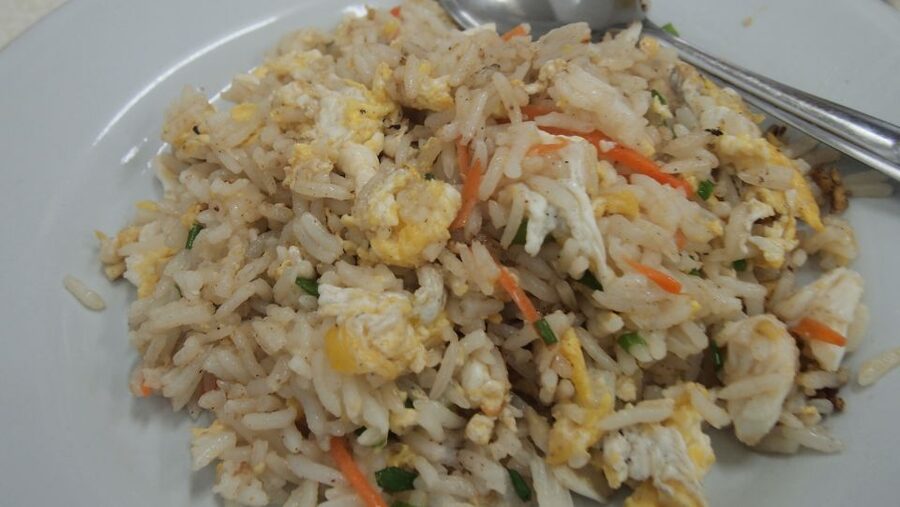
- Food is part of the tour: Snacks, coffee, and a local lunch are included.
- Sampeng Market adds everyday Bangkok: You walk through one of the city’s oldest open markets, packed into narrow alleys.
- Guide-led cultural context: English and Thai-speaking guides explain Thai Chinese traditions, local stories, and daily life.
- Temple visit requires care: Modest clothing is needed, and the temple stairs are steep.
Why this tour shows you a different Chinatown
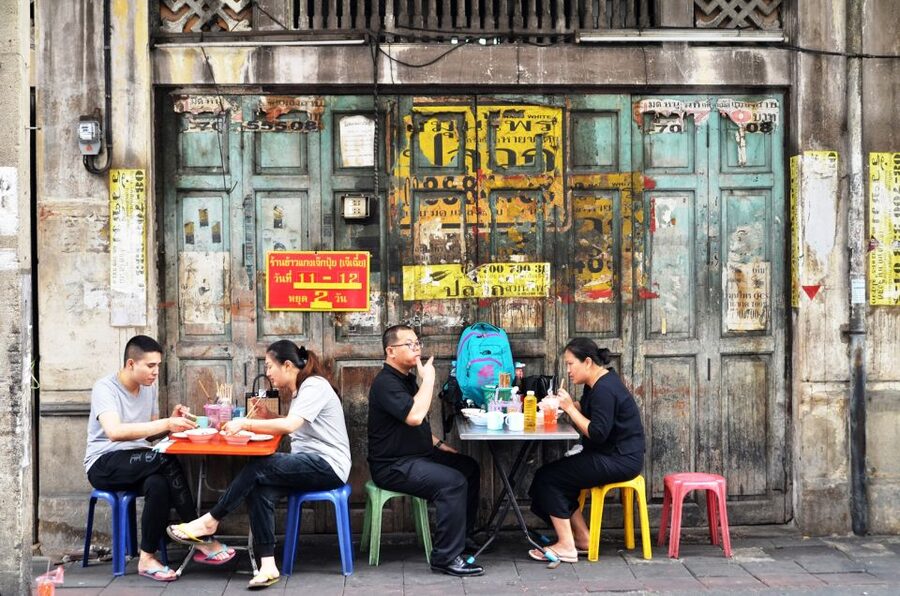
Bangkok Chinatown can feel like two places at once. Yaowarat Road has bright signs, food stalls, traffic, and a steady stream of people. A few turns away, the streets narrow sharply. You find old shop houses, small shrines, family businesses, and lanes where daily work matters more than sightseeing.
That quieter side is the reason to book this walk. A guide can point out details you would probably miss, including lesser-known religious sites, traditional homes, works of art, and small pieces of local life. The tour also gives you a chance to speak with members of the Chinese community rather than simply photographing buildings from the street.
I particularly like the balance between explanation and movement. You are not kept in one museum or given a long lecture. You walk, stop for a story, look around, taste something, and continue. That rhythm suits Chinatown, where the character of the area comes from many small details rather than one grand monument.
The tour has a rating of 4.8 from 17 reviews, and the strongest praise centers on the guides’ local insight, friendly manner, food, and thoughtful rest stops. That matches what this experience is designed to do: give you context while keeping you moving through the neighborhood.
A few more Bangkok half-days worth weighing up
- Bangkok: Damnoen Saduak Market and Maeklong Railway Market
★ 4.5 · 26,723 reviews - The Old Siam: Damnoen Saduak and Maeklong Railway Market
★ 4.5 · 10,992 reviews - From Bangkok: Ayutthaya Temples Guided Tour with Lunch
★ 4.7 · 10,535 reviews
Meeting at Tang Hua Pug Building and MRT Hualampong
The practical meeting point is MRT Hualampong Exit 1, near the Tang Hua Pug Building. Look for a guide wearing an Eatwalktalktour shirt. The tour ends back at the same meeting point, so you do not need to arrange transport from a distant final stop.
This is useful if you are staying near Bangkok’s metro system or plan to continue sightseeing from the station area. Hotel pickup and drop-off are not included, so you need to make your own way to MRT Hualampong.
Try to arrive with enough time to find Exit 1 without rushing. Bangkok’s stations and surrounding streets can be busy, and a relaxed start is worth more than an extra few minutes in bed. Wear shoes that are easy to remove and put back on, since temples may require you to take them off. Flip-flops are also listed as suitable, although some visitors may prefer a pair with a firmer sole for several hours of walking.
Walking through Chinatown’s narrow lanes
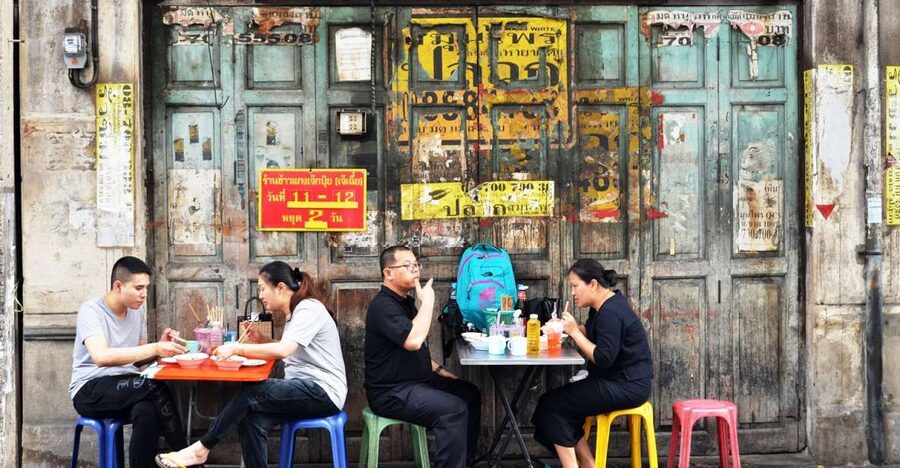
The first part of the route takes you into Chinatown itself, where the streets become narrower and the views change quickly. One moment you may be walking beside shop fronts and market goods. The next, you are looking at a small temple entrance, an old house, or a painted wall tucked into a side lane.
The art is one of the more unexpected elements. Colorful streets and wall paintings give the older neighborhood a modern layer without removing its everyday character. Your guide can help explain what you are seeing and direct you toward corners that are not obvious from the main roads.
You should expect frequent stops for photos and short explanations. This is not a fast-paced march from one landmark to another. The pauses matter because the point is to notice the neighborhood’s texture: the way buildings fit together, the narrow passages between businesses, and the mix of religious and commercial spaces.
The lanes can also be crowded. You may need to walk in single file, step aside for motorbikes, or wait while local activity clears. That is part of the setting, but it means you should keep your belongings secure and stay close to the group.
A secret temple with steep stairs
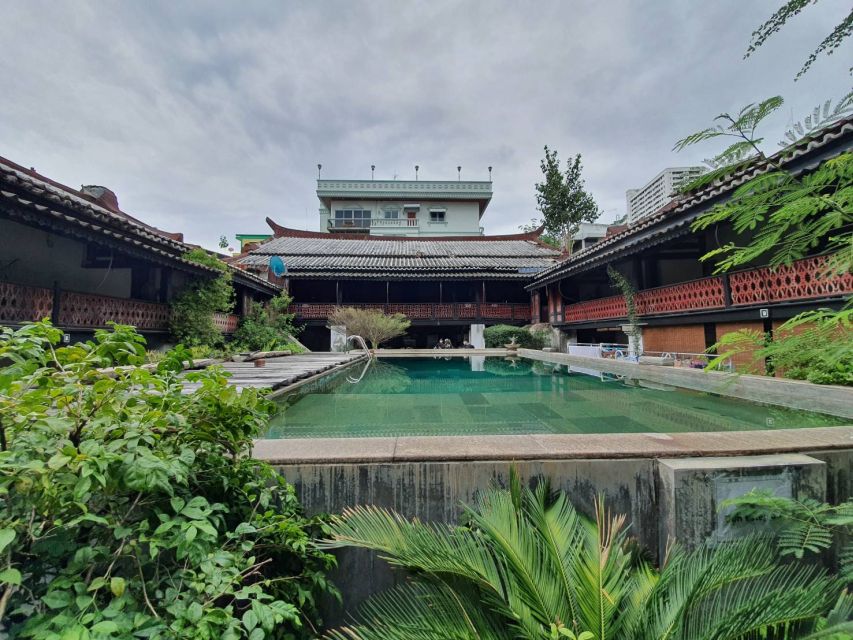
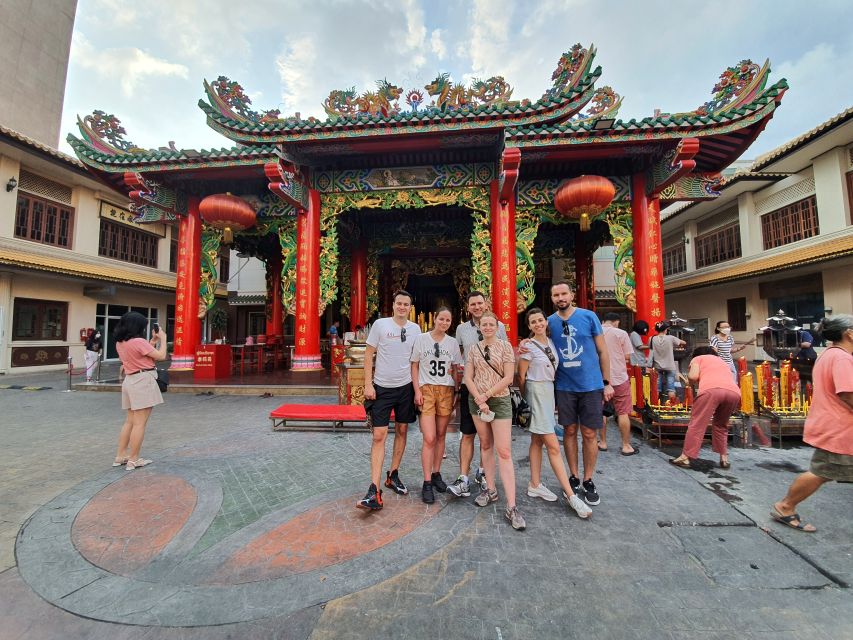
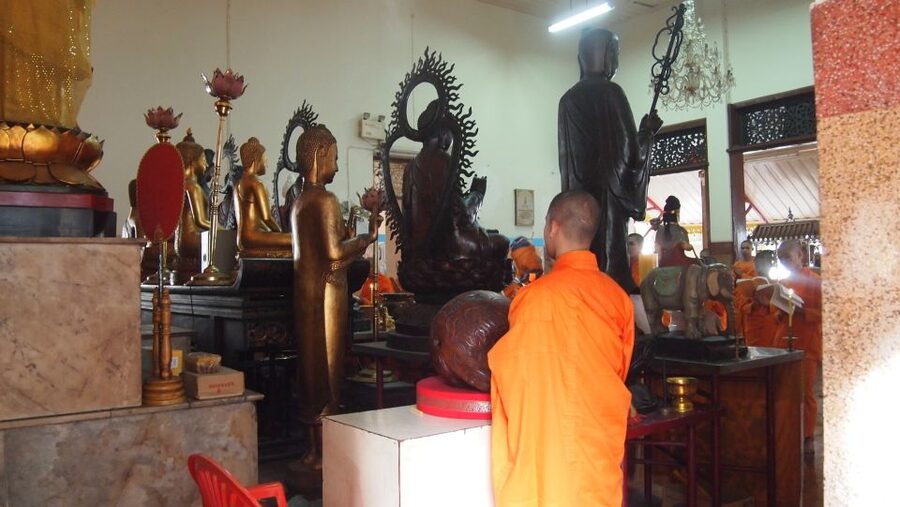
The temple visit adds a spiritual side to the walk. The site is described as a secret temple, meaning it is less obvious than the grander religious buildings most people seek out in Bangkok. It gives you a chance to see how worship spaces fit into the neighborhood rather than treating temples as isolated monuments.
There are steep stairs at the Chinese temple, so take your time. This is the clearest physical challenge on the route. The total distance is not extreme, but the stairs, heat, and hard surfaces can make a difference if you are not used to walking in Bangkok.
Dress respectfully. Short skirts and short pants are not suitable for the temple visit. Covering your shoulders is also a sensible choice when visiting religious sites, even though the stated requirement specifically concerns short skirts and shorts.
The temple stop is likely to appeal most if you want more than food and street photography. It brings the neighborhood’s Chinese religious traditions into the story and gives the guide a natural place to explain how these traditions connect with Thai Chinese life.
Same base, a completely different kind of day out:
- Bangkok: Train Market & Floating Market with Boat Ride
★ 4.7 · 9,547 reviews - Bangkok Canal Tour: 2-Hour Longtail Boat Ride
★ 4.5 · 5,909 reviews - Bangkok: Muay Thai Boxing Tickets at Rajadamnern Stadium
★ 4.9 · 4,740 reviews - Bangkok: White Orchid Chao Phraya Dinner Cruise free Beer
★ 4.4 · 4,573 reviews
Sampeng Market and the working side of Chinatown
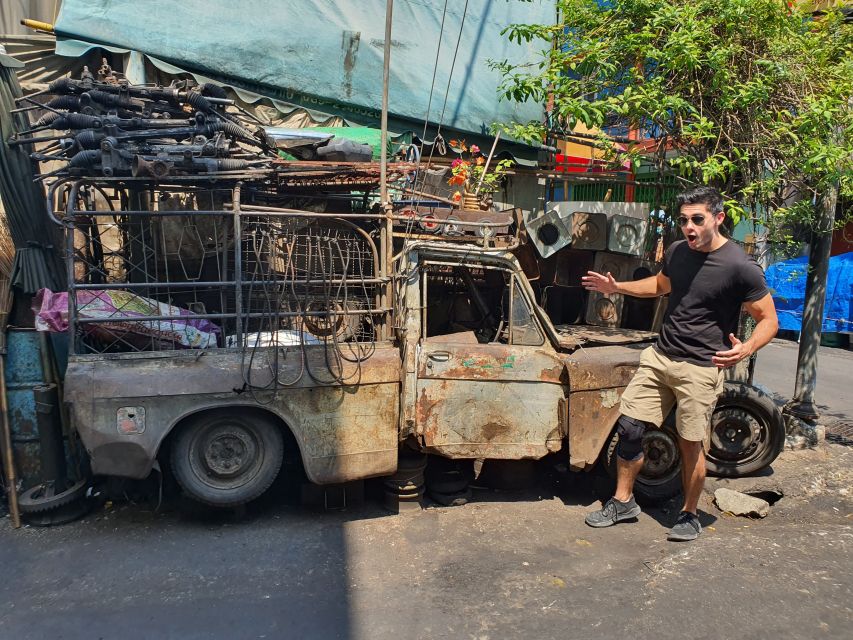
Sampeng Market is one of the tour’s strongest stops. It is one of Bangkok’s oldest open markets and occupies a maze of narrow alleys filled with goods. This is not a polished retail district arranged for sightseeing. It is a working market, and the close quarters are part of the experience.
You will see a wide range of merchandise as you move through the lanes, though the exact goods can change. The market shows a commercial side of Chinatown that is easy to miss if you stay on the restaurant streets. It also helps explain why this part of Bangkok has long been associated with trade, small shops, storage, and family businesses.
Take care with your pace here. The alleys can be tight, and stopping suddenly for a photograph may block people who are trying to work. Follow your guide’s lead and keep your bag close to your body.
Sampeng is also a good reason to choose a walking tour instead of a standard sightseeing bus. A vehicle can show you the district’s major roads, but it cannot take you through these compact passages. Walking gives you a much clearer sense of how closely packed the market really is.
Local houses, community conversations, and daily life
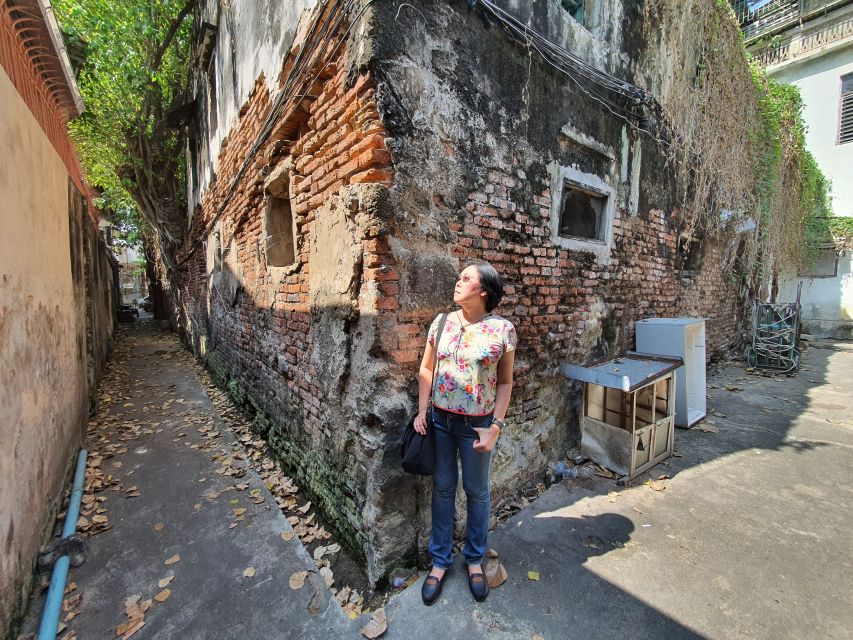
The tour includes traditional houses and opportunities to speak with local people in the Chinese community. These encounters are valuable because they move the experience beyond architecture and food. You get a look at the neighborhood as a living place, not a backdrop built for visitors.
The exact conversations will depend on the guide and the people you meet that day. Still, the format encourages genuine contact rather than a scripted performance. You may hear stories about Chinatown’s past and present, learn how families use their homes and businesses, or gain a clearer idea of how Chinese customs have continued within Thai society.
Guide Mee is specifically noted for leading visitors into more authentic parts of Chinatown and for explaining the area’s temples, people, and history with enthusiasm. Other tours may use a different English or Thai-speaking guide, but the experience depends heavily on who leads your group. This is one activity where a good guide adds real value.
The best approach is to stay curious and respectful. Local homes and working businesses are not attractions in the usual sense. Listen when your guide explains what is appropriate, ask short questions, and avoid treating private life as a photo opportunity.
Snacks, coffee, and lunch in Chinatown
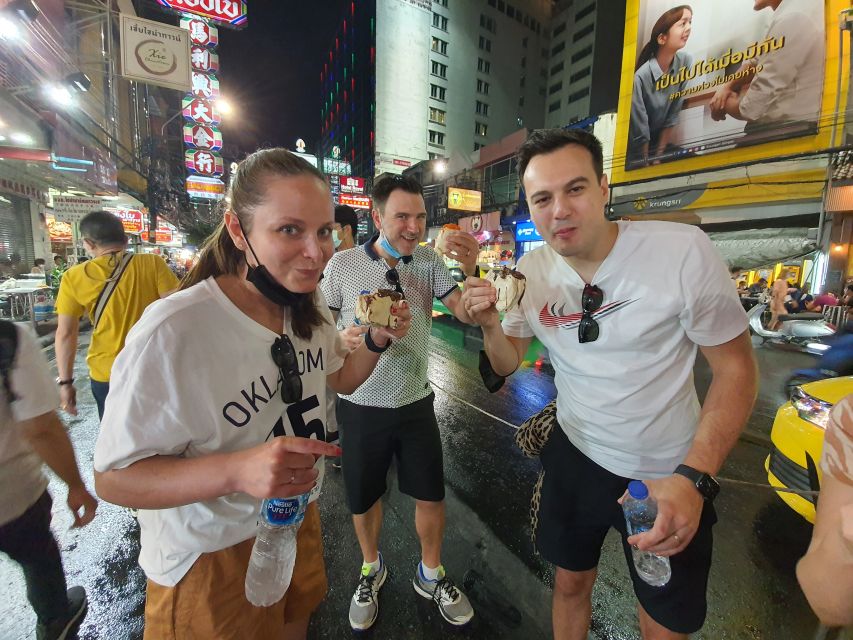
Food is built into the route, not added as an afterthought. You receive local snacks, coffee, and lunch at a local restaurant. This makes the $41 price easier to assess, since you are paying for a guide, several hours of access and interpretation, and multiple food experiences rather than only a walk.
The snack tasting gives you a quick introduction to local flavors as you move through the neighborhood. Lunch offers more time to sit down and eat. A well-timed meal also gives your feet a break, which matters on a three-and-a-half-hour walk.
The exact dishes are not specified, so do not book this expecting a fixed menu or a formal food tasting with a long list of named plates. Think of it as a Chinatown walking tour with selected food and drink stops. Alcoholic drinks are not included.
I like this format for first-time visitors because it removes some of the guesswork. Chinatown has plenty of food, but deciding what to order in a crowded district can take time. A guide can direct you toward local choices and explain what you are tasting.
If you have dietary restrictions, the available information does not promise specific substitutions. Ask before booking if food is a major reason for your decision.
A cafe break and a different pace
The cafe stop gives the tour a useful change of speed. After walking through markets and narrow lanes, you can sit with a refreshing drink in a more relaxed setting. The cafe is described as trendy, with an eclectic atmosphere, so this part adds a modern note to the older market and temple visits.
That contrast is one of the tour’s strengths. Chinatown is not frozen in one period. It includes old religious sites, traditional homes, working markets, colorful street art, local restaurants, and contemporary cafes. Moving between these settings helps you understand the neighborhood as it is now.
The cafe also functions as a rest stop. One of the positive points noted about the experience is that the breaks are well spaced. If you worry that a walking tour will leave you exhausted, this should help, though you still need to be comfortable walking several kilometers in Bangkok’s conditions.
The viewpoint and Chinatown from above
A viewpoint is included among the lesser-known stops. The supplied details do not identify its name or height, so you should not expect a famous observation deck or a guaranteed panoramic skyline view. The value is in gaining a different angle on the tightly packed district.
From above, even a modest viewpoint can help you see how the lanes and buildings connect. After walking through narrow passages, looking over the area can make the neighborhood’s layout easier to understand.
The viewpoint also creates a natural photo stop. Bring a phone or camera, but keep the schedule in mind. The tour has many points of interest, and the guide needs to keep the group together.
Timing, walking comfort, and weather
The experience lasts 3.5 hours and covers about 4 kilometers, or approximately 2 miles. The route is flat almost everywhere, but the steep temple stairs are important to note. You should be comfortable walking for several hours, standing during explanations, and moving through crowded lanes.
Bangkok can be hot and humid, and the market streets may feel close even when the distance is short. Bring water, wear light clothing that still meets temple standards, and choose footwear that will not slow you down.
From May through September, rain is common enough that an umbrella is recommended. A sudden shower can affect the comfort of a walking tour, especially in open market areas, so a small umbrella or rain layer is sensible.
The activity is not suitable for wheelchair users, pregnant women, babies under one year, or people over 95 years. Those limits relate to the walking route, narrow spaces, stairs, and general physical demands. If you need a slower or fully step-free experience, this is not the right fit.
Is $41 a fair price?
At $41 per person, this is not the cheapest way to walk around Chinatown, since you can explore the main streets without a paid guide. The comparison changes once you count the included snack, coffee, and local lunch, along with the time saved finding temples, market lanes, houses, art, and the viewpoint.
The real value is the access and explanation. Chinatown is easy to visit but harder to understand quickly. A local guide helps connect the food, faith, trade, Chinese heritage, and modern street culture into one route.
For someone who prefers independent wandering, the fixed schedule and group format may feel restrictive. You will not have unlimited time at every stall or temple. For a first visit, though, the tour offers a practical introduction and leaves you better prepared to return on your own.
Free cancellation up to 24 hours before the start gives you some flexibility, and you can reserve now and pay later. English and Thai are available. Check the starting time when booking, since several start times may be offered depending on availability.
Who should book this Chinatown walk?
You should consider it if you want to:
- See more than Yaowarat Road and the best-known temples
- Learn about Thai Chinese community life from a local guide
- Combine history, street art, markets, temples, and food
- Try local snacks without planning every stop yourself
- Walk through Sampeng Market and narrow residential lanes
- Have a guide who can explain customs and local stories in English or Thai
You may want to skip it if you dislike walking, crowded markets, steep stairs, or fixed group schedules. It is also not suitable for wheelchair users, pregnant women, very young babies, or anyone who needs a fully accessible route.
Should you book it?
Book this tour if you want a well-rounded first look at Bangkok Chinatown and care about the neighborhood’s people as much as its food. The strongest reasons are the small-lane route, Sampeng Market, the temple, the community contact, and the combination of snacks, coffee, and lunch.
Before booking, be honest about the walking and clothing requirements. Wear respectful temple-ready clothes, bring an umbrella in the rainy season, and expect about 4 kilometers on foot. If that sounds manageable, this is a good-value way to see a less obvious side of Chinatown with guide support from people such as Mee, who bring strong local focus to the route.
FAQ
Where does the Chinatown walking tour start?
The tour starts at MRT Hualampong Exit 1, near the Tang Hua Pug Building. Look for a guide wearing an Eatwalktalktour shirt.
Where does the tour end?
The activity ends back at the meeting point near MRT Hualampong.
How long does the experience last?
The walking tour lasts 3.5 hours. Starting times depend on availability when you book.
How far do you walk?
The total walking distance is about 4 kilometers, or approximately 2 miles. The route is flat almost everywhere except for the steep stairs at the Chinese temple.
What food and drinks are included?
The price includes a local snack, coffee, and lunch at a local restaurant. Alcoholic drinks are not included.
What languages are available?
The tour is offered with a live guide in English or Thai.
What should I wear and bring?
Wear easy on-and-off shoes or flip-flops, and dress modestly because the tour visits temples. Short skirts and short pants are not suitable. From May through September, bringing an umbrella is recommended.
Just added around Bangkok
- Bangkok to Ayutthaya Lopburi Monkey Temple, Largest Buddha Tour★ 5.0 · 62 reviews
- Baiyoke Sky Dinner Experience with Observation Deck Access★ 3.5 · 57 reviews
- Bangkok Luggage Delivery from Hotel to Airport★ 5.0 · 25 reviews
- Living Green Elephant Sanctuary Tour from Bangkok and Pattaya★ 5.0 · 88 reviews
- Bangkok Luggage Storage★ 4.5 · 37 reviews
- Ethical Elephant Watching Tour From Bangkok & Pattaya★ 4.5 · 9 reviews
- Living Green Elephant Sanctuary Experience near Bangkok & Pattaya★ 5.0 · 76 reviews
- King Power MahaNakhon SkyWalk at Bangkok Admission Ticket★ 4.0 · 37 reviews
Bangkok Tours, compared.
Damnoen Saduak Market and Maeklong Railway Market
Read our review →
The Old Siam: Damnoen Saduak and Maeklong Railway Market
Read our review →
Train Market & Floating Market with Boat Ride
Read our review →
Bangkok Canal Tour: 2-Hour Longtail Boat Ride
Read our review →
Muay Thai Boxing Tickets at Rajadamnern Stadium
Read our review →
White Orchid Chao Phraya Dinner Cruise free Beer
Read our review →