

Reviewed · 3-DAY EXPERIENCES
From Chiang Mai : 3 Day 2 Night Slow Boat to Luang Prabang
The most memorable part of this trip is not the transport or the border crossing. It is the long, steady run down the Mekong River, with forested hills, small riverside settlements, and two full days to watch northern Laos pass by. I like the White Temple stop in Chiang Rai, and I like that the route links Thailand and Luang Prabang without requiring you to arrange every connection yourself.
The tradeoff is plain: this is a slow and sometimes poorly organized journey, not a polished sightseeing tour. Communication can be thin, the boat may carry 60 to 100 passengers, and you must pay separately for the Laos visa, the White Temple, food, and a room in Pakbeng.
Key points to know before booking
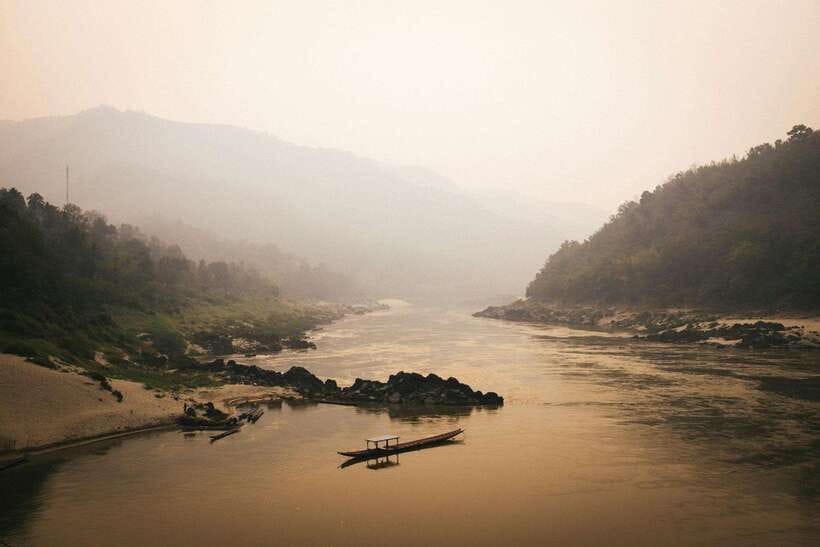
- The Mekong ride is the heart of the trip: You spend the second and third days on a large slow boat bound for Pakbeng and Luang Prabang.
- The White Temple visit is brief: The stop can be only about 30 minutes, and entry costs 200 baht per person.
- The border crossing needs cash and patience: Prepare about 40 US dollars or 1,800 baht for the Laos visa, plus some extra Thai baht for possible crossing fees.
- Only one night of lodging is included: Huay Xai is covered, but your Pakbeng room is not.
- The boat is crowded: Seating may be limited, and boarding can feel disorderly when many people arrive at once.
- This suits independent, flexible people: It is best for anyone who values the river journey more than speed, comfort, or constant guidance.
Why take the slow boat from Chiang Mai?
This trip gives you a practical overland route from northern Thailand into Laos, ending in Luang Prabang. You begin with a hotel pickup in Chiang Mai, continue toward Chiang Rai and the Thai border town of Chiang Khong, cross into Huay Xai, and then follow the Mekong south.
I like the basic idea. You get a long look at northern Thailand and Laos rather than simply flying over them. The trip also removes some of the hardest planning work: the shared transfer from Chiang Mai, the bus across the border, the Huay Xai connection, and the slow boat ticket are arranged for you.
But you should not mistake arranged for fully guided. The English-speaking host or greeter helps with the main handoffs, yet you may be left waiting for the next instruction. At several points, you need to pay attention, keep your documents close, and ask questions if the group is moved without a clear explanation.
The price is listed at $109 for a group of one. That can be fair if you value the bundled transfers, insurance, one hotel night, drinking water, and the boat ticket. It is less attractive once you add the Laos visa, meals, White Temple entrance, Pakbeng lodging, and possible border charges. Compare the total cost, not just the headline fare.
More evenings out in Thailand:
- Bangkok by Night: Temples, Markets and Food Tuk-Tuk Tour
★ 5.0 · 3,752 reviews - Krabi: 7 Islands Sunset Tour with Buffet Dinner & Snorkeling
★ 4.3 · 2,916 reviews - Phuket: Full Day City Tour with Night Market
★ 4.5 · 2,888 reviews
Day 1: Chiang Mai, Chiang Rai, and the Thai-Laos border
Pickup is available within Chiang Mai city, using shared transfers. Give the operator the exact hotel name and address, not just a Google Maps pin. The instructions specifically warn that a map location may not be enough to find you, and the vehicle collects people in order.
I would be ready at least 10 minutes early. Shared pickup means the departure may take time as the driver collects other passengers. If the wait becomes unusually long, contact the operator rather than wandering away from the hotel.
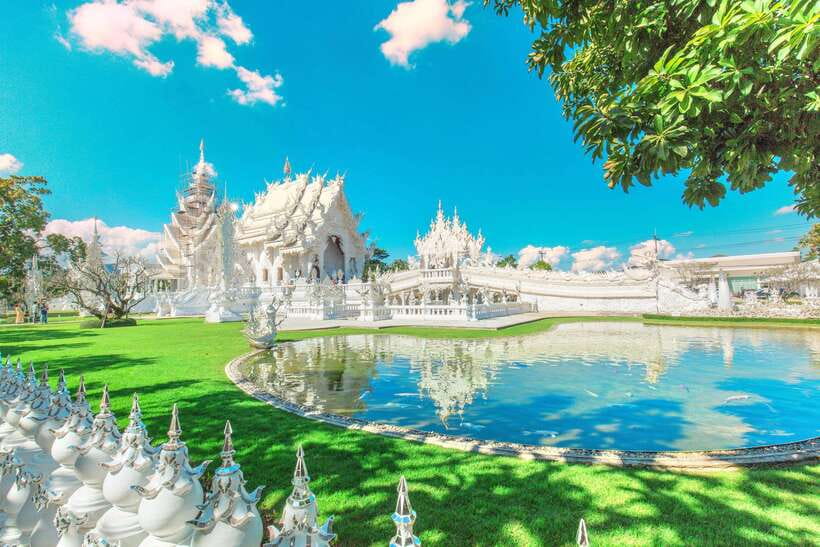
The route includes a visit to Chiang Rai’s White Temple, Wat Rong Khun. Its bright white architecture and detailed decoration make it an unusual stop on a long transfer day. The catch is time. One account puts the stop at roughly 30 minutes, so treat it as a quick look and photo opportunity, not a proper visit.
Entry is not included. If you want to go inside, budget 200 baht per person. If you are deciding between paying the fee and saving the money, remember that the stop is short. People who care about seeing the temple should have cash ready and move quickly once the vehicle arrives.
From Chiang Rai, the journey continues to Chiang Khong, the Thai border area. The Thai driver takes the group to the operator’s office first. From there, you receive a sticker for identification and take the provided bus across the border.
This handoff is one of the least relaxing parts of the trip. You may need to wait while paperwork is handled, and instructions can be limited. Keep your passport, phone, money, and any immigration papers together in a small day bag. Do not put them in luggage that is stored under a vehicle.
The Laos visa on arrival is extra. The supplied estimate is about 40 US dollars or 1,800 Thai baht, and cash is the safer choice. One account also warns of border fees that were not clearly explained in advance, so keep some Thai baht available for unexpected small charges. Since exchange rates and border policies can change, confirm the amount before departure if possible.
After immigration, a Laos greeter is meant to guide you to the van for Huay Xai. This is useful in theory, but the process may still feel scattered. You should expect a series of short handoffs rather than one guide staying with you from Chiang Mai to the hotel.
The first night in Huay Xai
Your first night is in Huay Xai, Laos, and this accommodation is included. It comes with basic essential amenities, but you share the room with other customers unless you pay extra for a private room.
That detail matters. If you are traveling as a couple or simply need quiet, ask about the private-room surcharge before departure. If you accept the shared arrangement, pack earplugs and keep expectations modest. The purpose of this night is to break up the long route, not to provide a resort stay.
The lodging has also received criticism for cleanliness. I would bring a few personal basics, such as hand sanitizer and a small towel, without assuming that every room will be unpleasant. The accommodation standard appears to be practical and variable rather than carefully managed.
The Huay Xai night can still be useful. It gives you a place to sleep before the boat and avoids trying to complete the border crossing and river journey on the same day. Just remember that the included room is part of a budget connection, not a major feature of the tour.
Day 2: Boarding the Mekong slow boat
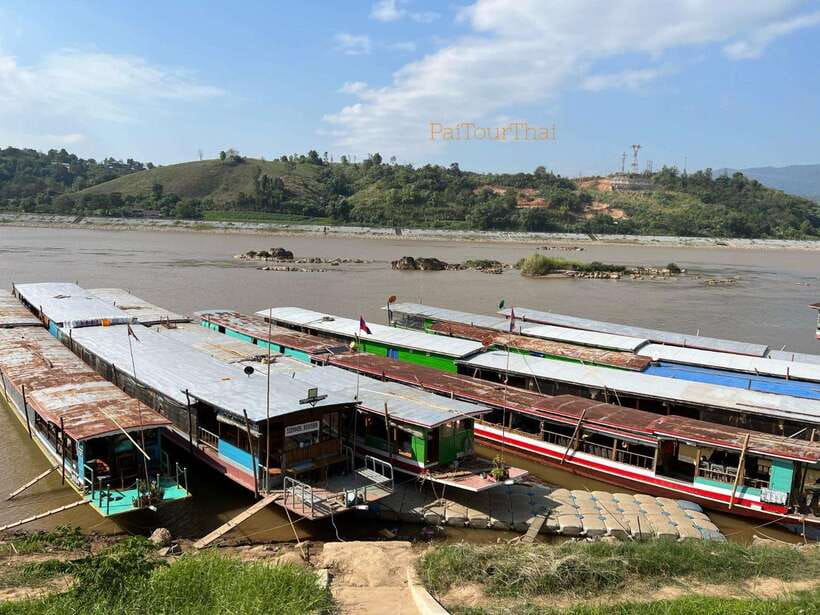
On the second morning, the Laos greeter takes you to the pier and provides the slow-boat ticket. The ticket shows the boat number, so keep it safe. A lost ticket has caused trouble before, although one guide was able to help resolve the problem.
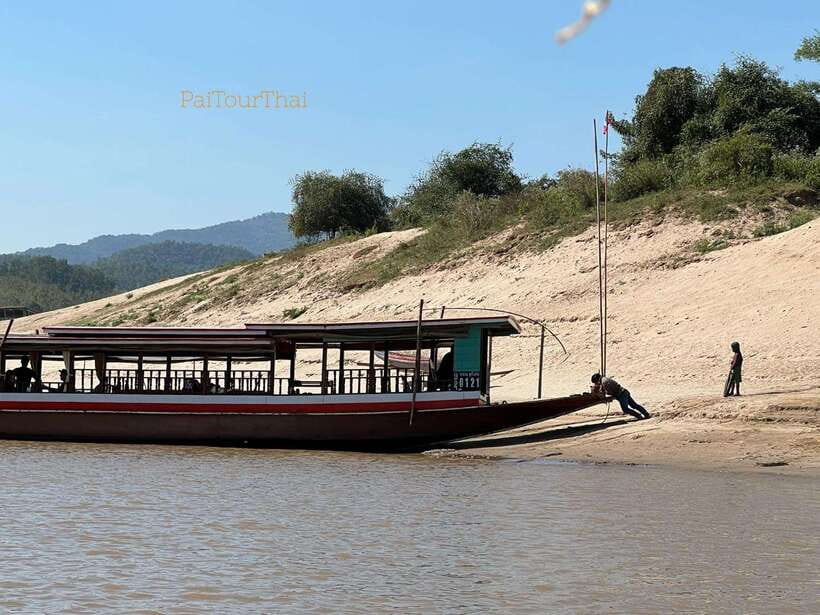
The boat is large, carrying at least 60 to 100 passengers. That number tells you more than the phrase slow boat. You are not boarding a small, quiet craft with a private guide. You are joining a shared river service, and the atmosphere depends heavily on the crowd, the seating arrangement, and the day’s boarding process.
Arrive early and find your boat before settling in. Seats may not be sufficient for everyone, and boarding has been described as uncomfortable or unsafe when the boat is crowded. Keep your small bag near you, and do not expect the crew to explain every step in detail.
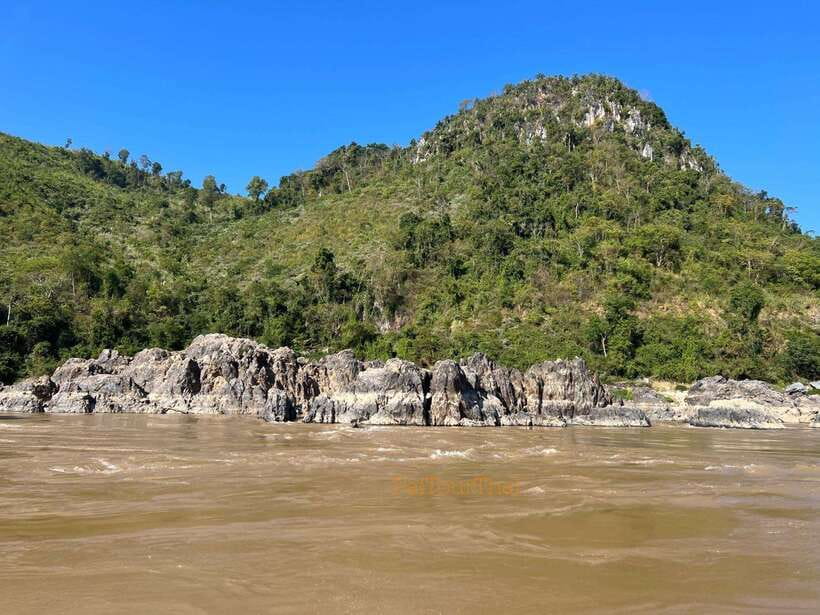
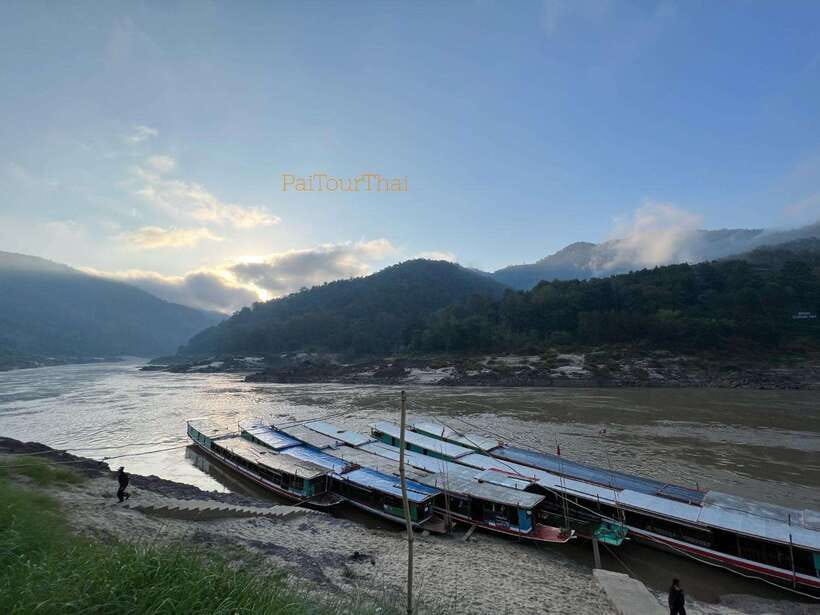
The Mekong itself is the reason to accept these inconveniences. Once underway, the pace gives you time to watch the river bends, wooded slopes, exposed rock, and riverside life. The scenery has been praised as the strongest part of the experience. It is calm and open, but it can also become repetitive after a few hours.
Bring something to read, headphones, a power bank, and a light layer for changing temperatures. You will be sitting for a long time. A seat by the window is pleasant, but people may move around, and there is no guarantee you will keep the best view all day.
Food is not included. You can buy lunch, drinks, snacks, and possibly breakfast on the boat. I would still pack a few items from Chiang Mai or Huay Xai, especially if you have dietary restrictions or do not want to depend on the onboard selection.
The boat route is not a guided sightseeing program. You are mainly watching the river and sharing the ride with a large group. That is a strength if you want an unhurried way to see the Mekong. It is a weakness if you expect commentary, frequent stops, or organized activities.
A few more Thailand half-days worth weighing up
- Open Water Course – Become certified diver in 3 days
★ 5.0 · 1,137 reviews - Angkor Wat 3-Day Tour from Bangkok
★ 4.5 · 58 reviews - Chiang Rai:3D2N Transfer to Luang Prabang by Slow Boat
★ 3.4 · 15 reviews - Bangkok and Ayutthaya 3 Days
★ 4.5 · 12 reviews
Pakbeng: the night you must arrange yourself
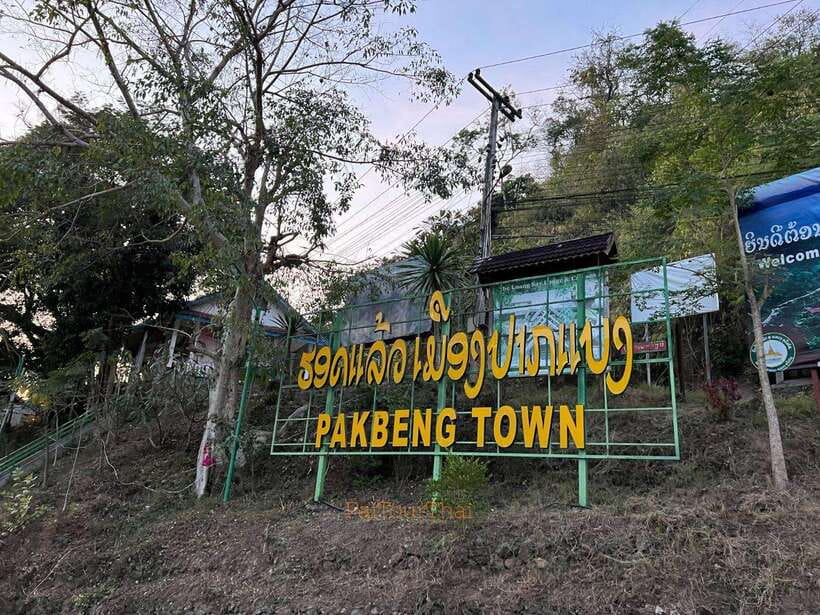
The boat reaches Pakbeng on the second day, where you spend the night before continuing to Luang Prabang. Your accommodation here is not included, and you are told to book it online in advance.
Do not leave this until the day of arrival. Your boat ticket gets you to Pakbeng, but it does not provide a room. Booking ahead gives you a clearer plan after a tiring day on the river, and it avoids searching with luggage in an unfamiliar place.
The instructions do not promise a particular hotel or room standard in Pakbeng. Check the booking details carefully, and keep the address available offline in case your phone connection is weak. Since the boat departure is scheduled for around 9 a.m. on Day 3, choose a place that lets you reach the pier early.
Pakbeng is a practical overnight stop, not a major sightseeing portion of this experience. You have time to eat, sleep, and prepare for the next boat. The main mistake is treating the stop as fully arranged when you still need to pay for and reserve the room yourself.
Day 3: the long run to Luang Prabang
The boat leaves Pakbeng at about 9 a.m. on the third day. Go to the pier early to find your boat and seat. This is especially important because seating may be limited and the boat may be crowded.
The final stretch continues down the Mekong toward Luang Prabang. Again, the value comes from the unhurried view. You can watch the river change as the boat moves south, but do not count on a detailed explanation of where you are or what you are seeing.
Pay attention as you approach Luang Prabang. Information about the final arrival can be unclear, and passengers have previously been unsure whether they should get off near the town or remain on board. Ask the crew or the person coordinating your group before the boat docks, and keep your luggage ready.
The destination is Luang Prabang, the UNESCO World Heritage town that gives the journey its cultural payoff. This tour does not provide a guided walking visit of the town, so plan your own onward arrangements and sightseeing after arrival. The boat gets you there, but the town visit is yours to organize.
Comfort, communication, and group size
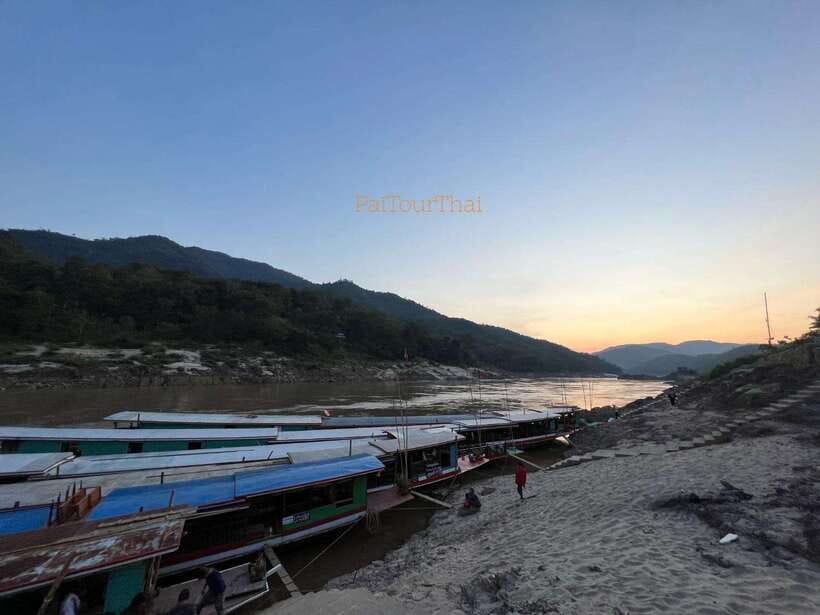
The word comfortable needs a little caution here. The package includes accommodation, drinking water, and transport, but the boat itself is a basic public-style service with a large passenger load. You should expect a long seated ride, shared facilities, and a variable level of order.
Communication is the other major concern. The host or greeter speaks English, and the border procedure is meant to be guided. Still, information may be sparse when you are dropped at a new location or transferred between vehicles.
I recommend asking three questions at every handoff:
- Where is the group meeting?
- What is the next departure time?
- Do I need to carry my luggage, passport, or boat ticket now?
This takes little effort and can prevent a lot of confusion. Keep your passport photo available as well. The operator asks for a passport picture by email or WhatsApp for insurance purposes, so send it before the trip if requested.
The tour includes insurance, but you should still understand what your own travel insurance covers. The supplied information does not explain the insurance limits or claims process.
What to budget beyond the $109 fare
The listed price is only the starting point. Your extra costs include:
- Laos visa on arrival, about 40 US dollars or 1,800 baht
- White Temple entrance, 200 baht per person
- Food and drinks
- Pakbeng accommodation
- Any private-room charge in Huay Xai
- Possible border fees or other personal expenses
The operator includes the Chiang Mai hotel pickup, insurance, drinking water, the first night’s accommodation, the slow-boat ticket, and the bus across the border. Those inclusions have real value, especially if you do not want to arrange several separate bookings.
Still, the trip is not necessarily the cheapest way to reach Luang Prabang once all extras are counted. Its value is the route itself. You are paying for a slow Mekong crossing and basic coordination, not simply a fast transfer.
I would book it if the river journey is central to your plans. I would not book it just because the initial price looks low.
Who should choose this journey?
This trip suits you if you:
- Have three days available and do not mind spending long hours in transit
- Like river scenery and slow travel
- Can manage your own meals, cash, luggage, and border paperwork
- Are comfortable with shared rooms and a large boat
- Want a Thailand-to-Laos route with some transport already arranged
- Can stay calm when instructions are brief or plans move slowly
It is a poor match if you need reliable step-by-step guidance, clean private accommodation, guaranteed seating, or a quick arrival. It is also not suitable for pregnant women, wheelchair users, babies under one year, or people over 70.
The tour has a 24-hour cancellation window for a full refund, and you can reserve now and pay later. Those flexible terms help if your route is still changing, but they do not remove the need to prepare carefully.
Should you book the Chiang Mai slow boat?
Book this trip for the Mekong experience, not for polished service. The river scenery is the clear high point, and the route offers a memorable link between northern Thailand, Huay Xai, Pakbeng, and Luang Prabang.
Before paying, set aside cash for the visa and possible border fees, reserve your Pakbeng room, and accept that the White Temple stop may be short. If you can handle crowds, basic lodging, and a few confusing handoffs, the journey can be a rewarding way to reach Luang Prabang.
If you have limited time or want comfort and certainty, spend more on a better-organized option or use air travel. This three-day trip asks for patience. In return, you get the river, the changing countryside, and a slower arrival in one of Southeast Asia’s most appealing towns.
FAQ
Is the Laos visa included in the tour price?
No. The visa on arrival is extra and costs approximately 40 US dollars or 1,800 Thai baht. Cash is recommended.
Is accommodation included for both nights?
No. The first night in Huay Xai is included, with shared-room accommodation. You must arrange and pay for your Pakbeng accommodation in advance.
How many people are on the slow boat?
The boat carries at least 60 to 100 passengers. Seating may be limited, so arrive early at the pier.
Is food included?
No. Meals and food are not included. You can purchase lunch, drinks, snacks, and breakfast on the boat, and bringing extra food is sensible.
How much does it cost to enter the White Temple?
Entry costs 200 baht per person and is not included. The stop may last only about 30 minutes.
Is hotel pickup available in Chiang Mai?
Yes. Pickup is available within the Chiang Mai city area using shared transfers. Provide the exact hotel name and address, and wait at least 10 minutes before the scheduled departure.
Just added around Thailand
- Bangkok to Ayutthaya Lopburi Monkey Temple, Largest Buddha Tour★ 5.0 · 62 reviews
- Baiyoke Sky Dinner Experience with Observation Deck Access★ 3.5 · 57 reviews
- Bangkok Luggage Delivery from Hotel to Airport★ 5.0 · 25 reviews
- Living Green Elephant Sanctuary Tour from Bangkok and Pattaya★ 5.0 · 88 reviews
- Bangkok Luggage Storage★ 4.5 · 37 reviews
- Living Green Elephant Sanctuary Experience near Bangkok & Pattaya★ 5.0 · 76 reviews
- Ethical Elephant Watching Tour From Bangkok & Pattaya★ 4.5 · 9 reviews
- King Power MahaNakhon SkyWalk at Bangkok Admission Ticket★ 4.0 · 37 reviews
3-Day Experiences, compared.
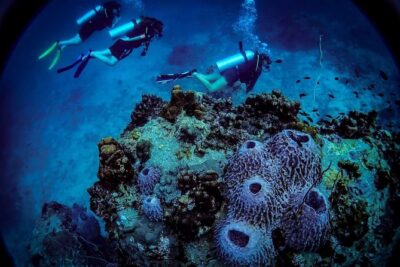
Open Water Course – Become certified diver in 3 days
Read our review →

Browse the lists this tour appears in