
Reviewed · BANGKOK TOURS
Lopburi Monkey Temple & Ayutthaya Old City Tour From Bangkok
Lopburi’s monkey-filled ruins give this day trip its odd, memorable spark. You move from cheeky wild macaques around a 12th-century Khmer monument to the fallen temples of Ayutthaya, once the capital of a powerful Thai kingdom. It is a long day, but the contrast is hard to forget.
I like the way this tour joins two very different old cities in one outing. I also like the small-group feel reported on many departures, plus guides such as Surina, Piya, Ken, and Thanya, who have been praised for clear stories, patience, and help with photos.
The main caution is the time on the road and the heat. Monkey numbers at Lopburi have fallen, sightings are not guaranteed, and the advertised pickup applies only to selected areas. If you want a slow, detailed study of Ayutthaya, a private tour may suit you better.
Key points before you book
- Two ancient cities in one day: Pair Lopburi’s Khmer ruins with Ayutthaya’s Buddhist temples and royal remains.
- Wild monkeys, not a zoo visit: Monkeys roam freely, and authorities have relocated many because of overpopulation.
- Five major temple stops: Phra Prang Sam Yot, Wat Yai Chai Mongkhon, Wat Mahathat, and Wat Phra Si Sanphet are the main sights.
- A practical Bangkok departure: Hotel pickup is offered only near Khao San Road and Siam Square. Other bookings meet at the Chinatown office.
- Temple fees cost extra: The listed admission charges total 260 baht per person, before lunch and personal spending.
- Expect a full, hot day: The tour lasts about 10 hours and includes long drives between Bangkok, Lopburi, and Ayutthaya.
Why this Bangkok day trip feels different
Most Bangkok excursions head south to beaches, floating markets, or the famous bridge at Kanchanaburi. This one points north, toward the old capitals and temple towns of central Thailand. You see a less polished side of the country, where ancient brickwork shares space with shops, roads, Buddhist shrines, and free-roaming monkeys.
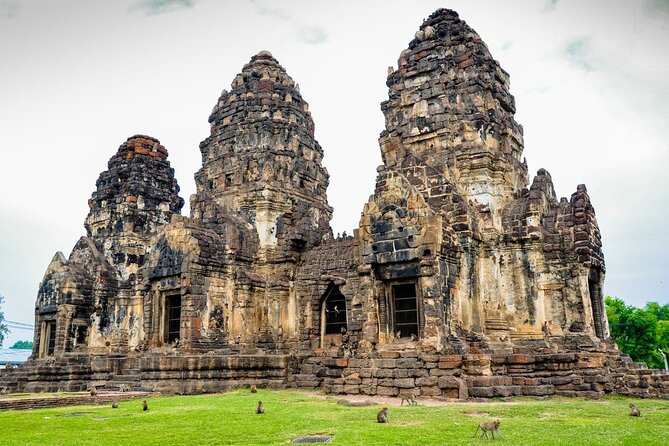
Ayutthaya alone makes a strong day trip. Adding Lopburi gives you something stranger and more local in feel. At Phra Prang Sam Yot, three weathered Khmer-style towers rise beside a town known for monkeys. The setting is not neatly arranged for sightseeing. That is part of the appeal, though it also means you should not expect a controlled animal encounter.
The tour costs $61.31 per person. For a 10-hour trip in an air-conditioned vehicle with a licensed English-speaking guide, hotel transfer in the stated zones, and drinking water, that is reasonable. The price is less attractive if you add every temple fee, lunch, and transport to the meeting point from another part of Bangkok.
The four listed temple admissions come to 260 baht:
- Phra Prang Sam Yot: 80 baht
- Wat Phra Si Sanphet: 80 baht
- Wat Mahathat: 80 baht
- Wat Yai Chai Mongkhon: 20 baht
You also pay for lunch and any drinks or snacks. Only one bottle of water is included, so I would carry extra water, especially in the hotter months.
More Ayutthaya temple days:
- From Bangkok: Ayutthaya Temples Guided Tour with Lunch
★ 4.7 · 10,535 reviews - From Bangkok: Ayutthaya Historical Park Guided Day Trip
★ 4.6 · 3,020 reviews - Ayutthaya Temples and River Cruise from Bangkok
★ 4.0 · 1,692 reviews
The road from Bangkok to Lopburi
The day starts at 8:00 am, with pickup timing usually falling between 7:30 and 8:00 for eligible hotels. Bangkok traffic can be slow, and the operator allows only a 10-minute grace period for group departures. Plan to arrive early rather than trying to cut it close.
If you stay near Khao San Road or Siam Square, pickup may make the morning easy. The wording matters: this is not citywide hotel pickup. If your accommodation is outside those zones, including much of Sukhumvit, you are directed to the WanderSiam office at 459/1 Thanon Chaokhamrop Road in Chinatown.
That limitation has caused some avoidable frustration. Check the exact pickup message sent through the booking platform the day before, including the junk folder. If you do not qualify for hotel pickup, build in time to reach the Chinatown meeting point.
The drive to Lopburi can take around 90 to 120 minutes, depending on traffic and road conditions. That makes the guide’s running commentary useful. Several guides, including Surina and Piya, have been praised for filling the drive with stories about Thai history, religion, and local customs. English ability can vary by guide, so if detailed architectural explanation is your top priority, keep your expectations measured.
Phra Prang Sam Yot and Lopburi’s monkey problem
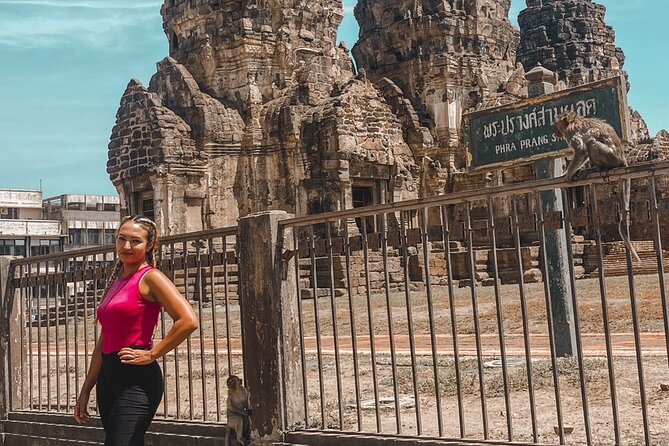
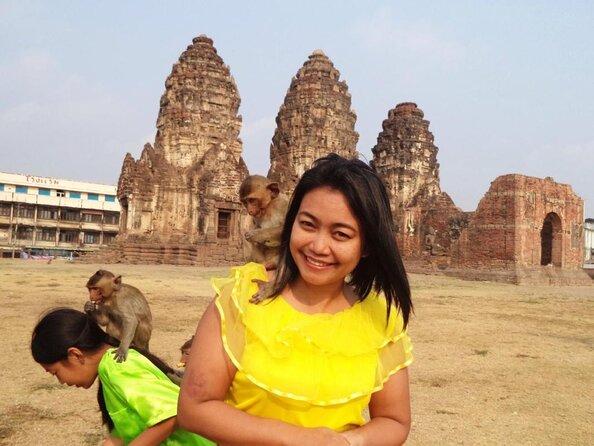
Phra Prang Sam Yot is the signature Lopburi stop. The three-towered monument dates from the period when Lopburi was under Khmer control from Angkor, likely in the late 12th or early 13th century. Its dark, weathered stone and pointed towers feel quite different from the later Thai temples in Ayutthaya.
The monkeys are the comic relief, but they are also the practical challenge. They are wild animals. Keep your distance, put phones and loose belongings inside your bag, and do not carry food toward them. A monkey that looks harmless can still grab, scratch, or run off with something important.
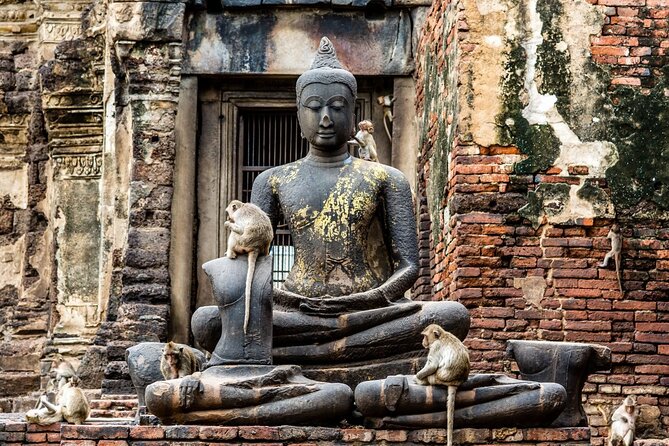
You may see monkeys around the temple and nearby streets, but the old scenes of huge numbers covering every surface are less likely now. Authorities moved many animals because of overpopulation. The tour information clearly says sightings cannot be guaranteed.
That change is important. If your main goal is a guaranteed monkey encounter, this trip carries some risk. Guides have sometimes taken groups to another nearby place where monkeys gather when the temple area is quiet, and people have enjoyed better views there. Still, that is a flexible response, not a promise.
Lopburi itself deserves more than a quick animal stop. The old city includes Khmer-style ruins, Buddhist temples, and Buddha images with bright surfaces that contrast with the ancient stonework. You get a glimpse of a town shaped by several periods of Thai history rather than a single grand monument.
Allow roughly three hours for the Lopburi portion, including the main temple and the old town. In practice, the pace depends on the group, the heat, and how active the monkeys are. The open areas offer little shade, so a hat, sunscreen, and comfortable shoes are useful.
Ayutthaya’s temples, starting with Wat Yai Chai Mongkhon
After Lopburi, the route turns toward Ayutthaya, the former Thai capital that flourished from 1350 until its destruction in 1767. Its historical park is now a UNESCO World Heritage area, but it does not feel like a single enclosed museum. Ruins spread across the old city, with modern roads and daily life close by.
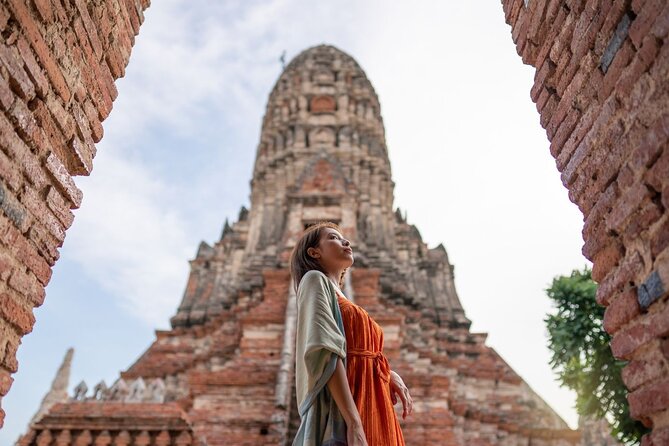
Wat Yai Chai Mongkhon is often the first Ayutthaya temple. King U Thong founded the monastery in the second half of the 14th century, early in Ayutthaya’s royal period. Its large central prang dominates the grounds, making it easy to understand the scale and purpose of the site even before the guide explains the details.
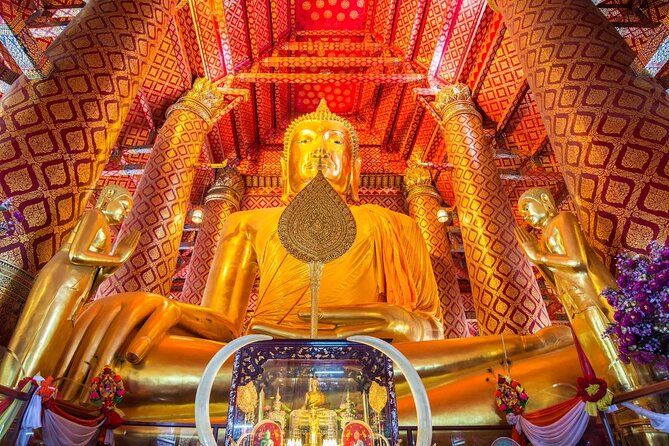
This is one of the more visually striking stops. You can see rows of Buddha images, old brick structures, and the tall central form rising above the complex. The site offers strong photographs, but it is not just a backdrop. The guide can explain how the monastery fits into the early Ayutthaya kingdom.
You have about an hour here. That is enough for the main views and photos, though not for a slow inspection of every corner. Wear footwear that is easy to remove if required, and dress with temple respect in mind. Thailand’s historic religious sites are active cultural places, not simply abandoned ruins.
A few more Bangkok half-days worth weighing up
- Bangkok: Damnoen Saduak Market and Maeklong Railway Market
★ 4.5 · 26,723 reviews - The Old Siam: Damnoen Saduak and Maeklong Railway Market
★ 4.5 · 10,992 reviews - Bangkok: Train Market & Floating Market with Boat Ride
★ 4.7 · 9,547 reviews - Bangkok Canal Tour: 2-Hour Longtail Boat Ride
★ 4.5 · 5,909 reviews
Wat Mahathat and the Buddha head in tree roots
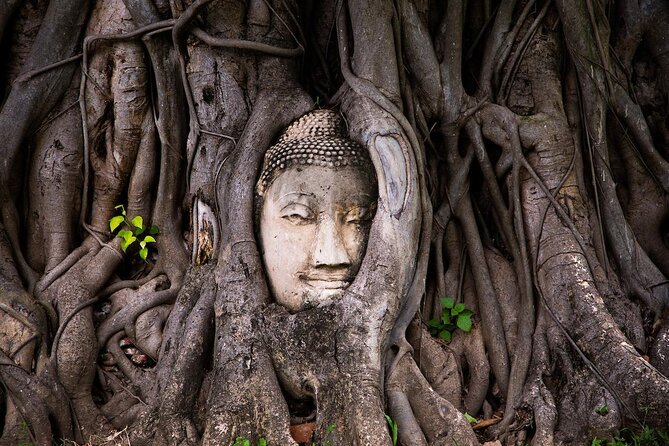
Wat Mahathat is one of Ayutthaya’s oldest temples and one of its most recognized. The remains include pagodas, an unusual octagonal pagoda, a royal hall, and smaller religious buildings. The famous Buddha head wrapped in tree roots is here, but the site is larger than that single photograph.
The tree roots have become the image many people associate with Ayutthaya. Your guide can add useful context about the damage, decay, and later preservation of the old city. The contrast between the calm tree, the stone face, and the broken brick buildings gives this stop a quiet power.
You should expect other people around the Buddha head and may need to wait briefly for a clear photograph. Keep your pose respectful, and do not stand above the head for a picture. The tour allows about an hour, which works well for seeing the key remains without losing too much time elsewhere.
This is also the stop where a guide’s communication matters most. If the explanation is brief or hard to follow, you may leave with good images but less understanding of what you saw. Guides such as Ken and Piya have been singled out for turning the ruins into a connected story rather than offering only dates and names.
Wat Phra Si Sanphet and the royal heart of Ayutthaya
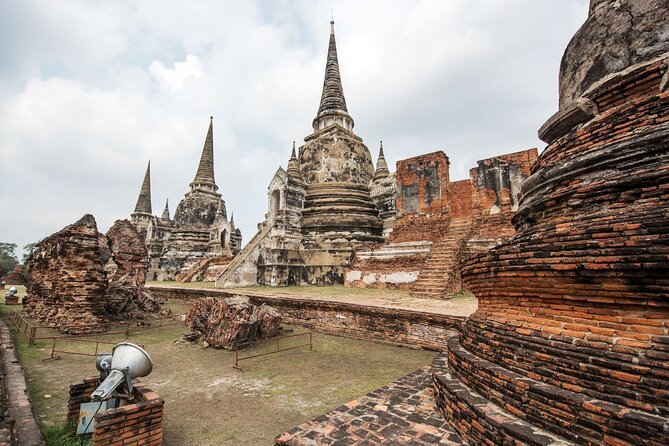
Wat Phra Si Sanphet is located on the city island within Ayutthaya’s World Heritage park. Its three restored chedis are the main sight. They contain the ashes of three Ayutthaya kings, giving the site a direct link to the royal center of the old capital.
The three chedis create one of the clearest views in the park. Their repeated shape is simple, strong, and easy to appreciate even if you are not an expert in Thai architecture. Around them, the remains of the former royal compound show how much of the old city has been lost.
The scheduled time here is about two hours, making it the longest Ayutthaya stop. That extra time helps because the site has more to see than a single tower or Buddha image. It also gives you room for photographs and a slower walk, though the midday sun can make two hours feel long.
I would save some energy for this stop. The tour packs a lot into one day, and by late afternoon you may have already walked across several temple grounds. Drink before you feel thirsty, and use every shaded rest point you find.
Guides, group size, and the human side of the day
The guide can shape this experience more than any single temple. The strongest feedback has centered on guides who explain the sites, keep the group together, help with photographs, and adjust when conditions change.
Surina has been praised for lively stories and for checking that everyone had enough time at each place. Piya has been noted for energy, humor, temple knowledge, and an unusual familiarity with the local monkeys. Ken has been praised for making Ayutthaya’s past easier to understand. Thanya has been described as especially helpful and attentive, including during an unexpected transport problem in Bangkok.
Those names do not guarantee who will lead your departure. The useful point is to expect a guide-led day, not an audio tour. English clarity may vary. One departure received criticism because the guide’s accent, repeated explanations, and limited English made the historical material difficult to follow.
The stated maximum varies within the supplied details, with one section noting up to 10 participants and another saying up to 30. Some departures have been described as groups of about 10, which is a comfortable size for walking and questions, but you should not assume every date will be that small.
A group tour also means waiting. You may pause while someone takes photos, catches up, or finds shade. That shared pace helps keep the cost down, but it will not suit you if you want to linger at one ruin or move on immediately.
Heat, lunch, water, and what to carry
Thailand’s central plains can be extremely hot, particularly around exposed temple grounds. The air-conditioned vehicle is a major comfort between stops, but you still spend much of the sightseeing time outdoors.
The tour provides one bottle of drinking water. That is not much for 10 hours, especially if you visit during a heat warning. Bring your own refillable bottle or buy extra drinks during the day. Stops for snacks, bathrooms, and supplies are part of the rhythm, but do not rely on the included water alone.
Lunch is not included. A meal stop is part of the day, and one account found the food enjoyable but expensive. If you care about keeping costs low, ask the guide what the meal stop offers before ordering, and carry a small snack if you need something between temples.
Bathroom facilities can be basic. Carry tissues and hand sanitizer, since paper may not always be available. Comfortable walking shoes are more useful than sandals with slippery soles, and a hat or umbrella can make the temple grounds easier to handle.
Do not bring food to feed the monkeys. Although some people have bought milk for them, the safety guidance is clear: these are wild animals, and keeping food away is the wiser choice.
Is the $61.31 price good value?
For the base price, I think the tour offers fair value if you want to cover both Lopburi and Ayutthaya without arranging transport yourself. You receive an air-conditioned vehicle, a licensed English-speaking guide, limited hotel pickup and drop-off, and one bottle of water.
The hidden cost is modest but real. Add 260 baht for the listed temple admissions, lunch, extra drinks, and transport to Chinatown if you stay outside the pickup zones. The total remains reasonable for a full day, but it is not an all-inclusive ticket.
The value drops if you mainly want a detailed Ayutthaya visit. You will spend time reaching Lopburi, and the monkey sightings are uncertain. For a first-time visitor who likes variety, the unusual pairing makes sense. For a serious student of Ayutthaya architecture, a dedicated Ayutthaya day with more time at fewer sites may be better.
Free cancellation is available when you cancel at least 24 hours before the start time. Cancellations or changes inside that window are not refunded, and weather cancellations are not eligible for a refund. Those rules make it wise to check the forecast and your Bangkok plans before booking.
Who should book this experience?
I would choose this tour if you want a big central Thailand day and like mixing major ruins with something unpredictable. It suits first-time visitors who want history, photographs, and a local oddity in one package.
It is also a good fit for solo visitors. One departure continued with a single participant, and the guide and driver still provided the full experience. Families should find the variety appealing, but adults must supervise children closely near the monkeys and keep all loose items secured.
I would hesitate if you dislike long drives, intense heat, group pacing, or uncertain wildlife sightings. I would also think twice if the only reason you are booking is to see hundreds of monkeys at Phra Prang Sam Yot. That scene has changed, and the animals may be fewer or absent on the day you visit.
My verdict
Book it for contrast: ancient Khmer towers, wild monkeys, early Buddhist monasteries, royal chedis, and the broken grandeur of Ayutthaya. The day is full, but it gives you a broad look at central Thailand for a fair base price.
Go in prepared. Confirm your pickup location, arrive early, budget for 260 baht in temple fees plus lunch, carry extra water and tissues, and treat the monkeys as wild animals. If you accept those limits, this is an entertaining and worthwhile day beyond Bangkok. If you want depth over variety, choose Ayutthaya alone.
FAQ
How long does the Lopburi and Ayutthaya tour take?
The experience lasts about 10 hours and begins at 8:00 am. It ends back at the meeting point.
Where does hotel pickup operate?
Pickup is offered only from accommodations in or near Khao San Road and Siam Square. If your accommodation is outside those areas, you must go to the WanderSiam office on Chao Khamrop Road in Chinatown.
Are monkeys guaranteed at Phra Prang Sam Yot?
No. Monkeys still live around Lopburi, but many were relocated because of overpopulation. The animals are wild, and sightings are not guaranteed.
How much do the temple admissions cost?
The listed fees are 80 baht for Phra Prang Sam Yot, 20 baht for Wat Yai Chai Mongkhon, 80 baht for Wat Mahathat, and 80 baht for Wat Phra Si Sanphet. That totals 260 baht per person.
Is lunch included?
No. Lunch, personal expenses, and extra drinks are not included in the tour price.
What should I do around the monkeys?
Keep your distance, do not bring food, and keep your belongings inside your bag. The monkeys roam freely and should not be treated as pets.
What is the cancellation policy?
You can receive a full refund if you cancel at least 24 hours before the tour starts. Cancellations made less than 24 hours before departure, no-shows, and weather cancellations are not refunded.
Just added around Bangkok
- Bangkok to Ayutthaya Lopburi Monkey Temple, Largest Buddha Tour★ 5.0 · 62 reviews
- Baiyoke Sky Dinner Experience with Observation Deck Access★ 3.5 · 57 reviews
- Bangkok Luggage Delivery from Hotel to Airport★ 5.0 · 25 reviews
- Living Green Elephant Sanctuary Tour from Bangkok and Pattaya★ 5.0 · 88 reviews
- Bangkok Luggage Storage★ 4.5 · 37 reviews
- Living Green Elephant Sanctuary Experience near Bangkok & Pattaya★ 5.0 · 76 reviews
- Ethical Elephant Watching Tour From Bangkok & Pattaya★ 4.5 · 9 reviews
- King Power MahaNakhon SkyWalk at Bangkok Admission Ticket★ 4.0 · 37 reviews
Bangkok Tours, compared.
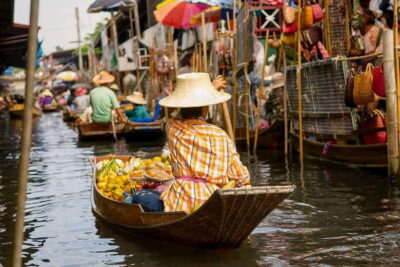
Damnoen Saduak Market and Maeklong Railway Market
Read our review →
The Old Siam: Damnoen Saduak and Maeklong Railway Market
Read our review →
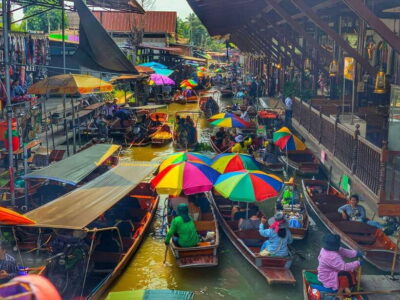
Train Market & Floating Market with Boat Ride
Read our review →
Bangkok Canal Tour: 2-Hour Longtail Boat Ride
Read our review →
Muay Thai Boxing Tickets at Rajadamnern Stadium
Read our review →
White Orchid Chao Phraya Dinner Cruise free Beer
Read our review →
Bangkok by Private Guide: Full Day Tour In and Around
Read our review →Browse the lists this tour appears in