
Reviewed · KOH SAMUI TOURS
Samui:Elephant Jungle experience & The First Elephant Museum
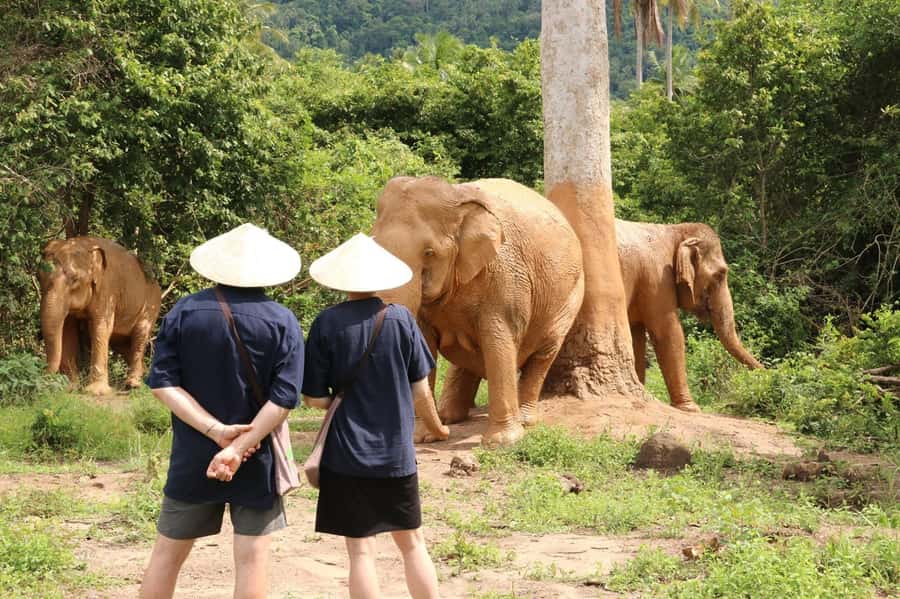
Samui Elephant Home pairs Thailand’s elephant heritage with a careful look at modern sanctuary work. You begin in Samui’s first Elephant Museum, then head into the forest to watch rescued elephants forage, wander, and cool themselves in the tropical heat.
I like the balance of classroom learning and time outdoors. I also like the seed bomb activity, which gives you a small, practical role in restoring food sources rather than treating conservation as a speech. The main consideration is time: three hours is short, and one visitor felt the museum and classroom took too much time away from watching the elephants.
Key points to know before you book
- The museum comes first: Set aside about an hour for Thai elephant history, culture, and a safety briefing.
- The elephants roam freely: You observe them in an open forest area rather than watching a staged performance.
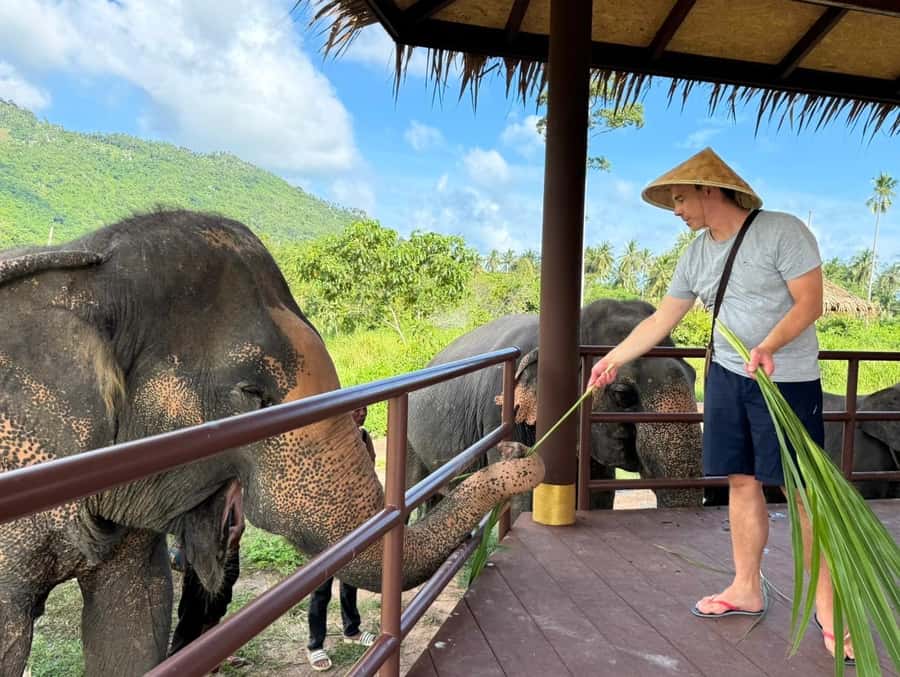
- Hands-on contact is limited: Feeding may be included, but the care model favors respectful distance and avoids forcing interaction.
- Seed bombs support future forage: You make clay balls with native seeds and launch them into the forest with a traditional slingshot.
- Guides make a difference: Angie, Katy, Katie, and Noot are praised for clear explanations and strong care for the animals.
- The price is $64: With hotel transfers, insurance, guiding, museum entry, and activities included, it offers solid value if ethical elephant care matters to you.
The visit begins with Thai elephant culture
Your morning or afternoon starts with pickup from your hotel somewhere on Ko Samui. The exact starting time depends on availability, and the operator asks you to wait in the hotel lobby about 15 minutes before pickup. That is sensible advice in Samui, where roads, hotel entrances, and traffic can make a precise handoff slower than expected.
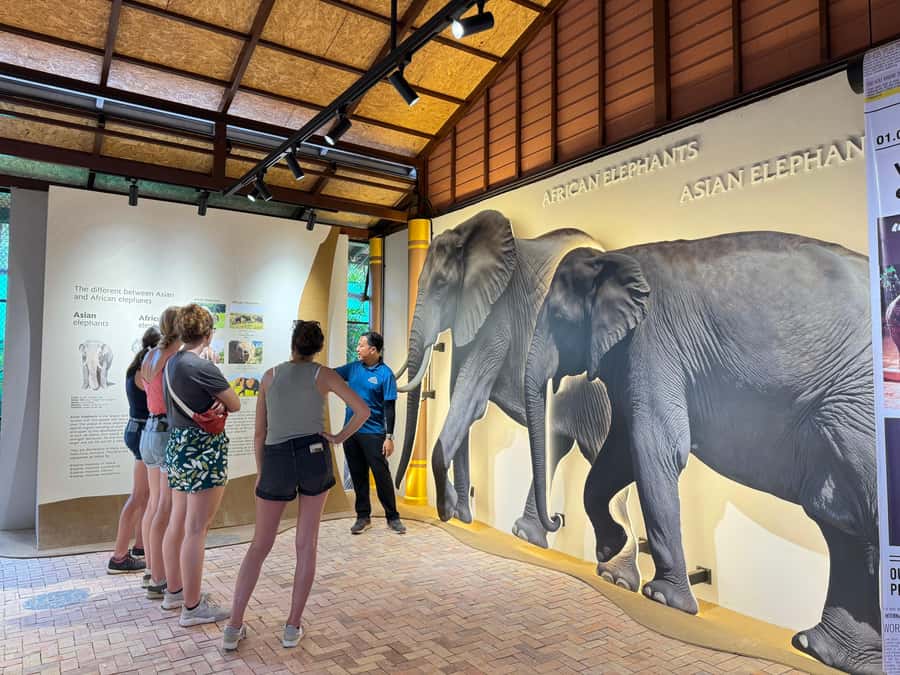
At Samui Elephant Home, the first hour centers on the museum, an introduction, and safety information. This is not simply a quick display before the main event. The museum explains the long relationship between elephants and Thai people, including their place in work, spirituality, culture, and daily life.
I like this beginning because it gives the forest visit a human and historical frame. You learn why elephants matter in Thailand, then consider what happens when working elephants are rescued and moved into a more natural setting. Guides such as Angie, Katy, Katie, and Noot have been singled out for explaining these topics with care and clarity.
The museum portion may be especially useful if you know little about Asian elephants or elephant conservation. Families and older children can get more from the experience when they understand the difference between natural behavior and a trained trick. It also helps you see why an elephant sanctuary should be judged by its care practices, not by how close it lets you stand.
The tradeoff is clear. If your main goal is to spend as much time as possible in the forest, the first hour may feel long. One four-star assessment specifically suggested shortening the classroom and museum section in favor of following the elephants outdoors. I would keep that in mind when comparing this visit with a shorter, mostly outdoor program.
More museums and galleries in Ko Samui:
- Samut Prakan: The Erawan Museum Admission Ticket (NON THAI)
★ 4.8 · 89 reviews - Chiang Mai: Art in Paradise Illusion Museum Entry Ticket
★ 4.4 · 82 reviews - Pattaya: Art in Paradise 3D Museum Discounted Ticket
★ 4.6 · 75 reviews
Into the forest with nine rescued elephants
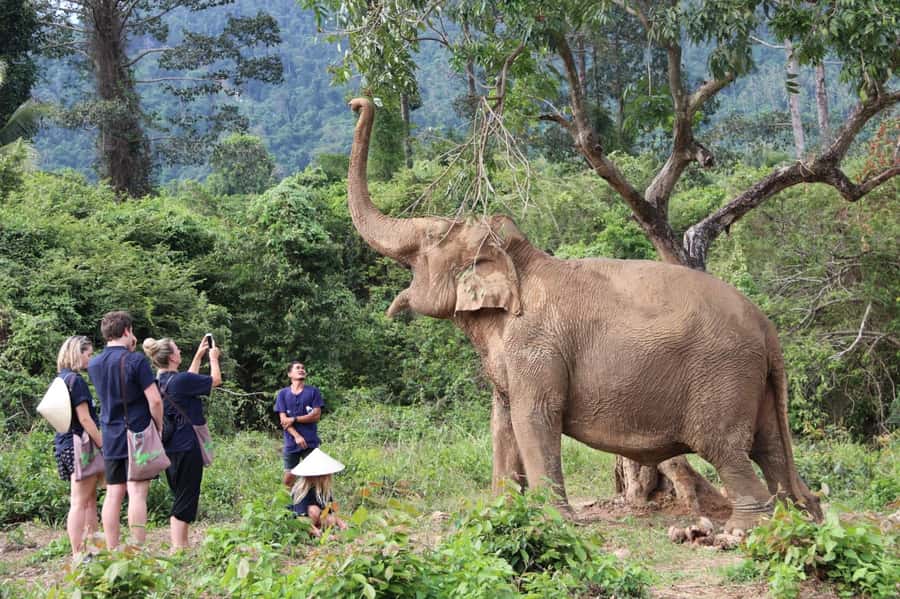
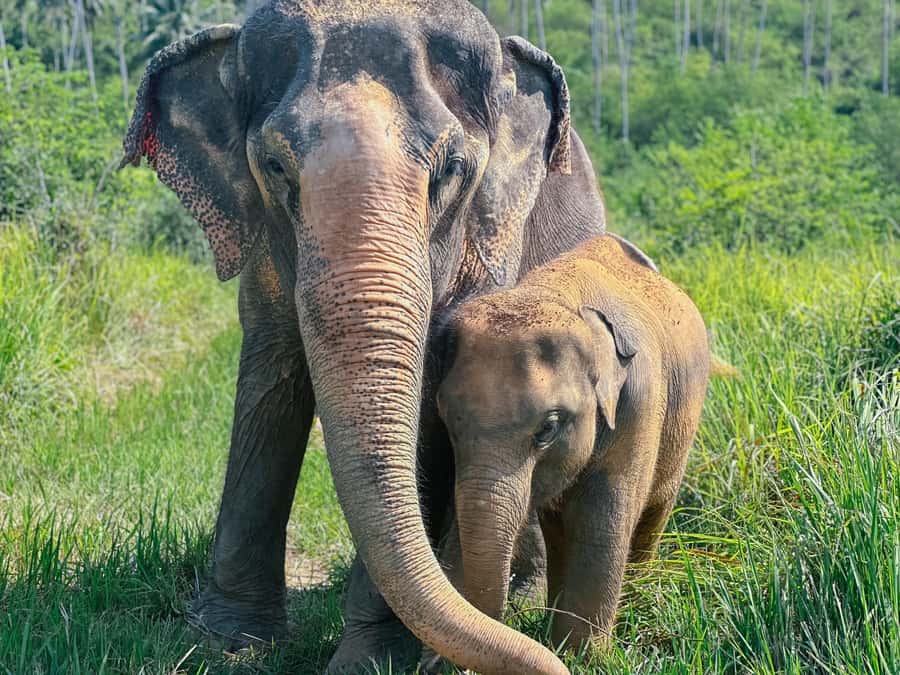
The outdoor portion lasts about an hour and a half. You walk through the forest and observe the elephants as they forage, explore, and spend time with one another. The supplied information describes nine rescued elephants, including eight adult females and one young male, though the group may change as the sanctuary’s animals and care plans develop.
The important point is that you are not watching a show. There are no rides, performances, or forced bathing sessions described here. Instead, the staff explains personalities, social links, feeding habits, and the meaning of freedom for elephants living under human care.
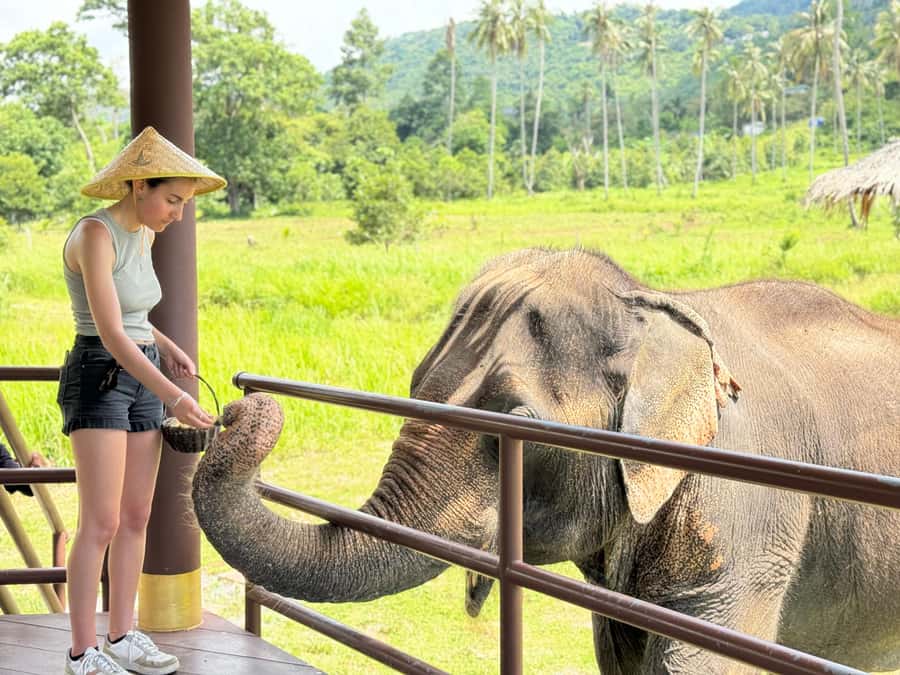
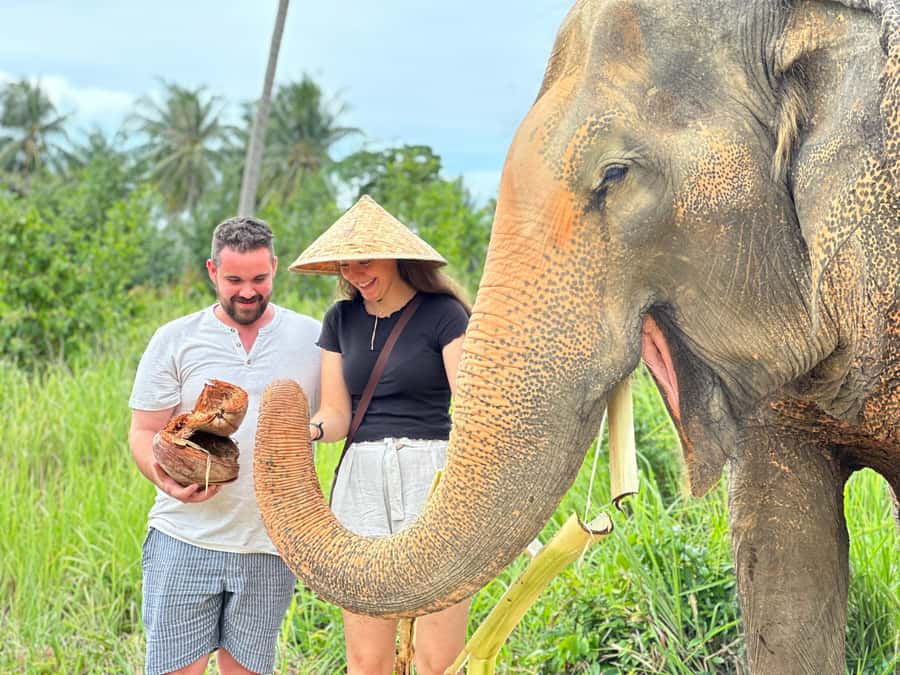
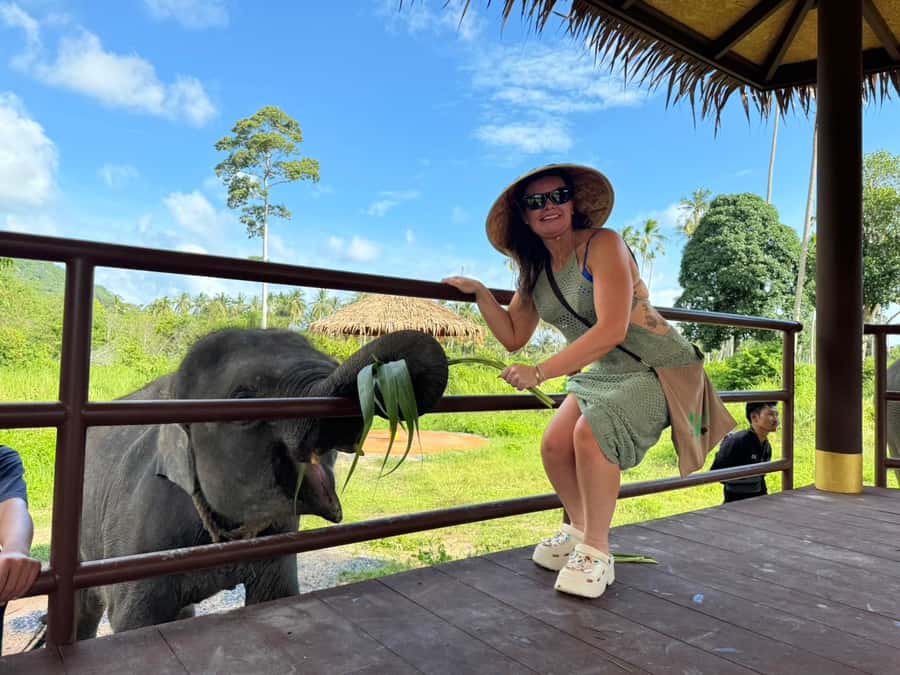
You may get close enough to offer food, with bananas, sugarcane, and similar treats mentioned in the experience details. Some accounts also describe limited touching. Still, the overall approach is mostly hands off, and that is a good sign for anyone trying to choose a responsible elephant activity. The elephants are allowed to decide how much contact they want.
That choice can make the experience feel less predictable than a standard animal encounter. An elephant may approach, pause, wander away, or focus on food and another elephant. You should bring a camera, but keep it ready without moving into the animals’ space. The best photograph may be the one you take from a respectful distance.
The baby elephant is often a memorable part of the group. One account describes him as cheeky, while other descriptions focus on the adult females and their difficult pasts. You will not get a polished wildlife documentary. You will get a close look at animals living in a managed forest environment, with staff nearby to protect both elephants and people.
Why the no mud bath policy matters
Many elephant activities in Thailand advertise bathing, mud bathing, washing, or repeated handling. This program does not include a mud bath. A guide explained to one group that mud bathing with elephants can be dangerous, which is an important detail for anyone weighing ethical standards.
The absence of a mud bath may disappoint you if you are looking for a classic photo opportunity. I see it as a positive feature. Elephants do not need to perform a human-designed activity for your benefit, and avoiding unnecessary contact keeps the focus on natural behavior.
The program instead explains how elephants manage the heat. After their forest walk, you observe mahouts helping them cool down through shade, water, and calm routines. The staff describes how tropical temperatures affect elephants and why comfort must come before a photo or feeding moment.
This part is easy to overlook, but it is one of the more useful lessons. Elephant care is not just about providing food. It also involves watching health, behavior, hydration, temperature, age, and individual needs. You see how a daily routine can support animals that once lived under much harder conditions.
Food preparation shows the daily work behind a sanctuary
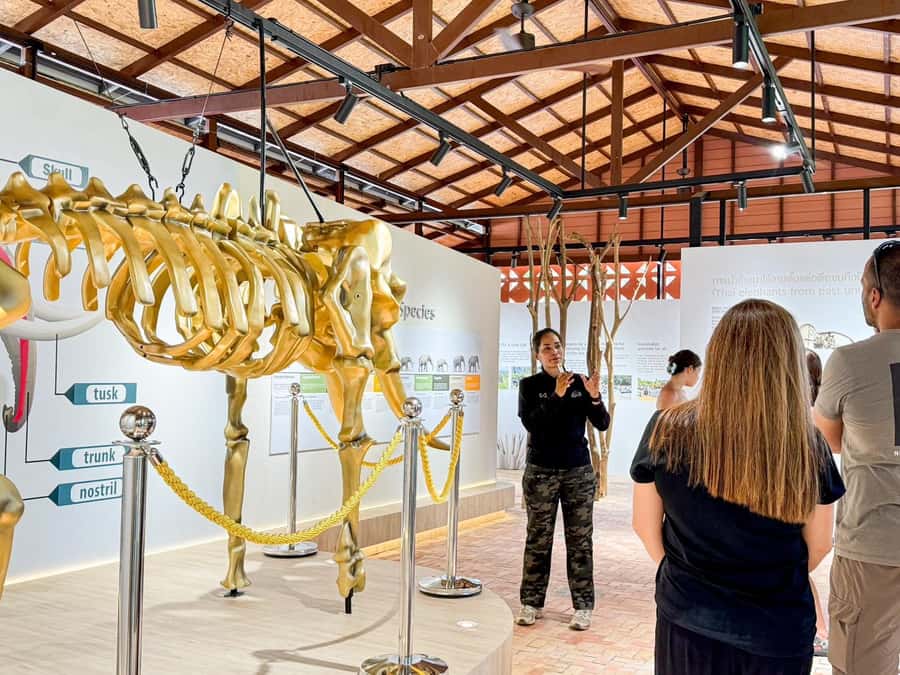
During the visit, mahouts demonstrate how organic food is prepared. Your guide explains dietary needs, health concerns, and the way nutrition changes across an elephant’s life stages.
This adds welcome substance to the encounter. Feeding an elephant is memorable, but learning what it should eat and why makes the activity more than a quick exchange of treats. You begin to understand that sanctuary work involves routine tasks long after the last tour group leaves.
The food demonstration may also help families keep expectations realistic. You are not simply handed a basket and sent toward the elephants. Staff control the process, explain how to offer food, and keep animal welfare as the first concern. The experience details indicate that feeding and limited touching can happen, but you should not assume that every elephant will come forward or accept contact.
That uncertainty is part of responsible animal tourism. A calm elephant at a comfortable distance is a better outcome than an agitated elephant made to interact.
A few more Ko Samui half-days worth weighing up
- Koh Samui: Pig Island & Koh Tan Snorkeling by Speed boat
★ 4.5 · 4,149 reviews - Koh Samui: Mu Ko Ang Thong Park Cruise with Kayaking Option
★ 4.3 · 3,728 reviews - Koh Samui: Half-Day Island Highlights Tour with Hotel Pickup
★ 4.6 · 3,556 reviews - Koh Samui: Island Hopping Adventure in Coral and Pig Island
★ 4.6 · 3,453 reviews
Making seed bombs with a slingshot
The conservation activity is the most unusual part of the program. You form seed bombs from clay and native plant seeds, then use a traditional slingshot to send them into forest areas.
The aim is simple: help grow plants that can provide future food for the elephants and support the surrounding forest. Some descriptions specifically mention pumpkin seeds, while the general activity refers to native seeds. Either way, the point is not instant results. You are taking part in a small planting project that may help the sanctuary over time.
This is a clever activity for families and children because it turns conservation into something physical and fun. It also gives adults a clearer idea of how an elephant home can work toward longer-term sustainability. You are not only observing the animals for a few hours. You are helping add to the place that supports them.
Use care with the slingshot and follow instructions closely. The activity takes place in a forest area, so this is not a reason to wander off or fire seeds wherever you like. The guide will direct the activity, and the forest setting can be hot, uneven, and exposed in places.
Guides, group size, and the human side of the visit
The strongest part of this experience may be the guides. Angie is repeatedly praised for her English, patience, warmth, and clear explanations. Katy and Katie are also noted for their museum and elephant knowledge, while Noot is described as especially committed to the animals.
One group had only four people, making the experience feel almost private. Group size can vary, so you should not book expecting a guaranteed small group. Still, the format allows room for questions, and the guide’s role is more than pointing out elephants. You learn why the sanctuary avoids certain activities, how animals were rescued, and what care looks like day by day.
The guides also seem attentive to human needs. When one participant struggled in the heat, Angie provided fans and extra water without being asked. That is worth noting in Samui’s tropical climate, particularly if you are sensitive to heat or planning the visit with children.
The setting around the museum is described as clean, green, and home-like. That matters because the condition of the facility gives you clues about how seriously the operator treats its work. It does not prove every part of an operation, but a well-kept center and calm animals are reassuring signs.
Is $64 good value for three hours?
The price is $64 per person. Included are roundtrip hotel transfer around Samui, full insurance, a welcome drink, the museum tour, the forest walk, elephant observation, and seed bomb making.
That is a fair package if you value education and responsible care. Transport alone can add hassle and expense on Ko Samui, so the hotel pickup and return make the price easier to justify. You also receive a guided cultural presentation, not just a short encounter with animals.
The value is weaker if you want several hours of close animal contact. The visit lasts three hours, with roughly one hour in the museum and 90 minutes outdoors, plus transitions and activities. Feeding or touching may be brief and depends on the elephants’ choices.
I would compare this program with your priorities. At $64, you are paying for a structured, educational experience that supports the sanctuary and its forest work. You are not paying for guaranteed photos of an elephant bathing beside you.
Practical advice for a comfortable visit
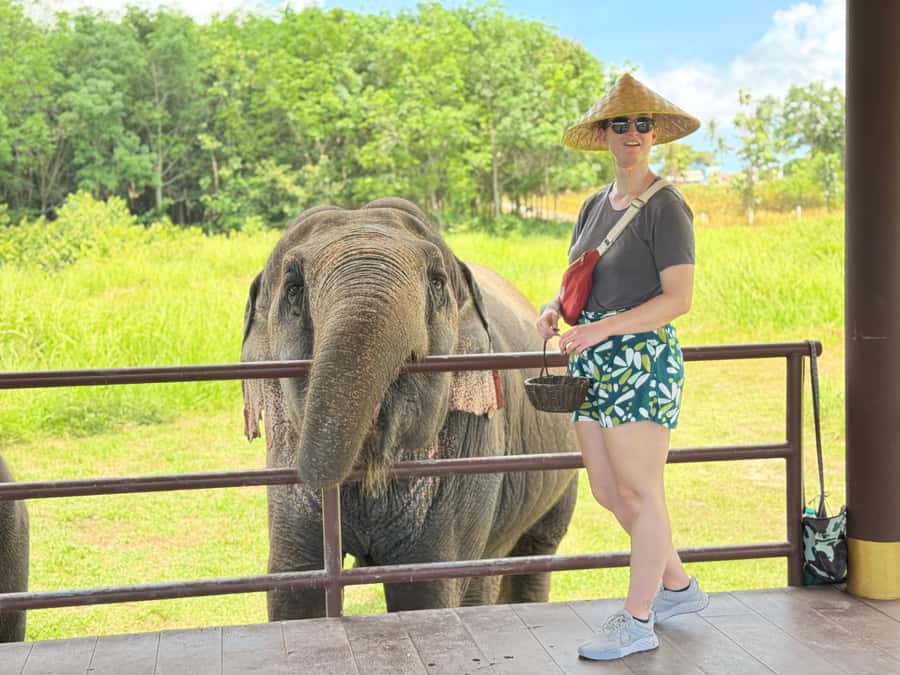
Wear walking shoes with a good grip. You will walk through a forest area, and the program includes hiking and wildlife viewing rather than standing in one spot.
Bring a hat, sunscreen, insect repellent, and a camera. The heat can be tiring, so water is sensible even though the experience includes a welcome drink and staff may provide extra water when needed.
Keep alcohol and drugs out of the program. Photography is allowed for personal use, but the animals’ space comes first. Do not call an elephant toward you, block its path, or assume that a calm animal wants to be touched.
The activity is listed as wheelchair accessible, but the outdoor forest walk can still involve natural ground and walking conditions. If you use a wheelchair, confirm the current route and access arrangements when booking so the staff can prepare properly.
Cancellation is flexible: you can cancel up to 24 hours ahead for a full refund. You can also reserve now and pay later, which helps if your Samui plans are still shifting.
Who should choose Samui Elephant Home?
I would recommend this experience to you if you want:
- An ethical elephant program with no riding or performance described
- A mix of Thai culture, conservation, and outdoor animal observation
- A guide-led visit where you can ask questions
- Limited, controlled feeding rather than constant handling
- A family activity with an educational purpose
- A way to support elephant care and forest planting
I would think twice if you want a full-day program, long wildlife tracking, or guaranteed close contact. The museum and classroom work take a meaningful share of the three hours, and the elephants set the pace outside.
The program also suits first-time sanctuary visitors. It explains why natural behavior matters and why a responsible activity may feel quieter than a commercial animal show. That is a useful lesson to carry into other parts of Thailand.
Should you book this elephant experience?
Book it if you want your money to support a sanctuary that puts food, shade, space, and calm routines ahead of forced entertainment. The museum adds Thai context, the forest walk lets you watch natural behavior, and the seed bombs give you a small conservation role.
Before booking, accept that the outdoor contact may be short and controlled. If that sounds right, Samui Elephant Home offers strong value at $64, especially with transfers, insurance, guides, and the museum included. If you only want maximum time beside elephants, search for a longer program. If you want an informed and respectful introduction to elephant care on Ko Samui, this is a sensible choice.
FAQ
How long does the Samui Elephant Home experience last?
The experience lasts three hours, including the museum visit, safety briefing, forest walk, elephant observation, and seed bomb activity.
What is the price per person?
The listed price is $64 per person.
Is hotel pickup included?
Yes. Roundtrip transfer from hotels around Ko Samui is included. You are asked to wait in your hotel lobby about 15 minutes before the pickup time.
What language is the tour conducted in?
The live guided tour is conducted in English.
What happens at the Elephant Museum?
You take a guided tour of Samui’s first Elephant Museum, with exhibits and stories about elephants’ role in Thai heritage, spirituality, and daily life.
Can I feed the elephants?
Feeding may be included during the outdoor visit. Bananas and sugarcane are mentioned as possible treats, but the interaction remains controlled and depends on the elephants’ behavior.
Can I touch the elephants?
Limited touching may occur, but the program favors respectful distance and a mostly hands-off approach. You should respect each elephant’s choice and personal space.
Are elephant rides or mud baths included?
No elephant rides or mud baths are included in the supplied activity details. The program explains why avoiding mud bathing can help reduce risk.
What should I bring?
Bring comfortable walking shoes, a hat, sunscreen, insect repellent, and a camera. Alcohol and drugs are not allowed.
Can I cancel or pay later?
You can cancel up to 24 hours before the experience for a full refund. Reserve now and pay later is also available.
Just added around Ko Samui
- Pig Island(Koh Mudsum) and Koh Tan Half Day Snorkeling Tour★ 4.2 · 11 reviews
- Private Group Half-Day City Tour Around Koh Samui★ 4.1 · 20 reviews
- Koh Samui: Pig Island & Koh Tan Speedboat Tour with Lunch★ 4.2 · 120 reviews
- Koh Samui: Zipline Experience of Lamai Viewpoint★ 4.1 · 31 reviews
- EasyKart Koh Samui (Chaweng Lake): Go-Kart Racing Experience★ 4.3 · 10 reviews
- Koh Samui: Island Tour with Sunset and Sightseeing★ 4.5 · 23 reviews
- Koh Samui City Tour with Cultural and Scenic Highlights★ 4.5 · 33 reviews
- Koh Samui: Fishing Day Tour by Escort Boat with Mr. Tu★ 4.1 · 45 reviews
Koh Samui Tours, compared.

Pig Island & Koh Tan Snorkeling by Speed boat
Read our review →
Mu Ko Ang Thong Park Cruise with Kayaking Option
Read our review →
Half-Day Island Highlights Tour with Hotel Pickup
Read our review →
Island Hopping Adventure in Coral and Pig Island
Read our review →
Mr.Ung’s 4WD Wild Jungle Safari Tour with Lunch
Read our review →
Angthong Marine Park Boat Tour w/ Transfer and Meals
Read our review →
Pig Island Snorkeling and Koh Tan Speedboat Tour
Read our review →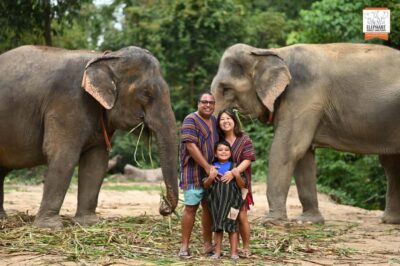
Elephant Sanctuary Entry and Feeding Experience
Read our review →Browse the lists this tour appears in