
Reviewed · BANGKOK TOURS
Thai Bus Food Tour Experience in Bangkok
Bangkok sightseeing rarely gets more unusual than this: you eat a full Thai meal on a moving double-decker bus while historic Rattanakosin Island passes outside the windows. The route links Hua Lamphong, Chinatown, the Grand Palace, Wat Pho, Wat Arun, and other major sights in about 90 minutes.
I like the easy first look at Bangkok, especially if this is your first activity in the city. I also like the friendly professional service, onboard restroom, WiFi, USB charging, and choice of lunch, afternoon tea, dinner, or a night outing. The main drawback is simple: you see the sights from the bus but do not stop to visit them, and traffic can make the route feel slow or repetitive.
Key points to know before booking
- More than 20 sights from one moving dining room: See Chinatown, Wat Saket, the Grand Palace, Wat Pho, Wat Arun, and the Giant Swing without arranging several separate transfers.
- Four meal times suit different Bangkok plans: Pick lunch, afternoon tea, dinner, or a nightlife tour, depending on how you want to fit sightseeing around your day.
- A proper meal, not just a snack: Most options include a welcome drink, starters, main courses, dessert, and a beverage.
- Good practical comforts: The bus has panoramic windows, an onboard restroom, WiFi, and USB charging ports.
- Food choices require attention: Kids’ menus, vegetarian dishes, and halal menus are available depending on the option you select.
- Traffic shapes the experience: The route and schedule can change with road conditions and weather, and the tour passes sights rather than stopping at them.
What the Thai Bus Food Tour actually feels like
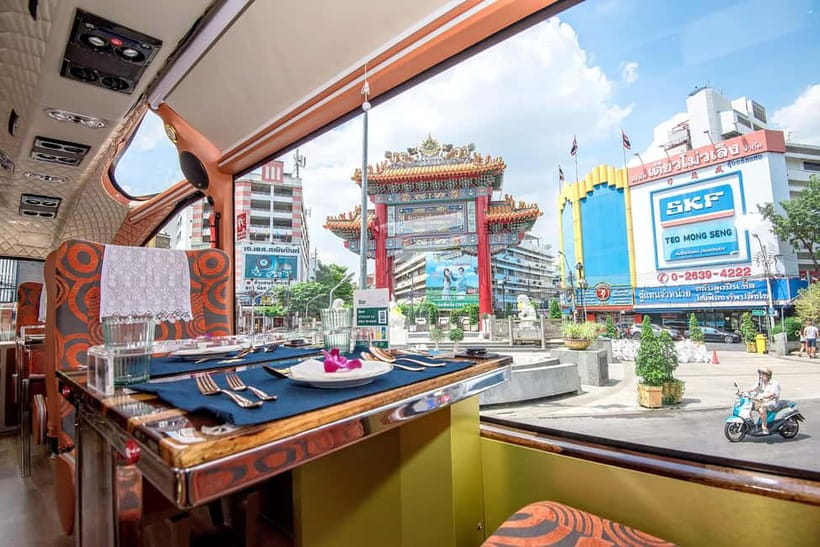
The appeal here is the combination of two activities that normally compete for your time: eating well and seeing Bangkok. Instead of spending an hour in a restaurant and then finding a taxi to the next sight, you remain seated while the city rolls past.
The bus is Thailand’s first dining bus, and the double-decker design gives the outing a special setting. Panoramic windows help you see temples, old civic buildings, busy streets, and riverside views while your meal is served. I would treat it as a moving introduction to central Bangkok rather than a replacement for walking through the historic district.
The service includes an English and Thai-speaking guide, driver, and service crew. The guide shares information about Bangkok’s heritage as the bus travels, while the crew handles the meal. You get professional service without needing to plan the route yourself.
The food is described as Michelin-awarded or Michelin-recognized Thai cuisine, with menus tied to the selected dining period. That gives the experience more weight than a standard sightseeing bus with a packaged sandwich, though the meal remains only one part of what you are paying for.
More Food Tours in Bangkok
- Bangkok: Backstreets Food Tour with 15+ Tastings
★ 4.9 · 2,880 reviews - Bangkok Backstreets Food Tour with 15+ Tastings
★ 5.0 · 1,926 reviews - Bangkok: Michelin Guide Street Food Tour by Tuk Tuk
★ 4.4 · 1,274 reviews
Choosing between lunch, afternoon tea, dinner, and night views
The four formats give this tour some flexibility. A lunch departure works well if you want to see the buildings and temples in daylight, then continue with your own afternoon plans. Daylight also makes architectural details easier to spot through the windows.
Afternoon tea offers a lighter-feeling schedule, though the exact menu depends on the option selected. It can suit you if you want a planned break between sightseeing activities without committing to a late meal.
Dinner is the strongest choice if you want the outing to feel like a special evening rather than a practical city introduction. The route includes major historic sights, and the transition from daylight into Bangkok’s evening glow can add variety to the view.
The night tour puts more attention on illuminated landmarks and the city after dark. Wat Arun across the river is especially suited to an evening route, while Chinatown and the central streets provide a lively backdrop. You should remember that darkness reduces the detail you can see on some buildings, so choose the daytime option if architecture is your main reason for booking.
Menus rotate by season and can change with ingredient availability. I would read the menu connected to your chosen departure instead of assuming every service offers the same courses.
From Hua Lamphong to Chinatown
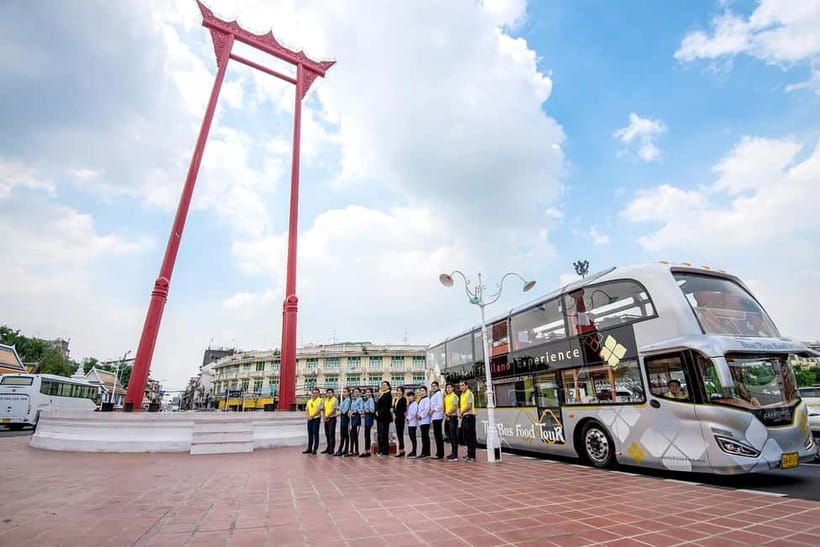
The bus begins at Thai Bus Food Tour and travels from the Hua Lamphong area. Hua Lamphong Railway Station is one of the city’s best-known transport landmarks, and seeing it from the bus gives you an early sense of Bangkok’s older central districts.
The route then passes Wat Traimit, home to the famous Chinatown area, followed by the Chinatown Gate and the streets of Chinatown itself. This is one of the most rewarding parts of the ride for first-time visitors because the route brings several layers of the district together: a major temple, a ceremonial gateway, and one of Bangkok’s best-known food and shopping quarters.
You will not get off to explore the lanes or visit the temple interiors. That is the tradeoff. The bus gives you a broad view and keeps the meal moving, but you will need a separate visit if you want to see Wat Traimit closely or spend time in Chinatown’s streets.
The vehicle then passes Maen Sri Waterworks. It is a less famous stop than the temples and palaces, but it helps show the everyday civic side of old Bangkok rather than presenting only grand monuments.
Wat Saket, Loha Prasat, and the Democracy Monument
Wat Saket, often called the Golden Mount, appears along the route as the bus moves toward the historic center. Its elevated golden chedi is one of Bangkok’s recognizable sights, although the bus view cannot reproduce the experience of climbing to the top.
Next comes Loha Prasat, a distinctive metal-spired temple structure near Wat Ratchanatdaram. Its unusual design gives you something different from the familiar gold-and-red temple forms elsewhere in the city. This is a good example of why the route works best as a visual survey. You can notice the shape and setting, then decide which places deserve a longer visit later.
The Democracy Monument follows. This large civic landmark sits on Ratchadamnoen Avenue and marks a change in the character of the route. You move from temple compounds and old commercial streets into a broad ceremonial avenue tied to Thailand’s modern political story.
The bus also passes Wat Bowonniwet, an important Buddhist temple in the historic center. Again, you see the building from the road rather than entering the grounds. Keep your expectations clear: the tour gives you a helpful sequence of sights, not guided visits inside each one.
More street food walks in Bangkok:
- Old Siam Bangkok Food Tour with 15+ Tastings
★ 5.0 · 867 reviews - Bangkok Authentic Tasting Thai-Chinatown Walking Food Tour
★ 4.9 · 852 reviews - Bangkok Tuk-Tuk Tour by Night with Chinatown Street Food Meal
★ 5.0 · 635 reviews - Bangkok: Old Siam Food Tour with 15+ Tastings
★ 4.9 · 559 reviews
Phra Sumen Fort and the open historic center
Phra Sumen Fort is one of the route’s most atmospheric landmarks. The white fort sits near the Chao Phraya River and recalls the defensive structures that once protected Bangkok’s old city. Its presence helps explain the shape of Rattanakosin Island, even during a short pass-by.
The National Museum and Sanam Luang come next. The museum holds major collections of Thai art and culture, while Sanam Luang is the broad open field beside the Grand Palace. From the bus, you get a useful sense of how these places relate to one another.
This is a point where the guide’s commentary matters. Without context, a moving view of a large field or old fort can pass quickly. With a short explanation, the route becomes easier to understand as a planned historic district rather than a random collection of monuments.
The bus does not include museum entry or time inside the fort. If you want an interior visit, plan that for another day. I would avoid trying to combine the bus ride with a rushed palace visit immediately before or after it, since traffic and the fixed 90-minute schedule can make tight connections uncomfortable.
The Grand Palace, Wat Pho, and Wat Phra Kaew
The Grand Palace is the central visual prize on the route. Its walls and ceremonial buildings represent the royal center of old Bangkok, and even a roadside view gives you a strong orientation to the city’s most important historic area.
Wat Phra Kaew, the Temple of the Emerald Buddha, is within the Grand Palace complex. The name can cause confusion, since the temple is not a separate stop far away. From the bus, you see the wider complex, but you do not enter the temple or palace grounds.
Wat Pho follows, known for its temple buildings and reclining Buddha. It sits close to the Grand Palace, so the route gives you a useful picture of how compact this part of Bangkok is. If you plan to visit these sites properly, allow separate time and check their entry arrangements independently.
The advantage of seeing them from the dining bus is comfort. Bangkok heat, traffic fumes, and long walks can wear you down, especially early in a trip. You can enjoy a welcome drink and several courses while getting your bearings. The disadvantage is that the visual experience is brief, and passing traffic may block part of the view.
Wat Arun across the river and the return through central Bangkok
Wat Arun appears across the Chao Phraya River, offering one of the route’s most memorable views. Its tall decorated prang is easy to recognize, and it looks particularly striking when lit at night.
The bus does not take you across the river for a temple visit. That matters if Wat Arun is high on your Bangkok list. You will see it from the route, but you need a separate ferry or other visit to explore the site.
The return section includes the Ministry of Defence, Wat Suthat, the Giant Swing, and Wat Mangkon Kamalawat. The Ministry of Defence brings a formal historic building into the view, while Wat Suthat and the Giant Swing provide one of the city’s most recognizable combinations of temple and civic landmark.
Wat Mangkon Kamalawat brings the route back toward Chinatown and its Chinese Buddhist character. By the time the bus returns to Thai Bus Food Tour, you have crossed a wide sample of Bangkok’s old center without changing vehicles or interrupting your meal.
Food, service, and dietary choices
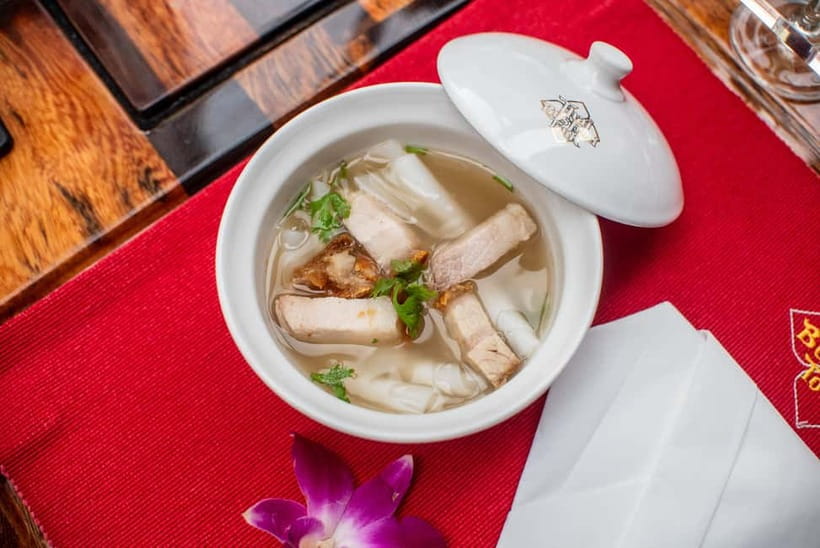
Most dining options include a welcome drink, appetizers, a main course, dessert, and another beverage. That makes the $47 per-person price easier to assess than if the fare covered only transport and a small tasting plate.
The meal is also central to the atmosphere. You are not simply looking out of a bus window while a guide recites names. Courses arrive as the city changes outside, giving the ride a steady rhythm.
The menus are Michelin-recognized, but you should keep the claim in proportion. One recent booking rated the food as good but not exceptional for the price, while another praised the food, bus, and staff highly. I would book this for the complete dining-and-sightseeing setting, not solely to chase a Michelin-level meal.
Vegetarian and halal choices are available on selected options, and kids’ menus are offered depending on the departure. Children aged 3 to 8 use the kids’ menu rate, while children aged 9 and older pay the adult rate. Children under 3 are not suitable for the activity.
If dietary needs matter to you, select the correct menu when booking rather than assuming the standard meal can be changed onboard. Seasonal changes also mean the exact dishes may vary.
Is $47 per person good value?
At $47 per person, the tour costs more than a normal city bus ride or an ordinary Thai meal. You are paying for the combination of a full-course meal, a 90-minute sightseeing circuit, guide service, driver, dining crew, and a specially designed double-decker bus.
I see the strongest value for a first visit, a special dinner, or a short stay when you want a quick overview without organizing several stops. The onboard restroom, WiFi, and USB ports add practical value, especially if you have spent the day moving around Bangkok.
The value is weaker if your priority is serious sightseeing. You will not stop at the Grand Palace, Wat Pho, Wat Arun, Wat Saket, or the other sights. You may also find the route limited if traffic causes the bus to circle or repeat parts of Chinatown.
One recent booking found the pricing unclear and felt the cost was presented in a confusing way. Since the listed rate is $47 per person, check the final reservation details carefully to confirm the number of diners, menu choice, and total amount before paying.
Timing, comfort, and practical limits
The experience lasts 90 minutes, but the schedule can shift because of traffic and weather. Bangkok roads can turn a short distance into a slow ride, so I would not pair this with a flight, train, timed attraction, or restaurant reservation that begins immediately afterward.
The bus has panoramic windows, but traffic can affect the view. Sit back and treat the sights as a moving sequence rather than expecting a perfect photograph of every temple.
The onboard restroom is a real benefit. So are the charging ports and WiFi, although the main reason to book remains the meal and route, not the technology.
There is no hotel pickup or drop-off. You need to arrange your own way to the starting point and back afterward. The live tour is offered in English and Thai.
Cancellation is flexible up to 24 hours before departure for a full refund, and you can reserve now and pay later. Those terms help if your Bangkok schedule is still changing, but they do not remove the need to allow extra time for traffic.
Who should book this Bangkok dining ride?
I would recommend it to first-time visitors who want a broad look at the old city, couples seeking an unusual dinner, families who prefer seated sightseeing, and anyone with limited time in central Bangkok.
It also suits you if heat, long walks, or complicated transfers make a conventional temple day less appealing. The bus lets you cover a lot of ground while staying comfortable and fed.
I would be more cautious if you have already visited Bangkok’s major sights and want new, detailed exploration. The pass-by format may feel too brief, particularly if Chinatown is your main interest and you hoped to walk its lanes.
Should you book the Thai Bus Food Tour?
Book it if you want a meal with a moving city view, a simple introduction to Rattanakosin Island, and a polished outing that requires little planning once you reach the starting point. The friendly staff, comfortable bus, full-course menu, and wide route give it a strong sense of occasion.
Skip it if you measure value by time spent inside monuments or if $47 feels high for a meal paired with roadside views. For the best match, choose lunch for temple details, dinner or night touring for illuminated sights, and confirm the exact menu and total price before booking.
FAQ
How long does the Thai Bus Food Tour last?
The tour lasts 90 minutes, although the schedule can vary because of traffic and weather.
What dining options are available?
You can choose from lunch, afternoon tea, dinner, or a night tour. Each option has its own menu.
Which Bangkok sights does the bus pass?
The route passes more than 20 sights, including Hua Lamphong Railway Station, Wat Traimit, Chinatown, Wat Saket, Loha Prasat, the Democracy Monument, Phra Sumen Fort, the National Museum, Sanam Luang, the Grand Palace, Wat Arun, Wat Pho, Wat Phra Kaew, Wat Suthat, the Giant Swing, and Wat Mangkon Kamalawat.
Is food included in the ticket?
Yes. Most options include a welcome drink, appetizers, a main course, dessert, and a beverage as part of the full-course meal.
Are vegetarian, halal, and children’s menus available?
Yes, but availability depends on the dining option selected. Children aged 3 to 8 use the kids’ menu rate, children aged 9 and older pay the adult rate, and children under 3 are not suitable for the activity.
Is hotel pickup included?
No. Hotel pickup and drop-off are not included. You need to make your own way to the Thai Bus Food Tour starting point.
Just added around Bangkok
- Bangkok to Ayutthaya Lopburi Monkey Temple, Largest Buddha Tour★ 5.0 · 62 reviews
- Baiyoke Sky Dinner Experience with Observation Deck Access★ 3.5 · 57 reviews
- Bangkok Luggage Delivery from Hotel to Airport★ 5.0 · 25 reviews
- Living Green Elephant Sanctuary Tour from Bangkok and Pattaya★ 5.0 · 88 reviews
- Bangkok Luggage Storage★ 4.5 · 37 reviews
- Living Green Elephant Sanctuary Experience near Bangkok & Pattaya★ 5.0 · 76 reviews
- Ethical Elephant Watching Tour From Bangkok & Pattaya★ 4.5 · 9 reviews
- King Power MahaNakhon SkyWalk at Bangkok Admission Ticket★ 4.0 · 37 reviews
Bangkok Tours, compared.
Damnoen Saduak Market and Maeklong Railway Market
Read our review →
The Old Siam: Damnoen Saduak and Maeklong Railway Market
Read our review →
Train Market & Floating Market with Boat Ride
Read our review →
Bangkok Canal Tour: 2-Hour Longtail Boat Ride
Read our review →
Muay Thai Boxing Tickets at Rajadamnern Stadium
Read our review →
White Orchid Chao Phraya Dinner Cruise free Beer
Read our review →
Bangkok by Private Guide: Full Day Tour In and Around
Read our review →Browse the lists this tour appears in