
Reviewed · BANGKOK TOURS
Thai Dance Class
Thai dance class gives you more than a few pretty poses for your camera. You learn how to dress in a traditional Thai outfit, hear where the dance comes from, and practice three songs with a teacher who explains what each movement means. The class is held at ThaiGlam Studio in central Thailand, with pickup available from Wat Arun Pier.
I like the small group limit of seven, since the teacher can give hands-on corrections rather than simply demonstrate from across a room. I also like the welcome drink, Thai dessert, and time spent on cultural background before the physical work begins. The main drawback is that this is not a casual drop-in photo session. You need to be comfortable standing, moving your arms and hands, and following a structured lesson. It is not suitable for children under 10, wheelchair users, or people over 95.
Key points to know before booking
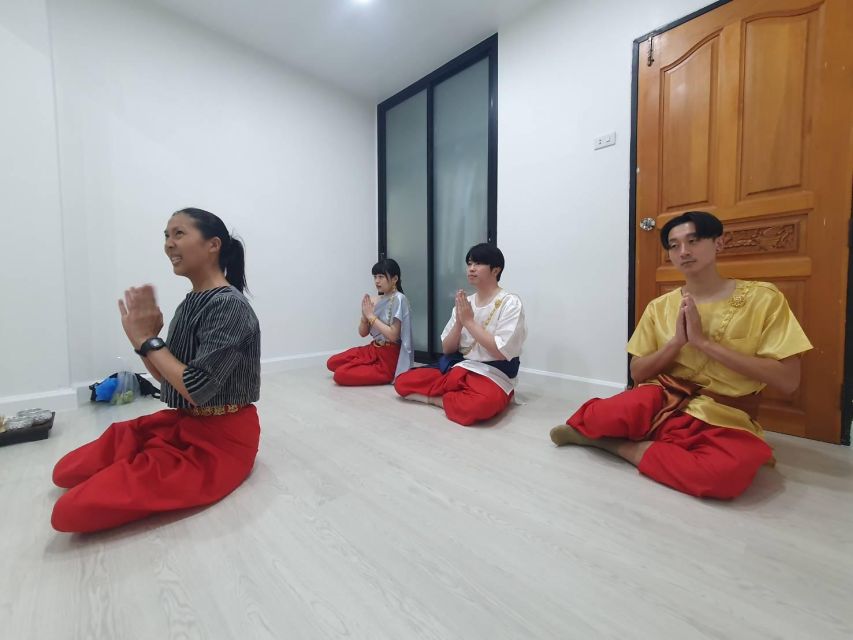
- Three dances, not just one photo pose: You warm up and practice three songs with different poses and movement patterns.
- Traditional clothes are part of the lesson: The studio supplies the dress and full accessories, then shows you how to put them on.
- Culture comes before choreography: The teacher explains the background of Thai dance before you start moving.
- A very small class: Seven participants is the maximum, and a solo booking may sometimes turn into a private lesson.
- A welcoming start: Thai desserts and a welcome drink are provided before class.
- English, Chinese, and Korean support: You can join with a host or greeter speaking one of these languages.
Thai dance begins with the costume
The class starts in a friendly, unhurried way, with a welcome drink and Thai dessert. That small opening matters. You have time to settle in before trying unfamiliar hand positions, and the food gives the lesson a distinctly Thai setting instead of making it feel like a generic dance workshop.
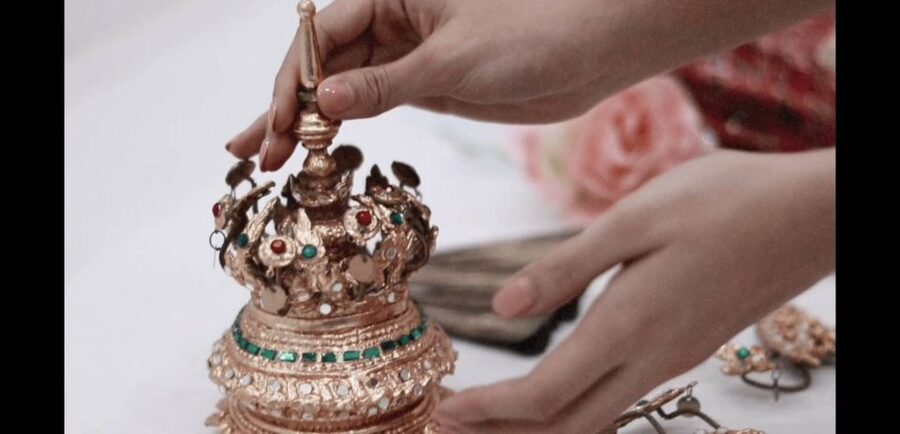
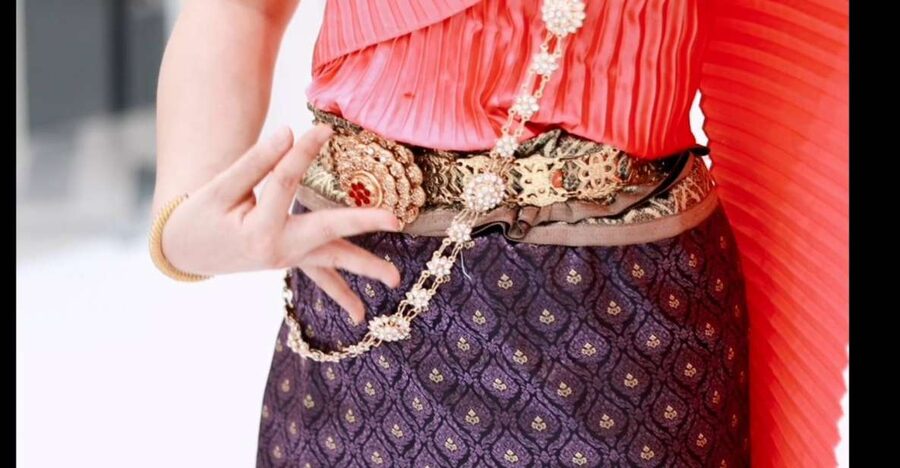
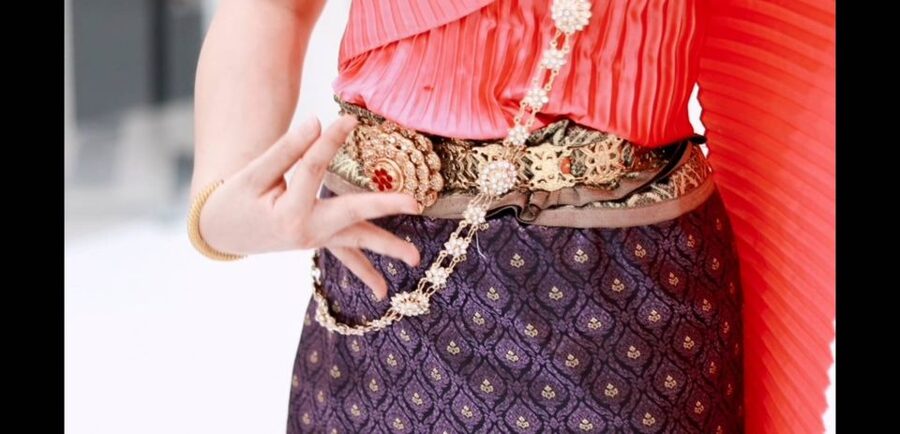
Next comes the traditional outfit. ThaiGlam Studio provides the clothing and full accessories, so you do not need to rent or assemble anything yourself. The teacher shows you how to wear it, which is useful because traditional dress can look simple in a photograph but feel less obvious when you are trying to arrange it on your own.
This part is also practical preparation for the dancing. The costume changes how freely you move, how you hold your posture, and how you position your arms. You will want to pay attention to the teacher rather than rushing through the dressing stage. The outfit is not just something to put on for a quick picture, it is part of understanding how Thai dance is presented.
The class is a good fit for someone who enjoys dressing up but wants more context than a costume photo. You get the picture-friendly element, but it is tied to a real lesson in movement and presentation.
More hands-on workshops in Bangkok:
- Bangkok: Hands-on Thai Cooking Class and Market Tour
★ 4.9 · 1,614 reviews - Bangkok: Tingly Thai Cooking School Half-Day Cooking Class
★ 4.9 · 1,191 reviews - Bangkok: Maliwan Thai Cooking Class with Market Tour
★ 4.9 · 1,133 reviews
The story behind the hand gestures
Before the warm-up, the teacher explains the history of Thai dance. This gives the poses a purpose. Without that introduction, the lesson could become a sequence of graceful arm movements that look attractive but mean little to you.
The teacher also explains the significance of individual movements, according to the class experience described by participants. That kind of guidance helps you understand why the hands, fingers, head, and posture must work together. Thai dance can look delicate and easy from the audience, yet the small details require concentration.
I especially like this cultural section because it puts the class in a wider setting. Thai dance is not treated as a novelty or a quick performance trick. You learn that the movement style carries ideas about Thai culture and presentation, and that makes the later practice more rewarding.
The lesson may be especially interesting if you have already seen Thai dance on stage. One person who had attended a play the night before recognized some of the movements during class. You might have the same experience if you pair this activity with a Thai performance during your stay.
The teacher’s role is important here. The strongest part of the class is not only the choreography, but the patient explanation. The instructor has been described as gentle with corrections and able to explain the meaning of each movement in detail. That is exactly what you want when your hands refuse to form the shape you saw a moment earlier.
A gentle warm-up before the three songs
After the introduction, you move into a warm-up. This prepares you for the posture and arm positions, and it gives the teacher a chance to see how comfortable you are with the basic movements.
Do not expect a high-energy fitness class. Thai dance focuses on control, balance, hand shapes, and deliberate gestures. You will need to listen closely and copy the teacher’s timing. The challenge is precision, not speed.
The class then moves through three songs, each with its own poses and movement patterns. Practicing several songs gives you more variety than learning one short routine for the camera. It also lets you see how the same basic principles can be used in different sequences.
You will probably spend part of each song learning a section and part repeating it. That repetition is useful. Thai dance depends on details that are easy to lose when you are thinking about your feet, hands, posture, and expression at the same time.
The teacher offers gentle corrections as you go. In a large class, you might miss that kind of help. Here, the group size is limited to seven, so you have a better chance of receiving individual guidance. If you are the only person booked for your session, the class may become a private lesson, though that depends on the bookings for your date.
Why the small group matters
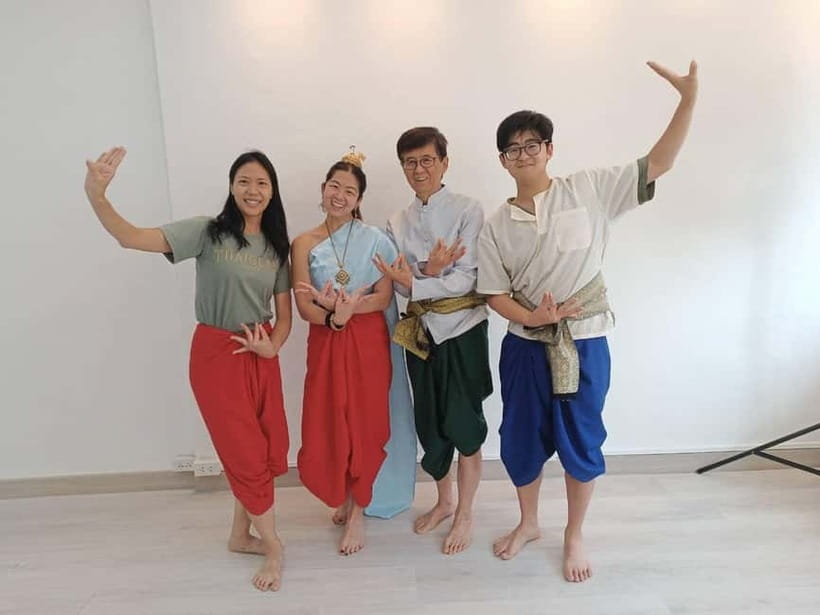
The maximum group size is seven participants. That is small enough to keep the class personal without requiring you to pay for a fully private appointment.
For a beginner, this makes a real difference. You can ask the teacher to repeat a movement, and the instructor has a reasonable chance of noticing when your fingers, elbows, or posture need adjustment. You are not expected to arrive with dance experience.
A solo traveler may also find the format useful. Activities often need a minimum number of participants, but this class has been able to go ahead for a person booking alone. In one case, the solo participant received a private lesson and found the teacher patient and encouraging.
That said, you should not book on the assumption that you will always receive private instruction. The advertised format is a small group, not a guaranteed one-to-one class. If you prefer personal attention, booking a time with fewer people may help, but the final group depends on the day.
The language options are another practical benefit. The host or greeter can speak English, Chinese, or Korean. If you need detailed instruction in one of those languages, select the option that matches your needs when booking and confirm the arrangement if it is important to you.
A few more Bangkok half-days worth weighing up
- Bangkok: Damnoen Saduak Market and Maeklong Railway Market
★ 4.5 · 26,723 reviews - The Old Siam: Damnoen Saduak and Maeklong Railway Market
★ 4.5 · 10,992 reviews - From Bangkok: Ayutthaya Temples Guided Tour with Lunch
★ 4.7 · 10,535 reviews - Bangkok: Train Market & Floating Market with Boat Ride
★ 4.7 · 9,547 reviews
Photos without losing the lesson
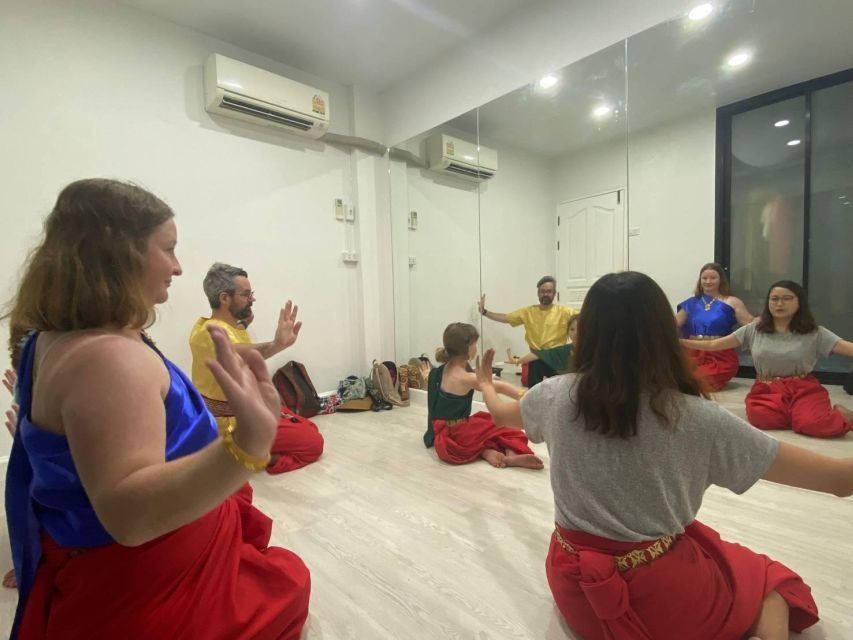
You can take photos and short video clips during some parts of the class. The wording matters: filming is allowed in certain sections, not necessarily throughout every explanation or movement drill.
I would treat the camera as a bonus rather than the main purpose of the activity. The most useful images will come after you understand how to hold the pose, rather than while you are still trying to remember it. Ask before recording if you are unsure, especially while the teacher is demonstrating or correcting the group.
The traditional dress and accessories make this more visually distinctive than an ordinary dance lesson. You can capture the outfit, the posture, and selected parts of the choreography. Just keep your attention on the instructor during the teaching sections. A phone held up at the wrong moment can make it harder to see the details you paid to learn.
This balance works well for couples, friends, and solo visitors who want a cultural activity with a few good images to take home. It is less suitable if you only want a quick costume shoot with minimal instruction.
The two-hour schedule and pace
The total duration is two hours. That is enough time for the welcome, dessert, dressing, cultural introduction, warm-up, and three songs without turning the activity into a full-day commitment.
The pace should feel structured rather than rushed. You begin with hospitality, move into clothing and cultural background, then spend most of the active time practicing. Because the class contains several different parts, the two hours offer more substance than a short demonstration.
You will need to stay engaged for the full session. This is not an activity where you watch a performance and leave. You participate, repeat movements, and accept corrections. If you are new to dance, the teacher’s patient approach should help, but you still need to concentrate.
Wear something that lets you change comfortably under or into the provided clothing. The activity information does not give a specific clothing requirement, so I would avoid bringing a complicated outfit that makes dressing difficult. Since the supplied costume includes full accessories, you should not need to prepare a traditional ensemble yourself.
Getting to ThaiGlam Studio
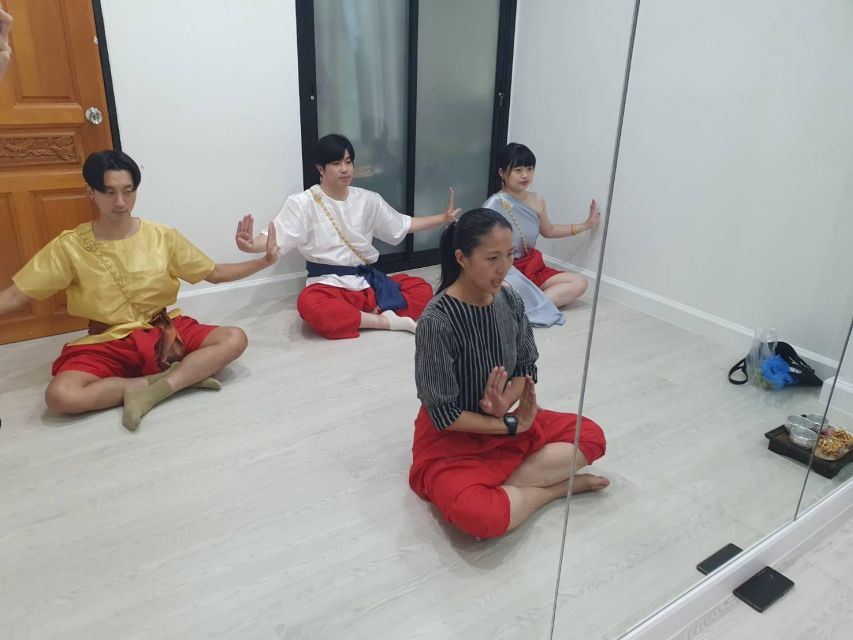
The activity takes place at ThaiGlam Studio in central Thailand. The meeting information also includes pickup service from Wat Arun Pier, so check the exact arrangement and directions for your booking before you set out.
There is a small wording issue worth handling early: you are told to come to the studio, while pickup is listed at Wat Arun Pier. I would confirm whether you should meet at the pier first or travel directly to the studio. This is especially sensible if you are planning the class around a visit to Wat Arun or another appointment.
The pier reference can be convenient if you are already in that part of Bangkok. It gives you a clear meeting point, but it does not replace checking the exact pickup instructions. Leave enough time to arrive without hurrying, since the class begins with a welcome and a structured introduction.
Is $70 a fair price?
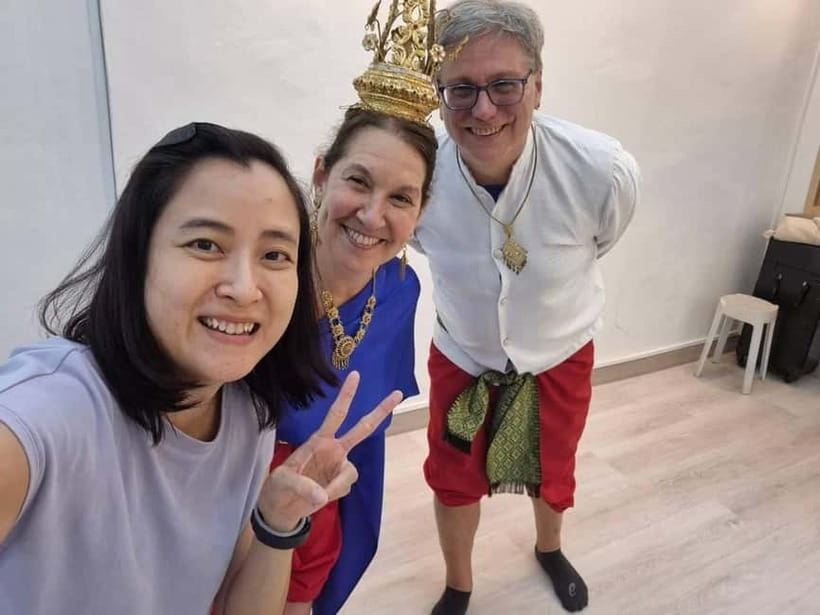
At $70 per person, this class costs more than a simple cultural demonstration, but you receive several services in one two-hour visit. The price includes the traditional outfit and accessories, a welcome drink, Thai dessert, instruction, cultural background, and the chance to practice three songs.
The small group is the strongest value point. You are paying for access to a teacher who can correct your movements, not only for a costume and a staged photograph. If your group is small on the day, the personal attention makes the price easier to justify.
The class also offers value for people who want cultural context. You learn how the clothes are worn, hear about Thai dance, and receive explanations of movement meaning. That is more satisfying than taking a picture in traditional dress without knowing anything about what you are wearing or doing.
The price may feel high if your only goal is a short photo opportunity. In that case, much of the fee goes toward teaching and cultural explanation that you may not use. I would book it when you want to participate and learn, not simply pose.
Free cancellation up to 24 hours before the activity and the reserve-now, pay-later option make planning easier. You can hold a place without paying immediately, then cancel for a full refund if your plans change within the stated rules.
Who will enjoy this class most?
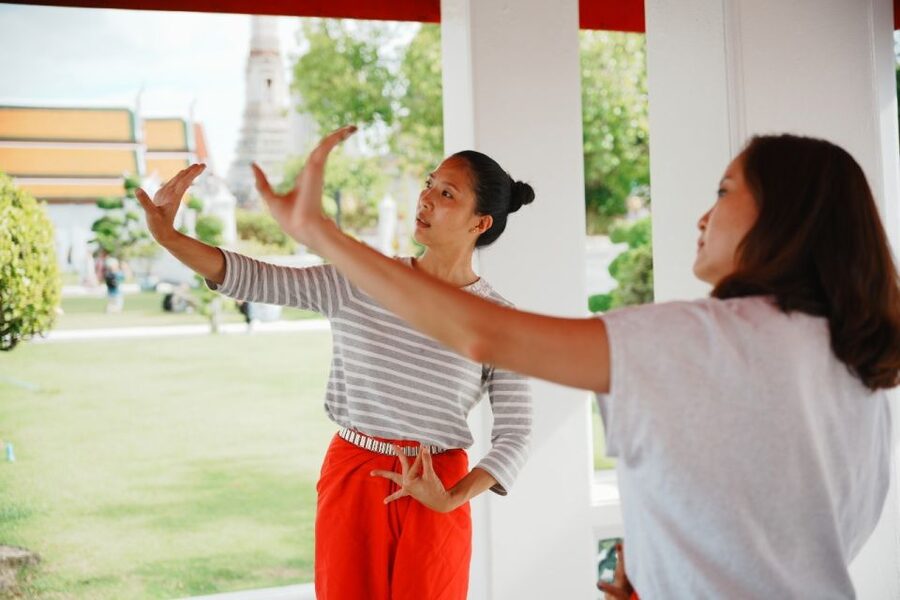
I would recommend the class to adults and older children aged 10 or above who enjoy cultural activities, gentle movement, and learning by doing. It is a particularly good choice for a first visit to Thailand, since you get food, costume, history, and dance in one compact experience.
Solo visitors should consider it seriously. The small format can work even when you are alone, and a private lesson may be possible if no one else books the same time.
It also suits couples and friends who want more than another temple visit. You can share the class, take selected photos, and compare your attempts at the three songs. The experience has enough structure to feel worthwhile, but it does not take up an entire day.
I would be more cautious if you have limited mobility or need wheelchair access. The activity is specifically not suitable for wheelchair users. It is also not suitable for people over 95, and children under 10 cannot join.
Alcohol and drugs are not allowed. That is ordinary but important guidance for a physical, instructional activity.
My verdict on ThaiGlam Studio
Book this Thai dance class if you want a hands-on look at Thai culture, especially if the idea of learning the meaning behind graceful gestures appeals to you. The combination of traditional clothing, dessert, history, and three songs gives the two hours a clear sense of purpose.
I would book with realistic expectations. You will not become a trained Thai dancer in one session, and filming is limited to some parts. But you can learn the basic character of the art, receive patient corrections, and leave with a better understanding of what you have seen in Thai performances.
The best reason to choose it is the teacher’s careful approach. The lesson is built around explanation as much as movement, and the small group gives you room to ask questions. At $70, it is a good value for an interactive cultural lesson with costume and refreshments, but less so for anyone seeking only a quick photo.
FAQ
How long does the Thai dance class last?
The class lasts two hours. It includes a welcome drink and Thai dessert, traditional dressing, an introduction to Thai dance, a warm-up, and practice with three songs.
What is included in the price?
The $70 price includes Thai desserts, a welcome drink, Thai traditional dress with full accessories, instruction, and pickup service at the stated meeting point of Wat Arun Pier.
How many people can join the class?
The class is limited to seven participants. If you are the only person booked for a session, it may become a private lesson, but private instruction is not guaranteed.
Which languages are available?
The host or greeter can speak English, Chinese, or Korean.
Can I take photos or videos during the lesson?
You can take photos and short video clips during some parts of the class. Recording is not stated to be available throughout the entire session, so follow the teacher’s instructions.
Who cannot join the activity?
The class is not suitable for children under 10, wheelchair users, or people over 95. Alcohol and drugs are not allowed.
Just added around Bangkok
- Bangkok to Ayutthaya Lopburi Monkey Temple, Largest Buddha Tour★ 5.0 · 62 reviews
- Baiyoke Sky Dinner Experience with Observation Deck Access★ 3.5 · 57 reviews
- Bangkok Luggage Delivery from Hotel to Airport★ 5.0 · 25 reviews
- Living Green Elephant Sanctuary Tour from Bangkok and Pattaya★ 5.0 · 88 reviews
- Bangkok Luggage Storage★ 4.5 · 37 reviews
- Ethical Elephant Watching Tour From Bangkok & Pattaya★ 4.5 · 9 reviews
- Living Green Elephant Sanctuary Experience near Bangkok & Pattaya★ 5.0 · 76 reviews
- King Power MahaNakhon SkyWalk at Bangkok Admission Ticket★ 4.0 · 37 reviews
Bangkok Tours, compared.

Damnoen Saduak Market and Maeklong Railway Market
Read our review →
The Old Siam: Damnoen Saduak and Maeklong Railway Market
Read our review →

Train Market & Floating Market with Boat Ride
Read our review →
Bangkok Canal Tour: 2-Hour Longtail Boat Ride
Read our review →
Muay Thai Boxing Tickets at Rajadamnern Stadium
Read our review →
White Orchid Chao Phraya Dinner Cruise free Beer
Read our review →
Bangkok by Private Guide: Full Day Tour In and Around
Read our review →Browse the lists this tour appears in