
Reviewed · PHUKET TOURS
Phuket:Beach walk with elephants, rain & care. 2.5 hours
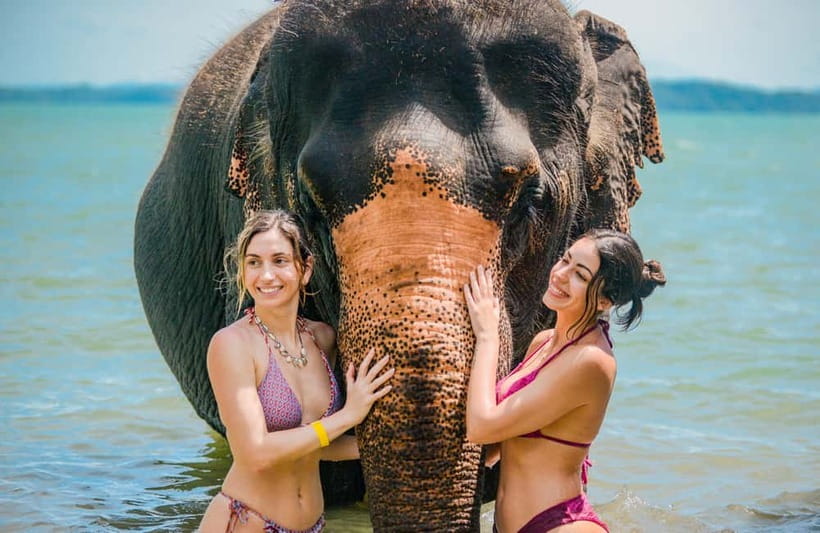
The best part of this Phuket elephant experience is the setting: you walk with the elephants from a 20-acre natural habitat to a private beach, then help wash and brush them in the sea. It feels more involved than a quick photo stop. You are not sitting on an elephant or watching a staged show. You are feeding, walking, bathing, and preparing food for them.
I like the short jungle walk and the chance to make vitamin herb balls, since both give you a glimpse of ordinary care rather than only the exciting beach session. I also like the relaxed staff, especially guides such as Kim, who explain the elephants’ backgrounds and keep the mood light. The main consideration is the sea floor: wear suitable footwear and listen carefully during the bathing session, since sharp rocks or sea urchins may be present.
Key points to know before you book
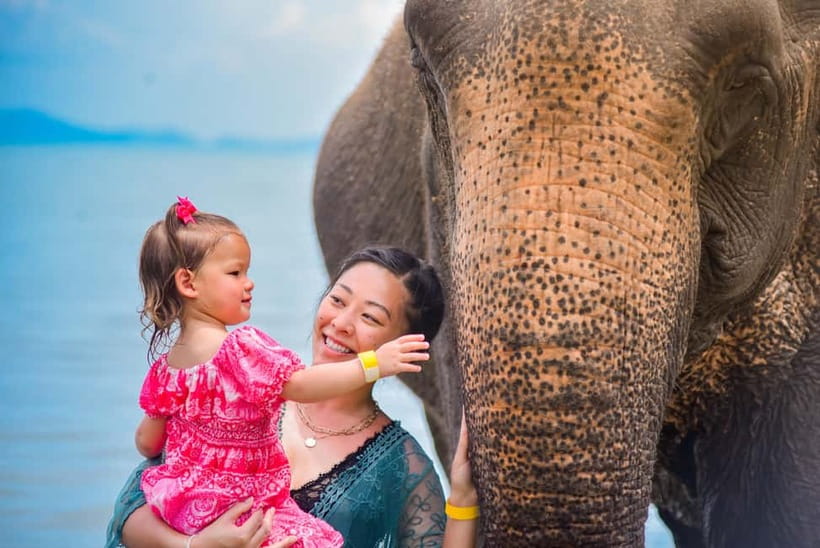
- Beach bathing is the main event: You can brush, shower, and bathe the elephants in the sea, with Phuket’s coast as the backdrop.
- No riding or chains are part of the program: The camp says its elephants are free from riding, torture, and chains during their care.
- The visit includes real care tasks: Feeding, walking, bathing, and making herb-based vitamin balls are all built into the session.
- Allow more time if you use transfers: The activity lasts about 150 minutes, but shared hotel transport can make the total outing much longer.
- Photography costs extra: Professional photos are available, but the digital package has been priced at about 1,500 THB for 10 images in recent bookings.
- Bring swim gear and reef-safe products: You need swimwear, a towel, dry clothes, sunscreen, and biodegradable insect repellent.
Why the beach setting changes the elephant experience
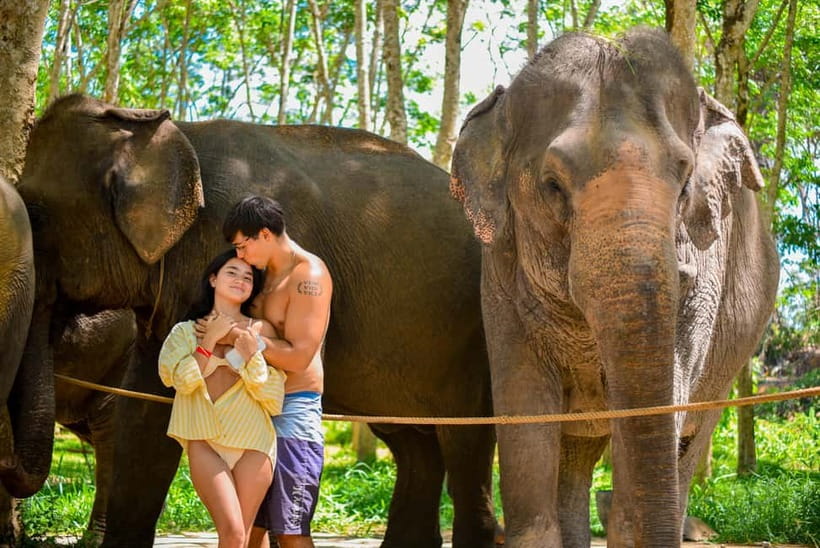
Lily Elephant Camp moved from Siray Island to Yamu, Paklok, where it operates a coastal sanctuary on a large area of natural ground. The sea is not just a pretty background here. It is where the most hands-on part of the program takes place.
You first meet the elephants on land, then follow them toward the shore. From there, the group helps brush and wash them in shallow water. The animals may spray water, accept a scrub, or simply wander and enjoy the attention. That makes the session feel less like a performance and more like supervised care, though you should still remember that close contact is arranged for tourism.
The camp presents itself as a conservation and education project. It explains that the elephants are former working animals and that some have been injured or spent much of their lives around people. That background matters when you think about the ethics of an encounter like this. Releasing a domesticated elephant into the wild is not a simple solution, and a sanctuary can offer food, medical care, and protection.
At the same time, bathing and touching elephants is still an organized visitor activity. I would choose this program over riding, circus tricks, or forced performances, but I would keep your expectations sensible. The most responsible part of the visit is the education and care work. The beach bathing is enjoyable, yet it is also the part most shaped around human entertainment.
More walking tours in Phuket:
- Phuket: Bukit Elephant Park Sanctuary Walk and Feed Tour
★ 4.9 · 926 reviews - World B+ (Zipline 18 Platforms + Roller + Sky Walk with World Set Menu )
★ 5.0 · 218 reviews - Phuket Food Tour and City Walk by Jane
★ 5.0 · 109 reviews
From pickup in Phuket to Lily Elephant Camp
Pickup is optional. When selected with your booking, hotel transport covers Phuket City, Phuket Old Town, Kata, Karon, and Patong. Seven listed drop-off areas include Patong Beach, Karon Beach, Kata Beach, Coconut Island, Yamu Village, Phuket, and the camp itself.
If you are staying outside the included zones, check the transport cost before paying. Standard transfer service for Panwa, Chalong, Rawai, Surin Beach, Mai Khao, Nai Yang, Nai Thon, Nai Harn, and Siray is listed at 300 THB per person. If you book the program without transport and later ask to use the shuttle, the charge rises to 750 THB per person.
That detail can change the value of the $59 price. The activity itself is fairly priced for a 2.5-hour program with food, guides, insurance, and several different activities. But a long shared transfer can turn a short visit into most of a day.
Pickup timing also deserves attention. Contact the driver to get an approximate collection time rather than waiting with no idea when the vehicle will arrive. One itinerary can collect people across several Phuket areas, so the first pickup and last drop-off may add hours. If you drive or use Grab, search for Lily Elephant Camp in Google Maps. The meeting point is the camp itself.
A short lesson before you meet the elephants
The visit begins with an introduction to Thai elephants and the work of a mahout, the person who cares for and handles an elephant. The guide explains the camp’s approach and the history of animals that were previously used for labor or other human purposes.
This briefing is useful because it gives you a better way to read elephant behavior. You learn that a calm elephant is not a prop waiting for a hug. It has its own habits, limits, and mood. Guides direct the interaction, and you should let the animal approach rather than crowding it.
The English and Thai guiding is one of the program’s strengths. Kim has received special praise for being funny, helpful, and clear, and other guides help visitors take photos without making the session feel like a sales pitch. The quality of the experience still depends on your assigned guide, but the program is designed around explanation rather than silent handling.
You may be in a fairly large group. One session had about 40 people with five elephants, yet visitors still had time to feed and photograph the animals individually. That is encouraging, but it also means the experience is not a private encounter. If you want complete quiet and solitude, this is not the right format.
Feeding elephants in their natural habitat
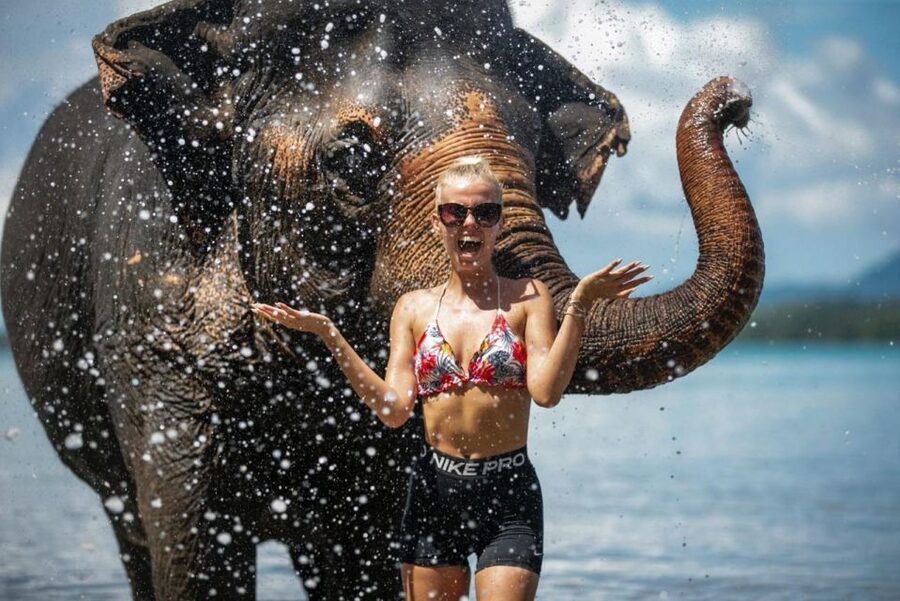
Feeding is your first close contact. Elephants are offered food, and you learn how to approach and pass it safely. Their size can be startling at first, even when they are gentle. A trunk reaching toward your hands makes a simple snack feel like a proper wildlife lesson.
This part works well for families and first-time elephant visitors because it is easy to understand. You do not need special fitness or animal-handling skills. The guide controls the pace and shows you how to stand, where to place the food, and when to step back.
It is also a reminder that the elephants rely on people for care. The camp provides food and supplements as part of its daily routine. That is different from feeding wild animals in a national park, where human food would be harmful. Here, feeding is a planned part of the animals’ care and the visitor program.
You can take photographs, but keep your phone secure around water and trunks. The staff photographer may also take pictures during the activity. Professional images are optional, not compulsory, which is good. The extra package has been listed around 1,500 THB for 10 digital photos, while promotional pricing from 300 THB is also advertised in the activity details. Confirm the current price before you agree to anything.
A few more Phuket half-days worth weighing up
- Phang Nga Bay Sea Cave Canoeing & James Bond Island by Big Boat
★ 5.0 · 4,666 reviews - Phuket: Elephant Jungle Sanctuary Ethical Feeding Experience
★ 4.8 · 4,359 reviews - From Phuket: Phang Nga Bay and Canoeing Tour by Big Boat
★ 4.7 · 3,528 reviews - Phi Phi Islands Adventure Day Trip w/ Seaview Lunch by V. Marine
★ 5.0 · 3,295 reviews
The 15 to 20 minute walk toward the coast
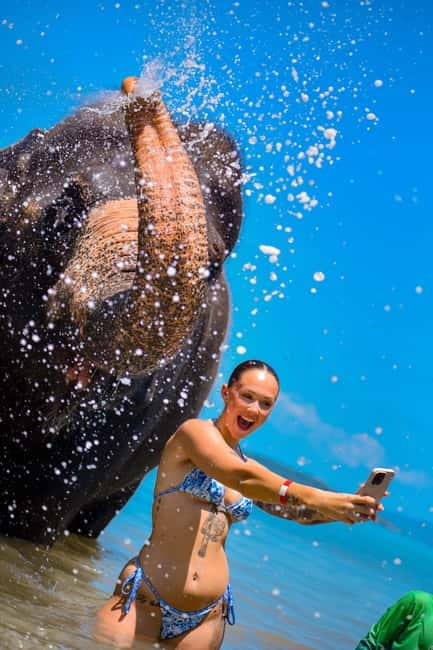
The nature walk lasts about 15 to 20 minutes. It is not a long trek, and that is a plus in Phuket’s heat. You get movement, trees, and a change of setting without spending the whole morning hiking.
Walking beside an elephant gives you a better sense of its pace and presence than standing in a photo line. You see it stop, look around, and move according to its own rhythm. The guide keeps the group together and helps you stay at a safe distance.
The walk can be muddy or wet if rain has passed through. Wear clothes and shoes you do not mind getting dirty. The activity listing calls this a refreshing rain shower with the elephants, but the weather is not guaranteed. If the sky opens, you will have a memorable natural shower. If it stays dry, the sea bathing still provides the water-based part of the program.
Do not expect untouched wilderness. You are on a managed sanctuary visit with staff, other people, and a planned route. The value is the contrast between the wooded camp and the quiet shore, not a claim that you are observing wild elephants.
Brushing and bathing elephants at the private beach
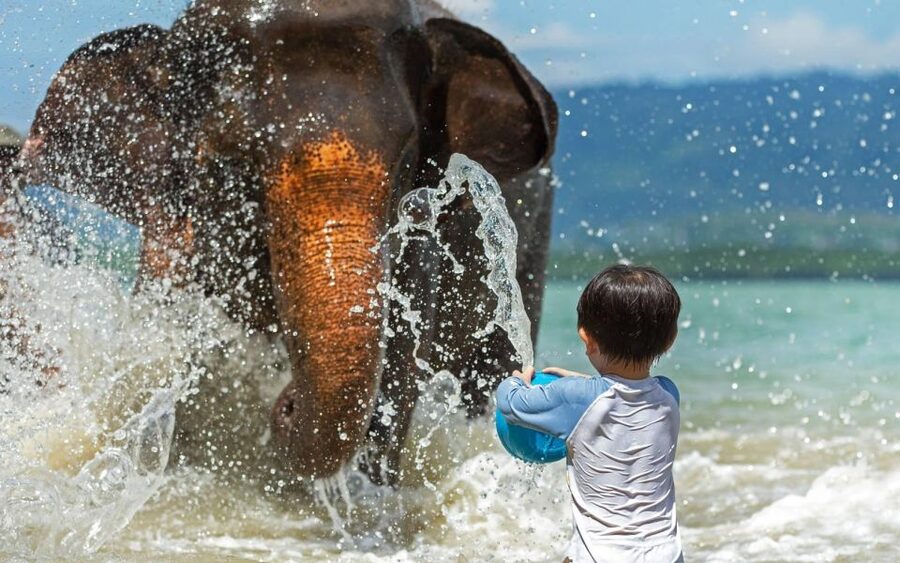
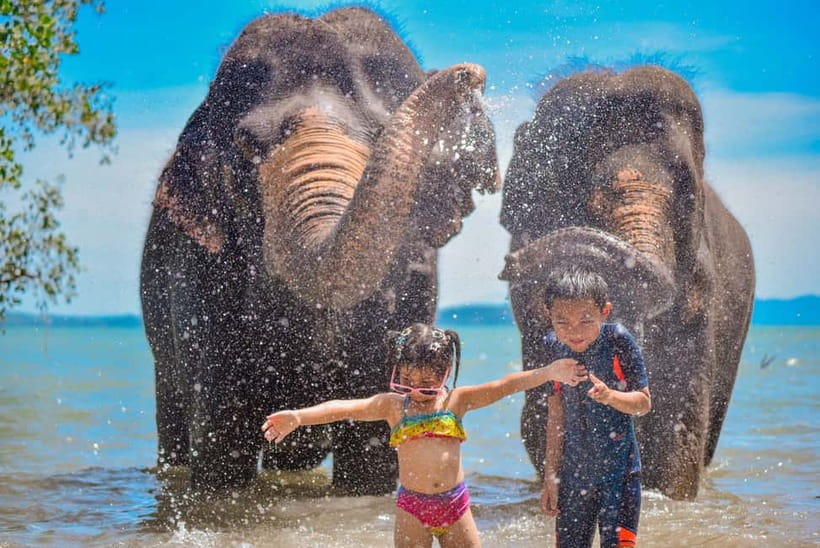
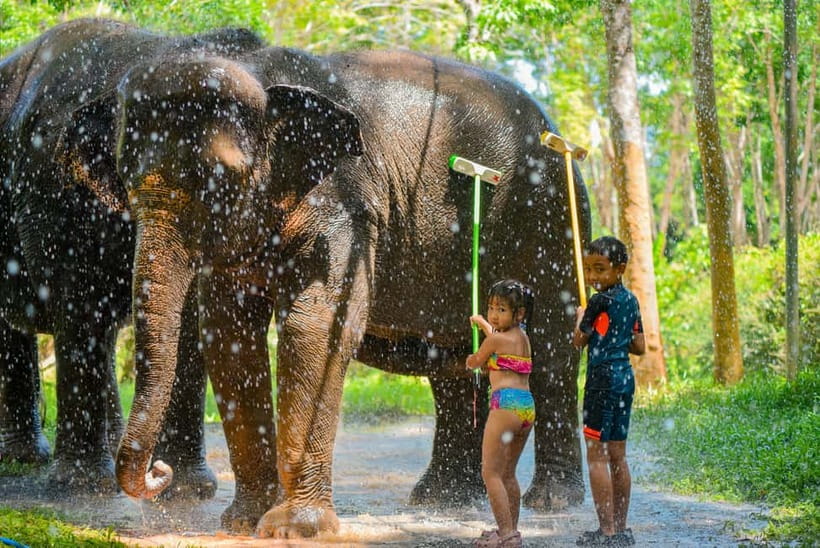
The beach session is the reason many people choose this tour. Once the elephants reach the shore, you help brush them and rinse them with water. You can stand in the shallows, get wet, and take photos with the ocean behind you.
The activity is playful, but the animals are the priority. A guide may ask you to move, stop, or change position. Follow those instructions even when you are trying to frame a perfect picture. The elephants are large, powerful animals, and their friendly behavior should not be mistaken for complete predictability.
Bring swimwear, a towel, and a full change of clothes. Sunglasses and a hat help on the beach, while biodegradable sunscreen and insect repellent are specifically requested. A waterproof phone pouch would be sensible, though it is not listed as a required item.
One important practical warning concerns footwear. A visitor was cut by sharp rocks and a sea urchin after removing rubber shoes in the water. That does not mean the beach is unsafe, but it does mean you should ask why footwear needs to come off and make sure the instruction is clear. If communication is difficult, ask another English-speaking guide before entering the water.
The bathing area is also where crowding matters most. Several people may be around one elephant, especially during popular time slots. The staff can help spread people out, but you may need patience while waiting for a clear photo or a turn with the brush.
A final shower and the herb-ball workshop
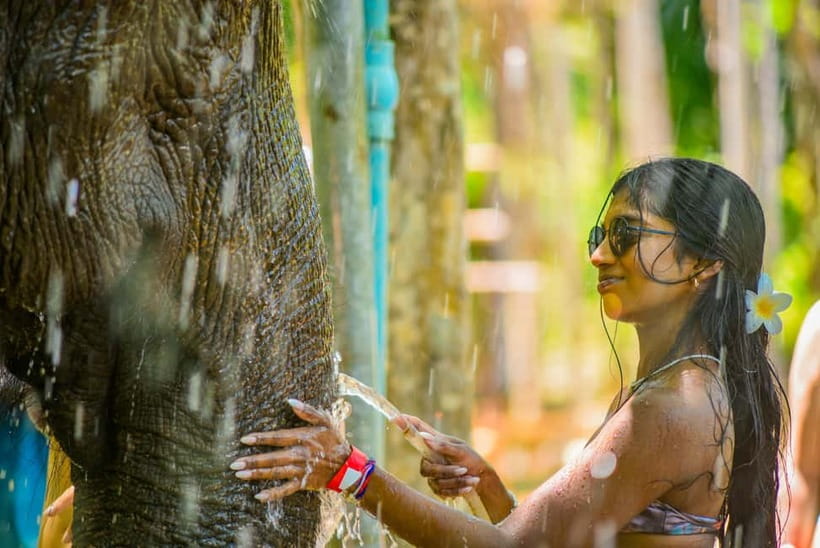
After the sea, the elephants receive another shower. You may also rinse yourself off, which is welcome after salt water, sand, and elephant splashes.
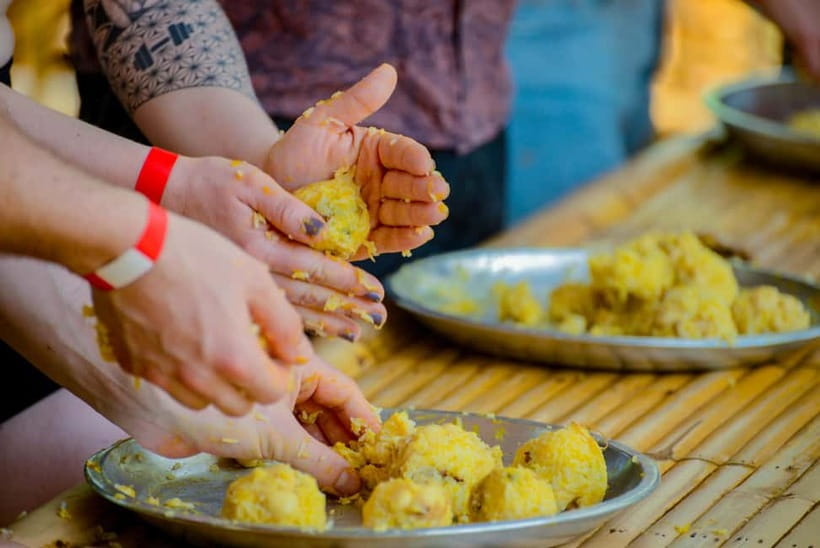
The final activity is preparing vitamin balls, also called herb balls, for the elephants. You work with natural ingredients that are made into supplements and then offer them as part of the animals’ diet. This is a small task, but it gives the visit a useful ending. You are not only taking a picture and leaving. You are helping prepare something the elephants eat.
The herb-ball activity also makes the program more educational. It shows that elephant care is repetitive, practical work. Food preparation, bathing, walking, and health support are all part of keeping rescued or formerly working elephants in good condition.
The camp provides elephant food as part of the price. A guide explains what you are doing, and the session is suitable for people who prefer a quieter activity after the excitement of the beach.
Facilities, staff, and the overall pace
The facility has toilets, showers, and free coffee and juice before or after the program. Those details matter more than they sound, especially if you are traveling with children or returning from the beach soaked through.
The staff are generally warm and playful, and the best guides add useful facts without turning the briefing into a lecture. A few guides may have limited English, particularly during the ocean portion, so ask for clarification if you do not understand a safety instruction.
The advertised program runs for two to two and a half hours. Some visits may take longer, especially if transfers, photographs, or group movement slow things down. I would not schedule a tight airport transfer, ferry departure, or dinner reservation immediately afterward.
The activity is wheelchair accessible, but the provided information does not explain which parts of the jungle path or beach are easiest for wheelchair users. If you need detailed access help, contact the operator before booking. The same applies to allergies or medical conditions. Add those details in the booking remarks so the camp can prepare.
Is $59 good value for Phuket?
At $59 per person, the price is reasonable if you want several kinds of contact in one visit. You receive food for the elephants, a guided nature walk, feeding, beach bathing, showers, the herb-ball activity, accident insurance, and an English or Thai guide. Hotel transport can be included, but only when you select the correct transport option.
The strongest value comes from the amount of time spent with the animals. This is not a 10-minute encounter followed by a gift shop. The program moves through several stages, and you can often take part from beginning to end.
The price is less attractive if you mainly want a quiet wildlife observation experience. The elephants are accustomed to human care, and the beach bathing is designed for interaction. It is also less convenient if you are staying far from the included pickup areas and must pay an extra transfer fee.
Professional photographs are a separate calculation. They can be useful because staff know how to position you with the elephants, and the sea makes a strong backdrop. Still, 1,500 THB for 10 digital images feels high to me, so decide before the tour if you want the package. You can also use your own camera, and staff help with photos.
Who will enjoy this elephant camp most?
I would recommend Lily Elephant Camp to families, couples, first-time Phuket visitors, and anyone who wants a hands-on elephant encounter without riding. Children can take part in feeding and washing, although adults need to stay close and follow every safety instruction.
It also suits people who value a conservation message but understand that this remains a visitor experience. You will hear difficult stories about abuse and labor, then see elephants receiving food, water, and daily care. That combination can be moving without pretending that the setting is completely wild.
I would be more cautious if you dislike touching animals, getting wet, or being in a group. The beach session is the heart of the visit, so anyone seeking a no-contact sanctuary should choose another type of program.
Free cancellation is available up to 24 hours before the activity, and you can reserve now and pay later. Drones are not allowed. Bring cash for any optional purchases, and do not forget dry clothes.
Should you book Lily Elephant Camp?
Book it if you want a well-organized, close-up encounter built around feeding, walking, and bathing rather than elephant riding or shows. The coastal setting is unusual, the staff put real effort into explaining elephant care, and the program gives you enough time to do more than pose for one photograph.
Before you pay, check the transfer option, the pickup zone, and the current photo price. Pack water-friendly clothes and protective footwear for the beach, and ask questions if an instruction is unclear. If you can accept a group setting and the ethics of supervised bathing, this is one of Phuket’s more active and memorable elephant experiences.
FAQ
How long does the Lily Elephant Camp activity last?
The program lasts about 150 minutes, or two and a half hours. The full outing can take longer if you use shared hotel pickup and drop-off.
Where is Lily Elephant Camp located?
Lily Elephant Camp is in Yamu, Paklok, Phuket, in the Gulf of Thailand area. You can search for Lily Elephant Camp on Google Maps or use Grab to reach the meeting point.
Is hotel pickup included?
Pickup is included only when you choose a transport option during booking. Included areas are Phuket City, Phuket Old Town, Kata, Karon, and Patong.
Can I bathe with the elephants in the sea?
Yes. The program includes walking to a private beach, brushing and bathing the elephants in the sea, and showering them afterward.
Is elephant riding included?
No. The camp describes its program as free from elephant riding, chains, and torture.
What should I bring?
Bring swimwear, a towel, a change of clothes, sunscreen, biodegradable sunscreen, biodegradable insect repellent, sunglasses, a sun hat, a camera, and cash.
Are professional photos included?
No. Professional photography is an optional extra. The listed information gives prices starting from 300 THB, while recent bookings have also referenced about 1,500 THB for 10 digital photos. Confirm the current price at the camp.
Can I cancel the booking?
You can cancel up to 24 hours in advance for a full refund. The activity also offers a reserve-now, pay-later option.
Just added around Phuket
- The Upside Down House: Phuket’s Must-See Attraction★ 4.7 · 13 reviews
- Siam Niramit Phuket Admission Ticket with Transfer Option★ 4.6 · 49 reviews
- Simon Cabaret Phuket Show Included Tickets and Transfer★ 4.4 · 155 reviews
- Phuket: Zipline Flying Higher than a Hawk with ATV Option★ 4.7 · 33 reviews
- Phuket:City Tour,Big Buddha, Forest Safari Tiger Park Canopy★ 3.6 · 15 reviews
- Phuket: White Water Rafting, ATV, and Zipline Adventure★ 3.1 · 35 reviews
- Phuket: Big Buddha View Wat Chalong, Old Town Guided Tour★ 3.6 · 38 reviews
- Phuket: Fully Customized Night Market Tour★ 4.2 · 18 reviews
Phuket Tours, compared.

Phang Nga Bay Sea Cave Canoeing & James Bond Island by Big Boat
Read our review →
Elephant Jungle Sanctuary Ethical Feeding Experience
Read our review →

Phi Phi Islands Adventure Day Trip w/ Seaview Lunch by V. Marine
Read our review →
Phi Phi Islands and Maya Bay Day Trip with Lunch
Read our review →
Phuket Thai Cooking Class with Market Tour Option
Read our review →Browse the lists this tour appears in