
Reviewed · CHIANG MAI TOURS
Completed Thai Silk Class Experience
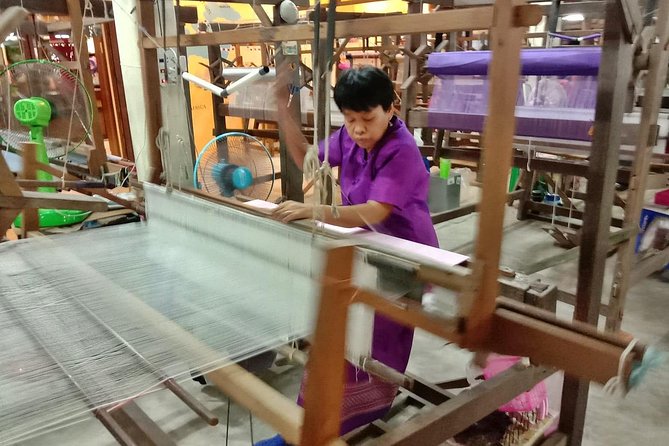
Thai silk is not just a pretty fabric in a shop window. It begins with patient, hands-on work, and this Chiang Mai class lets you see that process from natural tie-dye to spun thread and cross weaving. You also make a small silk product yourself, so the souvenir carries more meaning than a quick purchase.
I like the small maximum group of 10, which should give you a better chance to ask questions and receive help at the loom. I also like that lunch, air-conditioned transport, and hotel pickup and drop off are included. The main consideration is the price, $124.23 per person, which is a serious spend for a six-hour activity if you mainly want to buy silk rather than make it.
- Natural tie-dye comes first, showing how color becomes part of the cloth.
- Silk thread spinning explains the work behind the finished fabric.
- Cross weaving gives you hands-on time, not just a demonstration.
- You take home your own product, made during the class.
- Lunch and hotel transport are included, making the long morning easier.
- The class is limited to 10 people, with a 9:00 am start.
Seeing Thai Silk as a Complete Process
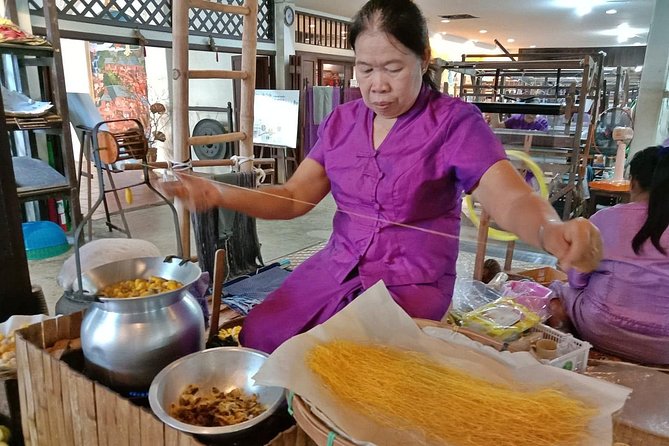
The best reason to book this class is simple: you do not see only the finished cloth. You follow several stages of production and then try the work yourself. That matters because Thai silk can look effortless when folded on a shelf, yet the cloth depends on repeated, careful tasks.
The day focuses on three main skills: natural tie-dye, silk thread spinning, and cross weaving. Each one shows a different part of textile making. Dyeing concerns color and pattern. Spinning turns silk into usable thread. Weaving brings thread together as cloth.
I find this order useful because it gives the day a clear shape. You first learn how the material is prepared, then how thread is made, and finally how it becomes a finished textile. You are not simply handed a craft project without context.
The class is described as a complete textile production experience, though the exact length of time spent at each stage can vary. If you want a tightly timed workshop with a printed schedule, you may find the day more flexible than expected. If you prefer to watch a demonstration, try a technique, and ask questions as you go, that flexibility should suit you.
The 9:00 am Start and Hotel Pickup
The experience begins at 9:00 am, with hotel pickup and drop off provided. That is a useful feature in Chiang Mai, where a craft center may not be close to your hotel or directly connected by public transport. You can begin the day without arranging a separate taxi there and back.
The vehicle is air-conditioned, which matters during a six-hour outing. Silk work can require concentration, and starting or ending the day in a hot vehicle would take some of the pleasure out of it. Pickup also removes one small travel decision from your morning.
The available information does not specify a pickup time for each hotel, so you should check the confirmed details after booking. The start time is 9:00 am, but your actual pickup may be earlier depending on location and the other people in the group.
The class is near public transportation, though the included vehicle is the simpler choice for most people booking this experience. Since the group has a maximum of 10, the ride may feel more personal than a large coach excursion, but the exact vehicle size is not given.
More hands-on workshops in Chiang Mai:
- Half-Day Thai Cooking Class at Organic Farm in Chiang Mai
★ 5.0 · 19,087 reviews - Chiang Mai: Cooking Class, Market & Thai Herbs Garden Tour
★ 4.9 · 4,824 reviews - Chiang Mai: Authentic Cooking Class with Market & Farm Visit
★ 4.9 · 4,546 reviews
Natural Tie-Dye: Starting with Color
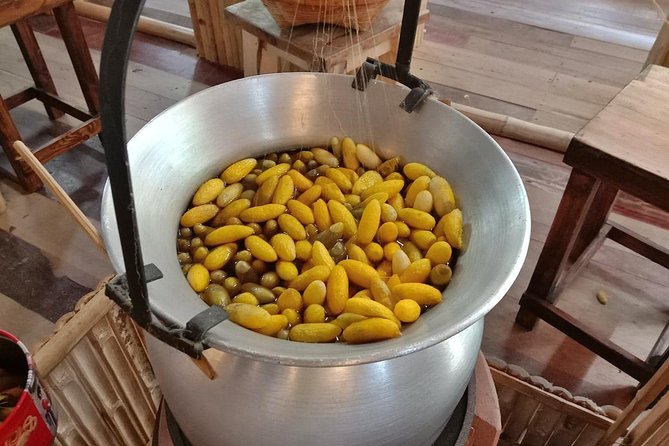
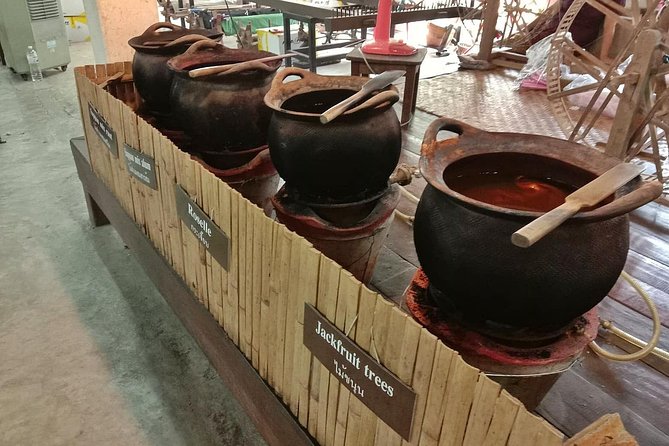
Natural tie-dye is one of the day’s most interesting elements because it links Thai silk to the materials used to color it. You learn how fabric is tied and treated to create patterns, rather than seeing only uniform, machine-made cloth.
The useful part here is the chance to connect cause and effect. A fold, knot, or wrapped section can resist dye and leave a different mark. Even if you do not remember every technical step, you will better understand why handmade silk has variations.
The class description says you learn Thai silk natural tie-dye, but it does not list the specific plants, minerals, or colors used. I would not book this expecting a full botanical lesson or a long study of dye chemistry. Expect an introduction to the technique as part of a broader textile day.
This stage is likely to suit you if you enjoy crafts but do not have much previous experience. You can approach it as a practical demonstration, then carry the idea into the handmade item you produce later. The point is not to become a professional dyer in one morning. It is to see how a simple process affects the look and feel of cloth.
Silk Thread Spinning and the Work Behind the Cloth
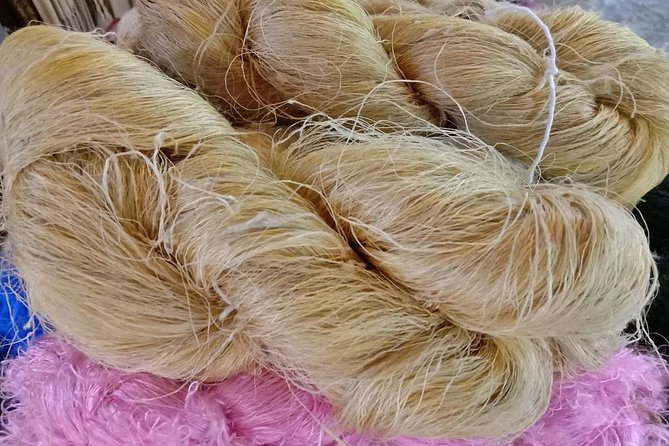
Spinning is the stage that makes the labor of silk easier to understand. Before thread can cross a loom, it has to be prepared, handled, and made consistent enough to use. Watching this process gives you a better sense of why handmade silk costs more than a casual souvenir might suggest.
The people working with the silk are eager to demonstrate their techniques, and the class gives you a chance to see spinning at close range. That personal contact is important. A textile workshop can become a passive stop if you only stand back and take photos. Here, the listed activities are designed to involve you.
You should expect the work to require patience. Spinning and weaving are not quick party tricks, and your first attempt may not look perfect. That is part of the value. The uneven spots and small corrections help you see the human effort in the finished textile.
The supplied details do not say whether you spin a fixed amount of thread or take spun thread home. The take-home item is described as your own product made during the class, not as a separate bundle of thread. Keep that distinction in mind when deciding what you hope to bring back.
Cross Weaving and Your Handmade Souvenir
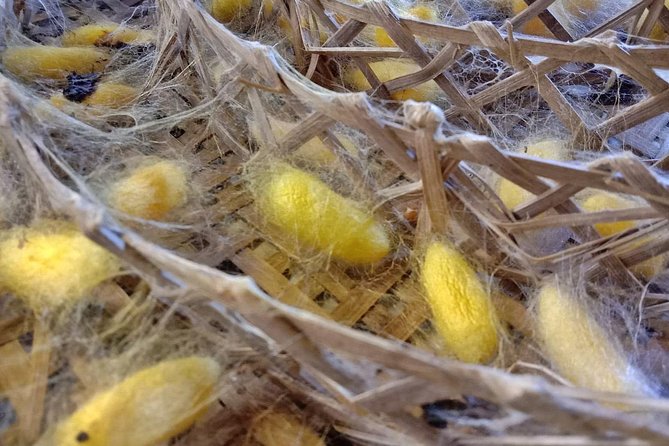
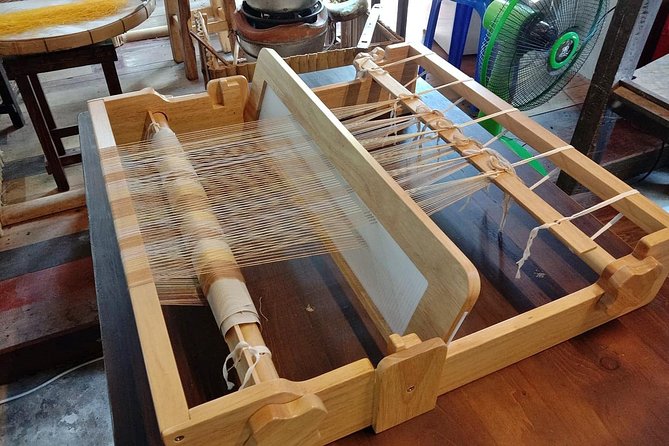
Cross weaving is where the class becomes most active. After learning about dyeing and spinning, you work with the structure of the cloth itself. You get to weave your own project rather than simply watch someone else work.
The hands-on element received the strongest praise in the available feedback. The appeal is easy to understand: you leave with an object connected to the time you spent learning. A shop-bought scarf may be attractive, but your own product records the fact that you tried the process.
Do not expect a factory-quality piece after one class. Your item is a handmade souvenir, and the experience matters as much as the finished result. If you are hard on yourself about neatness, take the activity as practice rather than a test.
The local women who demonstrate weaving and spinning are described as friendly and willing to show their methods. No guide names are provided, so I cannot tell you who will lead your particular session. Still, the direct demonstrations are one of the better reasons to choose a small group over a large cultural show.
The shop is described as huge, with something for everyone. That gives you a chance to see more silk products after making your own. It also creates a temptation to spend more, so set a souvenir budget before you arrive. Personal expenses are not included in the tour price.
A few more Chiang Mai half-days worth weighing up
- Chiang Mai: Elephant Sanctuary, Waterfall & Bamboo Rafting
★ 4.9 · 9,160 reviews - Chiang Mai: Doi Inthanon National Park Eco-Friendly Tour
★ 4.6 · 6,667 reviews - Chiang Mai: Elephant Sanctuary & Waterfall Group Tour
★ 4.9 · 5,780 reviews - Chiang Mai: Chiang Rai Temples, Karen Tribe and Hot Springs
★ 4.7 · 5,401 reviews
Lunch in the Middle of a Craft Day
Lunch is included, which is practical rather than decorative. A six-hour activity that begins at 9:00 am can stretch well into the afternoon, and you will be concentrating with your hands for much of the day. Having food arranged means you do not have to interrupt the class to find a place to eat.
The details do not specify the menu, meal style, or whether dietary requests can be handled. If you have food restrictions, ask the provider before the day rather than assuming the included lunch will meet them.
I also would not choose this class based on lunch alone. Its real value is the textile instruction and making session. Lunch simply helps turn those activities into a complete half-day outing instead of a shorter workshop that leaves you arranging food and transport separately.
What the $124.23 Price Really Covers
At $124.23 per person, this is not a budget craft lesson. The price makes more sense if you use the included parts: about six hours of activity, hotel pickup and drop off, an air-conditioned vehicle, lunch, instruction in three textile methods, and your own handmade product.
You are paying for access to a process, not only for the object you carry home. The value rises if you want cultural context, direct demonstrations, and time to make something yourself. It falls if you are mainly interested in shopping or taking a quick look at silk production.
Group size helps the calculation. With no more than 10 participants, you should have a better chance to follow the instructions than in a large bus group. That does not guarantee one-to-one teaching every minute, but it is a useful limit for a craft class.
Group discounts are offered, though the amount is not provided. If you are booking for several people, check the final price before comparing it with separate transport and a shorter workshop. The price can be easier to justify for a group that wants a shared activity rather than separate sightseeing.
The class is booked, on average, 22 days ahead. That is a useful planning signal, especially if your Chiang Mai dates are fixed. You do not need to treat that number as a rule, but booking early may be sensible during busy travel periods.
Who Will Get the Most from This Class
I would recommend this experience to you if you enjoy making things with your hands and want a souvenir with a personal story. It also suits visitors who like meeting local craftspeople and seeing work at close range, rather than only visiting a market.
It is a good fit for a couple, family, or small group that wants a shared half-day activity. Most people can participate, and the maximum group size is 10. The information does not list a minimum age, special skill requirement, or detailed accessibility notes, so families should confirm those points before booking for young children or anyone with mobility needs.
You may want a different activity if you dislike structured craft work, prefer a fast sightseeing schedule, or have little interest in buying or making textiles. The day is built around learning and repetition. It is not a general tour of every major attraction in Chiang Mai.
The class may also appeal to serious textile fans, but you should keep expectations in check. The available description covers the basics of natural tie-dye, spinning, and cross weaving. It does not promise advanced design instruction, a certificate, or a professional-level finished garment.
Practical Details Before You Book
Confirmation is received at the time of booking, which gives you the basic assurance that the reservation went through. The experience offers a mobile ticket, so you can keep the booking on your phone rather than print it.
Free cancellation is available if you cancel at least 24 hours before the local start time. Cancellations made less than 24 hours ahead are not refunded, and changes inside that window are not accepted. The experience also depends on good weather. If poor weather causes cancellation, you are offered another date or a full refund.
Personal expenses are not included. That mainly matters at the large shop, where you may see additional silk products. Bring a payment method and decide in advance how much extra shopping fits your budget.
The tour is listed as suitable for most people, but that is not the same as a full accessibility guarantee. If you need specific assistance, contact GoWithJoe before booking. Also confirm your pickup details, since the advertised start is 9:00 am but individual hotel collection times are not stated.
Is the Thai Silk Class Worth Booking?
Book this class if you want more than a silk purchase. The strongest feature is the chance to see natural tie-dye, thread spinning, and cross weaving, then make your own product under local guidance. The included lunch and hotel transport make the six-hour format easier, while the 10-person limit keeps it from feeling like a mass stop.
The price is high enough to require a clear interest in textiles. I would choose it for a hands-on cultural morning, especially if you value the story behind a souvenir. I would skip it if you only want to browse silk or prefer to spend $124.23 on several shorter activities.
For the right person, the finished piece is the reward, but the better memory is understanding how much work goes into the fabric before it reaches the shop. That is what gives this Chiang Mai class its real value.
FAQ
Where does the Thai silk class take place?
The experience takes place in Chiang Mai, Thailand.
What time does the class start?
The stated start time is 9:00 am.
How long does the experience last?
The class lasts approximately six hours.
Is hotel pickup and drop off included?
Yes. Hotel pickup and drop off are provided.
What silk techniques will I learn?
You will learn about Thai silk natural tie-dye, silk thread spinning, and cross weaving.
Do I make something during the class?
Yes. You make your own product and take the handmade souvenir home.
Is lunch included?
Yes. Lunch is included in the experience.
How large is the group?
The activity has a maximum of 10 participants.
What happens if I need to cancel?
You can receive a full refund if you cancel at least 24 hours before the local start time. Cancellations or changes made less than 24 hours before the experience are not refunded or accepted. If poor weather causes the activity to be canceled, you are offered another date or a full refund.
Just added around Chiang Mai
- Wat Phra That Doi Suthep & Wat Pha lat Evening Tour & Guide★ 4.5 · 89 reviews
- Walk With Monks Collecting Alms(meeting point maybe change)★ 4.9 · 8 reviews
- Chiang Mai: Doi Inthanon Park Day Trip with Kiw Mae Pan Hike★ 4.6 · 75 reviews
- Chiang Mai Zipline White Water Rafting and Elephant Sanctuary★ 4.0 · 11 reviews
- Zipline+Sticky waterfall+Long Neck Village Private Tour★ 5.0 · 22 reviews
- Chiang Mai Airport Private Transfer – Hotel or Airport★ 4.5 · 51 reviews
- Trek to a Jungle Waterfall★ 5.0 · 14 reviews
- Zipline Adventure at Skyline Jungle Luge Chiang Mai★ 5.0 · 102 reviews
Chiang Mai Tours, compared.
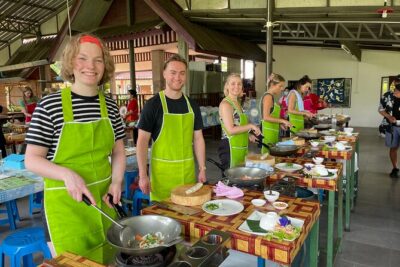
Half-Day Thai Cooking Class at Organic Farm in Chiang Mai
Read our review →
Elephant Sanctuary, Waterfall & Bamboo Rafting
Read our review →


Chiang Rai Temples, Karen Tribe and Hot Springs
Read our review →
Cooking Class, Market & Thai Herbs Garden Tour
Read our review →
Authentic Cooking Class with Market & Farm Visit
Read our review →
Elephant Sanctuary Feeding Program Half-Day Tour
Read our review →Browse the lists this tour appears in