
Reviewed · CHIANG RAI TOURS
1 Day Trekking in Chiang Rai forest (walk only)
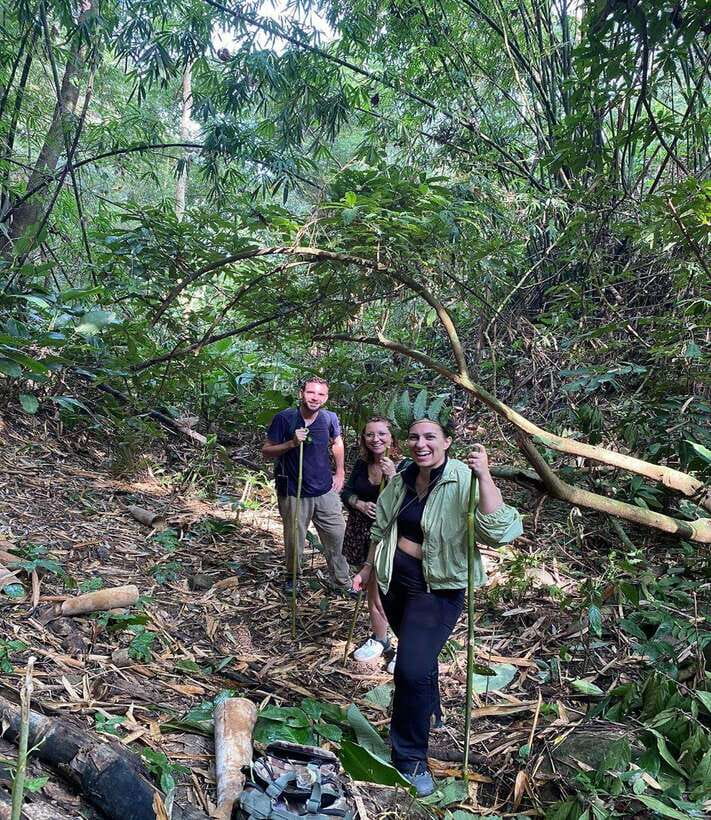
The best part of this Chiang Rai day is that you do more than look at rural Thailand from a vehicle. You walk through bamboo forest and community farmland, meet people in Lahu and Akha villages, then cook lunch in bamboo over an open fire. It feels active, local, and pleasantly hands-on.
I like the guides’ role here, especially the way Thor, Addie, June, and Chai have been praised for explaining plants, making small bamboo items, and keeping the walking pace friendly. I also like the combination of Huai Kaew Waterfall and tea plantations, which gives the day both fresh air and cultural interest.
The main thing to consider is the physical effort. The walk lasts about five hours, with steep, rocky, and sometimes slippery sections, particularly early in the day. Also, the hot spring stop may be less impressive than expected, and recent reports indicate that parts of the hot pool area have been under construction.
Key points to know before you book
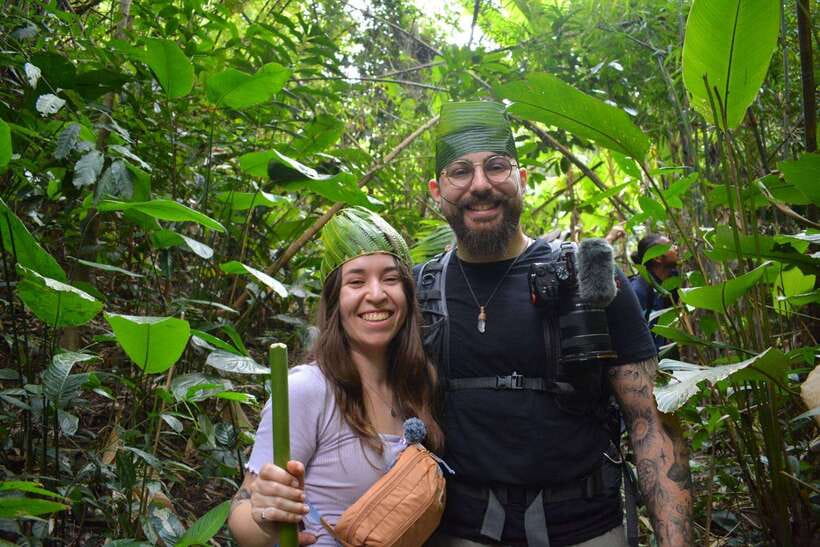
- Bamboo lunch is the heart of the day: You help make containers and cook food over an open fire rather than simply receiving a packed meal.
- The walk is active, not a gentle stroll: Expect roughly five hours on forest paths, including steep and uneven sections.
- Guides add real value: Thor, Addie, June, and Chai are praised for plant knowledge, humor, local connections, and practical forest skills.
- Waterfall time is built in: Huai Kaew Waterfall offers a chance to swim, cool off, and rest after the harder walking.
- You see several sides of rural Chiang Rai: The route includes bamboo forest, farmland, hill-tribe villages, a Chinese village, tea plantations, and coffee or rice-growing areas.
- The $57 price is fair for an active full day: Hotel transport, guide, water, insurance, and lunch preparation are included, which makes the cost easier to justify.
A full day beyond Chiang Rai’s city streets
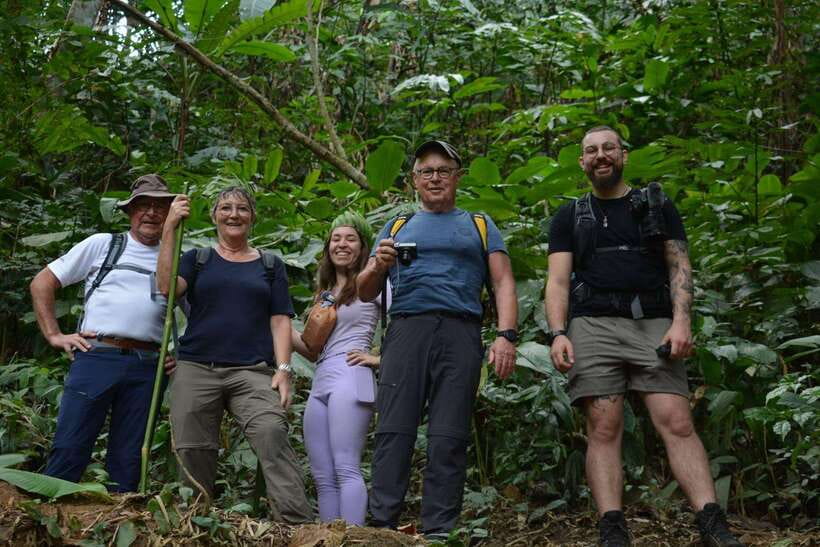
This is a walking tour with transport at the beginning and end, not a sightseeing trip where most of the day passes in a car. You are picked up in Mueang Chiang Rai District and driven for about 40 minutes by jeep or SUV before reaching the walking area.
The route is designed to show how forest, farmland, and village life fit together. You begin near hot springs, then move into bamboo forest and community farmland before continuing toward Lahu and Akha villages. Later, the path reaches Huai Kaew Waterfall, followed by the bamboo cooking session and a walk toward a Chinese village and tea plantations.
The total walking time is about five hours. That number matters. You do not need to be an athlete, but you should be comfortable walking for much of a day on uneven ground. One useful pattern comes through clearly: the route can feel difficult during the first two hours, then becomes easier once you reach more open paths and scenic stops.
I would describe this as a moderate-to-demanding day for someone with average fitness. People in their late 40s have managed it, but the trail still requires agility. If slippery slopes or rocky paths make you nervous, bring proper hiking shoes and expect to use your balance.
More walks and treks around Chiang Rai:
- Authentic trek only walk in Chiang Rai jungle
★ 5.0 · 90 reviews - 1 Day trekking : Chiang Rai popular activity,Fun in Nature.
★ 4.8 · 18 reviews - 3-in-1: Doi Inthanon Tour, Elephant Sanctuary, and Trekking Trail
★ 5.0 · 1,087 reviews
Starting at the hot springs and entering the bamboo forest
The day begins around the hot springs, then heads through bamboo forest and working farmland. This opening section gives you a gradual change from developed Chiang Rai to a quieter rural setting.
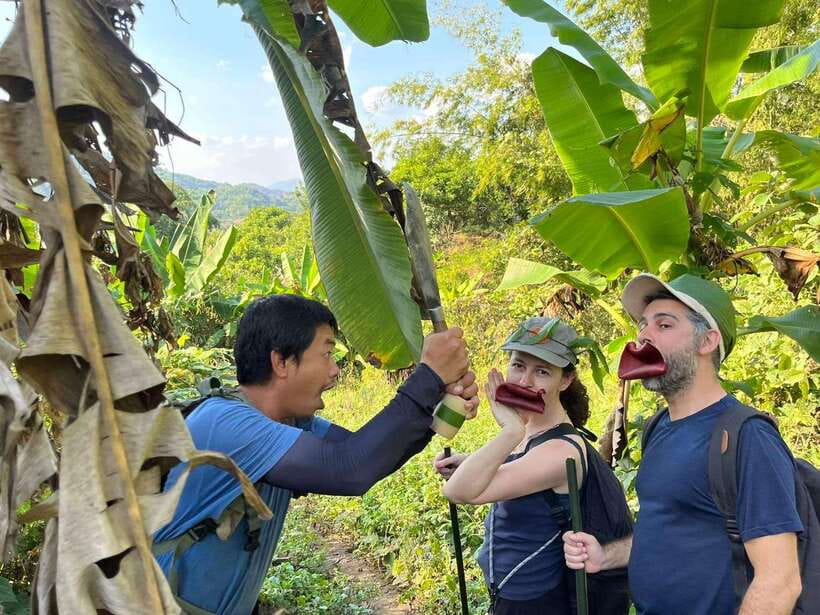
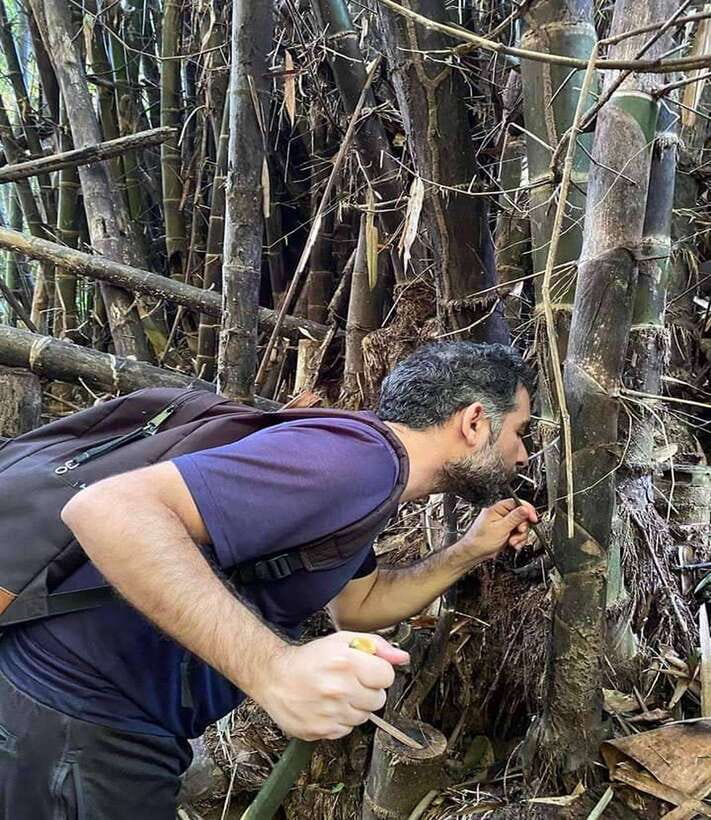
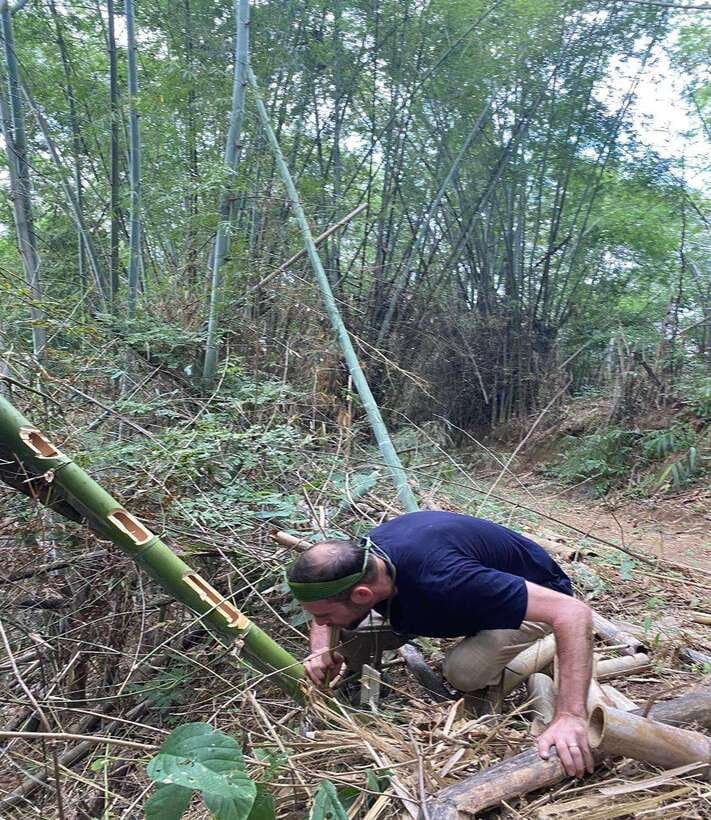
The bamboo is not just scenery. It becomes part of the day’s practical lesson. Guides may show you how bamboo holds water, how it can be shaped into cooking containers, and how it can be used for simple handmade objects. Thor, in particular, has been praised for keeping his hands busy during rest stops, making small toys and useful items from bamboo and leaves.
That kind of demonstration is valuable because it connects the forest to daily life. You are not simply being told that bamboo is important. You see how one plant can provide material for food preparation, tools, containers, and entertainment.
The path itself can be the toughest part of the route. Expect inclines, descents, stones, and slippery patches. Rest stops break up the effort, and the guides use those pauses to point out plants, fruit, berries, trees, herbs, and ways to find water in bamboo.
Bring biodegradable insect repellent. It is not included, and the tour specifically recommends it. Energy drinks are also not included, so carry whatever extra refreshment you normally need for a long walk, while remembering that water is supplied.
Meeting Lahu and Akha communities along the route

The village visits are one reason to choose this trip instead of a standard waterfall outing. You walk to Lahu and Akha communities and see homes, farmland, and everyday routines in a setting that feels more connected to the countryside than a staged cultural show.
Your guide matters here. June and Chai have been praised for explaining the surroundings and maintaining good relationships with local people. That can make a short village visit feel more respectful and useful, since you have someone to explain what you are seeing and how the community fits into the route.
Keep your expectations realistic. This is not a formal museum visit or a long lecture on hill-tribe history. The focus is on seeing local life as part of a walk, meeting people along the way, and understanding how forest resources and farming support the community.
You may pass through rice and tea-growing areas, and the route later reaches a Chinese village and tea plantations. These changes in scenery help show that northern Thailand is not one single cultural or agricultural zone. The day keeps shifting between forest, cultivated land, village paths, and plantation views.
As always, treat homes and residents with care. Ask before taking close-up photographs, and let the guide handle introductions. The strongest part of this stop is the personal connection, not collecting pictures.
Cooling off at Huai Kaew Waterfall
Huai Kaew Waterfall is described as the second largest waterfall in Chiang Rai Province. It gives the day a clear reward after the more demanding forest walking.
You can swim and relax here, so pack swimwear in an easy-to-reach place. The waterfall also makes a good natural pause before lunch. Instead of rushing from one sight to another, you have time to play in the water and cool down.
The exact feel of the waterfall will depend on conditions, but the attraction is easy to understand: fresh water, forest surroundings, and a chance to take the weight off your feet. If you are not swimming, it still works as a rest stop.
Do not confuse this with a polished resort pool. You are walking to a natural waterfall, so the approach may be uneven and wet. Water shoes could be useful, but hiking shoes are specifically recommended for the trek. At minimum, bring footwear with a firm grip and keep electronics protected around the water.
The route may include more than one waterfall or water stop, but Huai Kaew is the major named stop. Plan on changing back into dry clothing before the cooking session if you swim.
More walking tours in Chiang Rai:
- Bangkok: City Highlights Temple and Market Walking Tour
★ 4.5 · 3,990 reviews - Bangkok: Grand Palace and Wat Phra Kaew Guided Walking Tour
★ 4.4 · 2,417 reviews - Bangkok: Wat Pho and Wat Arun Guided Walking Tour
★ 4.6 · 1,720 reviews - Chiang Mai: 3 Hour Old City and Temples Guided Walking Tour
★ 4.6 · 1,568 reviews
Bamboo cooking turns lunch into the main event
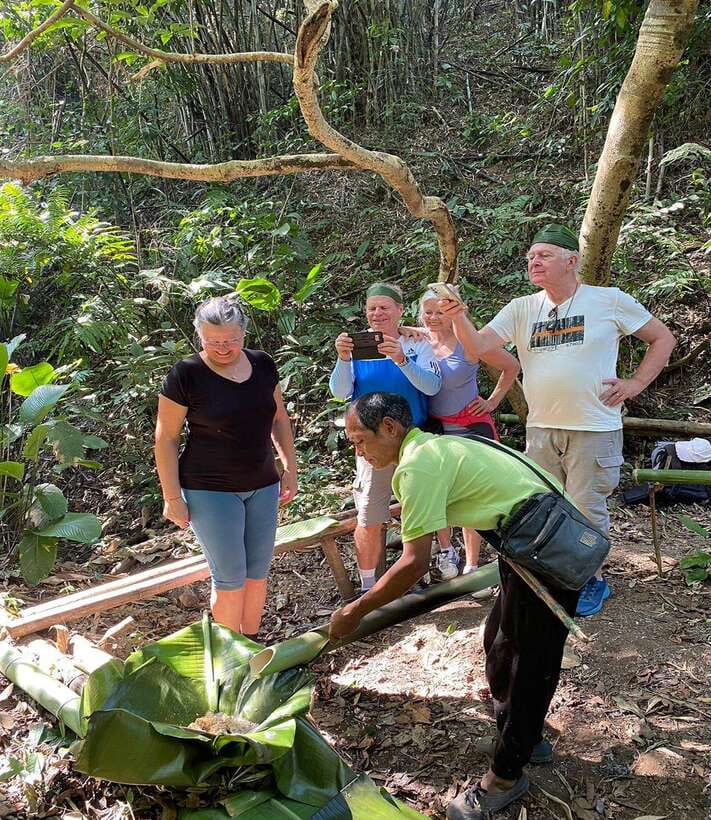
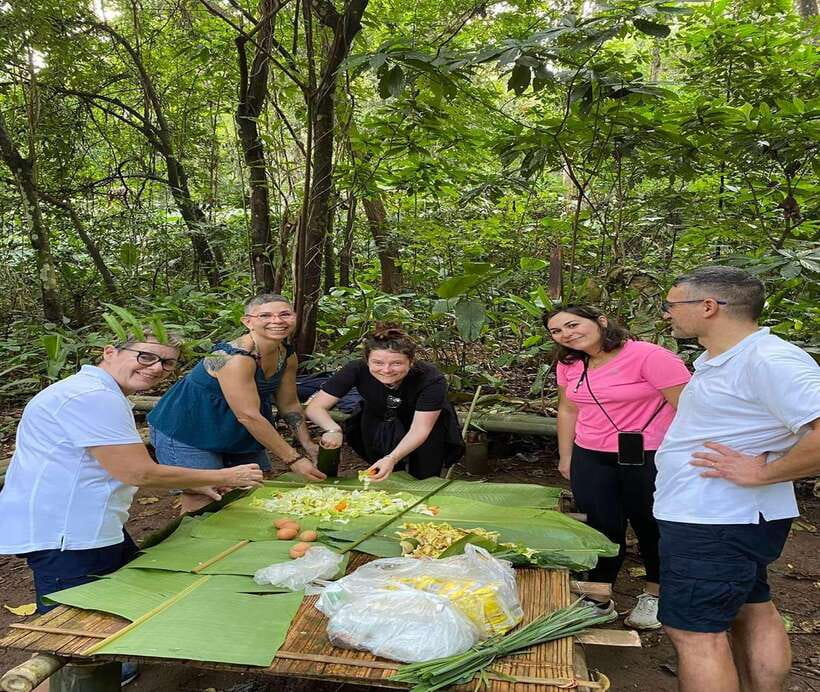
The bamboo lunch is the most distinctive part of the tour. You help prepare food using handmade bamboo containers and an open fire. This changes lunch from a passive break into a practical forest activity.
You may see soup and egg dishes cooked in bamboo, along with grilled pork prepared over a spit. The meal has received especially strong praise, and that makes sense: food cooked outdoors tastes better when you have helped prepare the equipment and watched the process from raw bamboo to finished meal.
The guides also make the session entertaining. Thor is known for bamboo cooking and for turning spare moments into demonstrations of forest skills. Addie has been praised for teaching survival techniques and explaining nature in a lively way.
This is a good fit for you if you like learning by doing. If you prefer a quick restaurant lunch with no smoke, waiting, or participation, this may feel slower than necessary. The cooking is central to the day, not a small extra added between attractions.
The tour includes bamboo cooking and water, but the details of every dish are not fixed in the information provided. The pork, soup, and egg dishes are commonly described as part of the meal, though the exact menu may vary.
Tea plantations and the Chinese village
After the waterfall and lunch, the walk continues toward a Chinese village and tea plantations. This part of the route adds a different view of northern Chiang Rai, moving away from dense forest into cultivated areas and village surroundings.
Tea plantations are especially good for slowing the pace. You get open views and a chance to see how the hills are used for agriculture. The day may also include coffee and rice-growing areas, giving you more context for the products and crops of the region.
The Chinese village is not presented as a large attraction with a long list of monuments. Its value is in the route itself, showing another local community and another layer of rural life. You should think of this as a walking visit rather than a standalone sightseeing stop.
By this stage, you will have spent hours on your feet. The plantation and village section can feel like a welcome change from steep forest tracks, though it is still part of the walking day. Wear a hat, bring sun protection, and keep drinking water even when the trail becomes easier.
The tour then returns you to Mueang Chiang Rai District by vehicle. Pickup and drop-off are included for hotels in the city, and airport pickup is also listed. Because the information also limits regular hotel service to the city area, confirm your exact pickup point before booking if you are staying farther out.
How hard is the trek?
The honest answer is that it is manageable for a reasonably fit person, but it is not effortless. Several people have described the walk as energetic, with steep and rocky slopes and slippery areas. The early part can be the hardest.
You should be able to walk for around five hours and handle uneven terrain without a stroller or powered wheelchair. Baby carriages and electric wheelchairs are not allowed, and the activity is not suitable for babies under one year or people over 95.
The guides appear to set a sensible pace. Rest stops are built into the day, and the stops are not wasted time. You may learn about local plants, see a bamboo demonstration, or simply catch your breath.
I would bring:
- Hiking shoes with a firm sole
- Swimwear and a change of clothes
- Biodegradable insect repellent
- Sun protection
- Drinking water beyond the supplied amount if you normally need extra
- A small bag that stays comfortable while walking
Motion problems deserve attention too. The route includes a 40-minute jeep or SUV ride, and the trail has slopes and uneven surfaces. If you struggle with motion or balance, this is probably not the right day trip.
The guide can make or break the day
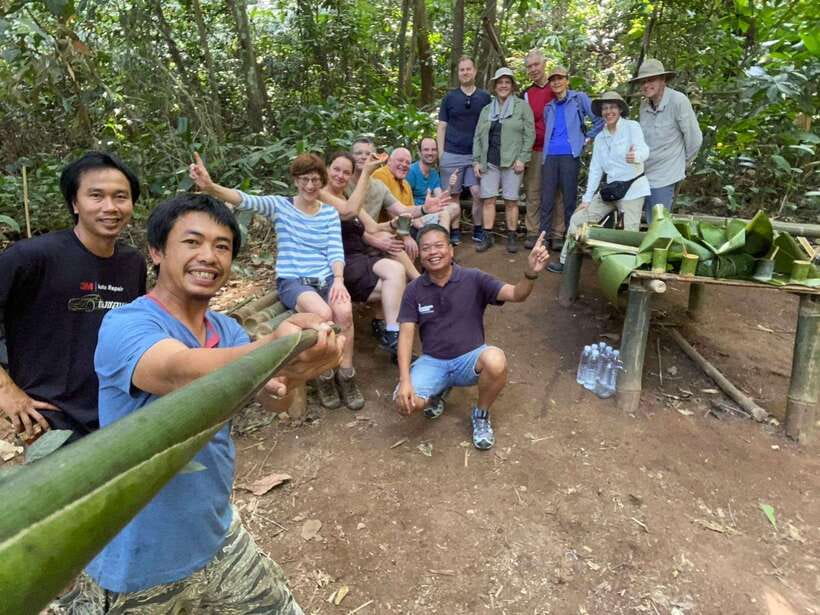
The guide is not just there to lead you from point to point. The best part of this experience depends on how well that person explains plants, talks with local people, and keeps the group moving through the hotter sections.
Thor is repeatedly singled out for humor, forest skills, bamboo crafts, plant knowledge, and enthusiasm. Addie is praised for explaining nature, sharing survival skills, and caring for someone who felt unwell. June is described as warm, informed, and a strong driver as well as a guide. Chai has been praised for identifying fruit, berries, trees, and water sources.
You may not receive the same guide on every departure, so do not book solely around one name. Still, the pattern is encouraging: the guide role is active and personal rather than limited to basic directions.
English and Thai are the listed tour languages. Clear explanations will be most useful during the village visits and bamboo cooking, so tell the guide early if you want more detail or need a slower pace.
Is $57 good value?
At $57 per person, I consider this a fair price for a full day that includes city hotel transport, a 40-minute transfer each way, a guide, water, insurance, and bamboo cooking. You are paying for both transport and access to a guided route that would be difficult to follow independently.
The value is strongest if you take part in the cooking and appreciate the guide’s nature explanations. A simple waterfall excursion might cost less, but it would not provide the same mix of walking, village visits, forest skills, and food preparation.
The price is less compelling if you mainly want a short nature walk or a guaranteed hot spring visit. The day is long, and the physical effort is part of what you are buying. Recent reports also say that the hot pool was under construction, with only a foot dip possible at one point.
Free cancellation up to 24 hours before the start and reserve-now, pay-later terms make it easier to fit the tour into a changing Chiang Rai schedule. Check the available start time when booking, since the exact departure time is not fixed here.
What the hot spring stop is really like
The hot springs are part of the route, but they should not be your main reason for booking. The advertised plan begins from the hot springs, while recent information indicates that the hot pool area has been under construction.
You might find a warm spring in a cement basin rather than a dramatic natural pool. That can be a letdown after a day built around waterfalls and forest, especially if you imagined a long soak.
Still, this is a small part of a much larger day. The forest walk, village visits, waterfall, tea fields, and bamboo meal carry the experience. I would treat the hot spring as a bonus and confirm its current condition before departure if soaking is important to you.
Who should book this Chiang Rai trek?
Book it if you want to use your legs, learn practical forest skills, and meet rural communities with a guide who can explain what you are seeing. It suits people who enjoy a full day outdoors and do not mind dirt, sweat, uneven paths, or a little uncertainty.
It is especially good for you if bamboo cooking sounds more appealing than another restaurant meal. The lunch is not just food. It is a lesson in using local materials and a chance to work alongside the guide.
Think twice if you have serious balance problems, dislike steep paths, need a stroller or electric wheelchair, or want a relaxed sightseeing day. The tour is not suitable for babies under one year, and it is not designed for people who cannot manage a long walk.
For most moderately fit adults, the route appears challenging but possible. Wear the right shoes, use insect repellent, and save enough energy for the return section.
Should you book it?
I would book this tour if your priority is an active and personal day in the Chiang Rai countryside. The strongest reasons are the hands-on bamboo lunch, the varied route, and guides who bring humor and practical knowledge to the walk.
I would not book it mainly for the hot springs, and I would not choose it if you want an easy stroll. Confirm the hot pool situation, prepare for five hours of walking, and expect the guide and cooking session to be more important than any single viewpoint.
At $57, it offers good value for an included full-day outing, especially if you want to see more than temples and city cafés. It gives you a taste of forest, farming, village life, and northern Thai food in one demanding but rewarding day.
FAQ
How long is the walking portion of the tour?
The total walking time is approximately five hours. The route includes bamboo forest, farmland, hill-tribe villages, waterfalls, a Chinese village, and tea plantations.
Where does pickup take place?
Hotel pickup and drop-off are included within Mueang Chiang Rai District. Airport pickup is also listed, but confirm the exact pickup point if you are staying outside the city area.
Is transportation included?
Yes. Transportation by jeep or SUV is included, with an approximately 40-minute drive before reaching the walking area.
What should I bring?
Bring swimwear, hiking shoes, and biodegradable insect repellent. Water is included, but energy drinks are not.
Can I swim during the tour?
Yes. You can swim and relax at Huai Kaew Waterfall. Bring a change of clothes if you plan to enter the water.
What languages are available?
The tour is offered with a live guide in English or Thai.
More 1-Day Tours in Chiang Rai
- From Bangkok: Ayutthaya & Ayothaya Floating Market Day Trip
★ 4.7 · 6,084 reviews - Krabi: Premium 4-Island Day Trip by Longtail Boat with Lunch
★ 4.5 · 4,812 reviews - Krabi: Hong Islands Day Trip by Speedboat with Lunch
★ 4.5 · 3,952 reviews - Phi Phi Islands Adventure Day Trip w/ Seaview Lunch by V. Marine
★ 5.0 · 3,295 reviews
Just added around Chiang Rai
- From Chiangrai: Slow Baot to Loas (Luangprabang) 2-Day Tour★ 4.4 · 56 reviews
- From Chiang Mai : 3 Temples & Golden Triangle with Lunch★ 4.5 · 17 reviews
- Explore the Chiang Rai and the Golden Triangle★ 4.6 · 18 reviews
- Chiang Rai: Discover 7 Must-See Spots & Lunch Included★ 4.7 · 26 reviews
- Chiangrai Full day: Popular 7 Locations with Thai buffet★ 4.8 · 16 reviews
- Chiang Rai:Lanna Home Cooking Class at Give Green Farm House★ 5.0 · 61 reviews
- Chiang Rai: Top Temples & Signature Attractions ~Free Buffet★ 4.7 · 10 reviews
- Chiang Rai:3D2N Transfer to Luang Prabang by Slow Boat★ 3.4 · 15 reviews
Chiang Rai Tours, compared.
Guided Highlights Guided Tour with Buffet Lunch
Read our review →
Iconic Temples & 7 Major Sites—River View Buffet
Read our review →
Sightseeing Join Tour Chiang Rai / PICK UP ONLY IN CHIANG RAI
Read our review →
Chiang Rai Must-See Tour – 7 Icons, Lunch & Small Group(9pp)
Read our review →
Chiang Rai Guide: Popular 7places 3Colors ,Golden Triangle
Read our review →
Browse the lists this tour appears in