
Reviewed · CHIANG MAI TOURS
Chiang Mai: 3 Hour Old City and Temples Guided Walking Tour
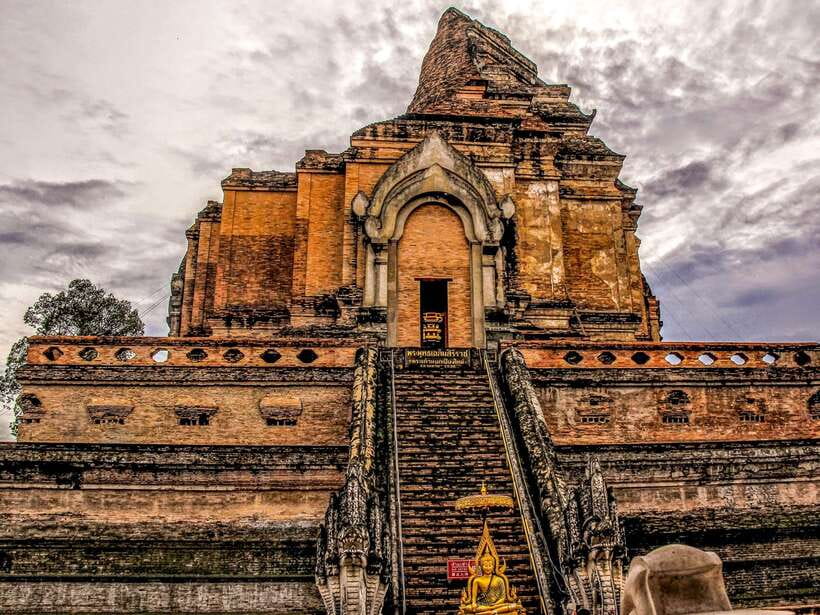
Chiang Mai’s best-known temples sit close together inside the Old City, and this tour gives you a useful story to connect them. You’ll move from the grand scale of Wat Chedi Luang to the quiet teak detail of Wat Phan Tao, then finish at the ornate Wat Phra Singh.
I like two things right away: the tour puts a local English-speaking guide beside you, and the $16 price keeps the experience accessible. Guides such as Nana, TomTam, Sunny, and Boon have been praised for clear explanations, humor, and thoughtful answers about Buddhism and Thai life. The catch is that the price does not include the three temple entrance fees, and walking in Chiang Mai’s heat can be tiring.
Key points to know before you book
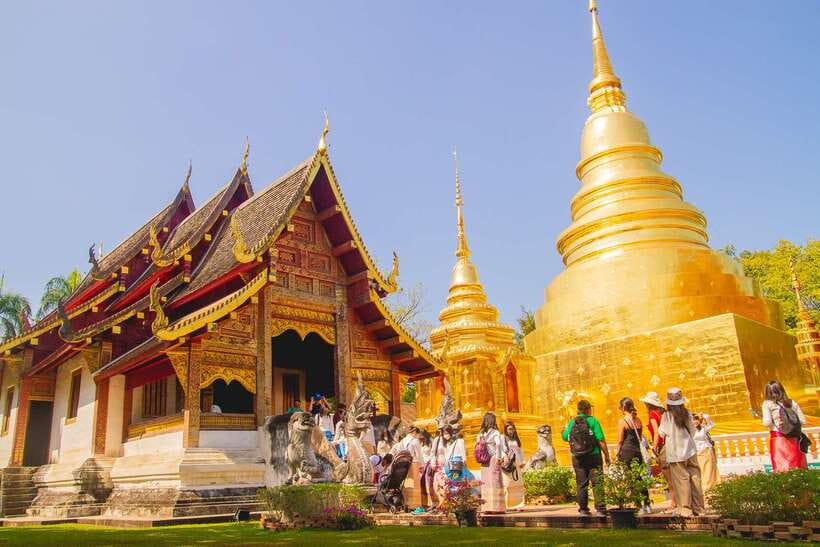
- A three-temple route with a clear visual contrast: See Chiang Mai’s largest stupa, a small teak temple, and one of the city’s most lavish sanctuaries.
- A guide adds meaning: You can learn about Lanna history, Buddhist beliefs, meditation, Thai languages, and local customs rather than simply taking photographs.
- The route ends at Wat Phra Singh: This is handy if you want to continue exploring the Old City on foot after the tour.
- Expect plenty of shoe removal: Slip-on shoes or sandals make temple visits easier, and socks may help if you dislike walking barefoot.
- Budget another 120 THB for admission: The listed fees are 50 THB for Wat Chedi Luang, 20 THB for Wat Phan Tao, and 50 THB for Wat Phra Singh.
- This is active sightseeing: Comfortable shoes, water, sun protection, and modest clothing will make the three hours much easier.
Three temples that explain Chiang Mai quickly
This is a smart introduction to Chiang Mai because the temples are not just a string of pretty buildings. Each stop shows a different side of the city’s religious art and Lanna culture.
You meet at the entrance of Wat Chedi Luang, where the guide carries a TripGuru sign. There is no hotel pickup or drop-off, so you need to make your own way there. The tour finishes at Wat Phra Singh Woramahawihan, rather than returning you to the starting point.
The route is planned for three hours, with about an hour at each major stop. That gives you enough time to look closely, ask questions, and hear the larger story without turning the outing into an all-day commitment. Some groups finish earlier, while particularly engaged groups have taken longer. If you have another booking afterward, leave a little breathing room.
More walking tours in Chiang Mai:
- Chiang Mai: Historic Temples and City Guided Walking Tour
★ 4.7 · 650 reviews - Chiang Mai: Temple And City Walking Tour Part I
★ 4.7 · 244 reviews - Chiang Mai: Local Food and Markets Guided Walking Tour
★ 4.3 · 175 reviews
Wat Chedi Luang and the great Lanna stupa
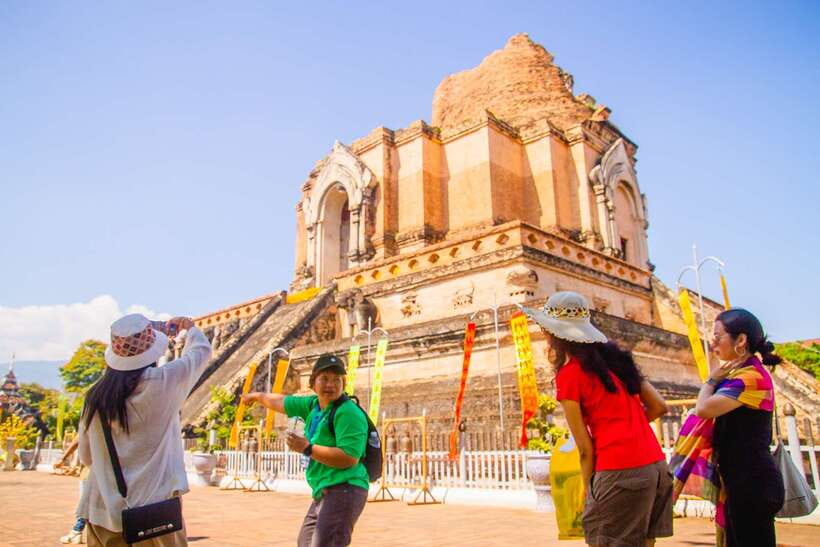
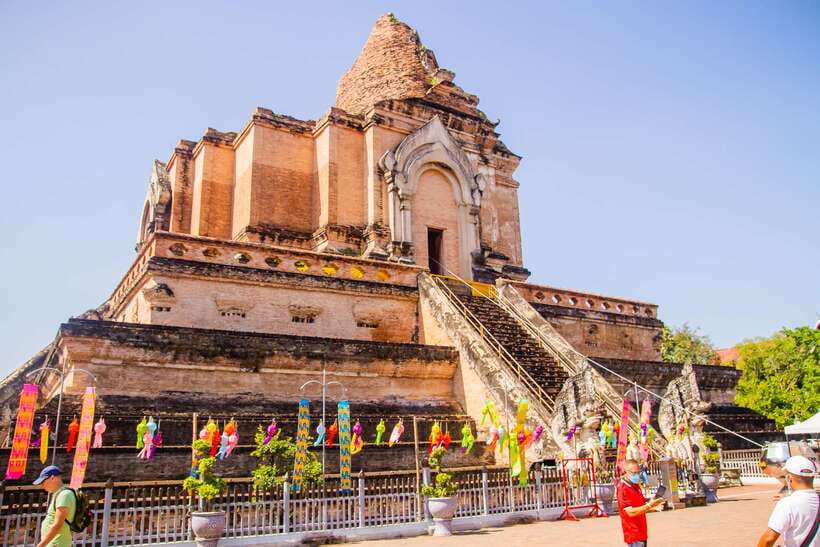
Wat Chedi Luang is the strongest opening stop. Built between the 14th and 15th centuries, it contains Chiang Mai’s largest stupa, a broad brick structure that gives the temple compound its sense of scale.
You’ll have time to walk around the grounds and study the Lanna-style details. This is where a guide earns the admission price. The compound has layers of history and religious use that are easy to miss when you are focused on the biggest structure. A good guide can point out what you are seeing and explain how the temple fits into Chiang Mai’s past.
I would use the first part of the visit to get your bearings, then slow down for the smaller details. Look closely at the rooflines, decorative elements, and the relationship between the main buildings and the stupa. Your guide may also explain Buddhist beliefs and Thai customs, subjects that come up often on this tour.
The grounds are sprawling enough to require steady walking. You will also remove your shoes when entering certain buildings, so this is not a stop where you simply remain on one paved path. In hot weather, the combination of sun, bare feet, and walking can wear you down sooner than expected.
Wat Phan Tao, small in size and strong in character
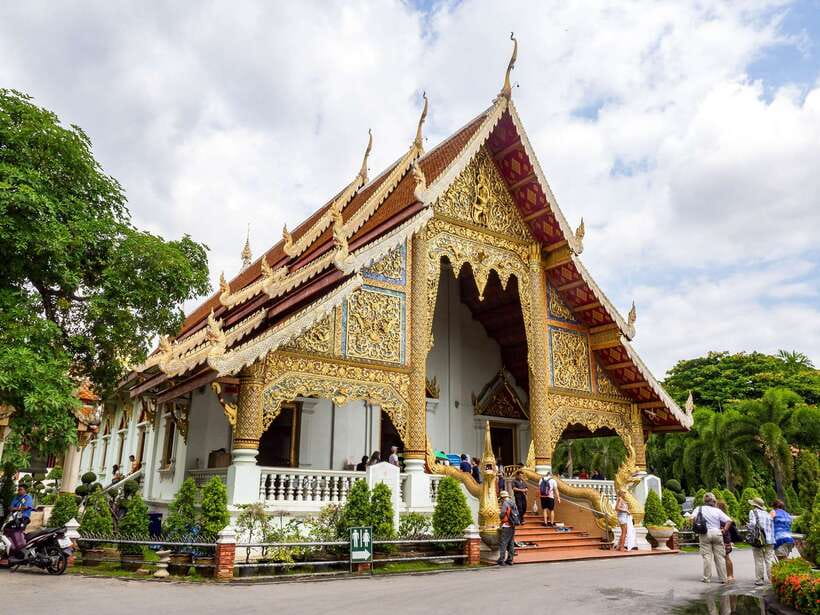
Wat Phan Tao provides a welcome change after the massive stupa. It is a much smaller temple, but its teak construction gives it an intimate character that the larger compound cannot match.
The temple was once a throne hall for King Mahotara Prateth before it became a place of prayer. Its carefully carved wooden facade is the main attraction. Take time to inspect the workmanship instead of treating this as a quick photo stop.
This is one of the most useful pairings on the tour. Wat Chedi Luang shows monumental scale, while Wat Phan Tao shows how much beauty can be packed into a modest building. I particularly like that the route does not equate importance with size.
The listed entrance fee is 20 THB, separate from the tour cost. Keep cash handy, since the three admission fees together come to 120 THB. A scarf is also worth carrying, both for sun protection and for use as an extra cover-up if your clothing does not meet temple rules.
Wat Phra Singh brings the grand finale
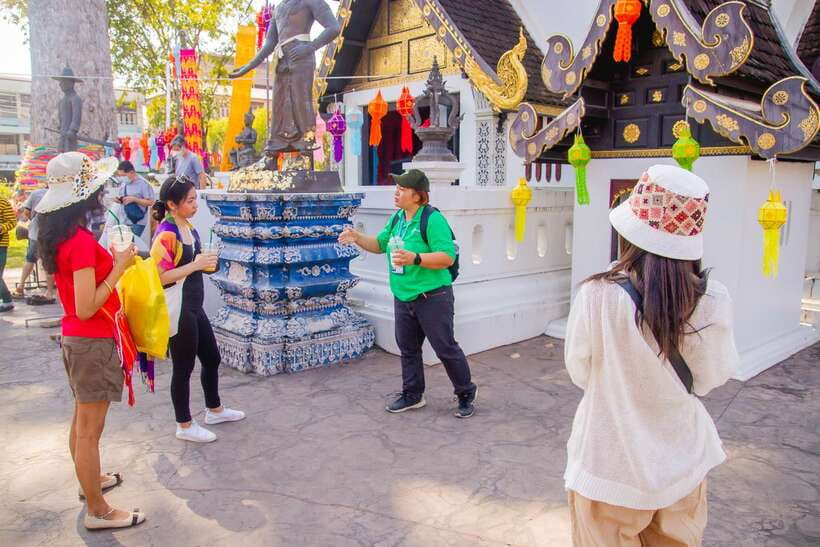
The final stop is Wat Phra Singh, a 14th-century temple regarded as one of Chiang Mai’s finest. Its grounds include a mosaic-decorated sanctuary, gilded pagodas, and the large Lion Buddha statue associated with the temple.
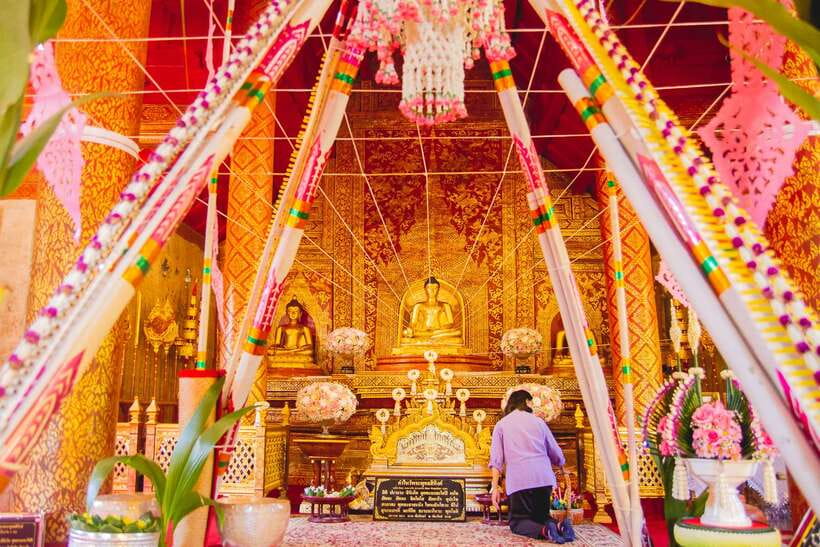
After the quieter woodwork at Wat Phan Tao, this stop feels more ornate and ceremonial. There are plenty of details to take in, from the decorative surfaces to the layout of the grounds. Your guide can help you understand which features matter and explain the Buddhist ideas connected to what you see.
This is also where the tour ends. That makes Wat Phra Singh a practical final stop if you want to continue around the Old City afterward. You are not being collected by a vehicle, and no transfer back to your hotel is included.
Allow time for photographs, but remember that these are active places of worship. Follow instructions about where to stand, when to remove shoes, and how to dress. Modest behavior matters as much as modest clothing.
A few more Chiang Mai half-days worth weighing up
- Taste of Bangkok: A 3-Hour Chinatown Food Feast
★ 4.8 · 59 reviews - Ayutthaya: 3-Hour Sunset Ride Bike Excursion
★ 4.8 · 35 reviews - Grand Palace & Wat Arun Immersive Guided Walking Tour 3-Hour
★ 5.0 · 9 reviews - So Thai Pleasure Spa Package (3 Hours)
★ 5.0 · 7 reviews
Why the guide makes the difference
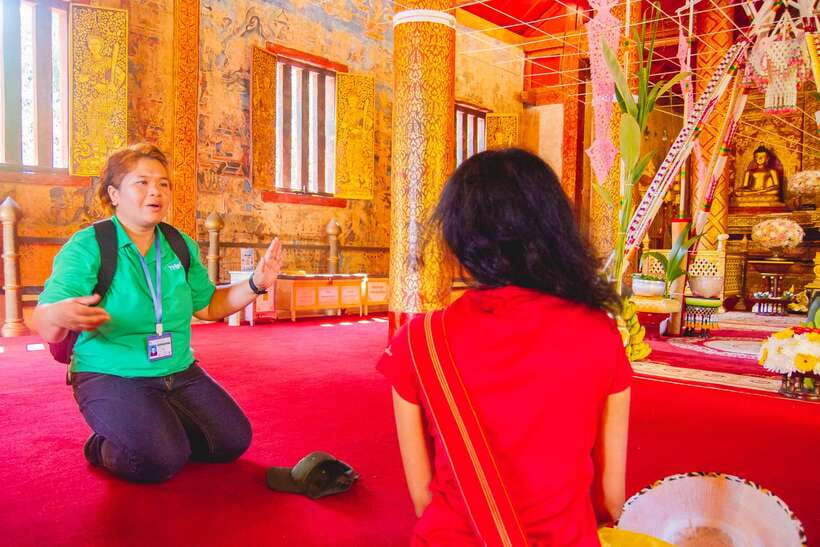
You can visit these temples independently, but the buildings will not explain themselves. The main value here is the interpretation provided along the way.
The strongest guide reports focus on clear English, Buddhist teaching, Chiang Mai history, and the ability to answer questions without rushing. Nana has been singled out for explaining the city and temples with humor. TomTam is praised for taking time with questions. Sunny is noted for explaining clearly and taking photographs. Boon has included a meditation lesson at one temple, while Popcorn has shared personal insight from his upbringing as a monk.
Those details show the range you might get from a live local guide. The exact guide is not guaranteed, so you should not book solely expecting one named person. Still, the repeated pattern is encouraging: guides are described as friendly, patient, and able to connect temple design with daily Thai life.
I especially value the cultural questions you can ask in person. You might want to know how Buddhism shapes family life, why people make offerings, or how local beliefs fit alongside formal religious practice. A walking tour creates room for those questions in a way an audio guide often does not.
Some guides also take group photographs, which is useful if you are traveling alone or want a picture with the temple grounds behind you. That is a pleasant extra, but the main benefit remains the explanation.
The pace, heat, and practical effort
Three hours sounds short, but walking between several temple compounds in Chiang Mai can feel substantial. You need a moderate level of fitness, and the tour is not suitable for people with mobility impairments, heart problems, or respiratory issues. It is also listed as unsuitable for pregnant women.
Take water even during the cooler season. February can still feel warm in the shade, and you may spend time outdoors between buildings. Wear comfortable shoes that come off easily. Sandals or slip-on shoes are convenient, while socks can make the repeated shoe removal more comfortable.
Bring sunglasses, a hat, sunscreen, insect repellent, a camera, cash, and a scarf. The scarf is not a substitute for proper clothing, so it is better to arrive dressed with covered shoulders, back, underarms, and knees. Temple rules are strict at some sights, and clothing that seems acceptable elsewhere may not be accepted inside a sanctuary.
The walking surface and access arrangements can vary around historic compounds. If you have a back or leg problem, think carefully before booking. One guide helped a participant with a spinal problem arrange a tuk-tuk back to the hotel after the walking became difficult, but that was personal assistance rather than a promised tour service.
What the $16 price really covers
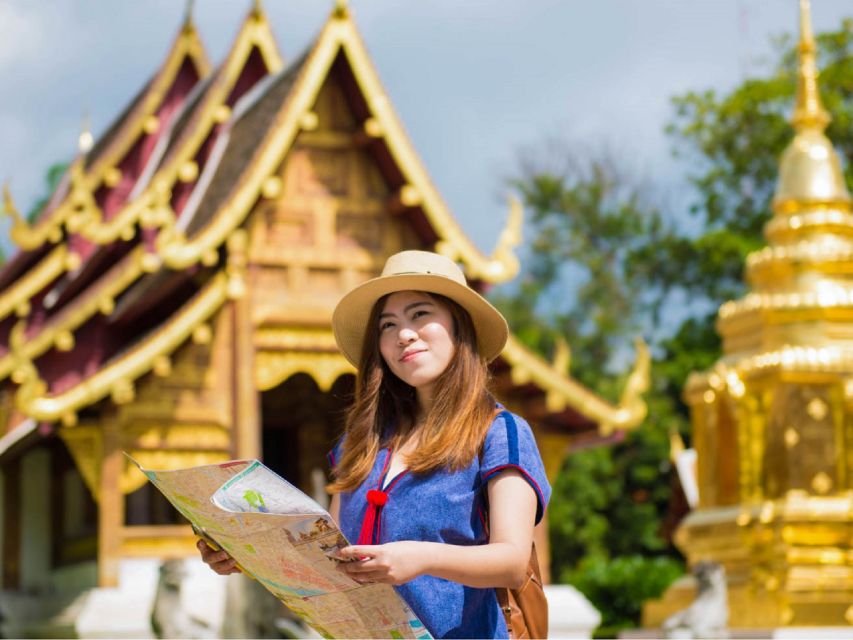
At $16 per person, this is a low-cost way to add context to three major Chiang Mai sights. The fee includes the local guide and walking tour, but not admission, food, drinks, or transportation.
The three entrance fees total 120 THB. Add that amount when comparing this outing with a free self-guided walk. Even after admission, the overall cost remains modest for three hours of live instruction in English.
The value is strongest for first-time visitors who want a quick cultural introduction. You are paying less for transport and more for someone who can explain what you are seeing. If you already know Chiang Mai’s temple architecture and Buddhist customs, you may prefer to visit independently and spend longer at selected sites.
The tour is GSTC-certified and presents itself as a lower-impact way to explore, with carbon emissions offset as part of its sustainability approach. That does not change the walking route, but it may appeal if you want an experience designed with environmental impact in mind.
Who will enjoy this walking tour most
I would recommend this tour to a first-time visitor with one morning or afternoon available in the Old City. It is also a good choice for solo visitors who want company, families with older children who can manage the walking, and anyone who prefers explanations over silent sightseeing.
It suits you especially well if you are curious about Buddhism, Lanna design, Thai history, or local customs. The guide can turn small details into useful stories, and you can ask questions as they arise.
I would be more cautious if you dislike heat, have trouble walking for several hours, or want a slow photographic study of one temple. The one-hour blocks keep the route moving. That is useful for a short visit, but it can feel rushed if you want to linger at every building.
The experience is also not a transport solution. You must reach Wat Chedi Luang yourself, and you must arrange your own way onward from Wat Phra Singh. The evening-before email confirms the meeting point and pickup time details, so check your messages and arrive 10 minutes early with the TripGuru sign in mind.
My verdict on the Old City temple walk
I would book this if I wanted a compact, affordable introduction to Chiang Mai’s major temples and did not want to spend time researching each site beforehand. The route has a good rhythm: monumental Wat Chedi Luang, finely carved Wat Phan Tao, then ornate Wat Phra Singh.
The main reason to choose it is the guide. Strong guides such as Nana, TomTam, Sunny, and Boon have made the history, Buddhist practice, and local culture easier to understand. The main reasons to hesitate are the walking effort, extra admission fees, strict dress rules, and the possibility that three hours will feel brisk.
For $16 plus 120 THB in temple fees, it offers very good value. Wear respectful clothing, carry water, and use easy-on, easy-off shoes. If that sounds manageable, this is a sensible first look at Chiang Mai’s Old City.
FAQ
How long does the Chiang Mai temple walking tour last?
The tour lasts three hours. The planned visits allow roughly one hour each at Wat Chedi Luang, Wat Phan Tao, and Wat Phra Singh.
Which temples are included?
The tour visits Wat Chedi Luang, Wat Phan Tao, and Wat Phra Singh. It begins at Wat Chedi Luang and finishes at Wat Phra Singh Woramahawihan.
What is included in the tour price?
The price includes a local English-speaking guide and the walking tour.
Are temple entrance fees included?
No. Admission costs are separate: 50 THB for Wat Chedi Luang, 20 THB for Wat Phan Tao, and 50 THB for Wat Phra Singh.
Is hotel pickup included?
No. You must make your own way to the entrance of Wat Chedi Luang, and hotel drop-off is not included.
What language does the guide speak?
The live tour guide speaks English.
What should I wear?
Wear clothing that covers your shoulders, underarms, back, and knees. Some temples enforce strict dress codes, so modest clothing is essential.
What should I bring?
Bring comfortable shoes, sunglasses, a hat, a camera, sunscreen, insect repellent, cash, and a scarf. Water is also a sensible choice for the walk.
Can people with mobility or health conditions join?
Moderate fitness is recommended. The tour is not suitable for people with mobility impairments, heart problems, respiratory issues, or pregnant women.
Just added around Chiang Mai
- Taste of Chiang Mai: Michelin Guide & Street Food Tour★ 4.9 · 159 reviews
- Red, Blue, White Temples & Hot Spring Trip from Chiang Mai★ 4.4 · 143 reviews
- From Chiang Mai: Mae Taeng Valley and Waterfalls Cycle Tour★ 4.9 · 159 reviews
- Long Neck Village, Silver Temple & Chiang Mai Top Sites★ 4.7 · 17 reviews
- Chiang Mai: Local Northern Thai Cooking Class at Grandma’s★ 5.0 · 33 reviews
- Chiang Mai: Khum Khantoke Northern Thai Cuisine and Show★ 4.3 · 38 reviews
- Private : Sticky Waterfall & Secret Temple & Karen Village.★ 5.0 · 9 reviews
- Half-day with CHIANGMAI ELEPHANT CARE program (12pm-6pm.)★ 5.0 · 27 reviews
Chiang Mai Tours, compared.
Half-Day Thai Cooking Class at Organic Farm in Chiang Mai
Read our review →
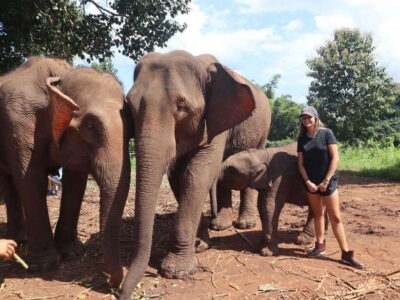
Elephant Sanctuary, Waterfall & Bamboo Rafting
Read our review →
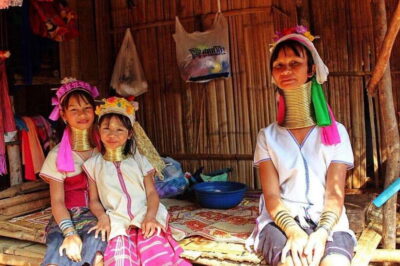
Chiang Rai Temples, Karen Tribe and Hot Springs
Read our review →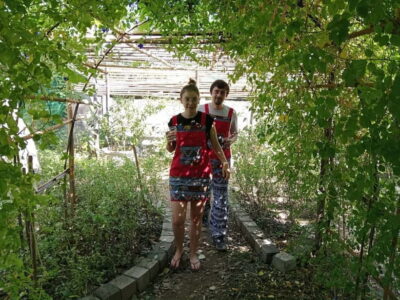
Cooking Class, Market & Thai Herbs Garden Tour
Read our review →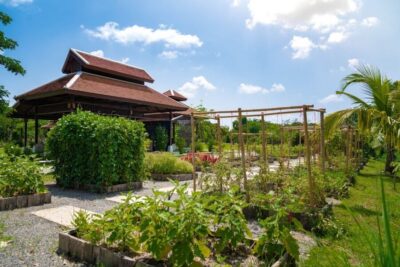
Authentic Cooking Class with Market & Farm Visit
Read our review →
Elephant Sanctuary Feeding Program Half-Day Tour
Read our review →Browse the lists this tour appears in