
Reviewed · CHIANG MAI TOURS
Chiang Mai: Temple And City Walking Tour Part I
Chiang Mai’s old city makes a fine classroom, and this tour gives you something better than a quick look at golden roofs: a guide who can explain how Buddhist practice shapes daily life. Former monks such as Son and Katoon have led many departures, answering questions about meditation, Buddha images, prayer, and monastic life.
I like the early 8:20 am start, which helps you avoid the worst heat, and I like the walk between three major temples rather than sitting in a vehicle all morning. The price is also hard to fault at $15, though you’ll pay another 90 THB for the two listed entrance fees and spend much of the four hours standing.
At a glance
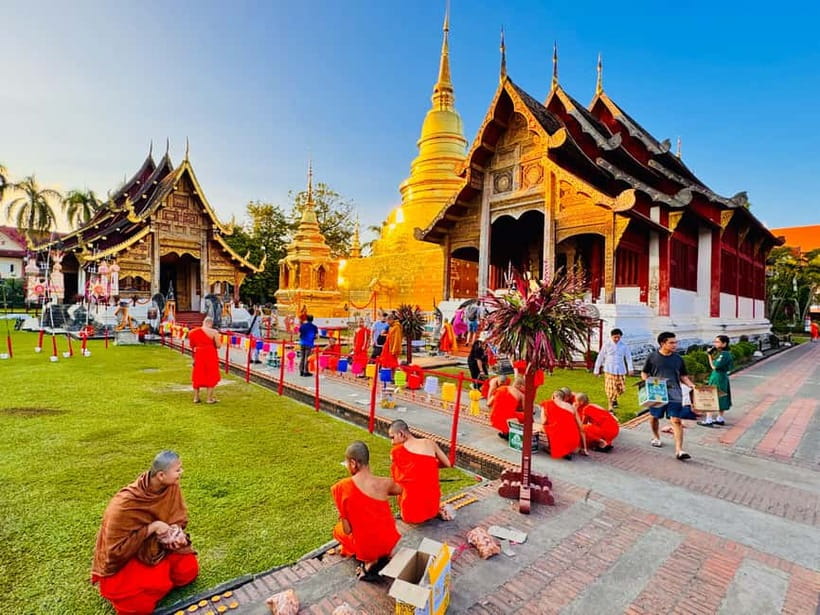
- Former monk guides: Some guides, including Son, Katoon, and Eddie, draw on personal experience of monastic life.
- Three major old-city temples: Visit Wat Chedi Luang, Wat Phan Tao, and Wat Phra Singh on foot.
- Early start: The 8:20 am departure gives you a better chance of cooler walking conditions.
- Low headline price: The tour costs $15 per person, with 50 THB for Wat Chedi Luang and 40 THB for Wat Phra Singh extra.
- Question-friendly format: Guides allow time for questions about Buddhism, history, and Thai customs.
- Dress carefully: Shorts, short skirts, sleeveless shirts, smoking, alcohol, drones, climbing, and nudity are not allowed.
Why the guide matters more than the route
Chiang Mai has no shortage of impressive temples. You can walk past them on your own, take photographs, and admire the carved wood. The harder part is understanding what you are seeing.
That is where this tour earns its modest fee. Guides explain the purpose of temple buildings, the meaning of Buddha images in different poses, and the way Buddhist beliefs connect with northern Thai history. Some departures are led by a former monk, giving you access to personal details that a standard sightseeing guide may not be able to provide.
Son is praised for taking time with questions and explaining both Chiang Mai’s past and Buddhist practice. Katoon, also spelled Kartoon or Kantoon in guide references, is described as patient, calm, and especially open about life as a monk. Eddie and Big have also led departures, with Big often adding a lively personality and taking photographs for the group.
Guide quality can vary by departure, as it does on any shared tour. One useful point is that a few guests found quieter guides difficult to hear, especially in busy temple courtyards. Stay close to the guide, and speak up if you are missing part of an explanation.
More walking tours in Chiang Mai:
- Chiang Mai: 3 Hour Old City and Temples Guided Walking Tour
★ 4.6 · 1,568 reviews - Chiang Mai: Historic Temples and City Guided Walking Tour
★ 4.7 · 650 reviews - Chiang Mai: Local Food and Markets Guided Walking Tour
★ 4.3 · 175 reviews
Starting with Wat Chedi Luang
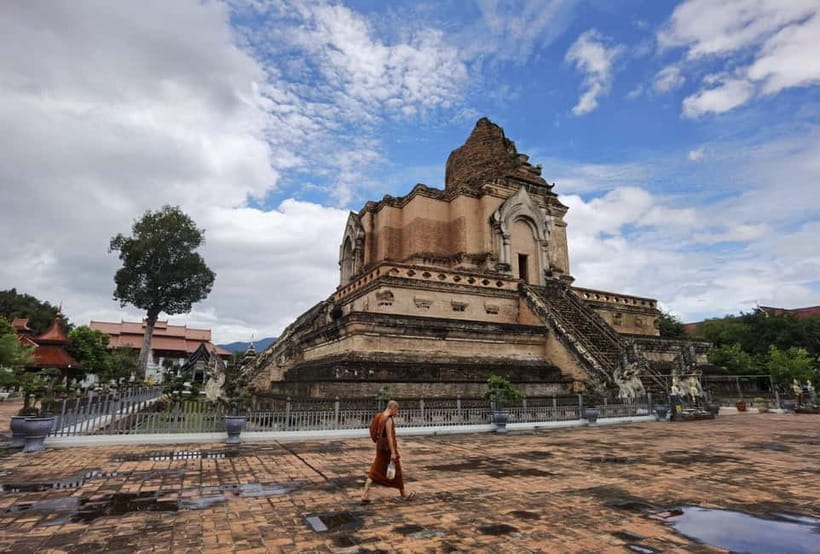
The first major stop is Wat Chedi Luang, home to one of Chiang Mai’s most striking old stupas. The central chedi was built in the 14th century and later badly damaged by an earthquake in 1545. Its broken form remains powerful, even without its original height and finish.
I like this as the opening stop because the ruins immediately show you that Chiang Mai is not only about polished temple decoration. The weathered stupa carries the marks of time, while the surrounding temple grounds keep the site tied to living religious practice.
Your guide can help you read the structure rather than simply circle it for photographs. You’ll learn why stupas matter, how temple compounds are arranged, and how northern Thai Buddhist traditions connect with the city’s past. The scale of the chedi also helps you understand why it was once among Chiang Mai’s most important religious buildings.
Wat Chedi Luang requires a 50 THB entrance fee, not included in the $15 tour price. Bring cash in Thai currency so this small extra cost does not slow you down.
The stop is also a lesson in pacing. You’ll walk around the grounds, pause for explanations, and stand while looking at major features. The walking itself is described as easy, but the heat can make a four-hour morning feel longer than the distance suggests.
The woodwork and murals of Wat Phan Tao
From Wat Chedi Luang, the group walks a short distance to Wat Phan Tao, also written as Wat Pan Tao in the tour description. This smaller temple has a different feel from the massive ruined chedi.
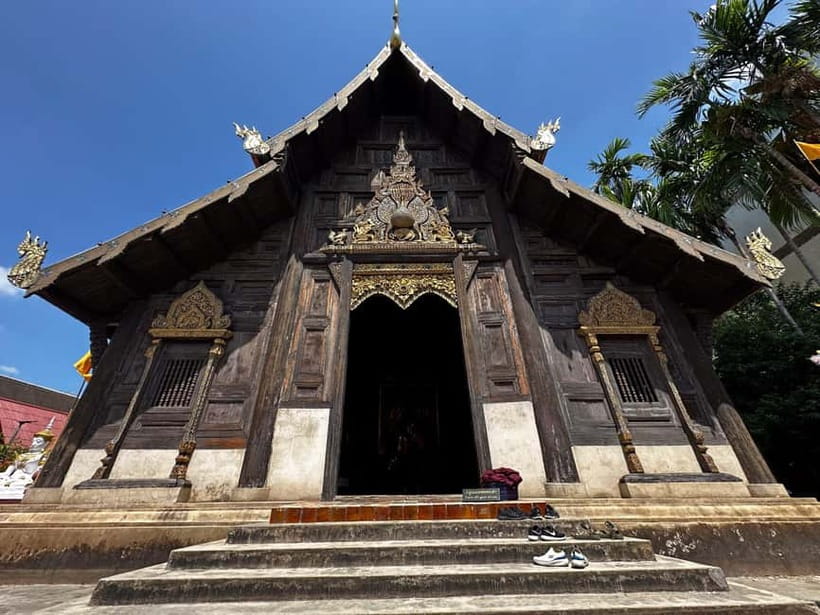
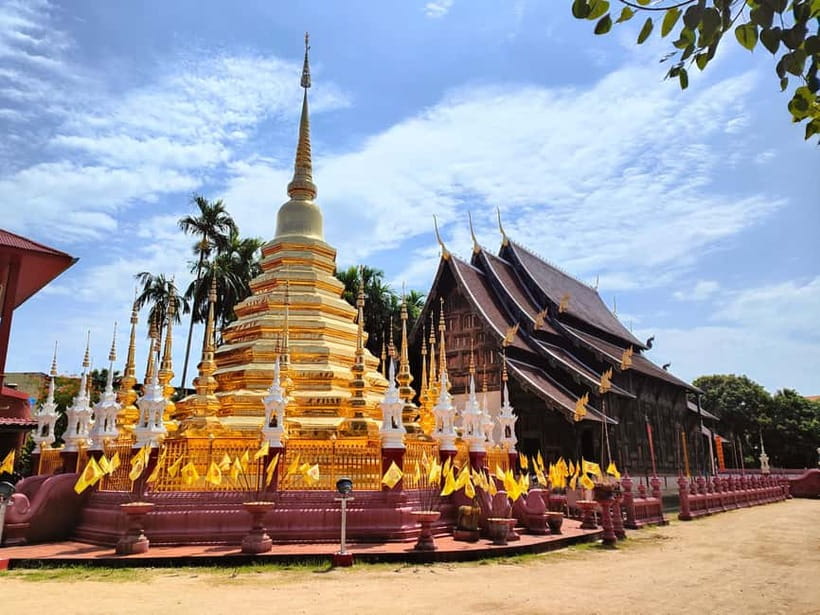
Wat Phan Tao is known for its Lanna-style ordination hall and murals showing scenes from the life of the Buddha. The building gives you a chance to focus on northern Thai design, especially after the open scale of Wat Chedi Luang.
This is the point where a guide’s explanation becomes especially useful. Temple art can look decorative when you do not know how to read it. A good guide can connect the murals to Buddhist stories and explain why the ordination hall matters within temple life.
The compact size makes this a pleasant middle stop, but do not expect a long rest period simply because the temple is smaller. You may still spend several minutes standing as the guide points out details and takes questions.
Several guides are also happy to take photographs. That can be useful at Wat Phan Tao, where the timber architecture and painted details provide more intimate pictures than the broad ruins at the first stop.
Meeting the Lion Buddha at Wat Phra Singh
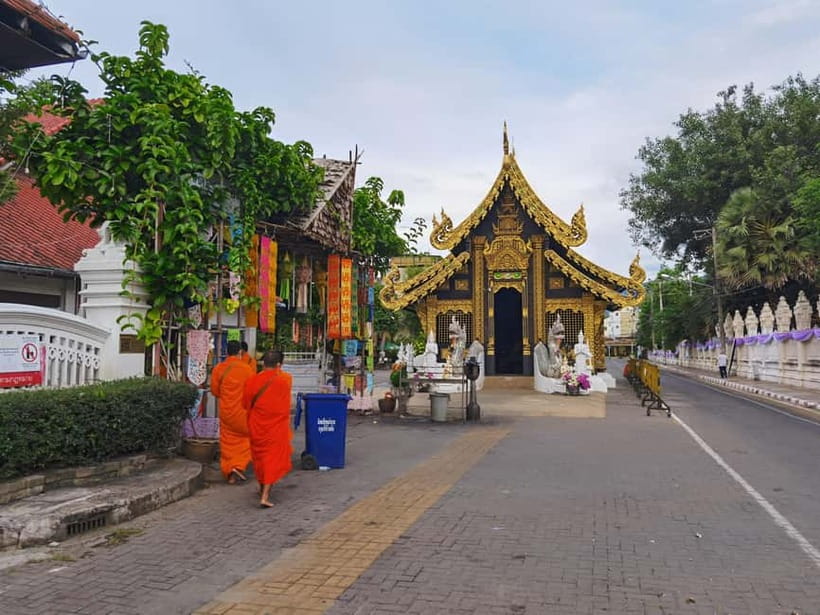
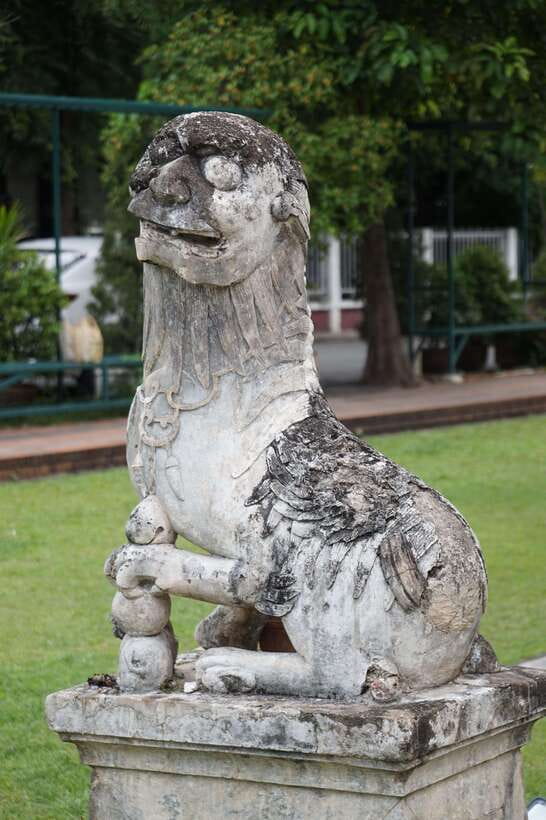
The final main temple is Wat Phra Singh, often translated as the Monastery of the Lion Buddha. It is one of Chiang Mai’s most important temples and houses the revered Phra Singh Buddha statue.
The temple grounds and architecture give the tour a strong finish. After the broken grandeur of Wat Chedi Luang and the Lanna woodwork of Wat Phan Tao, Wat Phra Singh adds another side of Chiang Mai’s religious identity.
Here, the guide can explain the significance of the Phra Singh image and the customs you see around it. You may learn how to approach Buddha images respectfully, what different postures represent, and why names and symbols appear on temple objects.
The listed entrance fee is 40 THB. Together with Wat Chedi Luang, admission adds 90 THB to the $15 booking price. That still leaves this as a low-cost way to visit three major temples with a live guide, but the extra fees should be part of your budget from the start.
Remember that temple visits are not only sightseeing stops. You’ll need to dress with respect and follow local rules. Shorts, short skirts, and sleeveless shirts are not allowed. Climbing, drone use, smoking, alcohol, drugs, and nudity are also prohibited.
A few more Chiang Mai half-days worth weighing up
- Half-Day Thai Cooking Class at Organic Farm in Chiang Mai
★ 5.0 · 19,087 reviews - Chiang Mai: Elephant Sanctuary, Waterfall & Bamboo Rafting
★ 4.9 · 9,160 reviews - Chiang Mai: Doi Inthanon National Park Eco-Friendly Tour
★ 4.6 · 6,667 reviews - Chiang Mai: Elephant Sanctuary & Waterfall Group Tour
★ 4.9 · 5,780 reviews
Buddhism explained in plain language
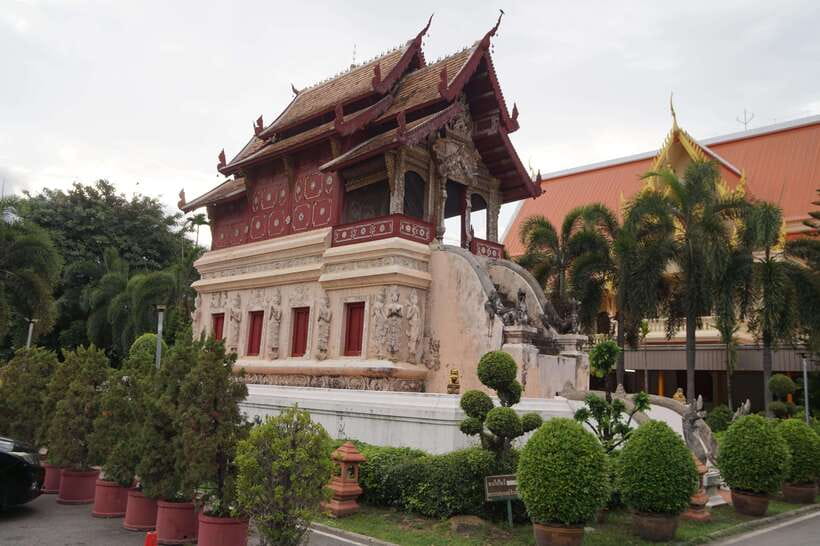
The strongest part of the experience is the chance to ask basic questions without feeling awkward. You can ask why Buddha images have different hand positions, how people pray, what meditation is meant to do, or what life as a monk involves.
Former monks have shared personal accounts of monastic life, and some departures have included a short meditation session. In smaller groups, guests have also had the chance to learn how to pray, receive a monk’s blessing, or take part in a traditional ritual. These extras should not be treated as guaranteed features of every departure, but they show how the experience can become more personal when the group is small.
I especially like the connection between history and religion. Instead of treating Chiang Mai’s temples as isolated monuments, the guide links them with the kingdoms and traditions that shaped northern Thailand. That context helps you see why the buildings matter now, not just why they look old.
The format is conversational rather than purely scripted. You’ll get the most from it if you arrive with questions. The guide’s role is not simply to point left and right, but to help you understand the ideas behind the buildings.
The four-hour walking rhythm
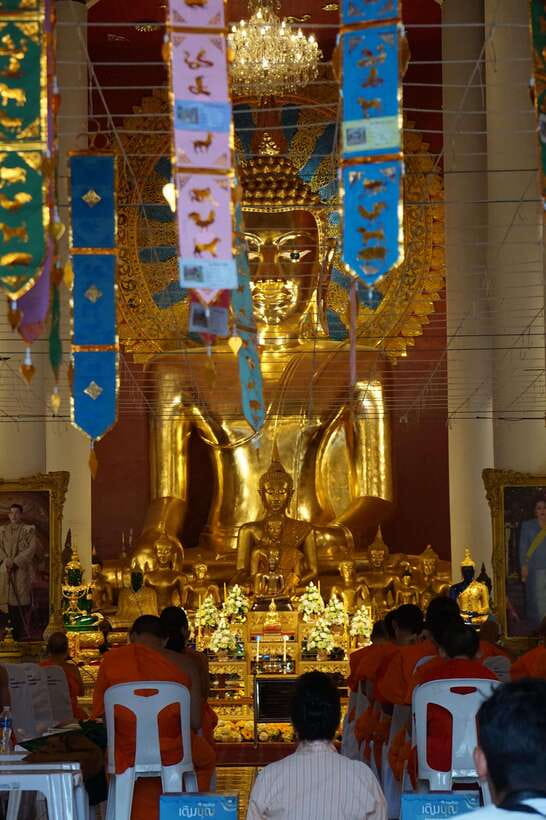
The tour lasts four hours, beginning at 8:20 am. There is no hotel pickup or drop-off, so you need to make your own way to the starting point. The supplied details do not specify a pickup location, so check the meeting instructions carefully when booking.
The route is concentrated in Chiang Mai’s old city, with the three main temples close enough to connect on foot. This keeps the morning simple and avoids the stop-and-start pattern of a vehicle tour.
The walk is generally manageable, but the physical demand comes from heat, temple surfaces, and standing during explanations. One guest called the walking easy and appreciated the early start. Another suggested extra cooling pauses during hotter weather. If you are not used to Thailand’s heat, bring water, wear light clothing that still meets temple rules, and use sun protection.
You may need to remove your shoes before entering some buildings. One participant noted that putting on and taking off boots repeatedly took patience. Wear footwear that is easy to remove, especially if you have stiff boots or complicated straps.
The tour is not designed for babies under one year, pregnant women, or people over 95. That does not describe the needs of every older or pregnant person, of course, but it is the stated suitability guidance and should be taken seriously when deciding.
What the $15 price really buys
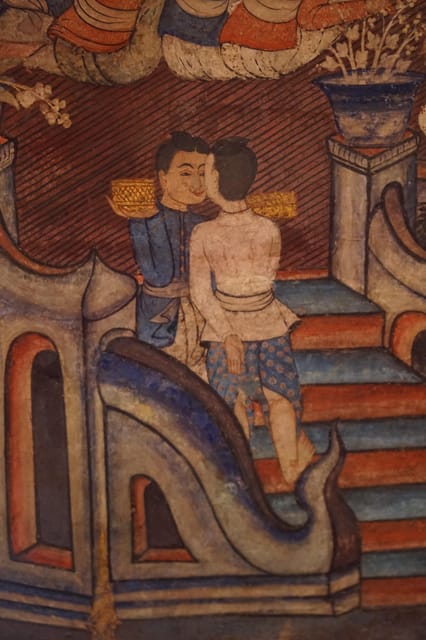
At $15 per person, this is not a ticket-only sightseeing loop. You are paying for a four-hour walking route, live instruction in Thai or English, and the chance to ask questions at each temple.
The value is best for people who would otherwise visit the temples without much context. The entrance fees are modest, and the guide may help you notice details you would likely miss on your own. If you prefer silent exploration and want to move at your own speed, the same structure may feel too slow.
The extra 90 THB in admission is reasonable, but it is still an extra cost. The tour price also does not cover transportation, food, drinks, or hotel transfers. Since the walk begins early and may run through warm conditions, eat beforehand or plan a meal afterward.
Small groups can make a major difference. A solo booking has sometimes resulted in a near-private experience, with more time for questions. On the other hand, group size and guide assignment can change, so do not book solely on the hope of receiving one particular guide.
Practical temple etiquette
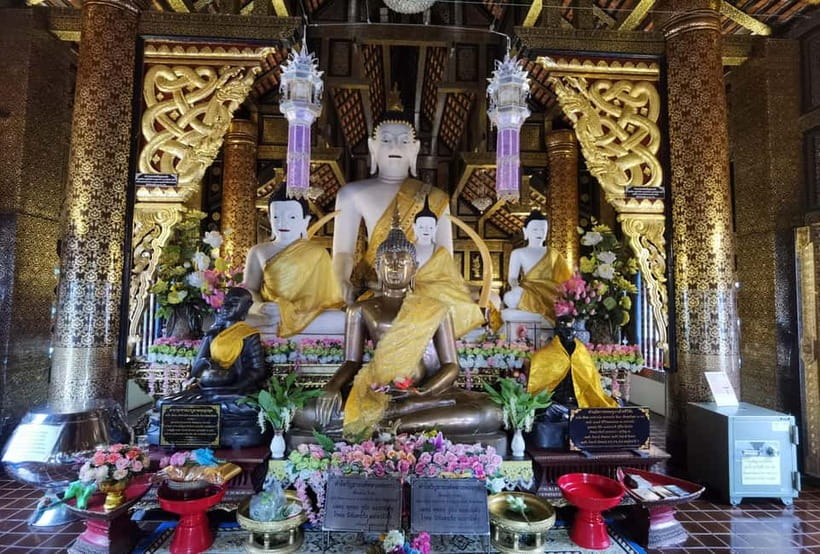
Dress for entry, not just for the street. Cover your shoulders and knees, and avoid shorts, short skirts, and sleeveless tops. A light shirt or scarf can help you stay comfortable while meeting the rules.
Do not use drones, climb structures, smoke, or bring alcohol and drugs. Smoking indoors is specifically prohibited as well. The restrictions are straightforward, and following them keeps the focus on the temples.
Inside religious buildings, listen for instructions about footwear and photography. Your guide can explain what is appropriate, but you should still watch the people around you and act with care.
This is also a good tour for anyone who wants a respectful introduction rather than a checklist of photo stops. The temples remain open to daily religious life, so the right attitude matters as much as the camera.
Who will get the most from this tour
You should consider booking if you want:
- A clear introduction to Buddhist ideas and temple customs
- Historical context for Chiang Mai’s old city
- A guide who may have personal experience as a former monk
- A compact morning route without vehicle transfers between the main stops
- Plenty of time for questions and explanations
- A low-cost cultural activity before the afternoon heat
It is less suitable if you dislike walking, standing, early starts, or dress restrictions. It may also disappoint if you expect a completely private itinerary or guaranteed access to special rituals.
Families with very young babies should note the stated restriction for children under one year. Pregnant people and those over 95 are also listed as unsuitable. If you have mobility concerns, ask the provider before booking, since the available information does not give a detailed accessibility description.
The tour is offered in Thai and English. Several guides are described as friendly and patient, while a small number of guests found soft speech hard to hear. In a larger group, position yourself near the guide.
Should you book the Temple and City Walking Tour Part I?
I would book this if you want the temples to make sense, not just look beautiful. The three stops are major Chiang Mai sights, but the real reason to go is the explanation of Buddhist practice, Lanna design, local history, and monastic life.
The early start, low price, and walkable route make it a sensible first morning in Chiang Mai. Pack water, wear proper temple clothing, allow for 90 THB in entrance fees, and expect a fair amount of standing.
Book it if you enjoy asking questions and learning from a guide such as Son, Katoon, Eddie, or Big. Skip it if you want to wander alone, avoid structured commentary, or spend the morning entirely in air-conditioned comfort. For curious visitors, this is a strong-value introduction to Chiang Mai’s most important old-city temples.
FAQ
How long does the tour last?
The tour lasts four hours.
What time does the tour start?
The stated start time is 8:20 am. Check availability when booking because starting times should be confirmed for your chosen date.
Which temples are included?
The main route includes Wat Chedi Luang, Wat Phan Tao, and Wat Phra Singh.
Is transportation included?
No. This is a walking tour, and hotel pickup and drop-off are not included.
How much are the temple entrance fees?
Wat Chedi Luang costs 50 THB, and Wat Phra Singh costs 40 THB. These fees are not included in the booking price. No separate admission charge is listed for Wat Phan Tao.
What languages are available?
The tour is offered with a live guide in Thai or English.
What should I wear?
Shorts, short skirts, and sleeveless shirts are not allowed. Wear clothing that covers your shoulders and knees for temple entry.
Can I cancel the booking?
You can cancel up to 24 hours in advance for a full refund. A reserve-now-and-pay-later option is also available.
Who is this tour not suitable for?
The activity is not suitable for pregnant women, babies under one year, or people over 95 years old.
Just added around Chiang Mai
- Taste of Chiang Mai: Michelin Guide & Street Food Tour★ 4.9 · 159 reviews
- Red, Blue, White Temples & Hot Spring Trip from Chiang Mai★ 4.4 · 143 reviews
- From Chiang Mai: Mae Taeng Valley and Waterfalls Cycle Tour★ 4.9 · 159 reviews
- Long Neck Village, Silver Temple & Chiang Mai Top Sites★ 4.7 · 17 reviews
- Chiang Mai: Local Northern Thai Cooking Class at Grandma’s★ 5.0 · 33 reviews
- Chiang Mai: Khum Khantoke Northern Thai Cuisine and Show★ 4.3 · 38 reviews
- Private : Sticky Waterfall & Secret Temple & Karen Village.★ 5.0 · 9 reviews
- Half-day with CHIANGMAI ELEPHANT CARE program (12pm-6pm.)★ 5.0 · 27 reviews
Chiang Mai Tours, compared.
Half-Day Thai Cooking Class at Organic Farm in Chiang Mai
Read our review →
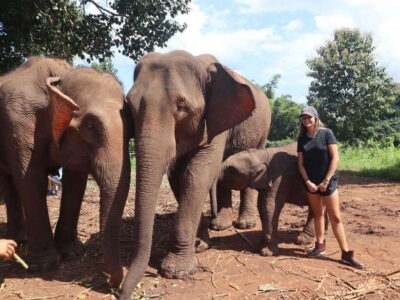
Elephant Sanctuary, Waterfall & Bamboo Rafting
Read our review →
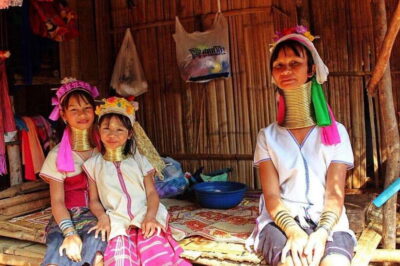
Chiang Rai Temples, Karen Tribe and Hot Springs
Read our review →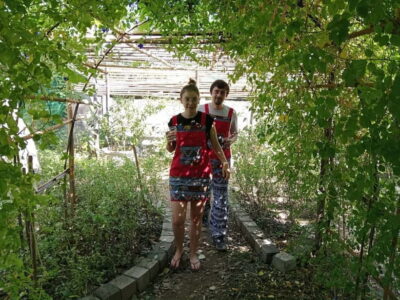
Cooking Class, Market & Thai Herbs Garden Tour
Read our review →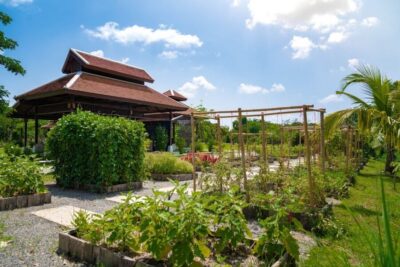
Authentic Cooking Class with Market & Farm Visit
Read our review →
Elephant Sanctuary Feeding Program Half-Day Tour
Read our review →Browse the lists this tour appears in