
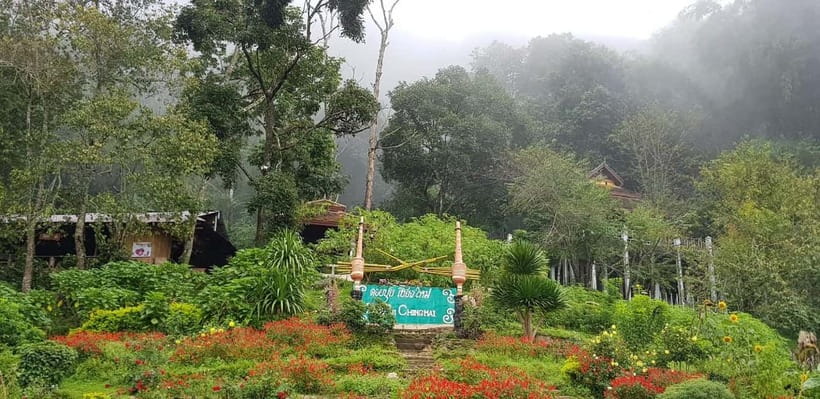
Reviewed · CHIANG MAI TOURS
Chiang Mai: Doi Suthep Temple & Hmong Village Tour
The golden pagoda of Wat Phrathat Doi Suthep is the star here, but the mountain view is nearly as good. From about 3,520 feet, you look across Chiang Mai after a winding drive through the hills. I like the simple half-day format and the fact that hotel pickup, the temple ticket, cable car, guide, and insurance are included.
I also like that the tour adds a Hmong village instead of stopping at the temple and rushing straight back to town. The main drawback is time: the village visit lasts about 40 minutes, which can feel hurried if you want to browse handicrafts or see the small museum. Some shopping stops may also feel more commercial than cultural.
Key points at a glance
- The 306-step Naga staircase gives you a memorable approach to the temple, while the included cable car offers an easier alternative.
- The golden pagoda uses Lanna-style design and engraved gold plates, with four ornamental umbrellas around it.
- The 3,520-foot viewpoint gives you a broad look over Chiang Mai and is one of the tour’s best rewards.
- The Hmong village visit adds a human side to the mountain trip, with traditional clothing, handicrafts, and an optional 20-baht museum ticket.
- The four-hour schedule works well for a free afternoon, but the short village stop leaves little relaxed shopping time.
- Guide Taya has been praised for making the temple visit informative, though the quality of the village portion can feel less even.
Why this short mountain trip works
Doi Suthep is Chiang Mai’s essential mountain outing. The temple gives you ornate religious architecture, a high viewpoint, and a quick change from city streets to cool hill roads. Adding a Hmong village makes the trip broader, although it also means you need to accept a brisk pace.
At $22 per person, this is priced as an easy introduction rather than a slow, specialist cultural tour. You are paying for transport, an English-speaking guide, admission to the temple, the cable car, pickup and drop-off in central areas, and travel accident insurance. If you had to arrange separate transport up the mountain, the convenience would be harder to match.
The tour lasts four hours, so you can fit it into a morning without giving up the rest of your Chiang Mai day. I would choose it early in a visit, especially if you want a quick sense of the city, its main mountain temple, and one local community stop before deciding how much more time to spend in the hills.
More Doi Suthep and Doi Inthanon days:
- Chiang Mai: Doi Inthanon National Park Eco-Friendly Tour
★ 4.6 · 6,667 reviews - Chiang Mai: Doi Suthep and Wat Umong Enchanting Evening Tour
★ 4.6 · 1,811 reviews - Doi Inthanon Waterfall and Royal Project Chiang Mai
★ 5.0 · 1,735 reviews
The morning pickup around Chiang Mai
Pickup is offered from hotels and guesthouses in the Old Town and Night Bazaar areas between 8:00 and 8:30 am. Santitham and Nimman pickups generally fall between 8:30 and 9:00 am. That makes the tour useful if you are staying in one of Chiang Mai’s central visitor areas.
Give the accommodation name and full address when booking. Pickup is not provided from an Airbnb identified only by a street address and no business name. In that case, select a nearby hotel or recognizable building shown on Google Maps.
The meeting point can vary with the option you book. At the end, the listed drop-offs include McDonald’s in Chiang Mai and McDonald’s at the Imperial Hotel near Tha Phae. These are practical central points, but you should be ready for a short walk or local ride back to your accommodation if your hotel is not directly nearby.
The exact group size is not provided, so I would not book this expecting a private outing. You ride in a van, and the first drive takes about an hour. Bring water and use the ride to settle in for the mountain road ahead.
The one-hour van ride into the hills
The drive to Doi Suthep follows winding roads through the hills around Chiang Mai. The changing scenery is part of the appeal. You leave the city behind and climb toward a cooler, higher setting, though anyone prone to motion sickness should prepare for bends.
This is not a hiking tour. The transport takes you close to the major stops, and the walking is concentrated around the temple and village. Wear comfortable shoes anyway, since you may use stairs, walk across temple grounds, and spend time on uneven surfaces.
Sunscreen and water are smart additions. The viewpoint can be bright, and the temple grounds are open enough that shade may not always be close at hand. A camera is worthwhile for the pagoda, Naga staircase, and Chiang Mai panorama.
Choosing between the Naga stairs and cable car
At the bottom of Wat Phrathat Doi Suthep, you have two ways up. The famous route is a staircase of 306 steps, lined by a large Naga, the mythical dragon-headed serpent. The staircase makes the arrival feel ceremonial and gives you a strong visual memory of the temple.
The cable car is included, so you can avoid the climb without paying an extra fare. This matters for anyone with limited stamina, knee trouble, or a tight schedule. The tour is marked wheelchair accessible, but non-folding wheelchairs and non-folding strollers are not allowed. If you use a wheelchair, check that your equipment can be folded before booking and confirm the practical arrangements with the provider.
You do not need to treat the stairs as a test. The temple itself is the point, not proving that you can climb every step. If you feel well enough, the Naga staircase is a fine way to approach. If not, take the cable car and save your legs for the temple grounds and village.
A few more Chiang Mai half-days worth weighing up
- Half-Day Thai Cooking Class at Organic Farm in Chiang Mai
★ 5.0 · 19,087 reviews - Chiang Mai: Elephant Sanctuary, Waterfall & Bamboo Rafting
★ 4.9 · 9,160 reviews - Chiang Mai: Elephant Sanctuary & Waterfall Group Tour
★ 4.9 · 5,780 reviews - Chiang Mai: Chiang Rai Temples, Karen Tribe and Hot Springs
★ 4.7 · 5,401 reviews
Inside Wat Phrathat Doi Suthep
You get about an hour at the temple, including a guided visit. Wat Phrathat Doi Suthep is known for its Lanna architecture and central golden pagoda, which is covered with engraved gold plates. Four ornamental umbrellas frame the pagoda and add to the formal, finely detailed appearance of the site.
The gold is not the only reason to pay attention. Look at how the temple’s design gathers your eye toward the pagoda, then take time to notice the smaller decorative details around it. A guide can help connect what you see with the temple’s religious and regional setting.
Guide Taya has received particular praise for explaining the temple clearly and making the visit more informative. Another assessment found the Doi Suthep portion a little short on information, so your experience may depend on how much detail your guide provides and how busy the stop feels that morning.
With only an hour, you will not have time for a slow study of every corner. Listen during the guided portion, then use your free moments for photographs and the viewpoint. The temple is beautiful, but the schedule asks you to keep moving.
The 3,520-foot view over Chiang Mai
The mountain-top viewpoint sits at about 3,520 feet, or 1,056 meters. From here, you get a wide panorama across Chiang Mai. The city looks very different from above, and this view helps you understand its position beneath the surrounding hills.
Weather and visibility can affect the scene. The tour promises the viewpoint, not a perfectly clear horizon every morning, so keep expectations sensible. Even with haze, the height and change of setting make this a valuable stop.
I would place the viewpoint near the top of your mental checklist. The temple provides the cultural heart of the visit, but the broad city view is the part that makes the mountain setting feel real. Have your camera ready, but do not spend the whole stop looking through it.
A brief introduction to the Hmong village
After the temple, the van continues for about 20 minutes to a Hmong hill tribe village. You get roughly 40 minutes here with a guided visit. The purpose is to learn about traditional daily life, see colorful clothing, and look at textiles, ornaments, and handicrafts.
This stop can add useful context. The trip is no longer just a temple and viewpoint run. You get a chance to see how a hill community presents its culture and goods, and you can support local makers by buying something if you find an item you genuinely want.
At the same time, keep your expectations measured. The village visit includes opportunities to shop, and part of the stop is clearly arranged around handicraft sales. One 20-baht museum ticket is optional, and admission to the museum is not included. If you want the museum, carry some Thai baht.
Forty minutes goes quickly. You may have enough time to walk through the main area, hear the basic explanation, look at clothing and crafts, and make a small purchase. You probably will not have the relaxed pace needed for a long conversation or careful comparison of every stall.
Some shopping experiences can feel pressured. A direct account of the stop described a guide moving quickly and staying close during shopping, with attention given to commission concerns. That is not a reason to reject the whole tour, but it is a good reminder to decide your budget before you arrive. Browse politely, buy only what you want, and do not feel obliged to purchase.
The return ride and four-hour schedule
The stated transport times add up to about two hours and 20 minutes in the van: one hour to the temple, 20 minutes to the village, and about 70 minutes back toward the drop-off points. The stops add another hour and 40 minutes, bringing the full experience to about four hours.
That balance explains both the value and the limits. You cover a lot of ground without spending a full day in transit, but neither major stop is leisurely. The village visit is especially short, and the return drive may feel long after the main sights are finished.
I would avoid scheduling a tight afternoon commitment immediately afterward. Pickup windows vary, and mountain roads can take time. A flexible lunch plan near your drop-off point is safer than a timed reservation across town.
What the $22 price really includes
The $22 price is strong if you want convenience. Hotel pickup and drop-off within the central service areas remove the need to negotiate a taxi or arrange a songthaew for the mountain road. The temple ticket and cable car are included, as is a licensed English-speaking guide.
Travel accident insurance is also included, though you should still use ordinary care on the stairs and temple grounds. Personal expenses are not covered, and the optional Hmong museum costs 20 baht.
The value is best for first-time visitors who want the main sights handled in one morning. It is less ideal for someone who wants a long village visit, independent shopping, or detailed religious study. At this price, the tour gives you a useful overview, not a deeply personal village encounter.
What to bring and what to wear
Wear comfortable shoes. You may choose the 306 steps, and even the cable car option involves walking around the temple and village.
Bring:
- Water
- Sunscreen
- A camera
- Small cash for personal purchases and the optional 20-baht museum
- Clothing that covers your shoulders and knees
Short skirts and sleeveless shirts are not allowed. Dress respectfully for the temple, even if you plan to use the cable car. Pets, luggage, and large bags are not allowed, so this is best done with a small day bag rather than suitcases or heavy shopping bags.
Unaccompanied minors are not allowed. Families should also note that non-folding strollers are prohibited. The activity is marked wheelchair accessible, but the rule against non-folding wheelchairs means you should confirm the equipment requirement before paying.
Who should book this Doi Suthep tour
I would recommend it to you if you want a short, organized introduction to Chiang Mai’s mountain sights. It suits first-time visitors, couples, solo visitors, and anyone staying in the Old Town, Night Bazaar, Nimman, or some Santitham areas.
It also works for people who prefer not to arrange transport themselves. The cable car makes the temple manageable, and the English guide gives structure to a place that can otherwise feel like a quick photo stop.
I would be more cautious if your main goal is Hmong culture. The village visit is worthwhile as an introduction, but 40 minutes is not enough for a slow, open-ended encounter. If shopping makes you uncomfortable, or if you want time to compare handicrafts without pressure, a longer or more independent visit may suit you better.
The tour has received its strongest praise for the beautiful temple, the mountain view, and helpful guiding. Guide Taya is specifically noted for making the temple visit informative. The weaker points are the short schedule, limited village time, and the possibility that the shopping element may feel too prominent.
Should you book it?
Book this tour if you want the best-known Doi Suthep sights, a high view over Chiang Mai, and a quick Hmong village stop for $22, with transport and main temple costs handled. It is a good-value morning sampler.
Skip it if you want a quiet, unhurried village visit or a full day focused on local life. If you do book, wear proper temple clothing, bring small cash, take the cable car if the stairs are not comfortable, and treat the handicraft shopping as optional. That approach lets you enjoy the pagoda and view without letting the rushed parts define the whole morning.
FAQ
How long does the Doi Suthep and Hmong village tour last?
The tour lasts four hours. The van ride to Doi Suthep takes about one hour, the temple visit lasts about one hour, the drive to the Hmong village takes about 20 minutes, the village visit lasts about 40 minutes, and the return journey takes about 70 minutes.
What time is hotel pickup in Chiang Mai?
Pickup from the Old Town and Night Bazaar areas is between 8:00 and 8:30 am. Pickup from Santitham and Nimman areas is between 8:30 and 9:00 am.
Is hotel pickup included?
Free pickup is available from hotels and guesthouses in the Old Town, Night Bazaar, Nimman Haemin, and some Santitham areas. You must provide the accommodation name and address.
Can I use a wheelchair on the tour?
The activity is marked wheelchair accessible, but non-folding wheelchairs are not allowed. Confirm that your wheelchair can be folded before booking.
Is the cable car included?
Yes. The Wat Phrathat Doi Suthep ticket and cable car are included. You can also choose to climb the 306-step Naga staircase.
What does the Hmong village visit cost?
The village visit is included, but the optional museum ticket costs 20 baht. Personal purchases, including handicrafts, are extra.
What should I wear to the temple?
Do not wear short skirts or sleeveless shirts. Comfortable shoes are recommended for the temple grounds and the 306-step staircase.
Is an English-speaking guide provided?
Yes. The tour includes a licensed English-speaking guide. Guide Taya has been specifically praised for making the temple visit informative.
Just added around Chiang Mai
- Taste of Chiang Mai: Michelin Guide & Street Food Tour★ 4.9 · 159 reviews
- Red, Blue, White Temples & Hot Spring Trip from Chiang Mai★ 4.4 · 143 reviews
- From Chiang Mai: Mae Taeng Valley and Waterfalls Cycle Tour★ 4.9 · 159 reviews
- Long Neck Village, Silver Temple & Chiang Mai Top Sites★ 4.7 · 17 reviews
- Chiang Mai: Local Northern Thai Cooking Class at Grandma’s★ 5.0 · 33 reviews
- Chiang Mai: Khum Khantoke Northern Thai Cuisine and Show★ 4.3 · 38 reviews
- Private : Sticky Waterfall & Secret Temple & Karen Village.★ 5.0 · 9 reviews
- Half-day with CHIANGMAI ELEPHANT CARE program (12pm-6pm.)★ 5.0 · 27 reviews
Chiang Mai Tours, compared.
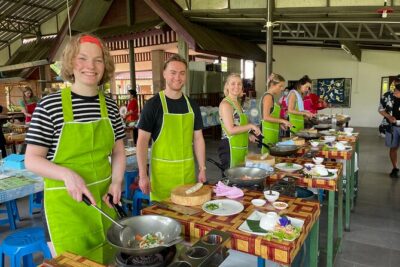
Half-Day Thai Cooking Class at Organic Farm in Chiang Mai
Read our review →
Elephant Sanctuary, Waterfall & Bamboo Rafting
Read our review →

Chiang Rai Temples, Karen Tribe and Hot Springs
Read our review →
Cooking Class, Market & Thai Herbs Garden Tour
Read our review →
Authentic Cooking Class with Market & Farm Visit
Read our review →
Elephant Sanctuary Feeding Program Half-Day Tour
Read our review →Browse the lists this tour appears in