
Reviewed · CHIANG MAI TOURS
Chiang Mai: Doi Suthep, Wat Umong, and Pha Lat Sunrise Tour
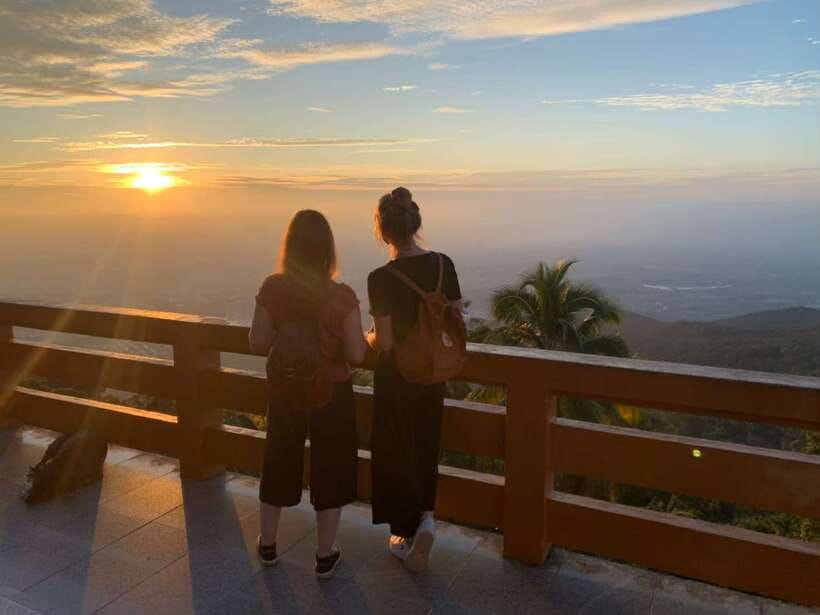
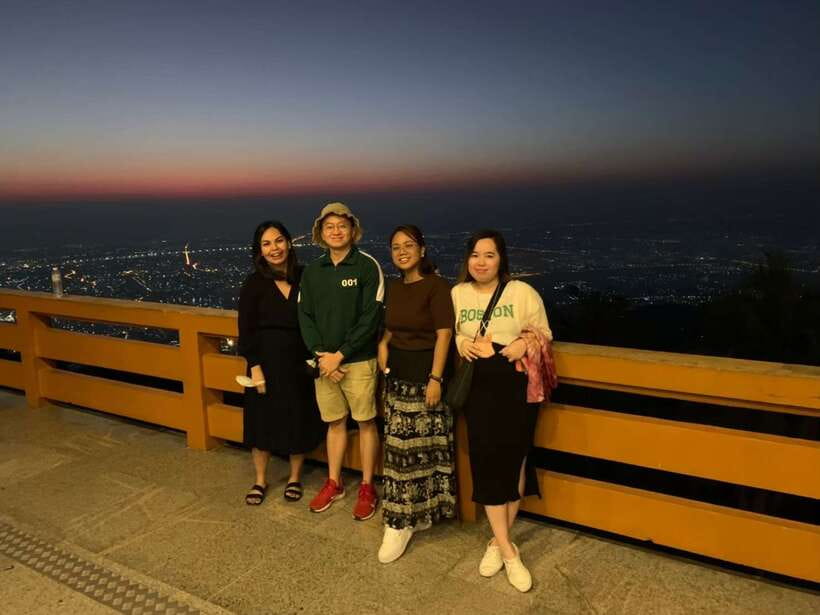
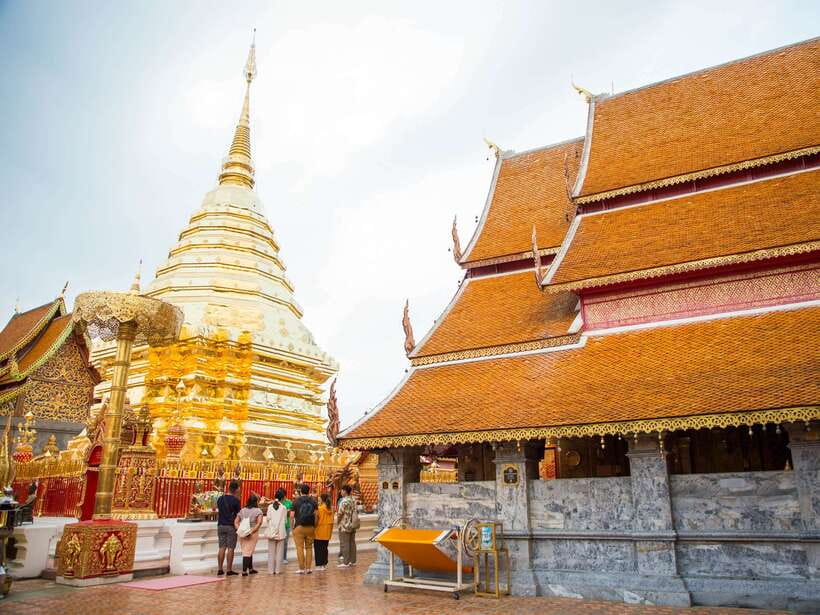
Doi Suthep before sunrise is the main event: climb 309 steps in the dark, reach the golden pagoda, and watch Chiang Mai brighten below you before the crowds arrive. I like the quiet temple atmosphere and the chance to hear monks chanting, then the change of mood at forested Wat Umong.
I also like the thoughtful route through three very different temples, with guides such as James, a former monk, offering useful background on Buddhism and monastic life. The drawback is the alarm clock: pickup can be around 5 a.m., and the tour may take closer to five or five and a half hours from hotel pickup to return, despite the advertised four-hour duration.
At a glance
- Sunrise at Doi Suthep: Climb 309 steps to one of Chiang Mai’s most important temples while the morning light spreads across the city.
- A guide-led look at Buddhism: Guides including James, who spent five years living with monks, explain customs, teachings, offerings, and temple etiquette.
- Wat Pha Lat by jungle path: Reach the tranquil Hidden Temple through lush forest and see shrines, statues, and old religious architecture.
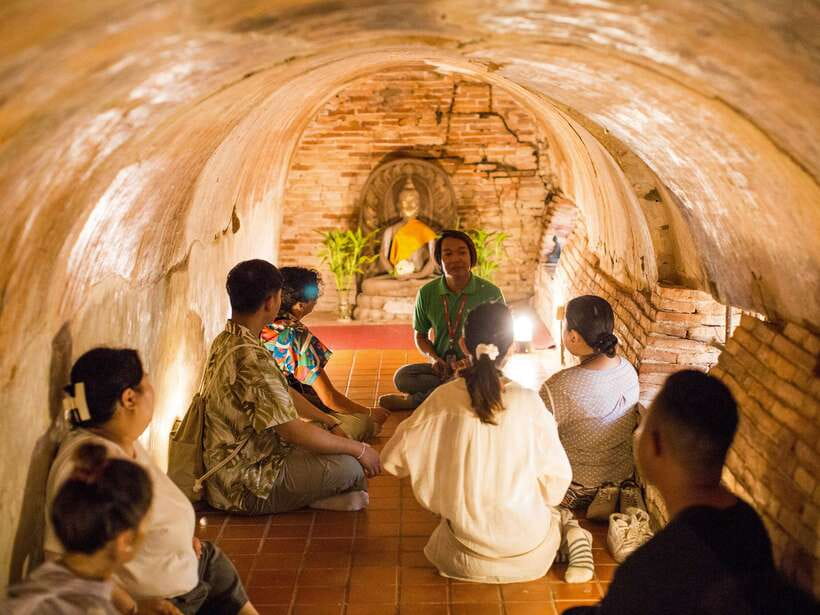
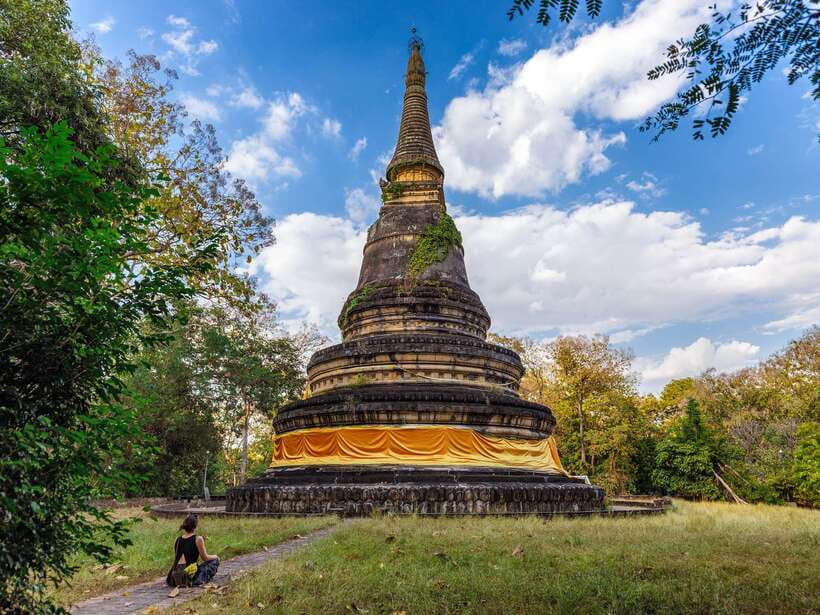
- Wat Umong’s tunnel temple: Explore a 700-year-old temple complex with underground passages, forest paths, and a distinctive chedi.
- Small-group feel: Small groups are available, and many departures are praised for their calm pace and personal guiding.
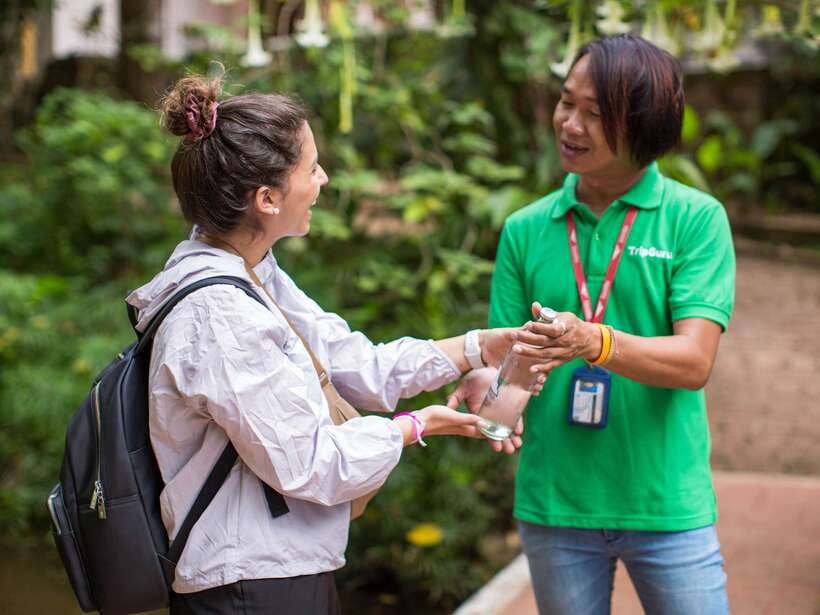
- Low-impact extras: Transport, entry fees, a glass water bottle, and carbon offset credits are included.
Why Doi Suthep before dawn is worth the alarm
Chiang Mai’s most famous mountain temple feels different in the early morning. The staircase is quieter, the air is cooler, and the first light gives the gold pagoda a softer glow than it has later in the day.
You begin by walking up the 309 naga-lined steps to Wat Phra That Doi Suthep. This is the one physical challenge of the morning, though the pace is guided rather than rushed. If your knees dislike stairs, take it slowly and use the handrails where available.
At the top, you have time to look around the temple and wait for sunrise. The reward is the view toward Chiang Mai, which gradually comes into focus as the sky brightens. Clear weather makes this especially memorable, but sunrise is never guaranteed. Rain or cloud can block the view, as happened on one departure, so book this for the temple visit and morning atmosphere as much as for a perfect photograph.
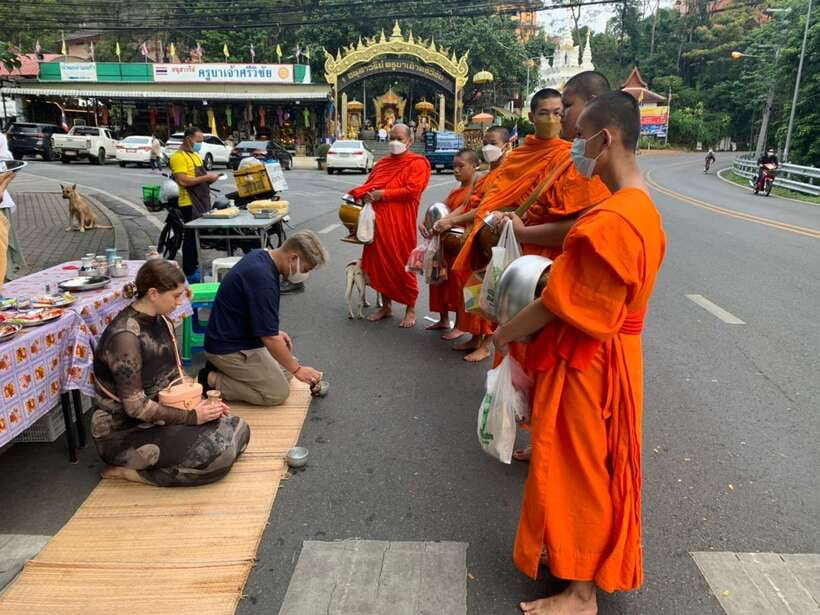
The early hour also changes the mood. You may see monks beginning their morning routines, hear chanting, or watch local religious activity before the main crowds arrive. The tour can include candle lighting, flowers, food offerings, and blessings, but offerings are optional and should be approached with respect.
Wear clothing that covers your shoulders, underarms, back, and knees. Shorts, short skirts, and sleeveless shirts are not allowed inside some places on the route. A light sweatshirt is a smart addition, since the mountain can feel chilly before sunrise, even when Chiang Mai later becomes hot.
More Doi Suthep and Doi Inthanon days:
- Chiang Mai: Doi Inthanon National Park Eco-Friendly Tour
★ 4.6 · 6,667 reviews - Chiang Mai: Doi Suthep and Wat Umong Enchanting Evening Tour
★ 4.6 · 1,811 reviews - Doi Inthanon Waterfall and Royal Project Chiang Mai
★ 5.0 · 1,735 reviews
The Kruba Srivichai Monument and the story of the mountain road
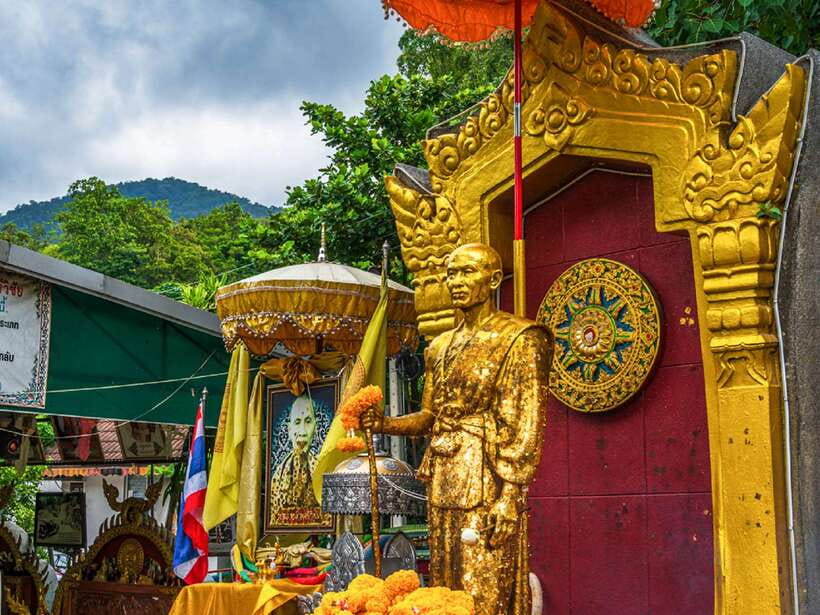
After Doi Suthep, the tour stops at the Kruba Srivichai Monument. This is more than a quick photo stop. Your guide uses the monument to explain Kruba Srivichai, the revered monk associated with the development of the route up to Doi Suthep and with local religious life.
This is where a good guide makes a real difference. The tour is not built around simply walking into a temple, snapping pictures, and leaving. Guides such as James, Matt, Nuttaya, Leela, Cookie, and Chatsuda have been praised for explaining Thai culture, Buddhist ideas, and the daily lives of monks in clear, accessible English.
James is a particularly interesting guide if you are assigned to him. His former life as a monk gives him personal experience of monastic routines and Buddhist practice. That does not mean every group receives James, but the guiding team generally brings strong cultural context to the morning.
If you want to make an offering, your guide may explain what to buy and how to present it. One departure included a stop at 7-Eleven so the group could purchase suitable items for monks. This is optional, and you should never feel pressured to take part.
Walking into Wat Pha Lat, Chiang Mai’s forest temple
Wat Pha Lat is often the most atmospheric stop. Reached through a jungle route, it feels far removed from the city and from the grand, polished setting of Doi Suthep.
The temple sits among trees and natural surroundings, with statues, shrines, and old structures spread through the forest. The setting encourages a slower look. Instead of concentrating on one large monument, you notice small details, shaded corners, stonework, and the way the religious buildings fit into the hillside.
The walk is part of the appeal, but it is not just a sightseeing stroll. Bring comfortable shoes with a good grip, especially if the path is damp. Insect repellent is also useful. You do not need hiking equipment, but this stop is less suitable for anyone who wants a completely flat, paved route.
Wat Pha Lat also helps connect the morning’s places. Doi Suthep is the grand mountain sanctuary, while Pha Lat offers a quieter forest setting tied to the same religious area. The contrast gives the tour more shape than a standard temple circuit.
There is one practical warning: Wat Pha Lat can occasionally be closed. On one private departure, the guide gave advance notice and adjusted the plan. If this happens, Doi Suthep and Wat Umong still provide substantial visits, but Pha Lat is the stop most likely to be missed because of access or closure issues.
Wat Umong and its 700-year-old tunnels
The final major stop is Wat Umong, a 700-year-old temple founded in 1297. Its setting is different again, with trees, forest paths, a large chedi, and underground tunnels.
The tunnels are the temple’s most distinctive feature. They are not vast, but they add a sense of mystery and make Wat Umong unlike the ornate mountain temple earlier in the morning. Your guide can explain the religious purpose and history of the site while you move between the tunnel passages, chedi, and surrounding grounds.
I find the order of the route sensible. You see the biggest sight first, then move toward quieter and more reflective places. By Wat Umong, the morning has shifted away from sunrise excitement and toward architecture, meditation, and forest stillness.
The stop can feel long if you are already tired from the early start. One parent noted that a 10-year-old in the group became too tired for the last temple. The driver allowed the child to rest safely in the vehicle with the door open while the adults continued. That is a useful reminder: families can enjoy this tour, but young children may run out of energy before the final visit.
More early starts in Chiang Mai:
- Wat Phra That Doi Suthep spiritual Sunrise Tour with an Ex-monk
★ 5.0 · 798 reviews - Spiritual Sunrise Wat Doi Suthep, Pha Lat, Alms & Meditation
★ 4.9 · 674 reviews - Half Day Morning Wat Pha Lat & Wat Phra That Doi Suthep Tour
★ 4.8 · 269 reviews - Chiang Mai: Historic Old City Bike Tour – Morning or Night
★ 4.7 · 263 reviews
A short tour with a sometimes longer morning
The experience is sold as four hours, but you should plan for more time if you are using hotel pickup. One departure ran about five to five and a half hours, and several detailed accounts describe a pickup around 5 a.m. with a return shortly after 9 or 11 a.m., depending on the route and location.
The van ride includes air conditioning, and transport is by air-conditioned vehicle. Hotel pickup and drop-off are available from major areas within about 5 kilometers of Tha Pae Gate, the Old City Wall, and nearby parts of Chang Klan Road, Thapae Road, Wualai Road, the night bazaar, Ton Lam Yai Market, and Warorot Market.
If you choose the meeting-point option, meet at Tha Pae Gate, in front of McDonald’s. The guide carries a TripGuru sign. You should arrive 10 minutes early, and the company sends the pickup time and meeting point by email the evening before.
Pickup is only from hotels or registered accommodations, not roadsides or shopping malls. This matters if you are staying outside the central area or plan to wait at a busy public location.
The van is a practical way to cover the mountain and two temples in one morning. It also avoids the need to arrange separate transport to Doi Suthep. The tradeoff is that you are working to a group schedule, even though small groups are available.
What the $32 price includes
At $32 per person, this tour offers good value if you want three temple visits, transport, a guide, and an early start handled for you. Entry fees, hotel pickup and drop-off where available, the guide, air-conditioned transport, and a glass bottle of drinking water are included.
You also receive carbon emissions offset credits, and the operator describes the tour as GSTC-certified. Water is supplied in glass bottles, which is a practical effort to cut single-use plastic. These details will not transform the day, but they fit well with a low-impact approach.
Meals and extra drinks are not included. Bring cash for food, drinks, or an optional temple offering. A quick snack stop may be possible, but you should not count on breakfast being part of the tour.
The value is strongest for a first visit to Chiang Mai, especially if you would otherwise need to arrange a driver and learn temple etiquette on your own. The price is less compelling if you already have private transport, know the temples well, or prefer to explore at your own pace.
How the guides shape the experience
The route is attractive on its own, but the explanations are what turn it into a cultural morning rather than a photo run. The strongest guiding feedback centers on clear English, humor, patience, and practical help with Buddhist customs.
James, also called James Bond by some participants, is a former monk and can explain Buddhist principles and monastic life from personal experience. Other guides praised for warm and effective presentations include Matt, Nuttaya, Leela, Cookie, Chatsuda, Peter, Tom Tem, Tamtam, Lyla, Boone, and Tai.
You cannot request a particular guide based on the information provided, so treat those names as examples of the team’s range rather than a promise. Spanish-language guiding is also available, alongside English.
The tour is a good fit if you like asking questions. You can learn why offerings are made, how to behave around monks, and how Thai Buddhist ideas connect with the temples you are seeing. One useful caution is that the explanations may feel repetitive toward the end, particularly if your group has already discussed Buddhism at length.
Clothes, shoes, and the small things to pack
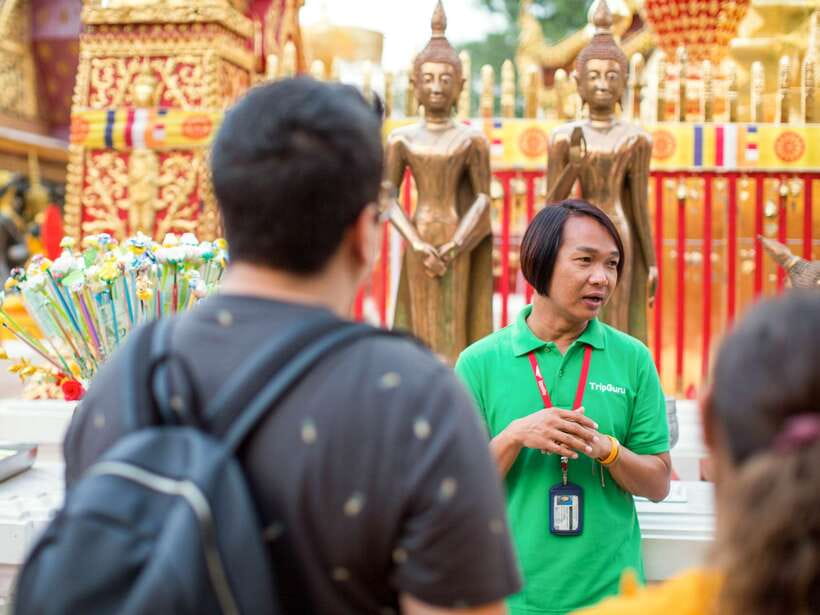
Your clothing is important here. Bring clothes that cover the knees and shoulders, and avoid sleeveless shirts, shorts, and short skirts. A scarf or light layer may help, but it should cover the required areas rather than serve only as decoration.
Pack:
- Comfortable shoes for the 309 steps and the forest path
- A hat and sunglasses for the return journey
- Sunscreen and insect repellent
- A camera or phone
- Cash for optional offerings, snacks, and drinks
- A light sweatshirt for the cool pre-dawn hours
This is not a demanding trek, but you should be comfortable walking, climbing stairs, and standing at temples. The tour works best when you arrive ready for a few hours outdoors rather than treating it as a vehicle-based sightseeing trip.
Who should book this sunrise temple tour
I would recommend it to first-time visitors who want a clear introduction to Chiang Mai’s Buddhist temples without spending a full day on the road. It also suits anyone who values cultural explanation, early-morning quiet, and a planned route.
Families can enjoy it, particularly with older children who manage early starts and stairs. For younger children, consider the length of the morning and the possibility that the final temple may come after everyone is tired.
It is less suitable if you need a late start, dislike stairs, want a long meal break, or prefer to linger at one temple for hours. The sunrise is the focus, so a poor-weather morning can reduce the photographic payoff, although the temples remain worthwhile.
Should you book it?
Book this tour if you can handle an early alarm and want to combine Doi Suthep with two temples that offer very different settings. The best reasons are the quiet pre-dawn visit, the city view, the chance to observe morning religious activity respectfully, and the guide-led explanation of Buddhism.
Before booking, confirm your pickup area, prepare suitable clothing, and plan your morning around a possible five-hour outing rather than relying strictly on the four-hour figure. At $32, it is a sensible package for transport, entry, guiding, and three major stops.
If the idea of climbing 309 steps before sunrise sounds miserable, choose a later temple visit instead. If it sounds like a fine price for a golden pagoda, jungle shrines, old tunnels, and a lesson in Thai Buddhist life, this is one of Chiang Mai’s better early starts.
FAQ
How long does the Doi Suthep sunrise tour last?
The advertised duration is four hours. Pickup and return timing can make the full outing longer, with some departures taking about five to five and a half hours.
Where is the meeting point?
The meeting point is Tha Pae Gate, in front of McDonald’s. Your guide will hold a TripGuru sign, and you should arrive 10 minutes before pickup.
Is hotel pickup available?
Yes. Pickup is available from major central Chiang Mai areas within about 5 kilometers of Tha Pae Gate and the Old City Wall, including listed areas around Chang Klan Road, Thapae Road, Wualai Road, the night bazaar, Ton Lam Yai Market, and Warorot Market. Pickup is only from hotels or registered accommodations.
Which languages are available?
The tour is available with a live guide in English or Spanish.
What should I wear to the temples?
Wear clothing that covers your shoulders, underarms, back, and knees. Shorts, short skirts, and sleeveless shirts are not allowed inside some locations.
Are food and temple offerings included?
Meals and other drinks are not included. A temple offering is optional and costs extra. A glass bottle of drinking water is included.
Just added around Chiang Mai
- Taste of Chiang Mai: Michelin Guide & Street Food Tour★ 4.9 · 159 reviews
- Red, Blue, White Temples & Hot Spring Trip from Chiang Mai★ 4.4 · 143 reviews
- From Chiang Mai: Mae Taeng Valley and Waterfalls Cycle Tour★ 4.9 · 159 reviews
- Long Neck Village, Silver Temple & Chiang Mai Top Sites★ 4.7 · 17 reviews
- Chiang Mai: Local Northern Thai Cooking Class at Grandma’s★ 5.0 · 33 reviews
- Chiang Mai: Khum Khantoke Northern Thai Cuisine and Show★ 4.3 · 38 reviews
- Private : Sticky Waterfall & Secret Temple & Karen Village.★ 5.0 · 9 reviews
- Half-day with CHIANGMAI ELEPHANT CARE program (12pm-6pm.)★ 5.0 · 27 reviews
Chiang Mai Tours, compared.
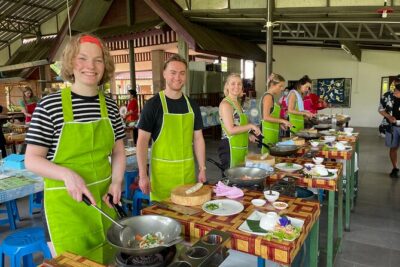
Half-Day Thai Cooking Class at Organic Farm in Chiang Mai
Read our review →
Elephant Sanctuary, Waterfall & Bamboo Rafting
Read our review →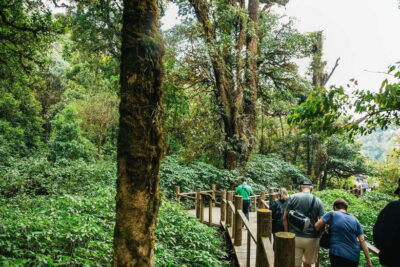

Chiang Rai Temples, Karen Tribe and Hot Springs
Read our review →
Cooking Class, Market & Thai Herbs Garden Tour
Read our review →
Authentic Cooking Class with Market & Farm Visit
Read our review →
Elephant Sanctuary Feeding Program Half-Day Tour
Read our review →Browse the lists this tour appears in