
Reviewed · CHIANG MAI TOURS
Chiang Mai: Temple & City Tour Part II
Wat Ku Tao’s unusual chedi and Wat Pa Pao’s Shan Burmese design give this walking tour a different feel from a standard Chiang Mai temple circuit. You visit four temples, not just the best-known central sights, and the guide helps explain what you are seeing rather than leaving you to decode every Buddha image and ritual alone.
I like the chance to ask real questions about Buddhism and monk life, especially with guides such as Katoon and Big, who draw on former monk experience. I also like the quieter route and the guide’s help with basic temple etiquette. The main drawback is the heat: you will walk for hours, and the meeting-point address can be confusing if you rely only on the supplied map code.
Key points at a glance
- Four temples with different identities: Visit Wat Chiang Man, Wat Chiang Yuen, Wat Pa Pao, and Wat Ku Tao rather than repeating the same temple style.
- Former monks may guide the walk: Katoon and Big have shared practical insight into Buddhist practice, meditation, and daily monastic life.
- A useful history lesson: Connect Chiang Mai’s temples with King Mengrai, Shan communities, Burmese rule, and local religious traditions.
- A proper walking tour: Expect several hours on foot, fresh air, temple courtyards, and tired feet by the end.
- Small groups or private touring: A private booking includes hotel pickup and drop-off, while the standard experience is a walking tour.
- Good value at $31: The price is reasonable if you want explanation and cultural context, not just four temple visits.
Why this temple walk feels different
Chiang Mai has enough temples to fill several days, but simply counting them can become tiring. After your third or fourth golden roof, the details begin to blur. This tour solves that problem by giving each stop a clear place in the story of the city.
You begin at about 8:20 am, according to the stated schedule, and move through a group of temples connected with different periods and communities. Wat Chiang Man takes you back to the founding of Chiang Mai. Wat Chiang Yuen introduces the former Shan residential quarter. Wat Pa Pao brings Shan Burmese architecture into view, while Wat Ku Tao links the city to Burmese political rule.
I like that this is not presented as a rushed photo stop at each site. The best part is the explanation between the buildings: why a chedi has a certain shape, how to behave in a temple, what monks do, and how Buddhist ideas connect with ordinary life in Thailand.
The tour is offered in English, Chinese, or Thai. Private and small-group options are available, and hotel pickup and drop-off apply when you choose the private option. At $31 per person, the cost makes sense if you want a guide to interpret the places. If you only want to wander through temple grounds and take pictures, you can visit many Chiang Mai temples on your own for less.
A few more Chiang Mai half-days worth weighing up
- Half-Day Thai Cooking Class at Organic Farm in Chiang Mai
★ 5.0 · 19,087 reviews - Chiang Mai: Elephant Sanctuary, Waterfall & Bamboo Rafting
★ 4.9 · 9,160 reviews - Chiang Mai: Doi Inthanon National Park Eco-Friendly Tour
★ 4.6 · 6,667 reviews
Wat Chiang Man and the beginning of Chiang Mai
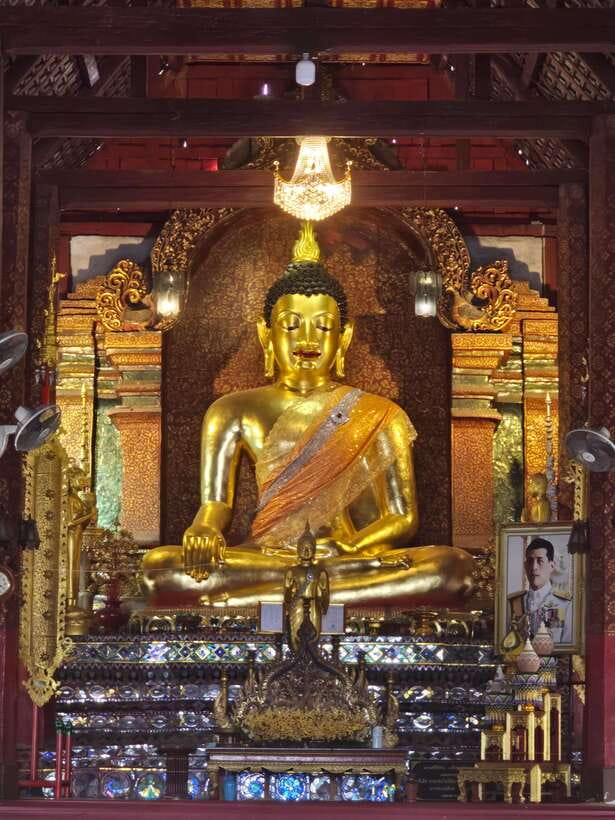
Your first stop is Wat Chiang Man, identified as the oldest temple in Chiang Mai. King Mengrai built it in 1296, the same period associated with the founding of the city. That date gives the temple more weight than a quick stop on a sightseeing checklist: you are looking at one of the earliest religious centers tied to Chiang Mai’s beginnings.
A crystal Buddha statue is enshrined here, adding another focus for the guide to explain. A good guide can help you look past the general impression of a Thai temple and notice why particular Buddha images matter, how people show respect, and how the temple functions as a living religious place.
You should not expect the guide to treat Wat Chiang Man as a museum. The point is to connect the site with Buddhist practice and local history. Several guides have shown visitors how to pray and how to enter temple spaces properly, which is useful if this is your first visit to Thailand or your first serious introduction to Buddhism.
This stop also sets the tone for the rest of the walk. You begin with the city’s foundation, then move toward the people and traditions that shaped Chiang Mai afterward.
Wat Chiang Yuen and the Shan connection
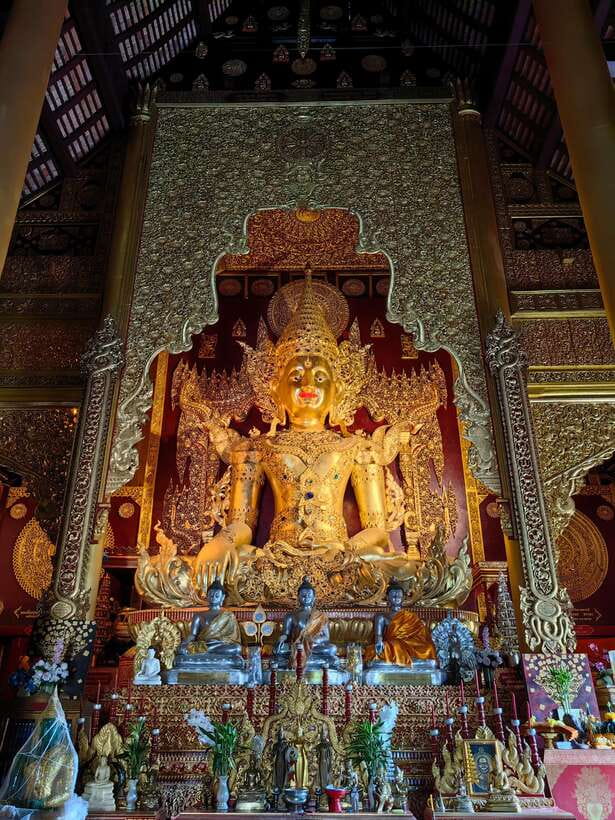
Wat Chiang Yuen is described as a distinctive 16th-century temple in an area that once served as a residential quarter for the Shan people. That detail matters because Chiang Mai’s identity did not develop from one culture alone. The Shan connection gives you a way to understand the city as part of a wider northern Thai and Burmese cultural region.
The temple is likely to feel less familiar than the most photographed sites around the old city. That is part of its value. I prefer a stop where the guide can explain why the temple is there and how a community used the surrounding area, rather than another grand building viewed without context.
You may find that the religious details here are easier to appreciate after the guide has explained basic Buddhist ideas at Wat Chiang Man. Look for differences in decoration, temple layout, and the way the site relates to its neighborhood. The tour does not ask you to become an expert in one morning. It gives you enough background to recognize that northern Thailand’s temples reflect several cultural influences.
Wat Pa Pao and Shan Burmese architecture
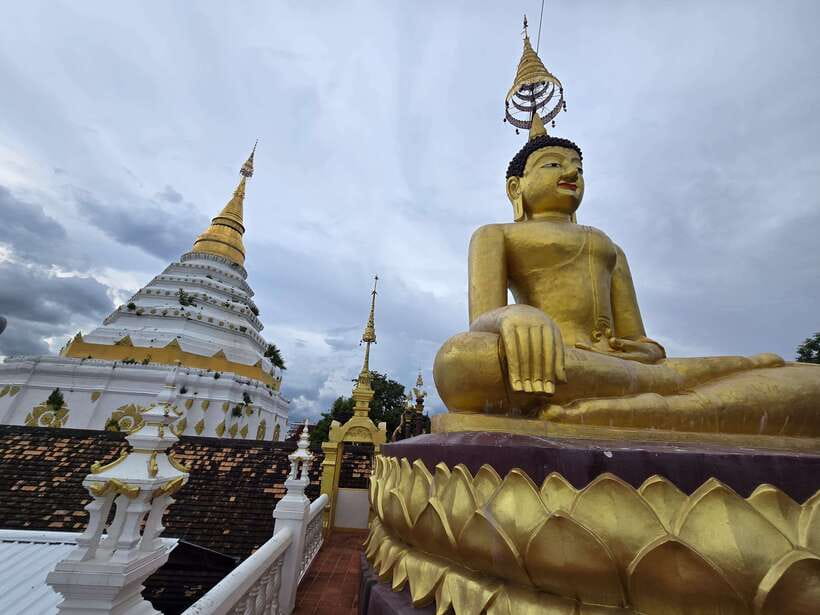
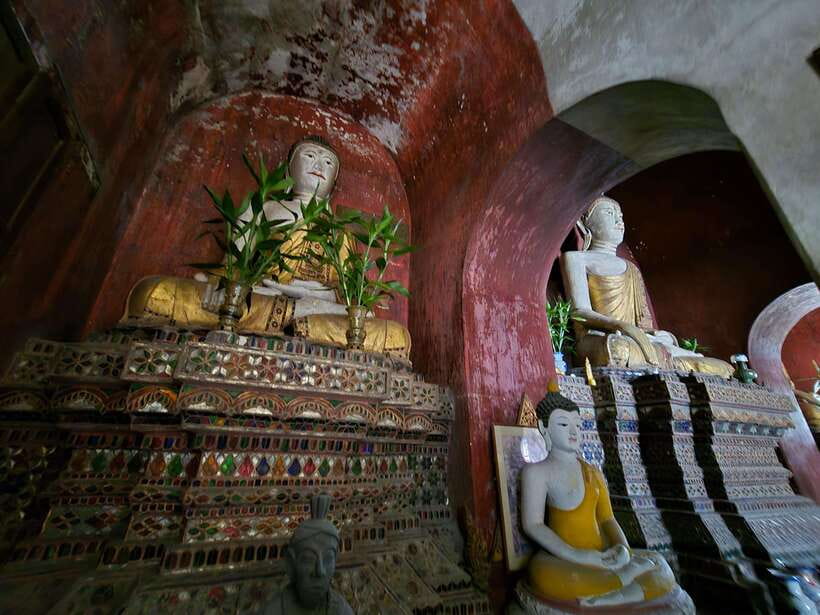
Wat Pa Pao sits outside Chiang Mai’s old city walls and moats. It is described as a Shan Burmese style temple, so it offers a clear contrast with the earlier stops and helps show how traditions crossed political borders.
The setting outside the old walls is useful in itself. Chiang Mai is often reduced to the square old city, yet its religious and cultural life extends beyond that boundary. Walking to a temple outside the moat gives you a better sense of how the city’s neighborhoods fit together.
This is where a guide earns the $31 price. Without explanation, you might simply label the building Burmese or Thai and move on. With someone who can discuss Shan culture, Buddhist practice, and local history, you have a better chance of noticing what makes the temple distinct.
The tour’s strongest guides seem to be those who explain without turning the walk into a lecture. Katoon, in particular, has been praised for patient answers about Buddhism and his former life as a monk. Big has also used his experience as a monk to explain temple customs and religious practice. Guide quality can vary by date and language, but the available guide roster includes English, Chinese, and Thai.
Same base, a completely different kind of day out:
- Chiang Mai: Elephant Sanctuary & Waterfall Group Tour
★ 4.9 · 5,780 reviews - Chiang Mai: Chiang Rai Temples, Karen Tribe and Hot Springs
★ 4.7 · 5,401 reviews - Chiang Mai: Cooking Class, Market & Thai Herbs Garden Tour
★ 4.9 · 4,824 reviews - Chiang Mai: Authentic Cooking Class with Market & Farm Visit
★ 4.9 · 4,546 reviews
Wat Ku Tao and a chedi with a political story
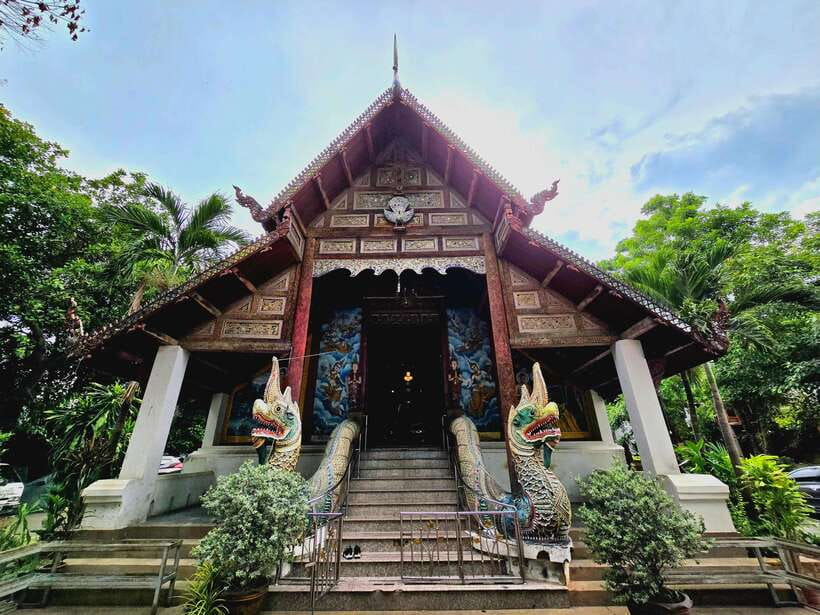
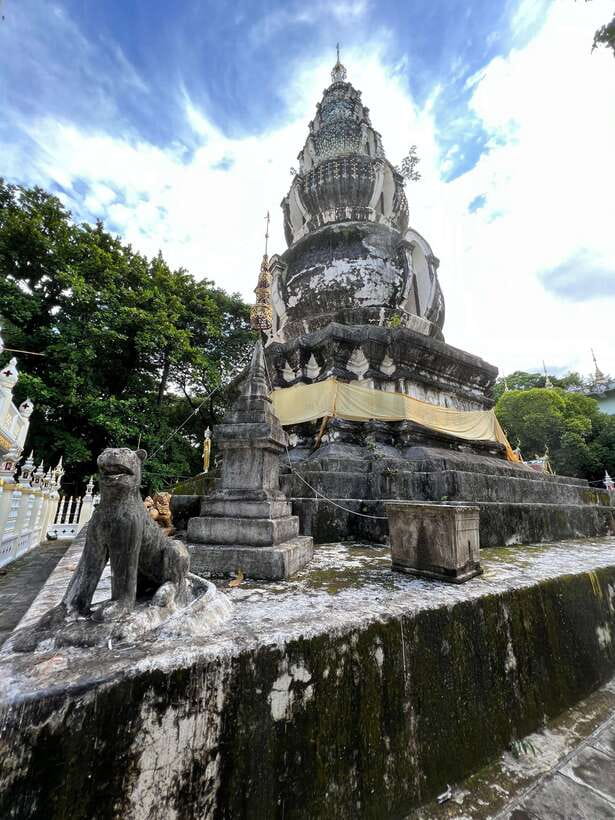
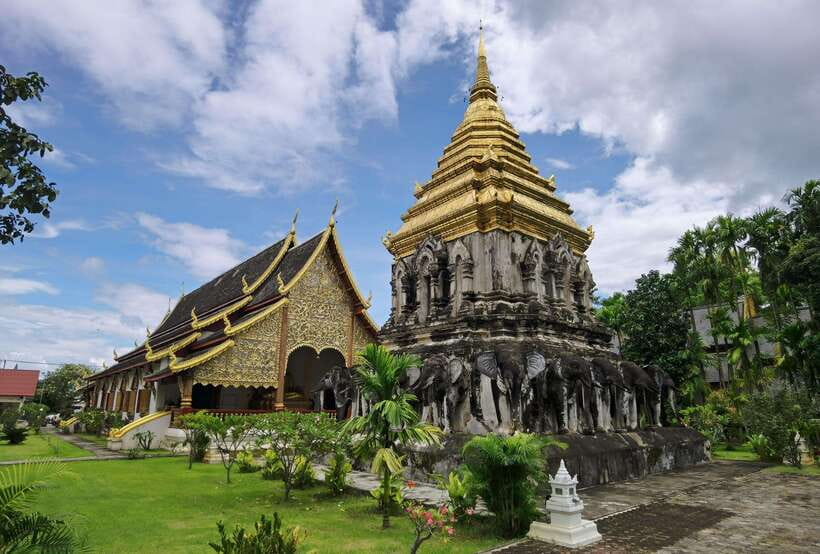
Wat Ku Tao is perhaps the most unusual stop of the four. Its chedi is thought to have been built in 1613 to hold the ashes of Prince Saravadi, who lived from 1578 to 1607 and is identified as the first Burmese overlord of Chiang Mai.
That story gives the chedi a political edge. Temples are not only places for prayer. They can also preserve the memory of rulers, changing power, and the connections between Chiang Mai and neighboring Burma. The unusual shape of the chedi becomes easier to appreciate when you know the story attached to it.
This stop may appeal most to you if you like history with a human and political side. The guide can explain the building, but also place it within the period when Burmese authority affected Chiang Mai. You will get more from the visit if you pause to compare it with the earlier temples rather than treating it as the final photo opportunity.
The supplied information does not give a precise walking distance or a guaranteed amount of time at each temple. Plan for a substantial walk and several hours outside. One person found the route tiring even after taking a break between this tour and the first part of the guide’s temple series. Comfortable shoes are essential.
Learning Buddhism from guides with monk experience
The most praised feature of this experience is the quality of its personal teaching. Katoon is repeatedly described as patient and generous with explanations, and several people valued his account of monk life. Big has also drawn on a former monk background to discuss Buddhism, temples, meditation, and daily practice.
That does not mean every departure will be led by the same person. Names connected with the experience include Katoon, Big, Eddy, and Son. Eddy has been praised for taking photos and adapting the tour to the group, while Son has been described as relaxed and helpful when discussing Buddhism, Thai culture, and temple history.
If you have questions, ask them. This is not a tour where you need to wait for the guide to cover every topic in a fixed script. Questions about meditation, prayer, Buddha stories, monk food, and the daily life of monks have all formed part of the experience described by participants.
You can also expect some help with basic etiquette. The guide may show you how to pray, how to enter a temple respectfully, and how to behave around monks. These small lessons are practical. They help you avoid accidental rudeness and make your time at the temples more meaningful.
The guide’s English may differ from person to person. Big is still improving his English, while another guide has been praised for speaking it very well. If precise language is important to you, a private booking or a guide-language request may be worth considering, though the available languages are English, Chinese, and Thai.
Walking pace, weather, and what to bring
This is a walking tour, not a vehicle-based temple sampler. The route is described as relatively easy, but easy does not mean effortless in Chiang Mai’s heat. You may walk for hours, with time spent standing in courtyards and listening to explanations.
Bring an umbrella, drinks, and cash. An umbrella is useful for sun as well as rain, and water matters more than it might on a short sightseeing outing. Cash gives you flexibility for personal purchases, though food and extra drinks are not included in the $31 price.
Wear clothes that cover the shoulders and knees, especially if you are unsure about local temple expectations. Short skirts are specifically not allowed, and respectful clothing is a practical way to avoid delays or discomfort. Comfortable sandals may work, but shoes that stay secure on your feet are the safer choice for a long walk.
Smoking indoors, alcohol, drugs, drones, loud behavior, and intoxication are not allowed. Pets, weapons, sharp objects, explosive substances, baby strollers, and electric wheelchairs are also excluded. Children under two, babies under one, pregnant women, and wheelchair users are listed as unsuitable for this activity.
The route may be fine for a reasonably active person, but it is not the right pick if you need step-free access or frequent transport between stops. Ask about the route before booking if mobility is a concern, since the stated activity is specifically a walking tour.
Meeting point and pickup details
The tour starts at about 8:20 am, but check the confirmed starting time when you book because the activity is valid for one day and availability controls the exact schedule.
Pay close attention to the meeting instructions. One participant had trouble with the map code QXRP+3WX because it did not clearly identify the meeting point, and a taxi driver and hotel staff member could not make sense of it. Allow extra time and confirm whether the meeting point is near a recognizable landmark such as the Three Kings Monument before setting out.
This issue is worth taking seriously because the tour does not appear to include general hotel pickup by default. Hotel pickup and drop-off are included when you select the private option. If you choose a small group, make sure you know exactly where to meet.
The provider is Journey D Travel. Free cancellation is available up to 24 hours before the activity for a full refund, and you can reserve now and pay later. Those terms are helpful if your Chiang Mai plans are still shifting, but they do not remove the need to check the meeting location carefully.
Is $31 a fair price?
At $31 per person, this tour sits in the useful middle ground between independent sightseeing and a costly private guide. You are paying for a full day of walking, a guide, historical interpretation, and help with Buddhist customs. Food and extra drinks are not included, so budget for your own refreshments.
The value rises sharply if you are curious about religion and local culture. A guide who can explain monk life, meditation, Buddha stories, and prayer etiquette gives you something you cannot get from photographing temple roofs alone.
The value is lower if you have already studied Chiang Mai’s temples and prefer complete freedom. You will follow a planned route and spend much of the day walking. You might also find the pace too demanding if hot weather affects you quickly.
Private touring costs more in most destinations, but here it also solves two practical problems: hotel pickup and a more flexible conversation. A small group can still work well, especially if you enjoy asking questions and comparing impressions with others.
How this fits with Part I
This experience can work on its own, but it is also described as the second part of a temple series. One person completed both parts on the same day, with a break for lunch and rest, and found the full day exhausting even though it was worthwhile.
I would not automatically combine both parts unless temples and Buddhism are your main reason for visiting Chiang Mai. Four temples in one day is already a serious amount of information, and your feet may need the rest. If you do book both, keep the midday break real. Eat, drink water, and sit down rather than treating the pause as another sightseeing slot.
As a stand-alone outing, Part II has a good internal shape. It moves from Chiang Mai’s early foundation to Shan community history, Shan Burmese architecture, and the legacy of Burmese rule. That gives the four stops a stronger connection than a random list of temples.
Who should book this walk?
I would choose this tour if you want to understand Buddhist customs rather than simply see temple buildings. It suits adults who enjoy walking, asking questions, and hearing stories about local life.
It is particularly useful for first-time visitors who feel unsure about prayer, meditation, clothing, or behavior around monks. The guide can remove that uncertainty early in your trip, so you can visit other temples with more confidence.
You may also like it if you have already seen Chiang Mai’s famous sites and want a quieter route with less familiar temples. The four stops offer a better sense of the city’s cultural mix than a tour focused only on the most photographed buildings.
I would hesitate if you dislike long walks, struggle in heat, require wheelchair access, or want a relaxed vehicle tour. I would also confirm the meeting point before paying, especially if you are not using the private hotel pickup option.
FAQ
How much does the Chiang Mai Temple and City Tour Part II cost?
The tour costs $31 per person.
How long does the experience last?
The activity is valid for one day and begins at about 8:20 am. The route involves walking for several hours, though the supplied information does not give a precise finishing time.
Which temples does the tour visit?
The route includes Wat Chiang Man, Wat Chiang Yuen, Wat Pa Pao, and Wat Ku Tao.
What languages are available?
Live guiding is available in English, Chinese, and Thai.
Is hotel pickup included?
Hotel pickup and drop-off are included if you select the private option. The activity is otherwise described as a walking tour, so confirm the meeting point before departure.
What should I bring?
Bring an umbrella, drinks, and cash. Wear comfortable clothing suitable for temple visits, and avoid short skirts.
Can I cancel or pay later?
You can cancel up to 24 hours in advance for a full refund. You can also reserve now and pay later.
Should you book it?
Book this tour if you want context, conversation, and a closer look at Buddhism in Chiang Mai. The strongest reason to go is the guide-led explanation, especially if you are matched with someone such as Katoon or Big who can draw on former monk experience.
The route is also a smart choice if you have already seen the central highlights and want temples tied to Shan culture and Burmese rule. Just prepare for heat, bring water, wear good walking shoes, and confirm the meeting point in plain language.
At $31, I consider it good value for an active visitor who wants to learn. It is not the best choice for a short, effortless sightseeing trip, but for an informed walk through four distinctive temples, it offers a useful and memorable day in Chiang Mai.
Just added around Chiang Mai
- Taste of Chiang Mai: Michelin Guide & Street Food Tour★ 4.9 · 159 reviews
- Red, Blue, White Temples & Hot Spring Trip from Chiang Mai★ 4.4 · 143 reviews
- From Chiang Mai: Mae Taeng Valley and Waterfalls Cycle Tour★ 4.9 · 159 reviews
- Long Neck Village, Silver Temple & Chiang Mai Top Sites★ 4.7 · 17 reviews
- Chiang Mai: Local Northern Thai Cooking Class at Grandma’s★ 5.0 · 33 reviews
- Chiang Mai: Khum Khantoke Northern Thai Cuisine and Show★ 4.3 · 38 reviews
- Private : Sticky Waterfall & Secret Temple & Karen Village.★ 5.0 · 9 reviews
- Half-day with CHIANGMAI ELEPHANT CARE program (12pm-6pm.)★ 5.0 · 27 reviews
Chiang Mai Tours, compared.
Half-Day Thai Cooking Class at Organic Farm in Chiang Mai
Read our review →
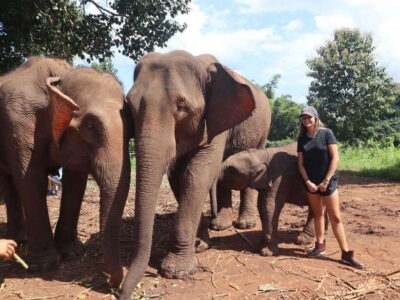
Elephant Sanctuary, Waterfall & Bamboo Rafting
Read our review →
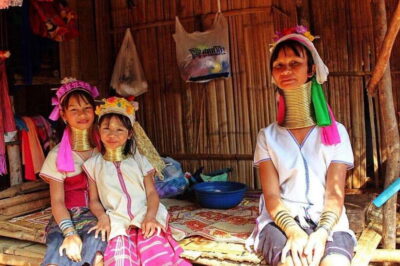
Chiang Rai Temples, Karen Tribe and Hot Springs
Read our review →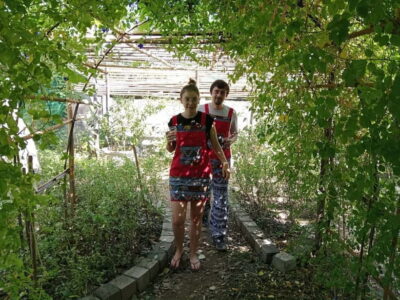
Cooking Class, Market & Thai Herbs Garden Tour
Read our review →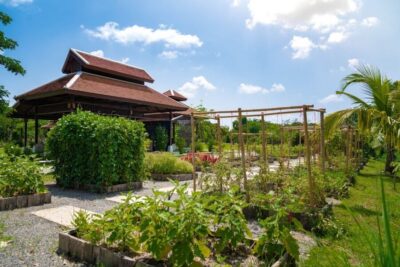
Authentic Cooking Class with Market & Farm Visit
Read our review →
Elephant Sanctuary Feeding Program Half-Day Tour
Read our review →Browse the lists this tour appears in