
Reviewed · CHIANG MAI TOURS
Colors of Chiang Mai Guided Bicycle Tour
Chiang Mai shows its best side away from the traffic and tourist streets. This half-day ride follows quiet country lanes past rice fields, fruit orchards, village homes, small temples, and the Ping River before reaching the old Lanna settlement of Wiang Kum Kam. The pace is easy, and the route covers about 20 to 25 kilometers.
I like two things right away: the chance to see daily life at close range, including local women making traditional Thai products, and the guides’ care on the few busier crossings. Guides such as Wit, Wee, Koi, and Dong have been praised for clear hand signals, patience, and useful explanations about Buddhism and local customs.
The main consideration is distance. You do not need to be a serious cyclist, but 20 kilometers or more is still a real morning on a bike. The route and stops can also change when markets, schools, shops, rice fields, or orchards are not operating or looking their best.
Key points at a glance
- A 20 to 25 kilometer countryside ride: Most cycling takes place on quiet green lanes and low-traffic roads.
- A former monk as your temple guide: Guides such as Wit have shared personal insight into Buddhist practice and monastic life.
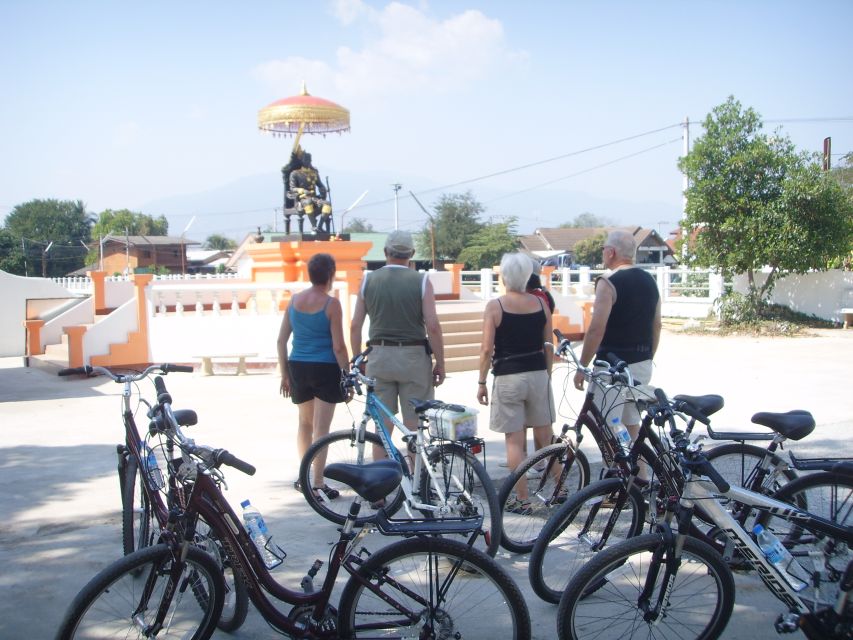
- Wiang Kum Kam’s ancient ruins: See temples and a 700-year-old Chedi in the settlement founded by King Mengrai in 1286.
- Local food along the way: The tour includes a snack or small Thai meal, with Khao Soy Kai available at a local restaurant.
- A safer choice for nervous cyclists: Guides use hand signals and manage crossings, though you still need basic confidence on a bicycle.
- Small-group flexibility: Private and small-group departures are available, but at least two participants are required for the tour to operate.
Why this bicycle tour gets beyond central Chiang Mai
Many Chiang Mai visitors spend their time inside the old city walls, where temples, cafés, and markets compete for attention. This ride takes you outward, into a quieter part of the province where the rhythm changes. You pass through local communities rather than simply stopping at major sights for a quick photograph.
The route is not built around one grand attraction. Its strength is the succession of ordinary places: a green lane, a rice field, a village workshop, a temple, a fruit orchard, a roadside eatery, and a riverbank. Taken together, these stops give you a clearer sense of how Chiang Mai works beyond its old center.
The ride lasts 270 minutes, or four and a half hours on the schedule. In practice, the cycling itself may take around three to four hours depending on the group, stops, and route. You can expect an easy pace rather than a race, but you should still be ready to spend much of the morning in the saddle.
A few more Chiang Mai half-days worth weighing up
- Half-Day Thai Cooking Class at Organic Farm in Chiang Mai
★ 5.0 · 19,087 reviews - Chiang Mai: Elephant Sanctuary, Waterfall & Bamboo Rafting
★ 4.9 · 9,160 reviews - Chiang Mai: Doi Inthanon National Park Eco-Friendly Tour
★ 4.6 · 6,667 reviews
Starting on quiet lanes and village roads
The tour begins with a bicycle, helmet, English-speaking guide, and a route that quickly favors quieter roads. Several guides have been praised for choosing leafy suburban lanes and back roads rather than keeping you on busy city streets.
That matters if you like cycling but do not feel comfortable beside heavy traffic. The guides make the busier sections less stressful by using clear hand signals and helping the group cross safely. Still, this is a road cycling tour, not a closed cycling path. You need to control a bicycle and remain alert around occasional traffic.
The first stretch gives you time to settle into the bike. You pass local communities and see the less polished side of Chiang Mai, with homes, small businesses, and working areas mixed into the route. This is the kind of sightseeing I value on a bicycle because you can slow down, look around, and notice details that disappear from a car window.
Meeting village craft makers
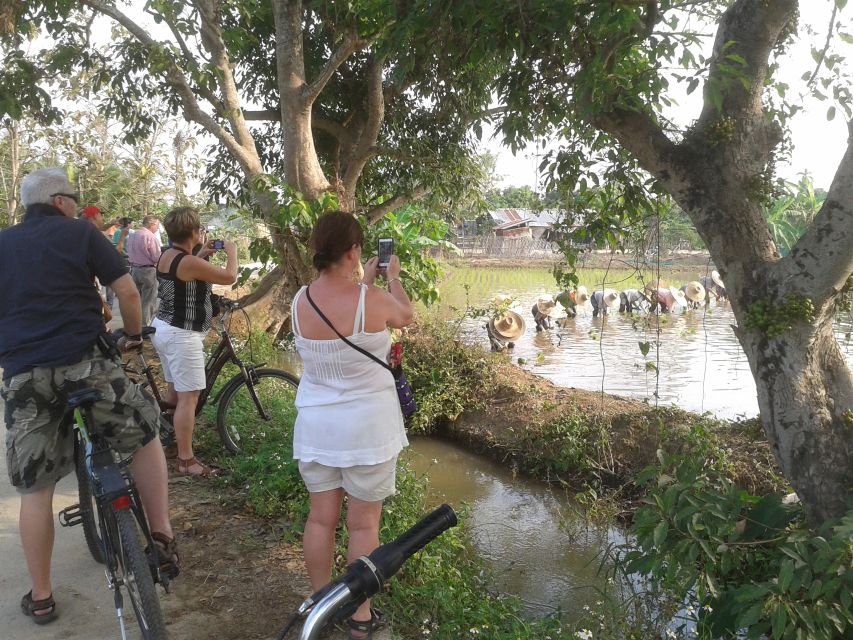
One of the more personal stops is a local village where women make traditional Thai products. This adds a useful human element to the ride. You are not only looking at old buildings or scenery, you are seeing practical skills and small-scale work that remain part of local life.
The exact craft activity can vary, so do not book this expecting a fixed workshop with a guaranteed demonstration. The operator may adjust the route when local shops or schools are closed, especially on weekends, school holidays, or national holidays.
That flexibility is worth keeping in mind. A changing stop can be a disappointment if you want a tightly controlled program, but it also reflects the way local village visits work. The tour is designed around places that are genuinely open and active rather than a staged attraction that operates identically every day.
Temples, Buddhism, and a former monk’s perspective
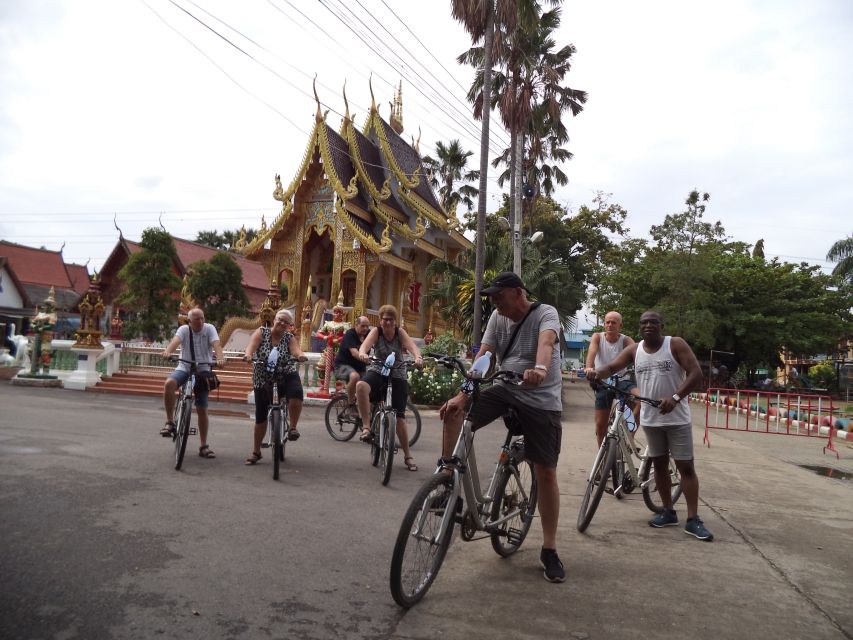
A temple stop gives the ride some cultural depth. Your guide explains the temple and basic Buddhist traditions, helping you understand what you are seeing instead of simply walking around a decorated building.
Wit, one of the guides, previously spent six years as a monk. His experience has allowed him to explain temple customs and monastic life from personal experience. That kind of background can make a difference, especially if you have questions about offerings, daily routines, symbols, or the role of Buddhism in northern Thai communities.
Other guides, including Wee, Koi, and Dong, have also been praised for clear explanations and friendly care. The quality of the tour depends partly on who leads your departure, so you should expect the details and storytelling style to vary. The languages offered are English and Thai.
Take your temple visit seriously. Dress and behave respectfully, and listen to your guide’s instructions. The tour gives you context, but it is still your responsibility to act appropriately at an active religious site.
Same base, a completely different kind of day out:
- Chiang Mai: Elephant Sanctuary & Waterfall Group Tour
★ 4.9 · 5,780 reviews - Chiang Mai: Chiang Rai Temples, Karen Tribe and Hot Springs
★ 4.7 · 5,401 reviews - Chiang Mai: Cooking Class, Market & Thai Herbs Garden Tour
★ 4.9 · 4,824 reviews - Chiang Mai: Authentic Cooking Class with Market & Farm Visit
★ 4.9 · 4,546 reviews
Rice fields, orchards, and a local market stop
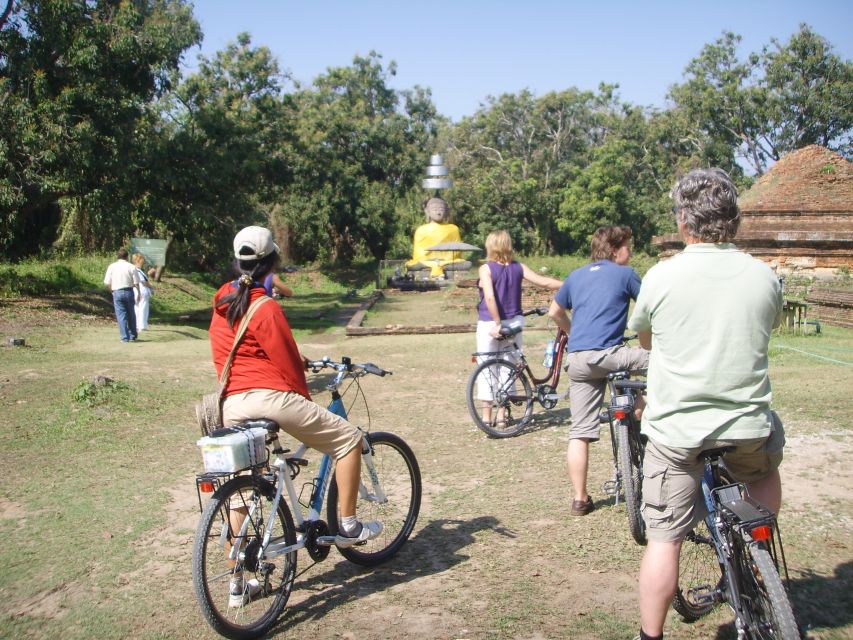
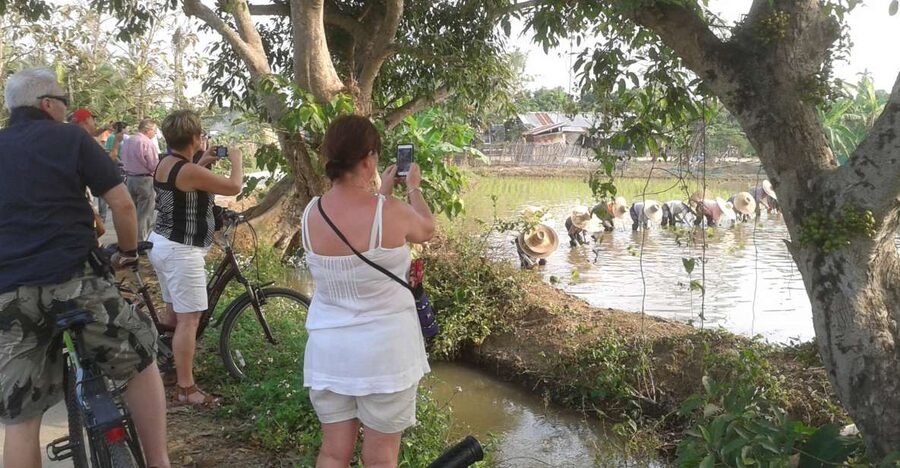
After the temple, the route moves through rice fields and fruit orchards. These are open agricultural areas rather than formal sightseeing attractions. Their appeal depends on the season, weather, and farming activity.
The operator warns that rice fields and orchards do not look the same year-round. Fields may not be green, fruit trees may not be in blossom, and some sections can be changed when conditions are unsuitable. You should treat the countryside as part of the ride’s atmosphere, not as a guaranteed postcard view.
A local market stop adds food and people to the morning. You may pick up fresh fruit or a snack, and the guide can help explain what you are seeing. The market is not open every day. A Saturday departure may offer a livelier stop, while another day may bring a different local shop or food break.
You also receive water or soft drinks during the excursion. That is important in Chiang Mai’s heat, though you should still arrive ready to drink regularly. Cycling for several hours in warm weather can be tiring even at a gentle pace.
Following the Ping River
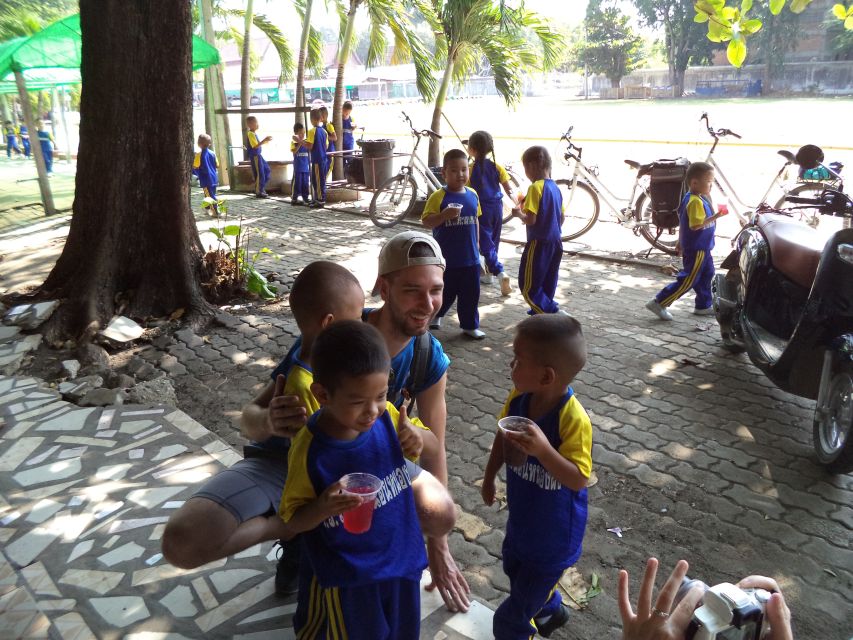
The ride along the Ping River is one of its most pleasant sections. Instead of treating the river as a distant view, the route brings you into the local atmosphere around it, with small settlements and tree-lined roads nearby.
The river section also breaks up the historical stops. You have time to ride without needing to absorb a long explanation at every turn. I like this balance: some parts teach you about Chiang Mai, while others simply let you enjoy being outside.
Do not expect a continuous riverside path or a long, uninterrupted river panorama. The tour description places the route along the Ping, but it also includes roads through communities and countryside. Think of the river as one part of a varied ride rather than the whole focus.
Entering Wiang Kum Kam and its 700-year-old Chedi
The final major section reaches Wiang Kum Kam, an old settlement founded by King Mengrai in 1286. It served as the Lanna capital for only about ten years before the center of power moved elsewhere. Today, the area is known for temples and ruins spread through a quieter setting south of central Chiang Mai.
This stop gives the tour a strong historical finish. You can photograph ancient structures and see a Chedi dating back roughly 700 years. The ruins are not presented as one enormous monument complex. Instead, they appear as part of a wider old settlement, which makes the bicycle approach particularly suitable.
Your guide helps connect the stone remains to the story of the Lanna kingdom. Without that explanation, several temple ruins could blur together. With it, you get a better sense of why this area mattered and why Chiang Mai developed where it did.
The visit is also a useful contrast with the countryside earlier in the day. You move from working rice fields and village roads into a place shaped by royal history, religion, and time. After the stops and photographs, you cycle back toward the starting point.
Lunch, Khao Soi Kai, and the value of eating locally
Food is included, either as a snack or a small Thai meal. Several departures have included fresh food at a local eatery, and Khao Soy Kai, Chiang Mai’s well-known chicken curry noodle dish, is specifically offered.
This is not a polished restaurant experience designed around tourists. The appeal is a simple local meal during the ride. It gives you a chance to rest, cool down, and try one of northern Thailand’s signature dishes without having to search for it later.
The exact food stop may vary with the route and opening hours. A market may provide fruit, while another departure may include coffee, ice cream, or a cooked meal. Personal expenses are not included, so bring some money if you want anything beyond the included food and drinks.
How hard is the 20 to 25 kilometer ride?
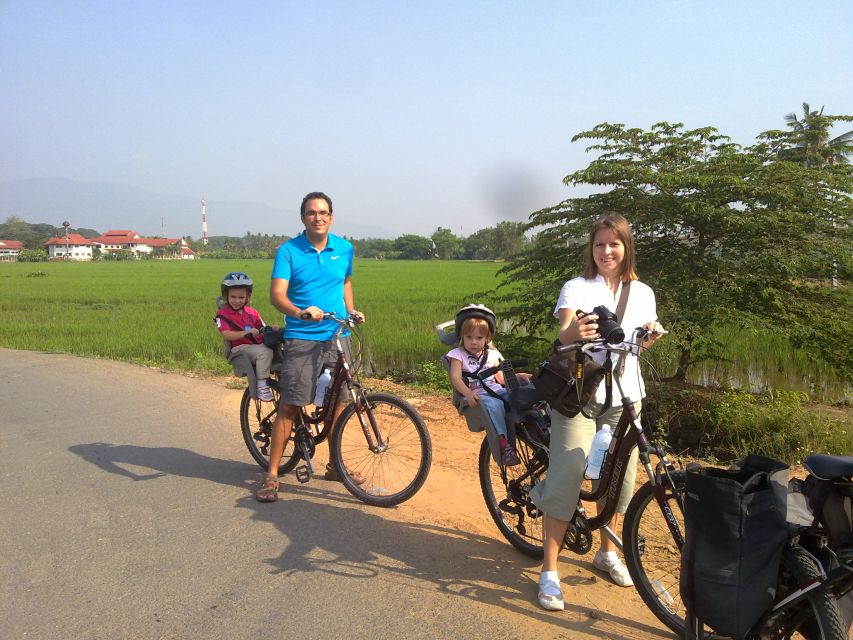
The route is generally described as easy-paced, and several guides have helped people who were not confident cyclists. Most of the distance runs on quiet roads, green lanes, or leafy suburban routes. The few busier crossings receive extra attention from the guide.
You should not interpret easy pace as effortless. Twenty to twenty-five kilometers can take several hours, especially with stops, heat, and uneven road conditions. If you cycle regularly, the distance should be manageable. If you rarely ride, consider how comfortable you are staying on a bike for a morning.
This tour suits you best if you want steady movement and cultural stops rather than a demanding athletic ride. It is less suitable if you want a short photo outing, a fully off-road ride, or a route with no traffic at all.
Bicycles and helmets are included. The supplied information does not give specific bike sizes, frame styles, or adjustment details, so ask the operator about fit if that matters to you. Arrive five to ten minutes before the start so there is time to get organized.
Guides who make the difference
The strongest part of this experience is the guiding. Wee has been described as caring and attentive, and he has helped arrange return transport when getting back to the city was difficult. Wit has been praised for humor, patience, temple knowledge, and practical suggestions for food and places to visit elsewhere in Thailand.
Koi has led a safe, enjoyable ride, while Dong has been praised for knowing the route and making the countryside easy to appreciate. These personal touches matter because a bicycle tour depends on more than the road. You need someone who keeps the group together, watches crossings, answers questions, and knows when to stop for water.
A solo booking is welcome, but the tour needs at least two participants to run. If that minimum is not reached, the operator can offer another time, day, or tour, or cancel the booking. Private and small-group options are available, which may be useful if you want a quieter pace or more room for questions.
Price, timing, and practical value
At $38 per person, the price is fair for a 270-minute outing that includes the bicycle, helmet, guide, insurance, water or soft drinks, and Thai food. You are paying for more than transportation between sights. The route combines exercise, local contact, history, temple interpretation, and a meal.
The value is strongest if you would otherwise book several separate activities. A typical half-day could easily involve arranging a countryside trip, finding a temple guide, locating Wiang Kum Kam, and choosing a local lunch. Here, those pieces are joined into one moving tour.
The price does not cover personal spending. You may want extra cash for market purchases, additional drinks, or anything not included at the meal stop.
Free cancellation is available up to 24 hours before departure for a full refund, and you can reserve now and pay later. Starting times depend on availability. WiFi is available at the operator’s office, though that is a minor convenience rather than a reason to choose the tour.
Who should book this Chiang Mai cycling tour?
I would choose this ride if you have already seen the main temples in the old city and want a different morning. It is also a good first look at Chiang Mai if you prefer local roads, food, and history to a schedule packed with major attractions.
The tour works well for:
- Casual cyclists who can handle 20 to 25 kilometers
- People nervous about busy roads but comfortable riding with guidance
- Visitors interested in Buddhism and Lanna history
- Couples, families, and small groups wanting a private or quieter outing
- Solo visitors willing to join a departure that reaches the two-person minimum
I would think twice if you dislike heat, cannot ride for several hours, or want every stop guaranteed. Markets, village shops, schools, rice fields, and orchards change with the calendar. That is part of the tour’s local character, but it means the day is not completely fixed.
Should you book it?
Book this tour if you want to see Chiang Mai through its back roads, food stops, river views, and working communities. The combination of an easy pace, careful guides, temple explanations, and Wiang Kum Kam makes it a well-rounded half-day outing.
The best reason to go is not one spectacular monument. It is the sequence of small experiences: a village craft stop, a quiet lane, a Buddhist temple, fresh fruit, Khao Soi Kai, the Ping River, and ancient ruins. If that sounds better than another morning in the city center, $38 is good value.
Skip it if 20 kilometers feels too much or if you need a guaranteed market, orchard, or craft demonstration. For most reasonably fit visitors who want a close look at everyday Chiang Mai, this is an engaging and practical choice.
FAQ
Where does the Colors of Chiang Mai bicycle tour take place?
The tour takes place in Chiang Mai Province, traveling through quiet roads, local communities, rice fields, fruit orchards, the Ping River area, and historic Wiang Kum Kam.
How long is the bicycle tour?
The scheduled duration is 270 minutes, or four and a half hours. The cycling distance is approximately 20 to 25 kilometers.
What is included in the price?
The price includes a bicycle, bicycle helmet, English-speaking guide, Thai meal or snack, water or soft drinks during the excursion, and insurance. Free WiFi is available at the operator’s office.
Is food included?
Yes. The tour includes a Thai snack or small meal. Khao Soy Kai at a local restaurant is one possible food stop, while other departures may include fresh fruit or another snack.
Which languages are available?
Guides are available in English and Thai.
Can solo participants book the tour?
Yes, solo participants are welcome to book. The tour requires at least two participants to operate, so the operator may offer another time, day, or tour, or cancel if the minimum is not reached.
Can the tour route change?
Yes. The operator may change the route because rice fields and fruit orchards are seasonal, and schools or local shops may close on weekends, school holidays, or national holidays.
Just added around Chiang Mai
- Taste of Chiang Mai: Michelin Guide & Street Food Tour★ 4.9 · 159 reviews
- Red, Blue, White Temples & Hot Spring Trip from Chiang Mai★ 4.4 · 143 reviews
- From Chiang Mai: Mae Taeng Valley and Waterfalls Cycle Tour★ 4.9 · 159 reviews
- Long Neck Village, Silver Temple & Chiang Mai Top Sites★ 4.7 · 17 reviews
- Chiang Mai: Local Northern Thai Cooking Class at Grandma’s★ 5.0 · 33 reviews
- Chiang Mai: Khum Khantoke Northern Thai Cuisine and Show★ 4.3 · 38 reviews
- Private : Sticky Waterfall & Secret Temple & Karen Village.★ 5.0 · 9 reviews
- Half-day with CHIANGMAI ELEPHANT CARE program (12pm-6pm.)★ 5.0 · 27 reviews
Chiang Mai Tours, compared.
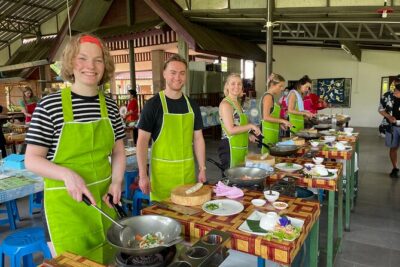
Half-Day Thai Cooking Class at Organic Farm in Chiang Mai
Read our review →
Elephant Sanctuary, Waterfall & Bamboo Rafting
Read our review →
Chiang Rai Temples, Karen Tribe and Hot Springs
Read our review →
Cooking Class, Market & Thai Herbs Garden Tour
Read our review →
Authentic Cooking Class with Market & Farm Visit
Read our review →
Elephant Sanctuary Feeding Program Half-Day Tour
Read our review →Browse the lists this tour appears in