
Reviewed · CHIANG MAI TOURS
Chiang Mai – Doi Suthep Temple & Wat Pha Lat Hike
Wat Pha Lat is the surprise here: a quiet forest temple reached by the Monk’s Trail, with statues, trees, and a waterfall instead of crowds and bright city noise. Then the tour takes you higher to Wat Phra That Doi Suthep, Chiang Mai’s famous golden temple.
I like the mix of a gentle nature walk and a major cultural sight. I also like the traditional red-car transport and the chance to see monks chanting or receiving alms on the early start. The main catch is that the trail can be rocky, muddy, and slippery after rain, and the temple entrance fees are extra.
Key points at a glance
- Wat Pha Lat feels genuinely peaceful: This forest shrine has old statues, gardens, and a waterfall setting that contrasts sharply with busy Doi Suthep.
- The Monk’s Trail changes direction by departure time: Regular tours hike up toward Wat Pha Lat, while the 5:00 a.m. sunrise tour visits Doi Suthep first and walks down.
- Sunrise gives you a special atmosphere: Early visitors may hear monks chanting, observe alms giving, and find Doi Suthep unusually quiet.
- Traditional transport is part of the fun: You ride in a red songthaew, a converted pickup truck with open sides and bench seats.
- Guides are a major strength: Jane, Margaret, Saman, Nancy, Bright, and others are praised for temple explanations, cultural context, humor, and help with photographs.
- Budget for extra costs: The $25 price does not include Doi Suthep entrance and cable car fees, the THB 100 Wat Pha Lat Monk’s Trail fee, or personal spending.
Two temples, two very different moods
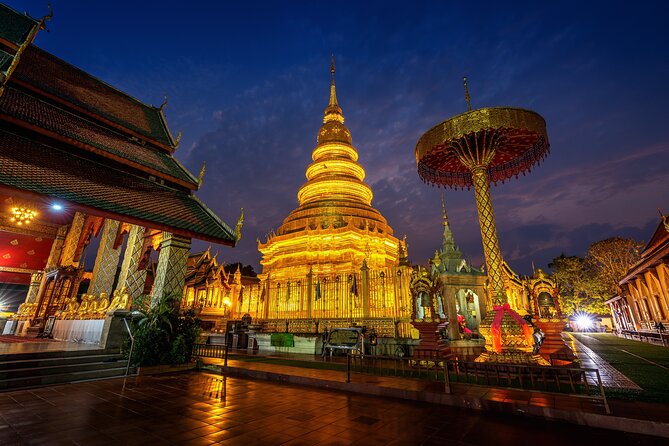
This four-hour outing works because the two temples offer such different experiences. Wat Pha Lat is about forest, silence, and small details. Doi Suthep is grander, busier, and tied closely to Chiang Mai’s religious identity.
I like tours that give you this kind of contrast. You are not simply driven from one photo stop to another. You first get a short walk through woodland, then a high mountain temple with broad views over Chiang Mai.
The schedule can be arranged around morning, afternoon, or later-day departures, so the mood changes with the clock. The 5:00 a.m. option is for sunrise and temple ritual. A later outing may give you sunset or city lights. One afternoon departure ran into evening traffic on the return, so allow some flexibility if you have dinner plans.
The overall rating is 4.6 from 740 bookings, and the praise is unusually consistent about the guides. That matters here. The buildings are beautiful on their own, but an explanation of Buddhist symbols, temple customs, and local history turns the visit into something more meaningful.
More Doi Suthep and Doi Inthanon days:
- Chiang Mai: Doi Inthanon National Park Eco-Friendly Tour
★ 4.6 · 6,667 reviews - Chiang Mai: Doi Suthep and Wat Umong Enchanting Evening Tour
★ 4.6 · 1,811 reviews - Doi Inthanon Waterfall and Royal Project Chiang Mai
★ 5.0 · 1,735 reviews
The red car ride up Doi Suthep
Pickup is available from hotels in Chiang Mai’s old city and some areas just outside the center. If you stay farther out, you meet the group in front of Burger King at Thapae Gate. Hotel pickup can begin up to 45 minutes before the scheduled start, so do not plan a last-minute breakfast around the advertised departure time.
Transport is by a typical Thai songthaew, often called a red car or red van. It is a converted pickup with two benches in the back, open sides, and no air-conditioning. I consider this a plus rather than a flaw. You travel in the way many people move around Chiang Mai, and the ride up includes switchbacks and occasional views toward the city.
It is not a luxury vehicle. You may share the benches with other people, and the open design offers little protection from sun or rain. Still, for a $25 half-day excursion, the songthaew keeps the outing local and informal.
The tour includes a bottle of water and an English-speaking guide. Groups can be small, with one booking describing six people as a comfortable size. Group size may vary, but the experience is intended to be guided rather than a large coach tour.
Walking the Monk’s Trail to Wat Pha Lat
The walk to Wat Pha Lat is the most distinctive part of the outing. The trail passes through woodland and leads to a temple set among trees, statues, and a waterfall. One description places the walk at roughly 2 to 3 kilometers through the forest, although the exact distance and direction depend on the tour schedule.
On standard timings, you hike up toward Wat Pha Lat. On the sunrise program, you visit Doi Suthep first, watch the dawn, then go to Wat Pha Lat and walk down the Monk’s Trail. That downhill route can feel easier for some people, but rough ground and wet sections still demand care.
This is not a polished city sidewalk. Reports describe rocky and muddy parts, especially after rain. Trainers may work in dry conditions, but proper walking shoes are the safer choice. Mosquito repellent is also a sensible item for the forest section.
The setting is the reward. Wat Pha Lat has a calm, almost storybook feel, with statues placed around a green garden and a waterfall nearby. You may see monks, temple dogs, or other signs of daily life rather than only formal tourist displays. The atmosphere is less about checking off a famous monument and more about noticing how a place of worship fits into the forest.
Your guide can explain the carvings, religious symbols, and role of the temple. Guides such as Bright and Saman are praised for explaining Buddhist ideas and the meaning behind the artwork. Margaret is also noted for adjusting the pace and helping people on a rainy trail.
If you cannot manage the hike, the tour information says you can go up by songthaew instead. I would still tell the operator about mobility concerns before booking. The activity is listed as wheelchair accessible, but a forest trail with rocks, mud, and uneven ground may not be suitable for every wheelchair user without further arrangements.
Wat Phra That Doi Suthep and its golden stupa
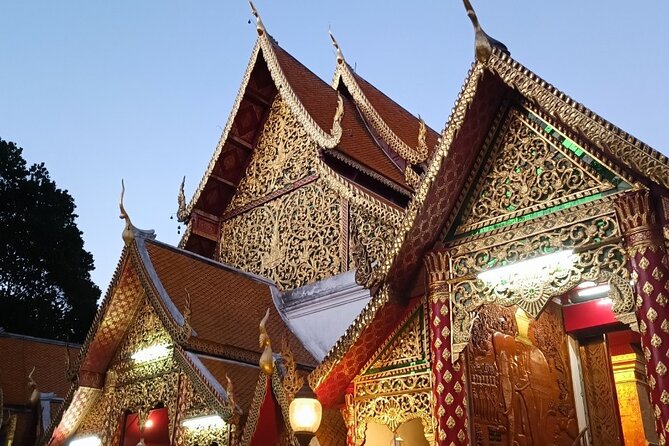
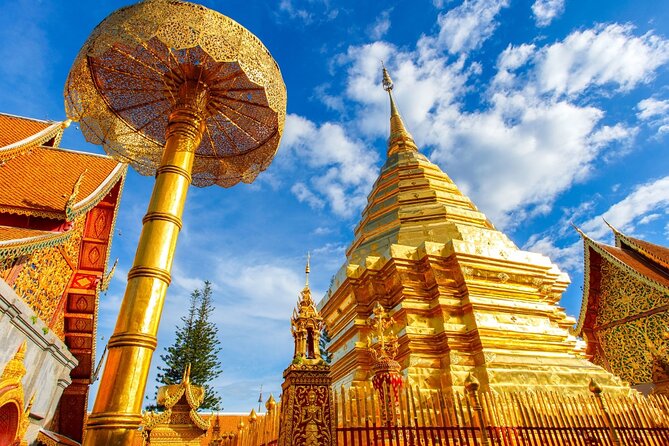
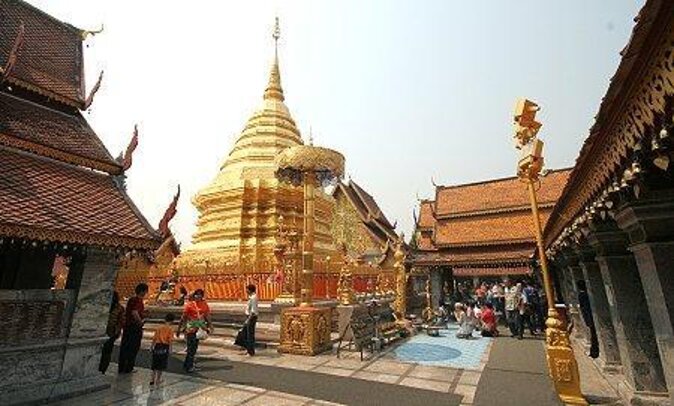
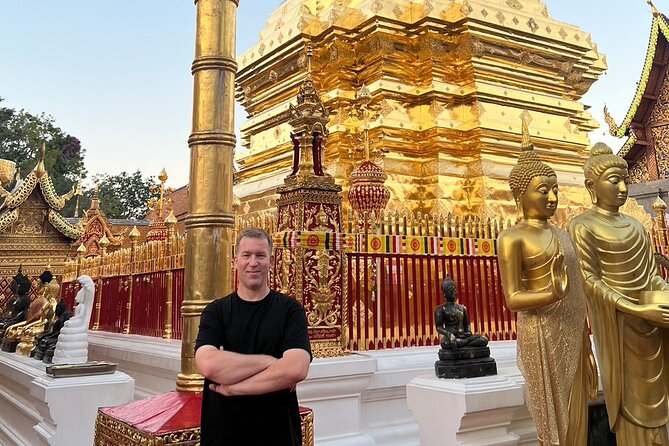
Wat Phra That Doi Suthep is the main landmark of the tour. Set high above Chiang Mai, it is one of northern Thailand’s most sacred temples and is known for its golden stupa and detailed architecture.
The visit gives you time to look at the temple rather than simply take one photograph and leave. A good guide can point out the carvings, religious images, and Buddhist symbolism, then give you space to explore at your own pace. Jane, Ata, Jean, and Saman are among the guides praised for clear cultural and historical explanations.
Doi Suthep is a working sacred place, not a museum arranged for visitors. Dress with respect. Shoulders and knees must be covered, and sleeveless shirts are not allowed. Bring cash for entrance charges and any personal expenses.
The price does not include the entrance fee or cable car for Wat Phra That Doi Suthep. The information also lists a THB 100 per-person fee for the Wat Pha Lat Monk’s Trail. These costs are not large compared with the tour price, but they do affect the true total.
If stairs are a concern, the cable car may make Doi Suthep easier to reach. If the forest hike is the issue, the songthaew option can help. Ask about the exact arrangements before departure, since the route changes between regular and sunrise programs.
More walks and treks around Chiang Mai:
- 3-in-1: Doi Inthanon Tour, Elephant Sanctuary, and Trekking Trail
★ 5.0 · 1,087 reviews - Chiang Mai: Doi Inthanon Trip with Pha Dok Siew Guided Trek
★ 4.6 · 910 reviews - Chiang Mai: Doi Inthanon Park with Kew Mae Pan Hike Day Trip
★ 4.7 · 841 reviews - Chiang Mai: Doi Inthanon Park and Pha Dok Siew Trail Trek
★ 4.6 · 752 reviews
Sunrise, sunset, or city lights?
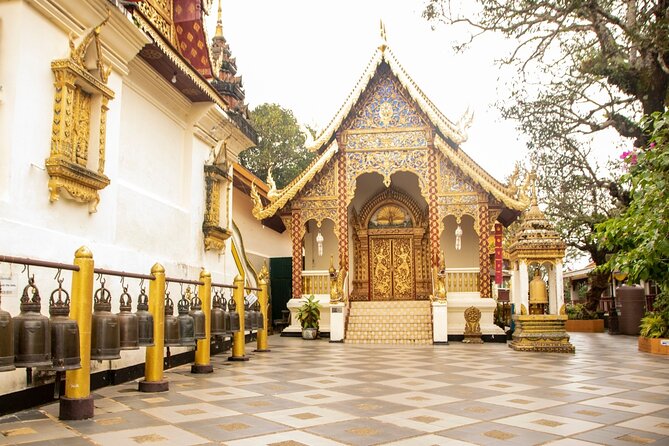
The 5:00 a.m. departure is the most atmospheric choice. You reach Doi Suthep early, before the main rush, and may see sunrise over Chiang Mai and the surrounding mountains. On clear mornings, the high viewpoint offers a broad view across the city.
The dawn visit can also connect you with living Buddhist practice. Several people describe hearing monks chant or seeing alms giving during the early hours. These moments are not guaranteed, but the early timing gives you a better chance to observe temple life before the day gets busy.
There is a tradeoff: you must wake very early, and cloud or rain may block the panorama. One rainy morning offered only a limited city view at first, though the guide changed the order and conditions improved later.
A later departure has its own appeal. The temples can glow in the softer light of late afternoon, and the city may begin to sparkle after sunset. One evening schedule was praised for avoiding heavy crowds and showing Chiang Mai’s lights. Another outing missed sunset because the group did not leave early enough, so if sunset matters to you, ask for the planned timing rather than assuming it is guaranteed.
The best choice depends on your priorities:
- Choose sunrise for quiet temple grounds, cooler walking, possible chanting, and the best chance of seeing early rituals.
- Choose late afternoon for more sleep, warmer light, and possible sunset or city lights.
- Choose a regular daytime departure if you want a straightforward half-day visit without committing to a 5:00 a.m. start.
What the guide adds to the visit
The guide is not just there to lead you along the path. The strongest part of the tour is the human explanation of what you are seeing.
Guides named Jane are praised for clear English, humor, and an ability to connect with different people in the same group. Margaret is repeatedly described as attentive, helpful with photographs, and good at making route decisions in bad weather. Nancy receives similar praise for looking after solo participants and helping with temple etiquette. Saman is noted for detailed explanations of iconography and monk life.
The guide can also help you avoid awkward mistakes. Temples require covered shoulders and knees, and respectful behavior matters during chanting, blessings, or alms giving. One outing included a monk blessing with holy water and a good-luck bracelet, but treat that as a possible moment rather than a promised part of every departure.
You should have time to take photographs, but this is not only a photo tour. Guides are often happy to take pictures for solo visitors or couples, while still allowing some independent wandering. That balance is useful at a site where you may want both explanation and quiet.
Is $25 good value?
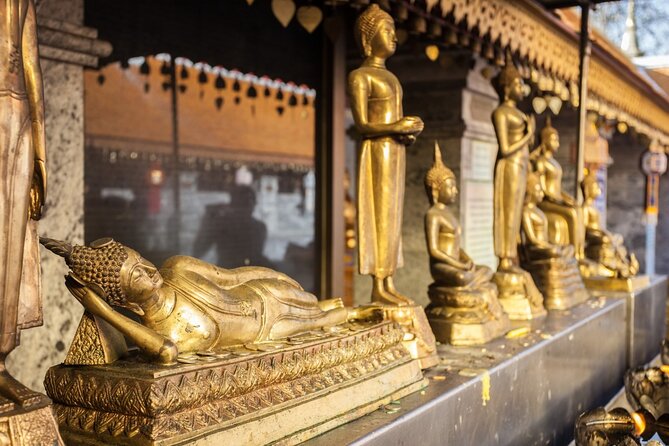
At $25 per person, I see this as good value for a four-hour introduction to Chiang Mai’s mountain temples. The fee covers red-car transport, a guide, water, and pickup and drop-off in the stated service area.
You get two temples, a forest walk, mountain views, and the chance to see a side of Chiang Mai beyond the old city walls. Arranging the same route independently may cost less if you are comfortable negotiating transport and finding the trail, but you would lose the cultural explanations and the convenience of having someone manage the timing.
The extra fees are the main budget detail. You must pay the Doi Suthep entrance and cable car costs separately, along with THB 100 for the Wat Pha Lat Monk’s Trail and your own expenses. Bring cash so these charges do not catch you off guard.
I would not call this a luxury tour. The open songthaew is basic, the hike can be muddy, and pickup may start well before the official time. But the low price matches the style of the outing, and the guides add real value.
Who should book this experience?

This is a strong choice if you want culture and light exercise in the same morning or afternoon. It suits first-time visitors who want Doi Suthep explained properly, solo visitors who appreciate help with photos and group support, and families who can handle a short uneven walk.
It is also a good fit for people who prefer smaller groups and local transport over an air-conditioned coach. The tour has been described as family-friendly, including with a 2.5-year-old child, though every family should judge the trail and temple steps for themselves.
Think twice if you want a fully relaxed sightseeing ride with no walking. The Monk’s Trail is not difficult for a reasonably active person in good conditions, but rain can make it slippery. Anyone with limited mobility should ask about the songthaew and cable car options before paying.
I would also avoid scheduling a tight airport transfer or fixed dinner immediately after. Traffic returning to central Chiang Mai can be slow, especially after a later departure.
Practical preparation for the morning

Wear walking shoes with a decent grip. Sandals are a poor match for mud, rocks, and downhill sections.
Pack or wear clothing that covers your shoulders and knees. A light cover-up is useful, and one guide even offered a jacket to a participant who needed extra coverage.
Bring cash, water if you prefer more than the included bottle, mosquito repellent for the forest, and a phone or camera. The tour provides water, but personal snacks and other purchases are not included.
If rain is forecast, do not assume the tour will be ruined. The route can be adjusted, and a guide may change the order of the temples. Still, rain can reduce the city view and make the Monk’s Trail harder, so waterproof shoes or a rain layer would improve your odds of staying comfortable.
Free cancellation is available up to 24 hours before the tour for a full refund, and you can reserve while paying later. Those terms help if your Chiang Mai schedule is still shifting.
FAQ
How long does the Doi Suthep and Wat Pha Lat tour last?
The experience lasts four hours. Pickup may begin up to 45 minutes before the scheduled start if you are eligible for hotel collection.
What time does the sunrise tour start?
The sunrise program starts at 5:00 a.m. It visits Wat Phra That Doi Suthep first, then continues to Wat Pha Lat before the Monk’s Trail walk down the mountain.
Is the Monk’s Trail walk uphill or downhill?
On regular tour timings, the walk goes up toward Wat Pha Lat. On the sunrise program, you visit Doi Suthep first and then hike down from Wat Pha Lat.
What transport is used?
The tour uses a Thai songthaew, also called a red car or red van. It is a converted pickup with two bench seats, open sides, and no air-conditioning.
Are entrance fees included in the $25 price?
No. Wat Phra That Doi Suthep entrance and cable car fees are extra. The Wat Pha Lat Monk’s Trail fee is listed as THB 100 per person, and personal expenses are not included.
What should I wear to the temples?
Your shoulders and knees must be covered, and sleeveless shirts are not allowed. Proper walking shoes are recommended for the forest trail.
Can I join if I cannot hike?
The tour information says you can use a songthaew to go up if you cannot do the hike. The activity is listed as wheelchair accessible, but you should confirm the route and assistance needs with the operator before booking.
Should you book it?
Book this tour if you want more than a quick visit to Chiang Mai’s famous mountain temple. The combination of Wat Pha Lat’s forest calm, Doi Suthep’s gold and ceremony, and a guide who can explain Buddhist customs gives you a satisfying half-day.
Choose the sunrise departure for the quietest mood and possible chanting or alms giving. Choose a later time for easier sleep and the chance of sunset or city lights. Just budget for extra entrance fees, dress properly, and treat the Monk’s Trail as a real woodland path rather than a paved stroll. For $25, it is a practical and memorable way to connect Chiang Mai’s city views, forests, and faith.
Just added around Chiang Mai
- Taste of Chiang Mai: Michelin Guide & Street Food Tour★ 4.9 · 159 reviews
- Red, Blue, White Temples & Hot Spring Trip from Chiang Mai★ 4.4 · 143 reviews
- From Chiang Mai: Mae Taeng Valley and Waterfalls Cycle Tour★ 4.9 · 159 reviews
- Long Neck Village, Silver Temple & Chiang Mai Top Sites★ 4.7 · 17 reviews
- Chiang Mai: Local Northern Thai Cooking Class at Grandma’s★ 5.0 · 33 reviews
- Chiang Mai: Khum Khantoke Northern Thai Cuisine and Show★ 4.3 · 38 reviews
- Private : Sticky Waterfall & Secret Temple & Karen Village.★ 5.0 · 9 reviews
- Half-day with CHIANGMAI ELEPHANT CARE program (12pm-6pm.)★ 5.0 · 27 reviews
Chiang Mai Tours, compared.
Half-Day Thai Cooking Class at Organic Farm in Chiang Mai
Read our review →
Elephant Sanctuary, Waterfall & Bamboo Rafting
Read our review →

Chiang Rai Temples, Karen Tribe and Hot Springs
Read our review →
Cooking Class, Market & Thai Herbs Garden Tour
Read our review →
Authentic Cooking Class with Market & Farm Visit
Read our review →
Elephant Sanctuary Feeding Program Half-Day Tour
Read our review →Browse the lists this tour appears in