
Reviewed · CHIANG MAI TOURS
Chiang Mai: Doi Suthep & Wat Umong Twilight Tour with Pickup
Wat Umong’s forest paths and old tunnels take on a different character after sunset. Then, high above Chiang Mai, Doi Suthep glows beneath the night sky, with city lights spreading below. This is a smart way to see two important temples without giving up your whole day.
I like the contrast between the two stops: Wat Umong feels quiet and earthy, while Doi Suthep is grand and ceremonial. I also like the strong guiding element. Guides such as New and Mr. Yoyo have been praised for clear English, lively storytelling, and useful explanations of northern Thai customs.
The main catch is time. Wat Umong gets about 90 minutes, while some visitors would prefer more time there, and the climb at Doi Suthep is not suited to people with mobility impairments. A hot, stuffy van has also been an issue on some departures.
Key points to know before booking
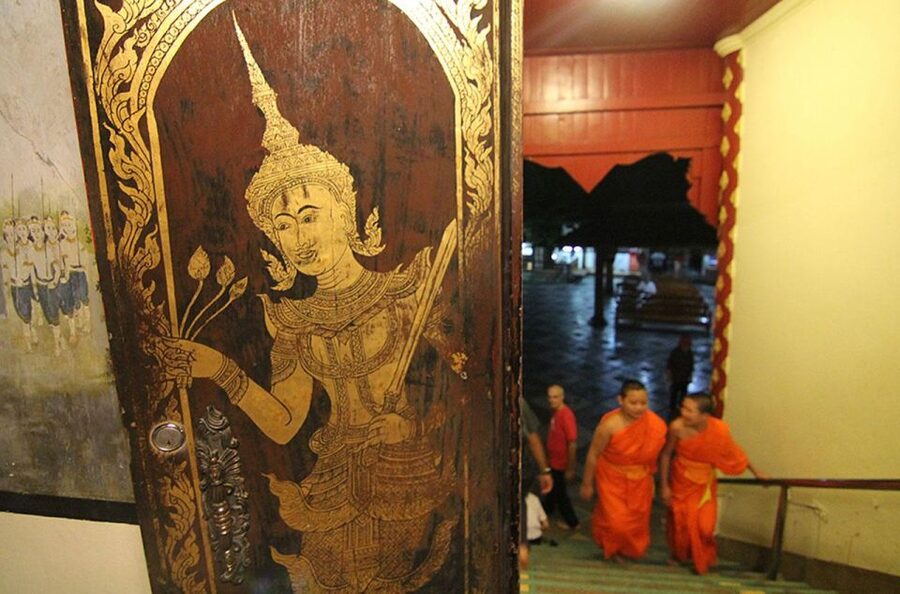
- Wat Umong after dark: Walk through a 700-year-old temple complex, its forest grounds, tunnels, and Lanna wall paintings as evening arrives.
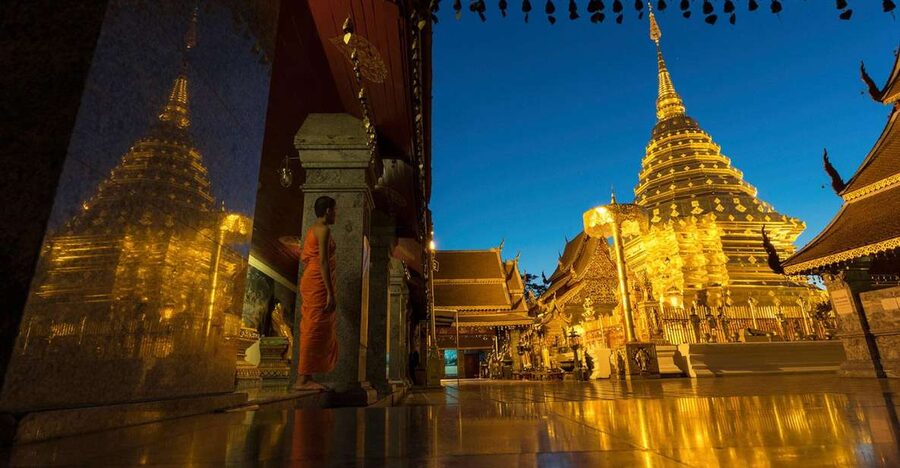
- Doi Suthep at twilight: Climb more than 300 Naga-lined steps to the golden mountaintop temple and look across Chiang Mai at night.
- Monk ceremony: You may witness resident monks taking part in a Buddhist ceremony, adding a living religious moment to the sightseeing.
- Useful local guides: Guides named New and Mr. Yoyo have been singled out for strong English, humor, and clear explanations.
- Old-town pickup included: Hotel pickup and return cover hotels within Chiang Mai’s old town, with collection generally between 5 and 5:30 PM.
- Good evening value: At $26 per person, the tour combines transport, entry fees, and a guide in a compact four-hour outing.
Why the evening timing works so well

Chiang Mai’s major temples can feel very different once the heat drops and the day crowds thin out. This tour uses that change well. You leave your hotel around sunset, visit Wat Umong while twilight settles over the grounds, and finish at Doi Suthep when its gold surface catches the artificial light.
That timing is useful if your daytime is already filled with markets, cooking classes, elephant sanctuaries, or a slow lunch in the old city. You do not need to arrange separate transport up the mountain, and you return to Chiang Mai the same evening.
The evening setting also gives each temple a clear identity. Wat Umong is about shadowy paths, trees, old brickwork, and quiet corners. Doi Suthep is about scale, ceremony, polished gold, and the view from the mountain. You get two very different pictures of northern Thai religious architecture in one short outing.
There is a practical trade-off. Darkness can make details harder to see, especially at Wat Umong. If your priority is close study of paintings and carvings, a daytime visit may reveal more. If your priority is mood, cooler air, and fewer people, the twilight schedule has the edge.
More Doi Suthep and Doi Inthanon days:
- Chiang Mai: Doi Inthanon National Park Eco-Friendly Tour
★ 4.6 · 6,667 reviews - Chiang Mai: Doi Suthep and Wat Umong Enchanting Evening Tour
★ 4.6 · 1,811 reviews - Doi Inthanon Waterfall and Royal Project Chiang Mai
★ 5.0 · 1,735 reviews
Wat Umong: tunnels, paintings, and a forest setting
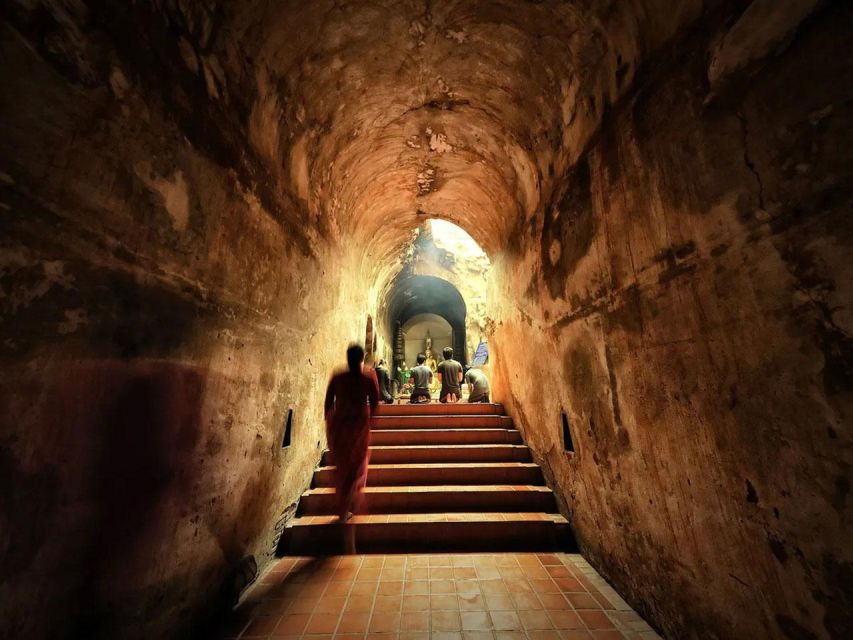
The first stop is Wat Umong, a temple with about 700 years of history. It is known for its underground passageways, Lanna-style art, and wooded setting. The site feels less formal than Doi Suthep, which is exactly why the pairing works.
Your guide leads you through the temple area and explains what you are seeing. The tunnels are the main attraction, but the setting around them matters just as much. Trees soften the site, and the fading light gives the old structures a calm, almost private feel.
Look for the centuries-old Lanna wall paintings inside the tunnels. They are an important link to northern Thailand’s artistic traditions, though the low light means you should not expect every detail to be easy to see. Your guide’s explanation becomes especially useful here, since context can fill in what your eyes miss.
You receive about an hour and a half at Wat Umong. That is enough for a guided walk through the main areas, but it is not a leisurely, open-ended visit. If you like taking photographs, reading every sign, or wandering down every path, you may feel hurried.
That time limit is worth keeping in mind when comparing this tour with a private visit. The advantage is that you get a planned route and a guide who can point out the important features. The disadvantage is that the temple’s quieter corners may remain unexplored.
One unusual issue can appear after rain. A past departure encountered thousands of moths around the temple, apparently after a daytime rainstorm. This is not presented as a normal part of the tour, but if the weather has been wet, bring a light mask or be prepared for insects around the lights.
Doi Suthep: gold, Naga steps, and Chiang Mai below
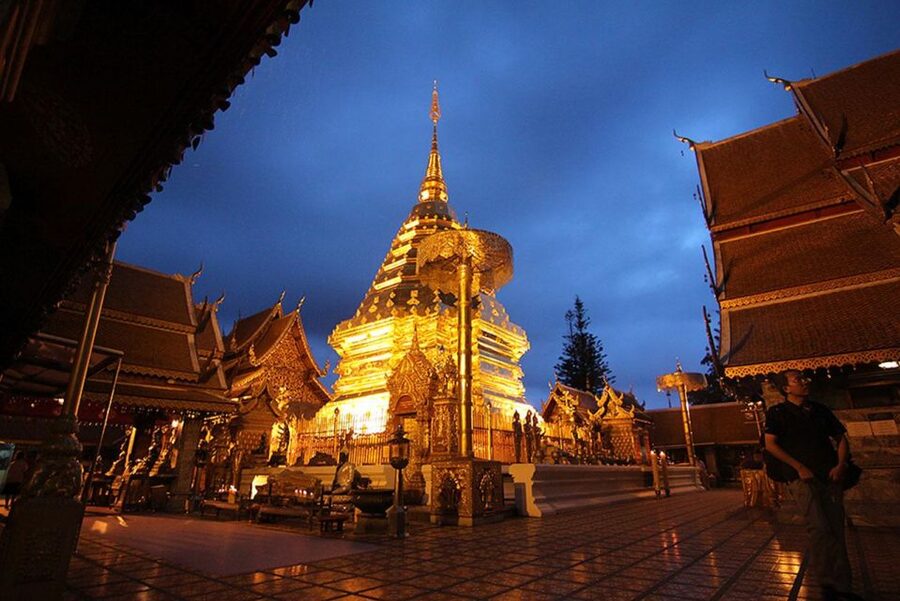
After Wat Umong, the van heads toward Doi Suthep. The drive takes about 30 minutes, followed by roughly 90 minutes at Wat Phra That Doi Suthep. This is the tour’s big finish.
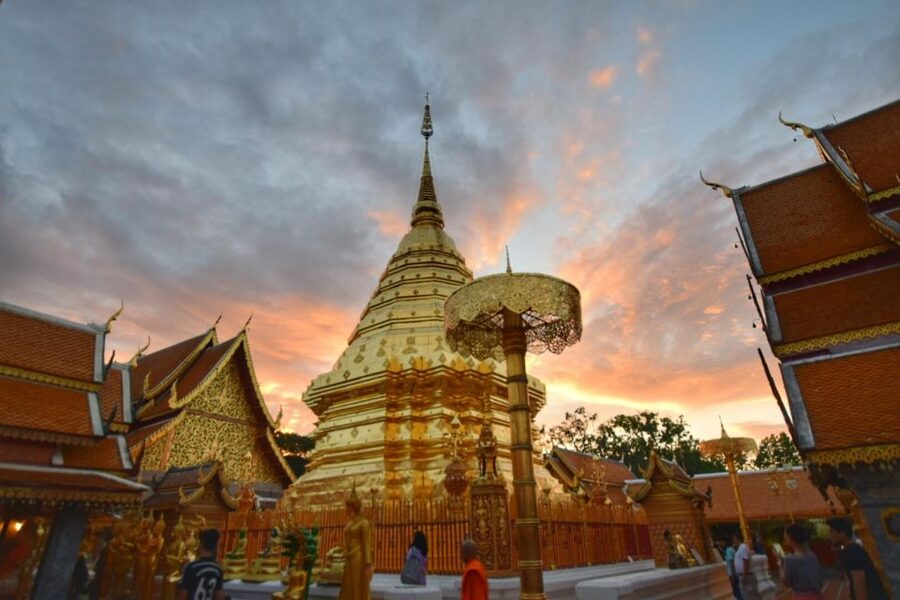
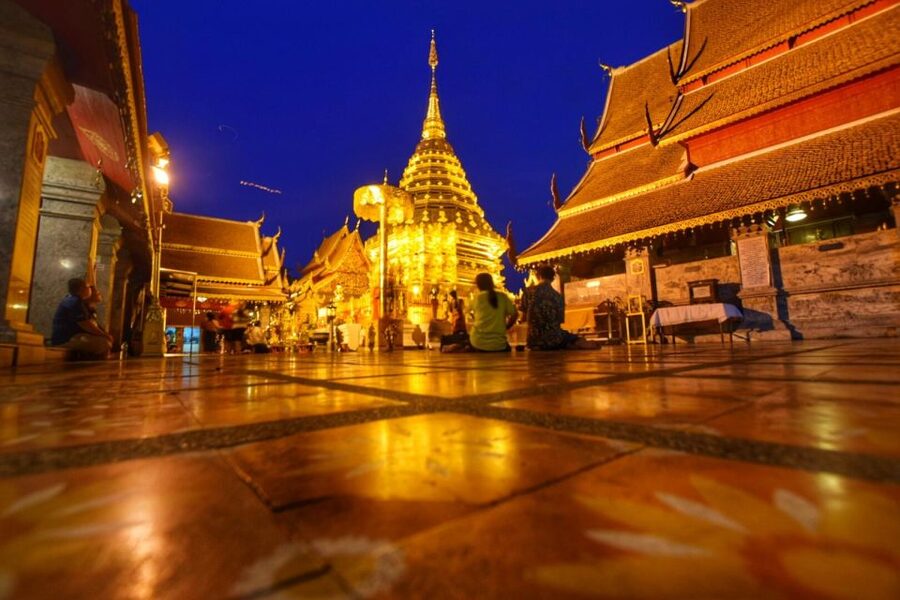
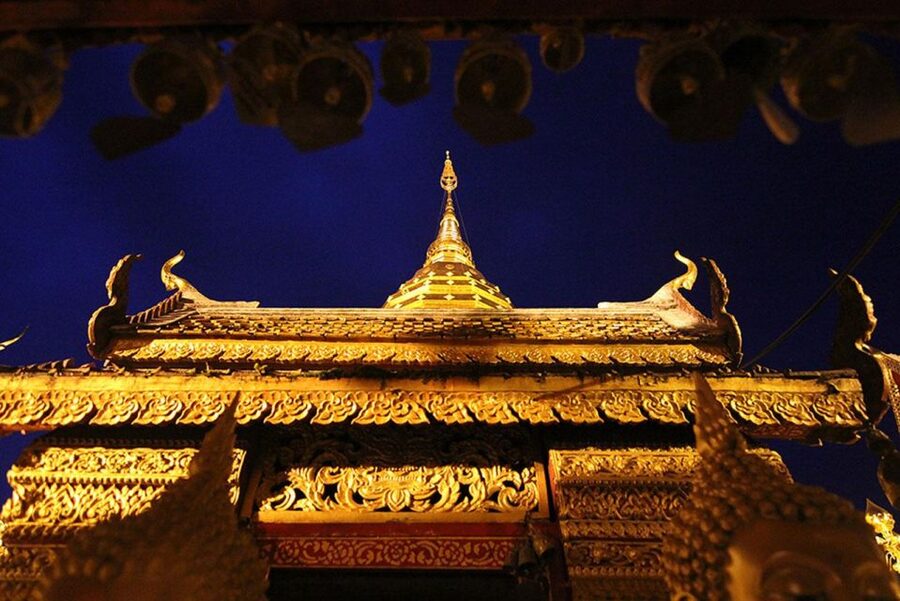
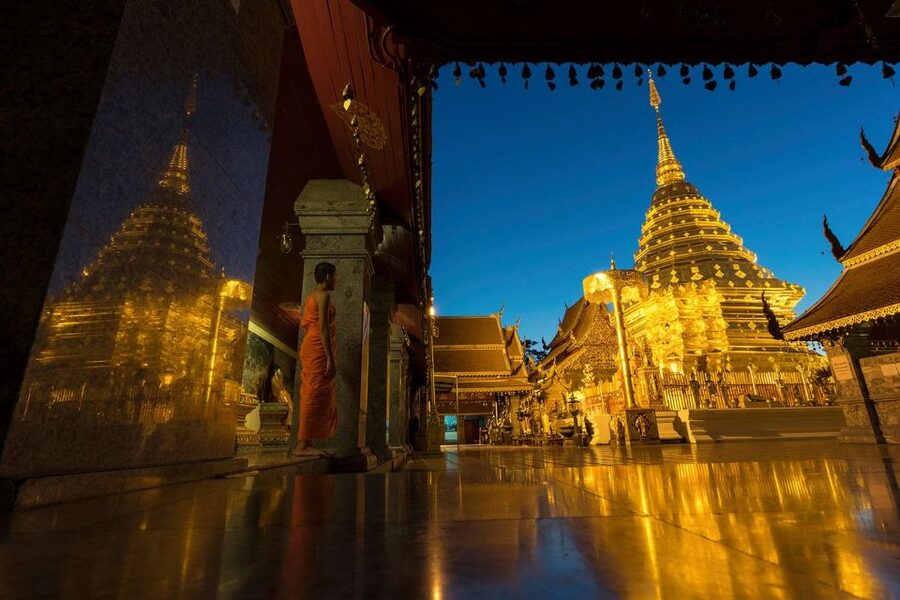
Doi Suthep sits high above the city and is one of Chiang Mai’s most important religious sites. Its golden temple becomes especially striking at night, when the bright surface contrasts with the dark mountain surroundings. You may also feel a welcome change in temperature as the higher elevation brings cooler air.
The traditional approach includes more than 300 steps decorated with Naga figures. These serpent forms line the staircase and are not merely decorative. Your guide explains their place in northern Thai religious design and the meaning behind the approach to the temple.
The climb requires effort, but the tour information specifically excludes people with mobility impairments. If stairs are difficult for you, ask the operator for details before booking. The experience is built around walking and sightseeing, not a fully accessible route.
At the top, allow time to look beyond the temple itself. The view over Chiang Mai is one of the strongest reasons to choose the evening departure. City lights spread across the plain below, creating a sharp contrast with the quiet mountaintop setting.
The exact quality of the view depends on weather and visibility. Clouds, haze, and rain can reduce what you see. Still, the combination of the illuminated temple and the city below gives this stop a memorable visual finish.
The temple can also remain active after sunset. You may see monks and worshippers praying or taking part in a ceremony. That detail matters. You are not visiting a museum after closing time. You are entering a living Buddhist site, so keep your voice low, dress respectfully, and follow your guide’s instructions.
Guiding that adds meaning, not just directions
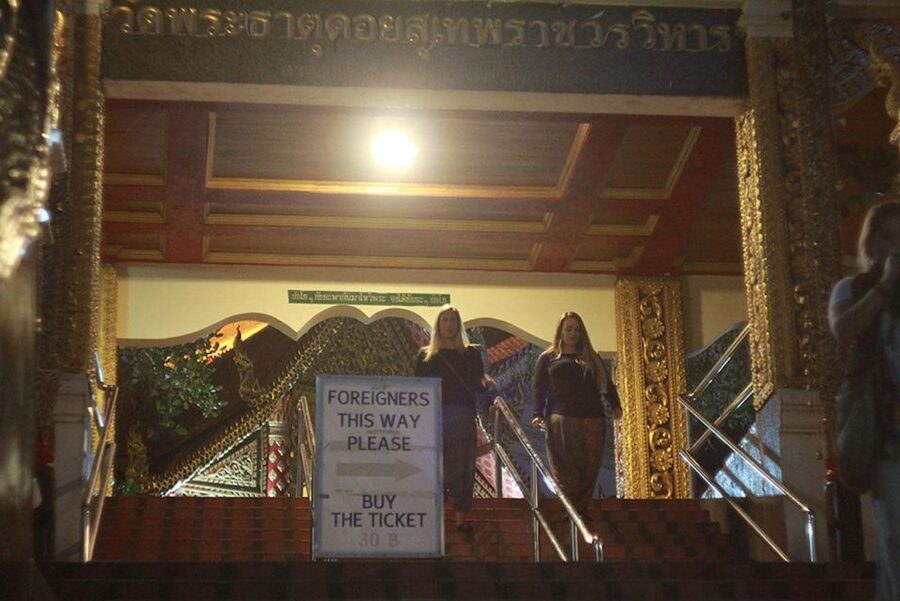
A temple tour is only as useful as the explanation you receive. Here, the guide is an important part of the value. The strongest praise has gone to guides who speak clear English, project their voices so the whole group can hear, and mix history with stories about Thai culture and tradition.
New has been praised for being both lively and informative. Mr. Yoyo has also been noted for answering questions and explaining the background of the temples and the city. Your assigned guide may be someone else, so treat those names as examples of the standard you may encounter rather than a guaranteed request.
Good guiding is especially helpful at Doi Suthep. Without context, you see a gold temple, a long staircase, and a fine view. With context, you understand why the Naga figures appear on the steps, how the building reflects northern Thai design, and why ceremonies continue there after dark.
The guide also helps manage the short schedule. At both temples, you need to know what deserves attention first. A good guide can point you toward the key tunnel paintings at Wat Umong and explain the main features at Doi Suthep before you spend the rest of your time taking photographs.
English and Thai are available. If hearing every detail matters to you, stand close enough to the guide during the walking portions. One strong feature noted about the best guides is that they speak loudly enough for the entire group, but group position still affects how much you catch.
A few more Chiang Mai half-days worth weighing up
- Half-Day Thai Cooking Class at Organic Farm in Chiang Mai
★ 5.0 · 19,087 reviews - Chiang Mai: Elephant Sanctuary, Waterfall & Bamboo Rafting
★ 4.9 · 9,160 reviews - Chiang Mai: Elephant Sanctuary & Waterfall Group Tour
★ 4.9 · 5,780 reviews - Chiang Mai: Chiang Rai Temples, Karen Tribe and Hot Springs
★ 4.7 · 5,401 reviews
Transport, timing, and what the $26 covers
The price is $26 per person. For a four-hour outing, that is solid value if you want both temples and do not want to arrange a car, driver, entry fees, and a guide separately.
The package includes hotel pickup and drop-off within Chiang Mai’s old town, temple entry, and a live guide in Thai and English. Pickup generally begins between 5 and 5:30 PM. Meet in your hotel lobby at least 10 minutes early, since arriving late can mean the van leaves without you.
The drive to Wat Umong takes about 30 minutes. After the temple visits, another 30-minute van ride brings you back to Chiang Mai. The time in transit is reasonable for the distance, though the vehicle itself may affect your comfort.
One departure was described as hot and stuffy, with weak cooling. That may depend on the vehicle and the weather, but it is a fair concern in Chiang Mai. Carry water, wear light clothing that still meets temple standards, and tell the operator in advance if you need extra space for a baby or child.
The tour is designed for hotels in Chiang Mai’s old town. If you are staying outside that area, confirm pickup arrangements before paying. The supplied details do not promise collection from every part of the province.
Bring a passport or identity card. A copy is accepted. Temple clothing should cover shoulders and knees, and modest dress is required. This is not the place for beachwear, even in the warm evening air.
The main drawbacks to consider
The biggest limitation is the fixed schedule. Wat Umong receives 1.5 hours and Doi Suthep receives 1.5 hours, with transport taking up the other hour. That keeps the tour efficient, but it leaves little room for a slow visit.
If Wat Umong is your main interest, you may wish the tour spent more time there. Its tunnels, forest paths, and old paintings reward careful looking, and the schedule may move you along before you have seen every corner.
Doi Suthep can also be affected by maintenance work. One past departure found scaffolding and gold cloth around parts of the temple, which reduced the visual impact. Conditions change, so this is a possibility rather than a permanent problem.
The tour is not suitable for people with mobility impairments. You will walk at both temples, and the Doi Suthep staircase is long. A baby is possible but not effortless, as one family found. If you are carrying a child, the stairs and evening schedule deserve careful thought.
Weather can shape the visit. Rain may affect the walk and can bring insects to Wat Umong. Cloud or haze can soften the city view from Doi Suthep. The tour still operates as a temple visit, but the photographic side may be less rewarding on a wet or cloudy night.
Who will get the most from this temple tour
I would choose this tour if you have only a short stay in Chiang Mai and want a practical introduction to two major religious sites. It suits first-time visitors who want transportation and interpretation handled for them.
It is also a good fit if your mornings and afternoons are already booked. The late start leaves the day open, while the four-hour length keeps the evening manageable.
Photography fans should like the contrast between the dark temple grounds, golden architecture, and city lights. Bring a phone or camera that handles low light well, but do not expect ideal conditions every night.
You should think twice if you want a slow, solitary visit or a detailed architectural study. A private guide or separate daytime visits would give you more control. You should also avoid this outing if stairs, uneven paths, or extended walking are difficult.
The tour works best for couples, solo visitors, and small groups who want a cultural evening rather than a restaurant or nightlife outing. Families can join, but young children may find the late timing and Doi Suthep steps tiring.
Should you book the Doi Suthep twilight tour?
Book it if you want two contrasting temples, evening atmosphere, and simple transport at a modest price. The strongest reasons are the quiet feel of Doi Suthep after dark, the city view, the chance to see a monk ceremony, and guides who can explain what the buildings and rituals mean.
Skip it if Wat Umong deserves a full, unhurried visit for you, or if mobility is a concern. Also confirm the pickup area and prepare for the possibility of a warm van or weather-related insects.
For most able-bodied visitors staying in Chiang Mai’s old town, this is a well-priced way to use an evening. The golden temple at night is the main reward, while Wat Umong gives the outing a quieter and more atmospheric opening.
FAQ
How long does the tour last?
The tour lasts four hours, including approximately 30 minutes of transport to Wat Umong, 1.5 hours at Wat Umong, 1.5 hours at Doi Suthep, and about 30 minutes returning to Chiang Mai.
What time is hotel pickup?
Pickup begins between 5 PM and 5:30 PM. Meet your guide in the hotel lobby at least 10 minutes before the scheduled pickup time.
Where is pickup available?
Pickup and drop-off are available at hotels within Chiang Mai’s old town.
Are temple entry fees included?
Yes. Temple entry fees, a tour guide, and hotel pickup and drop-off within Chiang Mai’s old town are included.
What languages are available?
The live guide service is available in Thai and English.
What should I wear and bring?
Dress modestly for the temples, covering your shoulders and knees. Bring a passport or identity card. A copy of the document is accepted.
Just added around Chiang Mai
- Taste of Chiang Mai: Michelin Guide & Street Food Tour★ 4.9 · 159 reviews
- Red, Blue, White Temples & Hot Spring Trip from Chiang Mai★ 4.4 · 143 reviews
- From Chiang Mai: Mae Taeng Valley and Waterfalls Cycle Tour★ 4.9 · 159 reviews
- Long Neck Village, Silver Temple & Chiang Mai Top Sites★ 4.7 · 17 reviews
- Chiang Mai: Local Northern Thai Cooking Class at Grandma’s★ 5.0 · 33 reviews
- Chiang Mai: Khum Khantoke Northern Thai Cuisine and Show★ 4.3 · 38 reviews
- Private : Sticky Waterfall & Secret Temple & Karen Village.★ 5.0 · 9 reviews
- Half-day with CHIANGMAI ELEPHANT CARE program (12pm-6pm.)★ 5.0 · 27 reviews
Chiang Mai Tours, compared.
Half-Day Thai Cooking Class at Organic Farm in Chiang Mai
Read our review →
Elephant Sanctuary, Waterfall & Bamboo Rafting
Read our review →


Chiang Rai Temples, Karen Tribe and Hot Springs
Read our review →
Cooking Class, Market & Thai Herbs Garden Tour
Read our review →
Authentic Cooking Class with Market & Farm Visit
Read our review →
Elephant Sanctuary Feeding Program Half-Day Tour
Read our review →Browse the lists this tour appears in