Reviewed · CHIANG MAI TOURS
Chiang Rai and Golden Triangle Day Tour from Chiang Mai
The main draw is the chance to link Chiang Rai’s White Temple with the Golden Triangle in one long northern Thailand outing. You will see the Mekong and Ruak rivers meet, look toward Myanmar and Laos, and learn how this border region was shaped by the opium trade.
I like the scenic ride through rice country and the range of stops. I also like that lunch, hotel transport, and a local guide are included, which makes a complicated northern route easier to manage. Guides named Maggie, Anna, Sid, and Kitty have been praised for clear explanations and friendly help.
The catch is simple: this is a very long day. Pickup begins around 7 a.m., and return can approach 8 or 9 p.m. Some departures spend much of the day in the minibus, so you need to value the White Temple and Golden Triangle enough to accept the road time.
Key points to know before booking
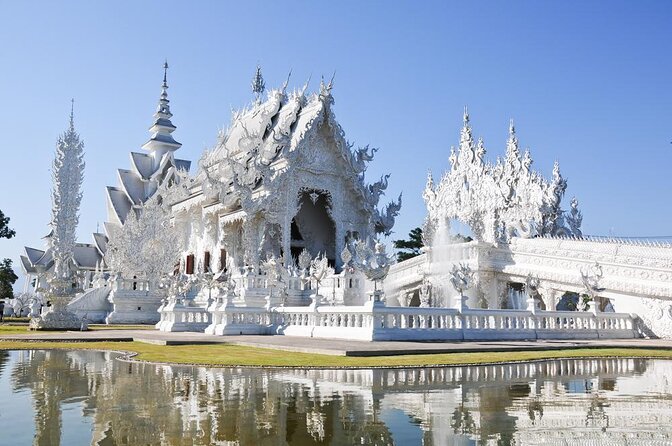
- The White Temple is the star stop: Plan on about an hour at Wat Rong Khun, Chiang Rai’s dazzling contemporary temple complex.
- The Golden Triangle is a border viewpoint, not a full town tour: You will see the meeting point of Thailand, Myanmar, and Laos near the Mekong and Ruak rivers.
- Mae Ka Chan is mostly a short hot-spring stop: The pools are very hot, and the experience may be limited to soaking your feet rather than swimming.
- The route can include Baan Dam Museum and hill villages: The exact order and mix of stops may vary, so check the day’s plan with your guide.
- A Mekong boat trip costs extra: You may be able to cross toward Laos, but bring your passport if you want to take this optional ride.
- The value depends on your tolerance for driving: At $122.65 per person, transport and lunch help, but the price is harder to justify if you dislike long minibus days.
Why this northern Thailand day trip takes so long
Chiang Mai and Chiang Rai are separate destinations, and the Golden Triangle lies farther north. This tour tries to connect several places in one outing, so the timetable is ambitious from the beginning.
Pickup is scheduled for 7 a.m. from hotels in Chiang Mai city. The vehicle is air-conditioned, and vans are fitted with GPS equipment that beeps if the speed rises above 90 kilometers per hour. That safety measure is useful on a day with long stretches of road, although driving standards can still feel fast to some people.
The advertised duration is about 12 hours, but some departures have lasted closer to 14 hours. A realistic return window is therefore important when planning dinner, a train, a flight, or another evening activity.
The ride is not dead time. You pass farmland and rice paddies, and the guide can explain the day’s route and the region’s past. Still, this is a transport-heavy excursion. I would not book it expecting a relaxed pace or long stays at every attraction.
A few more Chiang Mai half-days worth weighing up
- Half-Day Thai Cooking Class at Organic Farm in Chiang Mai
★ 5.0 · 19,087 reviews - Chiang Mai: Elephant Sanctuary, Waterfall & Bamboo Rafting
★ 4.9 · 9,160 reviews - Chiang Mai: Doi Inthanon National Park Eco-Friendly Tour
★ 4.6 · 6,667 reviews
Mae Ka Chan Hot Spring: a quick stop with very hot water
Mae Ka Chan Hot Spring sits roughly halfway between Chiang Mai and Chiang Rai, about 65 kilometers from Chiang Mai according to the tour details. The geothermal water can reach about 80 degrees Celsius, so this is not a place for a full-body soak in the main boiling water.
The stop lasts about 30 minutes. You may put your feet in one of the pools, and small fish may nibble at dead skin. You can also buy quail eggs and cook them in the hot water, a simple local-style novelty that gives the stop a bit of fun.
I would treat Mae Ka Chan as a leg-stretching break rather than a major spa visit. Some descriptions make the stop sound like a chance to soak sore muscles, but the practical experience may be limited to the feet. If you are expecting a swimming pool or a quiet thermal bath, you may find this stop underwhelming.
That said, after the first stretch of driving, a short break is welcome. Wear shoes that are easy to remove if you want to try the foot pools, and be careful around the hottest water.
Wat Rong Khun, the White Temple, and its strange beauty
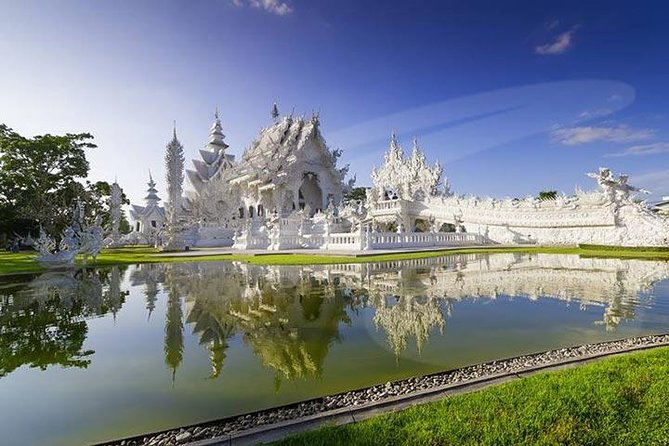
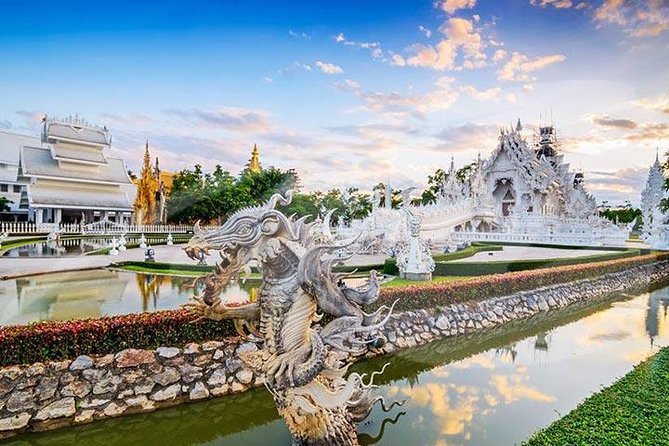
Wat Rong Khun is the strongest reason to make the trip to Chiang Rai. The complex is covered in white plaster and glass, which catches the light and gives the buildings a bright, almost unreal appearance.
Local artist Chalermchai Kositpipat began rebuilding the site in 1997. It is a contemporary artistic project rather than a traditional old temple, and that distinction matters. You are looking at modern religious art, not a centuries-old monument preserved in its original form.
The tour allows about one hour here. That is enough to see the main features and take photographs, though you may want more time if you enjoy details in the sculptures and buildings. The design uses dramatic imagery alongside Buddhist ideas, and guides can help explain references that are not obvious at first glance.
I like this stop because it gives the itinerary a clear visual centerpiece. Even people who are not regular temple visitors can appreciate the bold architecture. The drawback is timing. With only an hour and several other stops still ahead, you will need to keep moving.
Dress respectfully for the temple setting, and remember that the white exterior can be extremely bright in strong sun. Comfortable footwear also helps, since you will be on your feet during several stops.
Baan Dam Museum and Chiang Rai’s darker artistic side
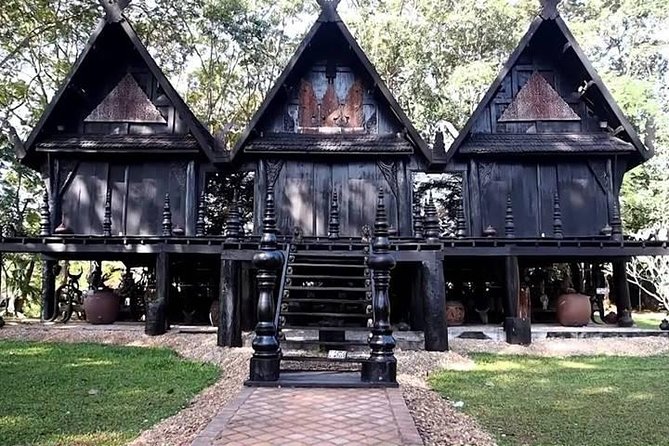
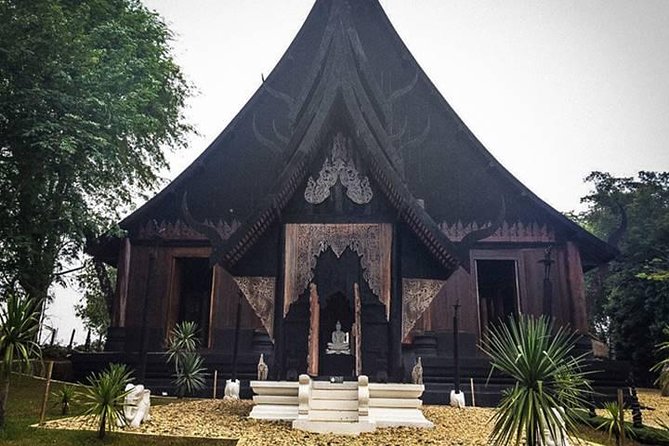
The itinerary includes about 45 minutes at Baan Dam Museum, also called the Black House. It was created by Chiang Rai artist Thawan Duchanee, whose work draws on Lan Chang, Lanna, and Suvarnabhumi architectural traditions.
The museum offers a sharp contrast to Wat Rong Khun. The White Temple is bright and reflective, while Baan Dam uses darker buildings and a more somber artistic mood. The setting is not simply another temple visit. It is a collection of buildings and artworks that show a different side of Chiang Rai’s modern art scene.
This contrast makes the route stronger. You are not seeing one attraction after another with the same look and feel. The two artists approached spiritual and cultural ideas in very different ways.
Your time here is fairly short, so do not expect to study every building at length. If Baan Dam is a priority, ask your guide how much time the group will have and whether the stop is included on your specific departure. The supplied route lists it as a stop, while the general tour description places more emphasis on the hill villages and Golden Triangle.
Same base, a completely different kind of day out:
- Chiang Mai: Elephant Sanctuary & Waterfall Group Tour
★ 4.9 · 5,780 reviews - Chiang Mai: Chiang Rai Temples, Karen Tribe and Hot Springs
★ 4.7 · 5,401 reviews - Chiang Mai: Cooking Class, Market & Thai Herbs Garden Tour
★ 4.9 · 4,824 reviews - Chiang Mai: Authentic Cooking Class with Market & Farm Visit
★ 4.9 · 4,546 reviews
Lunch near Mae Sai and the northern border
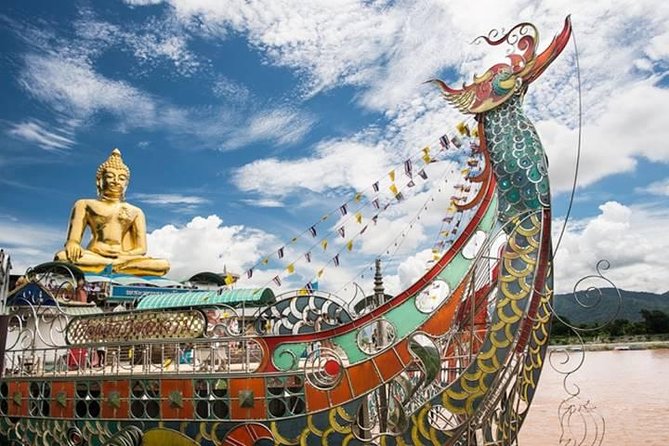
Mae Sai is Thailand’s northernmost trading point near the Myanmar border. The town is associated with Burmese and Lao handicrafts and other regional goods, and the border setting gives the stop more interest than a standard meal break.
Lunch is included. The route has used both a regional meal and, on at least one departure, a large buffet at a riverside resort. Food quality can vary by day and venue, so I would see the included lunch as a practical benefit rather than a reason to book the tour.
You should have about an hour around Mae Sai. This is enough to look around the trading area and see the border checkpoint, but not enough for a deep exploration of the town.
Bring modest expectations. Mae Sai is a functioning border and market area, not a grand monument. Its value comes from seeing how trade and daily movement work at Thailand’s edge. If you want a polished sightseeing stop, the White Temple will satisfy you more.
The Golden Triangle and the Mekong meeting point
The Golden Triangle is where Thailand, Myanmar, and Laos meet around the confluence of the Ruak and Mekong rivers. From the Thai side, you can look across the water toward the other two countries and understand why this location became so important.
The region is also tied to the opium trade. The guide may explain how the borderlands developed a reputation as a major opium-producing area and how the trade affected local communities and politics. An opium museum is included on some versions of the route, particularly around the Golden Triangle stop, and adds useful context to what might otherwise be a quick photo opportunity.
The standard stop lasts about an hour. You will see the river junction and the three-country setting, but do not expect a long mountain lookout or a wide-ranging border tour. The exact viewpoint has disappointed some people who anticipated a more dramatic panorama.
An optional boat trip on the Mekong can make this part more rewarding. The ride may include a short visit toward Laos and costs extra, with one reported price of about 550 baht. Bring your passport if you want to take the boat, since crossing toward Laos involves paperwork and identification.
The boat is not included in the $122.65 tour price. I would decide in advance if this is important to you and carry enough Thai baht. If you skip it, the land-based view still gives you the unusual experience of looking across three countries at once.
Akha and Yao villages: useful context, limited time
The tour description includes visits to Akha and Yao hill tribe villages on the return journey. These communities are part of northern Thailand’s cultural picture, and the stop can add human context to a day otherwise focused on temples, borders, and roads.
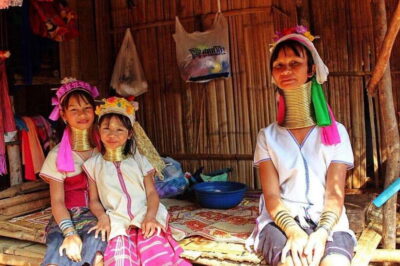
You should keep your expectations realistic. Some departures have found the village stop to be little more than a row of stalls selling handmade goods. A long-neck community visit may be offered separately for an extra fee, reported as about 300 to 500 baht, but it is not part of the included tour price.
This is an area where the quality of the experience depends heavily on how the visit is handled. A guide who explains the communities and gives you room to look respectfully can make the stop worthwhile. Without that context, it can feel like a shopping stop.
If you prefer cultural encounters that are less commercial, ask what the village visit will involve before you pay for any add-on. Do not assume the long-neck visit is included just because it appears in some descriptions of similar northern Thailand routes.
Guides, group size, and the road experience
The tour is capped at 20 people and uses an air-conditioned vehicle. Group size can make a real difference on a day this long. A small group may move faster, and the guide has more time to answer questions and take photographs.
Several guide names appear in the strongest accounts of the experience. Maggie has been described as smart and helpful, Anna as clear and easy to hear from the back of the minibus, and Sid as friendly, well informed, and willing to arrange the Mekong trip. Kitty has also been praised for answering questions and taking photographs.
That does not guarantee the same guide on your departure. Guide quality can vary. Some departures have had weak communication, little explanation, or a guide who spent too much time on a phone. One serious complaint also raised inappropriate conduct by a guide. That is not a minor issue, and it is worth contacting the operator promptly if anything makes you feel unsafe or uncomfortable.
The driver matters just as much. The tour company says the vans use GPS speed monitoring, but driving can still feel quick on the long northern route. If you get carsick, sit near the front if possible, carry any medication you normally use, and keep water close. The drive includes many hours in a minibus, even when the stops themselves are good.
Is $122.65 a fair price?
At $122.65 per person, the tour is not the cheapest way to see northern Thailand. But the price includes round-trip hotel pickup and drop-off within Chiang Mai city, an air-conditioned vehicle, a local guide, and lunch.
The value improves if you want to see Chiang Rai and the Golden Triangle but do not want to arrange a private driver, compare separate transport, or manage the route yourself. You also get a guide who can connect the White Temple, border geography, hill communities, and opium trade.
The value falls if you mainly want the White Temple. In that case, the Golden Triangle adds several hours of driving, and the border area may feel brief once you arrive. The same is true if you dislike organized shopping stops or prefer slow visits at fewer places.
The optional boat ride, any long-neck village visit, and possible admission charges not listed as included will add to your spending. The route lists Baan Dam admission as included, while the White Temple, hot spring, Golden Triangle, and Mae Sai stops have no separate admission fee shown.
Who should book this tour?
I would book it if you have a limited stay in Chiang Mai and want one ambitious day covering Chiang Rai and the far north. It suits you if you enjoy changing scenery, unusual architecture, border geography, and guided historical context.
It is also a good fit if you prefer having hotel transport and lunch arranged. A friendly guide can make the long ride useful, especially when explaining the region between stops.
I would skip it if you want a restful holiday day, dislike minibus travel, or have only a passing interest in the White Temple. You should also think twice if you need a strict return time in Chiang Mai.
The strongest version of this day includes a good guide, a clean vehicle, enough time at the White Temple, and the optional Mekong boat ride. The weakest version feels like a rushed sequence of brief stops separated by many hours on the road.
Final call: worthwhile for the right kind of day
This is an ambitious northern Thailand sampler, not an easy day trip. The White Temple is spectacular, the three-country river junction is unusual, and the route gives you a useful introduction to Chiang Rai and the Golden Triangle.
Book it if those sights matter to you and you can accept a 12 to 14-hour schedule. Confirm the pickup details, ask which stops are planned, bring your passport for the Mekong option, and do not count on swimming at Mae Ka Chan.
At $122.65, I see fair value in the convenience and range of sights, but not if you measure value by relaxed time at each place. Choose this tour for access and variety, not comfort or depth.
FAQ
Where does the tour start?
Pickup starts at about 7 a.m. from hotels in Chiang Mai city.
How long does the tour last?
The advertised duration is approximately 12 hours, though some departures have returned closer to 8 or 9 p.m., making the day 12 to 14 hours.
Is hotel transportation included?
Yes. Pickup and drop-off are included for hotels in Chiang Mai city, using an air-conditioned vehicle.
Is lunch included?
Yes. Lunch is included in the tour price.
Can I swim at Mae Ka Chan Hot Spring?
The stop is mainly suitable for soaking your feet. The water can reach about 80 degrees Celsius, so you should not expect a normal swimming experience.
Do I need my passport for the Mekong boat ride?
Yes. Bring your passport if you plan to take the optional boat ride toward Laos. The boat costs extra.
What is included at the Golden Triangle?
The tour takes you to the area where Thailand, Myanmar, and Laos meet near the Ruak and Mekong rivers. The optional boat ride is not included.
Can the tour be canceled if too few people book?
Yes. The experience requires a minimum number of participants. If the operator cancels for that reason, you will be offered another option or a full refund.
Just added around Chiang Mai
- Wat Phra That Doi Suthep & Wat Pha lat Evening Tour & Guide★ 4.5 · 89 reviews
- Walk With Monks Collecting Alms(meeting point maybe change)★ 4.9 · 8 reviews
- Chiang Mai: Doi Inthanon Park Day Trip with Kiw Mae Pan Hike★ 4.6 · 75 reviews
- Chiang Mai Zipline White Water Rafting and Elephant Sanctuary★ 4.0 · 11 reviews
- Zipline+Sticky waterfall+Long Neck Village Private Tour★ 5.0 · 22 reviews
- Chiang Mai Airport Private Transfer – Hotel or Airport★ 4.5 · 51 reviews
- Trek to a Jungle Waterfall★ 5.0 · 14 reviews
- Zipline Adventure at Skyline Jungle Luge Chiang Mai★ 5.0 · 102 reviews
Chiang Mai Tours, compared.
Half-Day Thai Cooking Class at Organic Farm in Chiang Mai
Read our review →
Elephant Sanctuary, Waterfall & Bamboo Rafting
Read our review →
Chiang Rai Temples, Karen Tribe and Hot Springs
Read our review →
Cooking Class, Market & Thai Herbs Garden Tour
Read our review →
Authentic Cooking Class with Market & Farm Visit
Read our review →