Reviewed · CHIANG MAI TOURS
Iconic Half-Day Landmarks & Temples of Chiang Mai
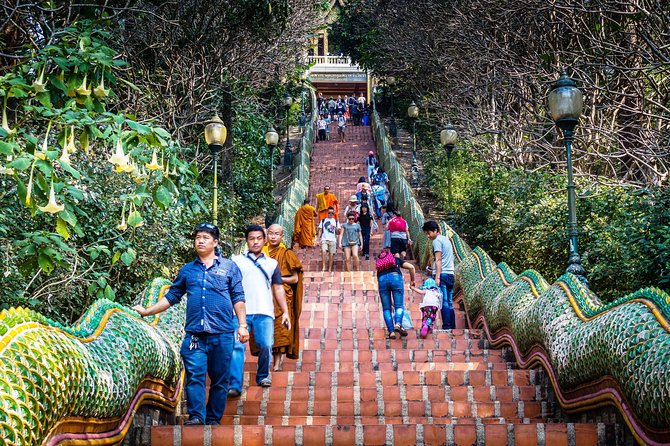
Chiang Mai’s best-known temple sits high above the city, reached by a 306-step naga staircase. Wat Phra That Doi Suthep gives you glittering religious art, a famous gold-topped chedi, and broad views over Chiang Mai when the air is clear. I like that this tour combines the mountain shrine with old-city temples, so you see both the grand setting and the quieter details.
I also like the choice between a shared tour and a private outing, plus the comfortable air-conditioned transport. Guides including Tinny, Nu, Yaya, Krisada, and Mick have been praised for clear English, strong local knowledge, and a relaxed pace. The main drawback is that the tour is short for four major stops, and the published route differs slightly: the overview names Wat Phra Singh, while the detailed itinerary lists Wat Phan Tao and Warorot Market.
Key things to know before you book
- Doi Suthep comes first: Allow for 306 stairs, strong sun, and time at the mountain shrine.
- You get a useful temple overview: The route links Doi Suthep with central Chiang Mai’s old-city monuments.
- Private tours offer more flexibility: A private guide can adjust the pace and explain details in greater depth.
- The group option is capped at 15 people: That keeps the shared outing smaller than a large coach tour.
- Dress matters at the temples: Cover your shoulders and wear clothing falling below the knees.
- Check the exact central temple stop: The description mentions Wat Phra Singh, while the detailed schedule includes Wat Phan Tao.
Why this four-hour route works in Chiang Mai
Chiang Mai has enough temples to fill several days, but that can create a practical problem. You may see many golden roofs without understanding which places matter, how Lanna Buddhist design differs from Bangkok’s, or why a particular image is revered.
This half-day outing gives you a sensible first look. You begin outside the city at Doi Suthep, then return through town to visit historic temples and a major market. That order matters. You start with the most dramatic setting and finish with ordinary city life rather than spending four hours inside temple compounds alone.
The advertised duration is about four hours and 15 minutes. Morning and afternoon departures are available, and pickup is offered from main hotels in downtown Chiang Mai. Transport is by air-conditioned vehicle with a professional driver, a welcome feature in Thailand’s heat and humidity.
The shared version is limited to 15 people. That is still a group, so you should not expect the constant back-and-forth of a private visit, but it is small enough for a guide to answer questions. The private option costs more, yet it makes sense if you want to set the pace, need extra help with the stairs, or care deeply about Buddhist art and local history.
A few more Chiang Mai half-days worth weighing up
- Half-Day Thai Cooking Class at Organic Farm in Chiang Mai
★ 5.0 · 19,087 reviews - Chiang Mai: Elephant Sanctuary Feeding Program Half-Day Tour
★ 4.8 · 4,527 reviews - Chiang Mai: HALF-DAY COOKING COURSE at a Thai Cooking Farm
★ 4.9 · 705 reviews
Wat Phra That Doi Suthep and the 306 naga steps
Doi Suthep is the centerpiece. The temple sits near the summit of its namesake mountain, reached by a winding road from Chiang Mai. The drive itself changes the feel of the outing. You leave the city behind and climb toward a major pilgrimage site with a much broader view.
At the temple, the classic approach is a 306-step staircase shaped as a naga, a dragon-headed serpent from Southeast Asian religious tradition. The staircase is part of the visual drama, but it is also the clearest physical challenge on the route. If stairs are difficult for you, ask your guide about the available short ride to the top. One tour participant specifically described using a funicular, while also noting that the stairs were an option.
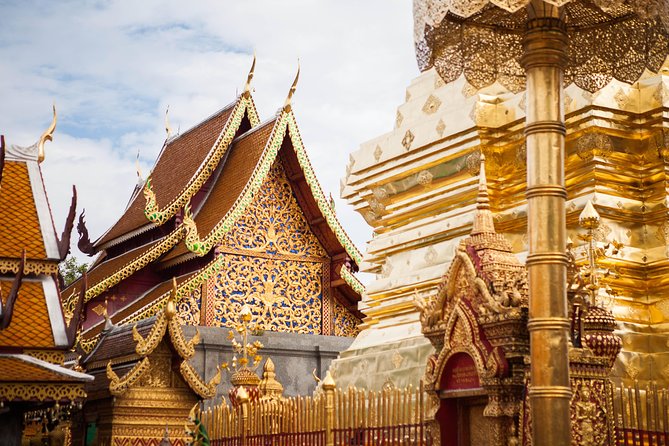
Inside, the focus is a copper-plated chedi topped by a five-tiered gold umbrella. It is believed to contain partial relics of the Buddha, which helps explain why this is more than a scenic viewpoint. The shrine is an active religious place, so quiet behavior and suitable clothing matter.
The temple’s appearance changes with the light. In sunshine, the metalwork and gold details are especially striking. On a clear day, you can look out over Chiang Mai from the mountain. Clouds, haze, and weather can reduce the view, so I would not book this solely for the panorama. The temple itself is the reason to come, with the view an excellent bonus.
You may remove your shoes before entering certain buildings. Your guide should tell you where this applies, but wear shoes that are easy to take off and put back on. Keep sunblock, a hat, and sunglasses handy. Even on a cloudy day, the sun can be harsh.
Returning to town through Chiang Mai’s old center
After Doi Suthep, the vehicle descends toward Chiang Mai. The route passes Warorot Market before the central temple visits, although the detailed timing places the market at the end. Either way, the contrast is useful: the mountain shrine represents pilgrimage and royal religious tradition, while the city stops show how temples sit within everyday urban life.
The central portion is mostly on foot once you reach the old city. Comfortable shoes help, even though the tour is not presented as a strenuous walking trip. Temple floors, courtyards, and steps can vary, and you will be taking shoes off and on at some points.
Wat Chedi Luang and the scale of old Chiang Mai
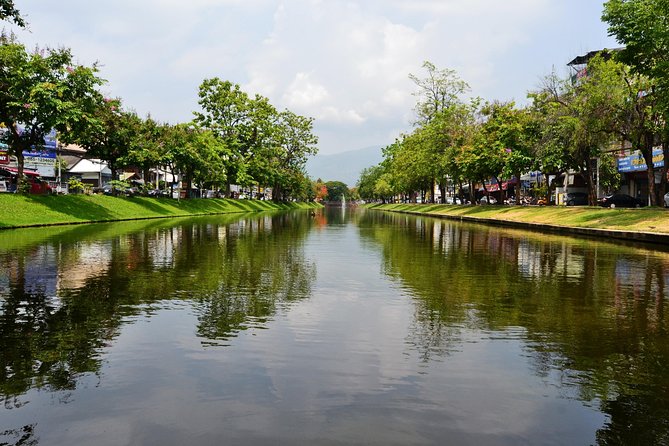
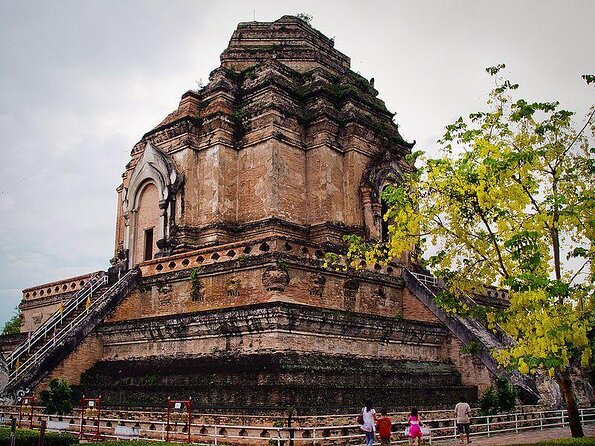
Wat Chedi Luang is allotted about an hour. Its huge chedi rises roughly 196 feet, or 60 meters, and gives the site a powerful sense of scale. This is the kind of place where a guide adds real value. Without context, you see a large weathered structure. With explanation, you can better understand its importance to Chiang Mai and the Lanna Kingdom.
The temple was once home to the famous Emerald Buddha. That image is now associated with Bangkok, but its earlier connection to Wat Chedi Luang gives this stop added weight. The site is not simply a photogenic ruin or large temple. It was once a central religious setting in the region.
Allow time to look beyond the main chedi. The grounds include more than one building, and your guide can point out details that are easy to miss when you are moving quickly. The one-hour stop is enough for a useful visit, though not enough for a slow study of every corner.
I would pay attention to the guide’s explanations here, especially if this is your first day in Chiang Mai. Several guides have been described as easy to understand, friendly, and able to connect temple history with wider Thai and Buddhist culture. That kind of explanation can help you make sense of later temples on your own.
Same base, a completely different kind of day out:
- Chiang Mai: Elephant Sanctuary, Waterfall & Bamboo Rafting
★ 4.9 · 9,160 reviews - Chiang Mai: Doi Inthanon National Park Eco-Friendly Tour
★ 4.6 · 6,667 reviews - Chiang Mai: Elephant Sanctuary & Waterfall Group Tour
★ 4.9 · 5,780 reviews - Chiang Mai: Chiang Rai Temples, Karen Tribe and Hot Springs
★ 4.7 · 5,401 reviews
Wat Phan Tao, Wat Phra Singh, or both?
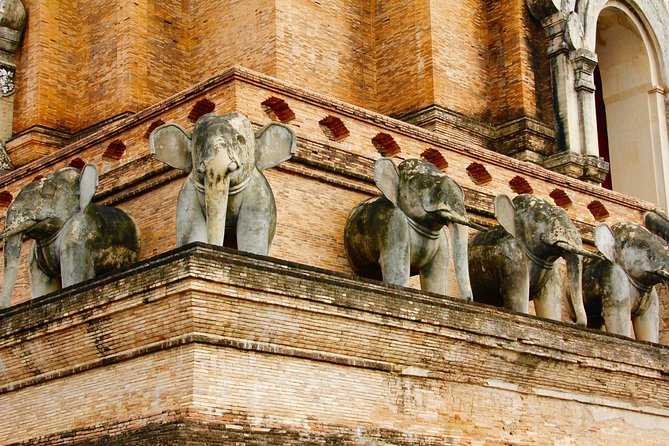
There is an important scheduling detail to check before booking. The main description says the tour visits Wat Phra Singh, while the detailed stop list gives one hour at Wat Phan Tao. These are different temples, and the distinction matters if you have a fixed must-see list.
Wat Phan Tao is known for its Lanna-style ordination hall made almost entirely of teakwood. It is one of the few remaining all-wood structures of its kind in Chiang Mai. If this is your scheduled stop, look closely at the woodwork and the building’s quieter character. This visit complements the massive chedi at Wat Chedi Luang with a more intimate example of local architecture.
Wat Phra Singh is described as a 14th-century temple, the principal religious center of the Lanna Kingdom, and home to a sacred Buddha image said to be 1,500 years old. Its compound contains several buildings, with varying artistic and architectural quality. If this is included in your departure, it gives you a different kind of temple visit, with more emphasis on religious importance and the old Lanna capital.
Because the supplied route information is not fully consistent, contact the operator and ask which central temple is included on your date. Do not assume you will see both. This is the one point I would clarify before paying, especially if Wat Phra Singh is high on your Chiang Mai list.
Warorot Market for a taste of daily city life
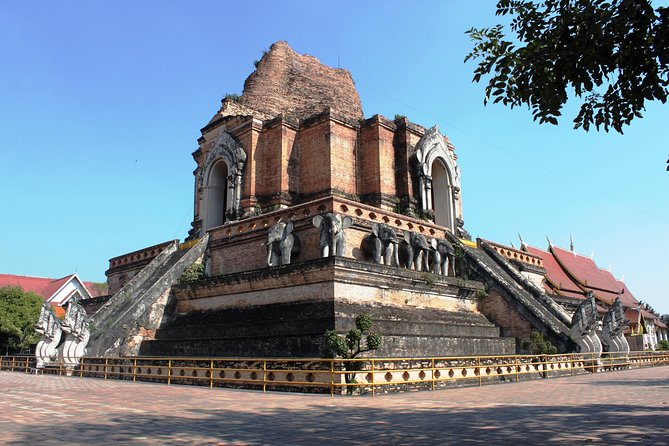
The final listed stop is Talat Warorot, usually called Warorot Market or Kad Luang. You get about 45 minutes here, with no entrance fee. This is Chiang Mai’s largest market and a long-standing center of trade.
The market gives the tour a welcome change of pace. Temples ask you to slow down and observe religious spaces. Warorot shows Chiang Mai as a working city, with trade, food, and local movement. The wet-market area is particularly active, though the supplied details do not promise a tasting session or a meal.
One guide, Mick, was especially noted for helping with tasting and explaining the market. That suggests a good guide may help you approach unfamiliar foods, but you should budget separately for anything you buy. Meals, drinks, shopping, tips, and portage fees are not included.
Forty-five minutes is enough for a look around and perhaps a small purchase, but it is not a serious shopping session. If you want to browse every aisle, compare prices, or eat a full meal, plan a separate return visit. I like the market stop because it keeps the outing from becoming a string of formal monuments, but shoppers may wish it lasted longer.
What the guides add to the experience
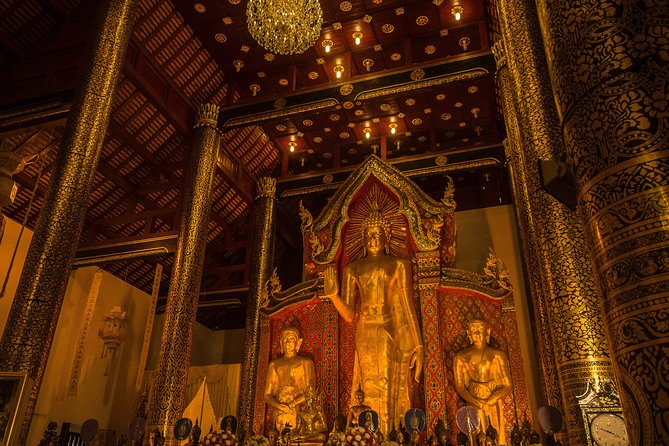
The guide is the strongest reason to choose this tour instead of arranging a taxi between temples. The best part is not simply getting from one place to another. It is having someone explain the Lanna setting, Buddhist customs, temple symbolism, and Chiang Mai’s place in Thai history.
The guide names associated with especially strong experiences include Tinny, Nu, Yaya, Krisada, and Mick. Nu was described as soft-spoken, engaging, and easy to understand. Yaya was praised for taking an appropriate pace for two older participants. Krisada was singled out for a friendly, informative afternoon, and Mick for making the market visit more approachable.
That range is useful because it shows what you should ask for. If you want a slower walk, say so. If you are interested in Buddhist culture rather than only photographs, tell the guide. On a private tour, you have a better chance of shaping the conversation and pace around your interests.
The shared tour is operated with an English-speaking guide. The private option also includes a personal guide, and past private outings have been described as flexible and unhurried. Guide quality can vary from person to person, but the operator’s format gives you a much better chance of getting context than a self-guided visit.
Price, pickup, and what you actually receive
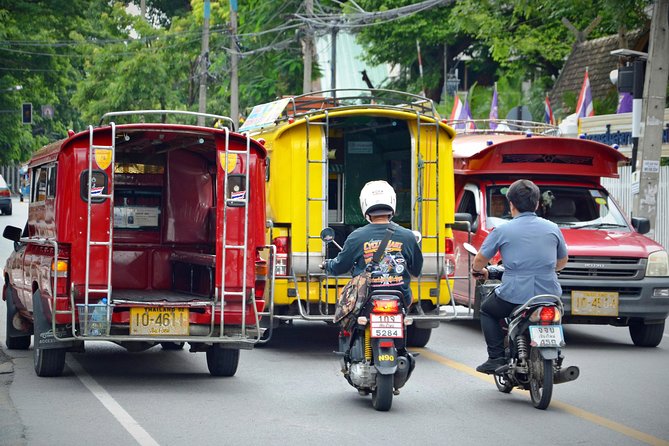
At $66.20 per person, the tour is not the cheapest way to see Chiang Mai’s temples. You are paying for a half-day vehicle, driver, English-speaking guide, hotel pickup within the downtown area, and entrance fees. For a first visit, that can be fair value, especially if you would otherwise need to arrange several separate rides.
The private option is the better value for couples or families who want to move at their own pace. A shared trip may be the smarter choice if you mainly want transport and an introduction to the major sites. Group discounts are available, though the exact savings are not provided.
Pickup is limited to main hotels in downtown Chiang Mai. Mae Rim, Hang Dong, Doi Saket, Mae Taeng, and Chiang Mai International Airport are outside the included area and may carry a supplement. Pickup from private homes, apartment buildings, or other non-registered accommodations may not be confirmed. You could be asked to meet at a nearby hotel.
The exact pickup time may be confirmed at booking, but operational changes can mean receiving it the day before. Give the operator correct hotel details and report accommodation changes early. Changes made within 24 hours may be handled on request, and a no-show or unapproved last-minute change can lead to cancellation charges.
The tour accepts mobile tickets, and confirmation is provided at booking. Free cancellation is available up to 24 hours before the start time. Bad weather can lead to a different date or a full refund.
Clothing, shoes, weather, and practical comfort
Treat this as a religious outing, not just a sightseeing drive. Wear clothing that covers your shoulders and falls below your knees. Shirts with obscene or disrespectful images, along with brightly colored clothing, may lead to refused entry at strict royal temples and palaces.
Bring a hat, sunglasses, and high-SPF sunblock. Protect cameras and phones from natural elements, since the operator does not accept responsibility for damage caused by poor protection. A small bag is useful for shoes when you are asked to remove them, though the supplied information does not specify whether a bag is provided.
The tour lasts just over four hours, but the stairs, heat, and walking between old-city buildings can make it feel full. I would choose the morning if you prefer to handle the physical part before the strongest heat, or the afternoon if you want a later start. The experience requires good weather, so keep some flexibility in your schedule.
Who should book this temple tour?
I would recommend it to a first-time visitor who wants Chiang Mai’s main religious sights explained in one manageable outing. It also suits couples, families, and older people who prefer a vehicle between distant stops and a guide who can adjust the pace.
A private booking is worth considering if you have specific questions, limited time, or mobility concerns around the Doi Suthep staircase. The shared version works well if you want lower-cost transport and a structured introduction.
I would not choose it if you want long, quiet visits at every temple, an extended market meal, or a completely flexible schedule. Four hours and 15 minutes goes quickly, and the route may feel brisk. Confirm the Wat Phra Singh and Wat Phan Tao question before booking, then decide if the included temples match your priorities.
Should you book it?
Book this tour if you want a clear introduction to Chiang Mai’s sacred sites, a memorable mountain temple, and a glimpse of local market life without arranging transport yourself. The combination of Doi Suthep, Wat Chedi Luang, a central Lanna temple, and Warorot Market gives you a good first frame for the city.
The strongest value comes from the guide’s explanations and the convenience of connecting a mountain site with central temples in one morning or afternoon. If you prefer quiet exploration, book privately and confirm the route. If you want the simplest overview at a moderate price, the shared tour is a sensible starting point.
FAQ
How long does the Chiang Mai temple tour last?
The tour lasts approximately four hours and 15 minutes.
Is hotel pickup included?
Pickup is offered from main hotels in downtown Chiang Mai. Areas outside central Chiang Mai may require a supplement, and pickup from private residences or apartment complexes may not be confirmed.
Is the tour available in the morning and afternoon?
Yes. Morning and afternoon departures are available.
Which temples are included?
The main description names Wat Phra That Doi Suthep, Wat Chedi Luang, and Wat Phra Singh. The detailed stop schedule lists Wat Phan Tao instead of Wat Phra Singh, so confirm the exact route with the operator before booking.
How many people can join the shared tour?
The activity has a maximum group size of 15 people.
Is a private tour available?
Yes. You can choose between a shared tour and a private option with a personal guide.
Are entrance fees included?
Yes. Entrance fees for the listed visits are included.
What should I wear?
Wear clothing covering your shoulders and falling below your knees. You may also need to remove your shoes before entering certain temple buildings.
Can I cancel for a refund?
You can cancel up to 24 hours before the experience start time for a full refund. If poor weather causes the tour to be canceled, you will be offered a different date or a full refund.
Just added around Chiang Mai
- Wat Phra That Doi Suthep & Wat Pha lat Evening Tour & Guide★ 4.5 · 89 reviews
- Walk With Monks Collecting Alms(meeting point maybe change)★ 4.9 · 8 reviews
- Chiang Mai: Doi Inthanon Park Day Trip with Kiw Mae Pan Hike★ 4.6 · 75 reviews
- Chiang Mai Zipline White Water Rafting and Elephant Sanctuary★ 4.0 · 11 reviews
- Zipline+Sticky waterfall+Long Neck Village Private Tour★ 5.0 · 22 reviews
- Chiang Mai Airport Private Transfer – Hotel or Airport★ 4.5 · 51 reviews
- Trek to a Jungle Waterfall★ 5.0 · 14 reviews
- Zipline Adventure at Skyline Jungle Luge Chiang Mai★ 5.0 · 102 reviews
Chiang Mai Tours, compared.
Half-Day Thai Cooking Class at Organic Farm in Chiang Mai
Read our review →
Elephant Sanctuary, Waterfall & Bamboo Rafting
Read our review →


Chiang Rai Temples, Karen Tribe and Hot Springs
Read our review →
Cooking Class, Market & Thai Herbs Garden Tour
Read our review →
Authentic Cooking Class with Market & Farm Visit
Read our review →