
Reviewed · CHIANG MAI TOURS
We Cook Thai Home Garden Cooking School
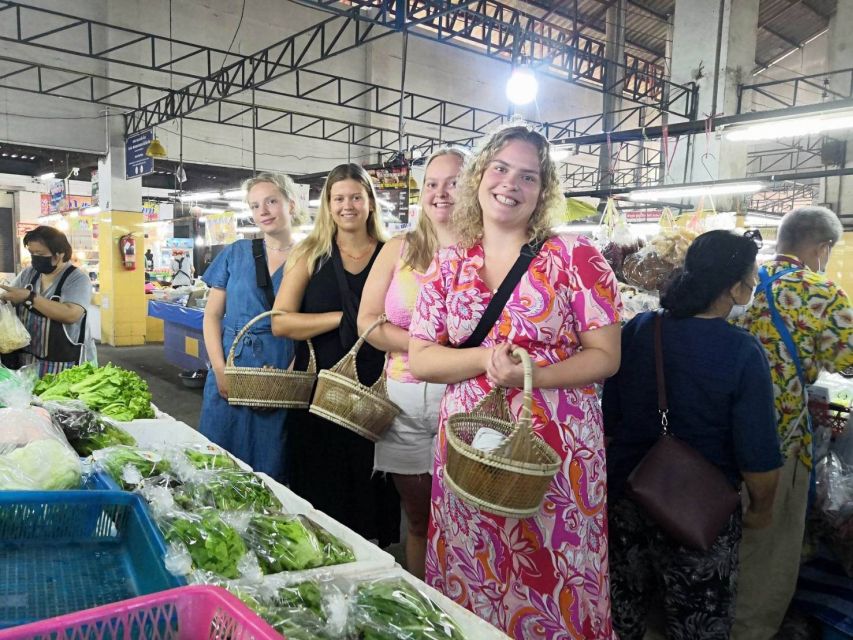
The best part of this Chiang Mai cooking class happens before you reach the stove. Mam, the owner and teacher, takes you through a local market and explains the herbs, vegetables, fruit, spices, and sauces that give Thai food its punch. You do not just chop ingredients. You learn what they are and how they work.
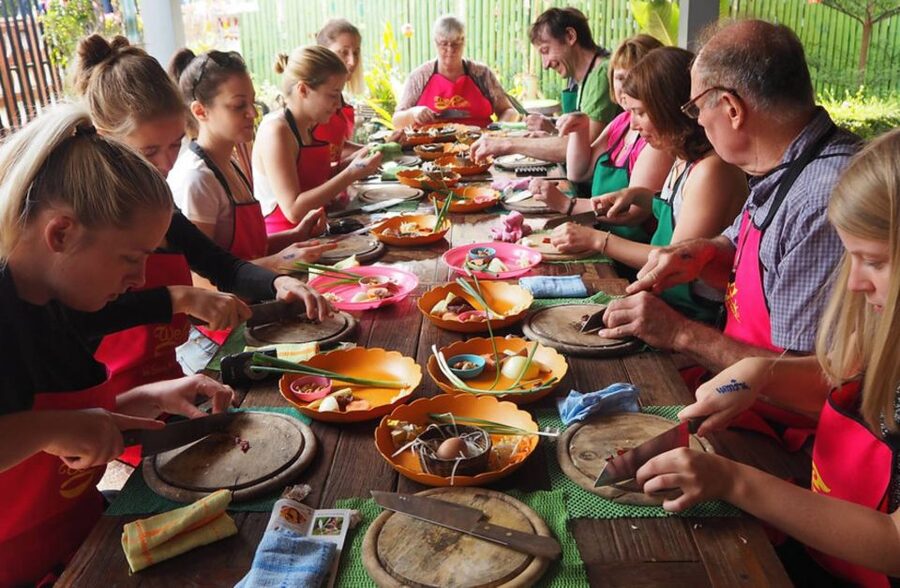
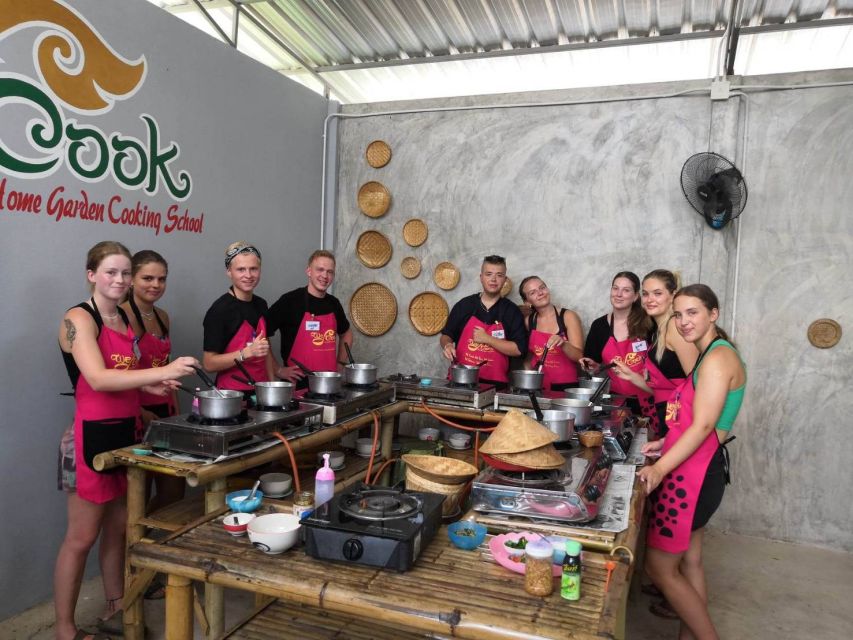
I like the one wok per person setup, because you do the cooking rather than watch a teacher perform it. I also like the home setting: after cooking, you sit down in a separate dining area and eat what you made in a garden atmosphere. The main thing to consider is the sheer amount of food. This is a large meal, so arrive hungry and do not plan a heavy breakfast or lunch beforehand.
Key points before you book
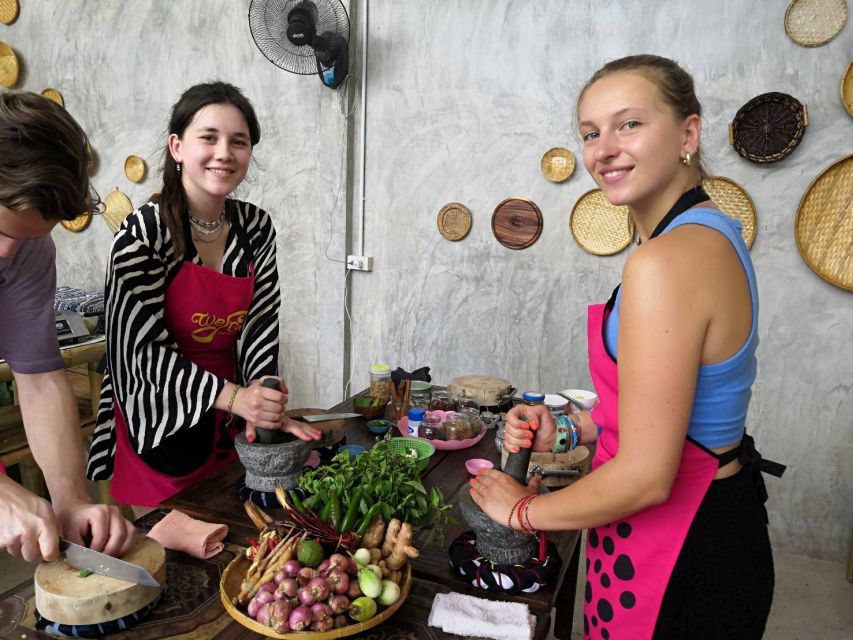
- A real local market visit: Mam introduces ingredients in their everyday setting, including different types of eggplant, basil, herbs, spices, vegetables, rice, and fruit.
- Hands-on cooking: You get your own wok and cook each dish yourself, with Mam guiding you step by step.
- A broad Thai menu: Choose dishes from several categories, including starters, soups, curries, main dishes, and dessert.
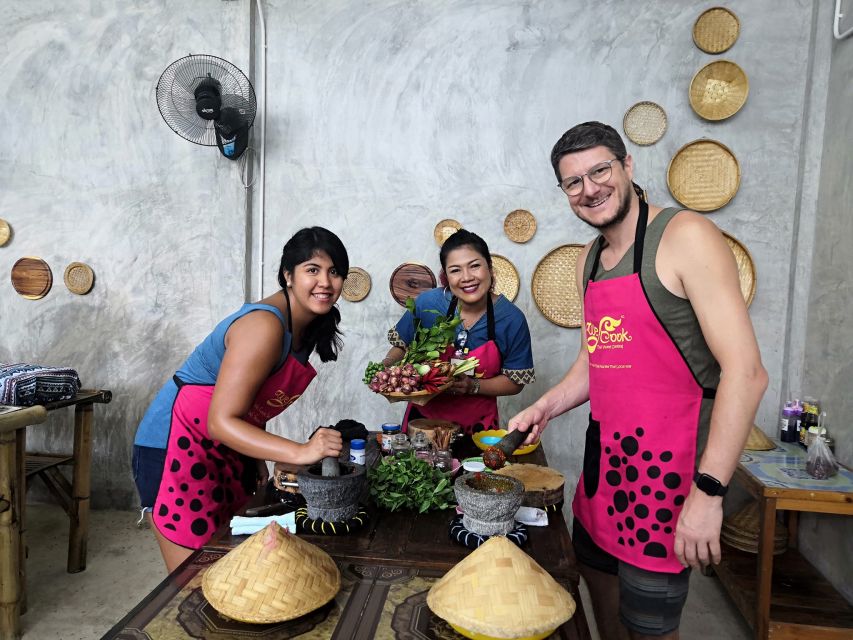
- A home garden kitchen: The cooking school is Mam’s home, with an open-air cooking area and a separate place to sit and eat.
- Good value at $32: The fee includes the market visit, ingredients, cookbook, certificate, meal, English instruction, and limited pickup and drop-off.
- Plan around the height rule: Participants must be at least 120 cm tall. Smaller children and accompanying adults can join as visitors for THB 300 per person and receive two dishes.
Why this class feels different from a standard cooking demo
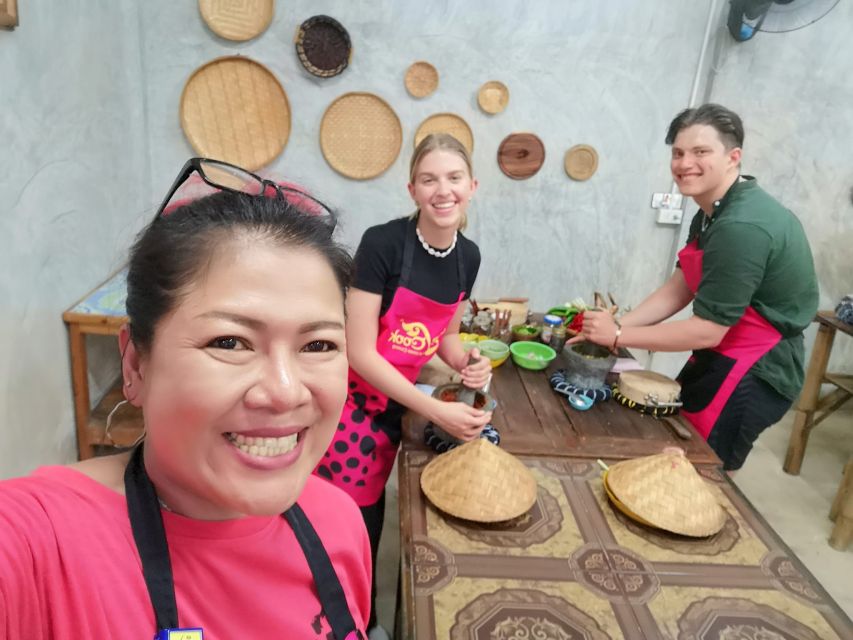
Many cooking classes are really demonstrations with a little chopping added. This one is built around doing the work yourself. With one wok for each person, you control the heat, stir the curry, fry the noodles, and learn how the food changes as it cooks.
That matters in Thai cooking. Recipes often depend less on exact timing and more on signs you can see, smell, and taste. Mam’s teaching style helps you notice those signs instead of treating the recipe as a fixed list of minutes and measurements.
You can be a complete beginner here. The class also suits an experienced home cook who wants to understand Thai ingredients better. Mam is described as patient, funny, and encouraging, and she makes room for questions and different skill levels.
The setting adds something important. You cook at Mam’s home, not in a large commercial kitchen. The garden includes an outdoor dining area, and the cooking and eating spaces are kept separate. That gives the class a more relaxed rhythm: learn, cook, sit down, eat, and talk.
More Cooking Classes in Chiang Mai
- Half-Day Thai Cooking Class at Organic Farm in Chiang Mai
★ 5.0 · 19,087 reviews - Chiang Mai: Cooking Class, Market & Thai Herbs Garden Tour
★ 4.9 · 4,824 reviews - Chiang Mai: Authentic Cooking Class with Market & Farm Visit
★ 4.9 · 4,546 reviews
Start at the market with Mam
The market visit is not a quick stop to collect a shopping bag. Mam uses it to explain the building blocks of Thai food before you start cooking. You may handle and smell ingredients, compare different vegetables, and learn where familiar Thai flavors come from.
This is especially useful if you have eaten Thai food but cannot identify what is in it. Thai basil, eggplant, fresh herbs, spices, rice, fruit, and sauces can look unfamiliar when you see them in a market stall. Mam explains their names and uses, including ingredients that may not be needed for your own menu.
I like this order of events. First you see the ingredients in a local setting. Then you use them in the kitchen. That connection makes the lesson easier to remember, and it gives you a better chance of finding similar ingredients when you try the recipes at home.
The market can also be the most culturally interesting part of the morning. You see ordinary food shopping rather than a staged food display. The trade-off is that markets are active places, with uneven surfaces and plenty of standing and walking. The experience is wheelchair accessible, but you should still check the pickup and meeting details if you need specific mobility assistance.
Choose your Thai menu
The class lets you select dishes by category. The categories described include a starter, soup, curry, main dish, and dessert, while the experience is also advertised as a six-category meal with six dishes. The exact number can vary by menu or class, so confirm the current choices when you book.
The range is broad enough to build a meal around your own interests. Possible choices mentioned by participants include:
- Pad Thai
- Papaya salad
- Khao soi
- Tom yum
- Massaman curry
- Vegetable spring rolls
- Thai noodle soup
- Khao pad gai, or chicken fried rice
- Mango sticky rice
This is one of the strongest features for couples and small groups. You can choose familiar dishes you have enjoyed in Thailand, or use the class to try something new. If your partner chooses curry and you choose noodles, you get to compare the results at the table.
The menu also works for vegetarians. Vegetarian substitutions are available, and food issues can be accommodated. Still, tell the school about your needs in advance. A cooking class is the wrong place to assume that a dish is vegetarian simply because it contains vegetables.
Cook five or six dishes, one wok at a time
Once you arrive at the cooking school, the ingredients are ready and the process becomes practical. Mam demonstrates each step, then you work at your own station. She helps where needed without taking over.
Expect plenty of chopping, mixing, pounding, frying, and stirring. The class is not a quiet lesson, and the food comes quickly once the burners are going. You may prepare curry paste, cook noodles, build a soup, fry rice, and finish with a sweet dish such as mango sticky rice.
The one-wok-per-person arrangement is a real value point. It gives you a feel for heat control and lets you make the dish in your own style. It also means you cannot simply sit back and watch. Wear clothes you are comfortable cooking in and be prepared to spend much of the session standing.
Mam’s approach focuses on judgment as well as instructions. You learn to look for texture and color, smell the aromatics, and adjust flavors as the dish develops. That is more useful for repeating Thai food at home than memorizing a rigid cooking time.
The class is suitable for people who rarely cook. One participant brought along a father over 70 who had never cooked before, and he still enjoyed the class. At the other end, experienced cooks can ask about sauces, spices, and substitutions.
More Thai cooking classes in Chiang Mai:
- Thai and Akha Cooking Class in Chiang Mai
★ 5.0 · 4,358 reviews - Chiang Mai: Cooking Class with Market and Pickup
★ 4.9 · 1,365 reviews - Chiang Mai: Cooking Class with Organic Farm at Mama Noi
★ 4.9 · 1,151 reviews - Full Day Thai Cooking at Farm (Chiang Mai)
★ 5.0 · 1,127 reviews
Eat in the garden after the cooking
The reward is not a small tasting plate. You sit down to a full meal made from the dishes you prepared. The separate dining area makes this feel like a proper lunch or dinner rather than a quick bite beside the stove.
Most people will find the meal very filling. Several menus include five courses, and the advertised format can include six dishes. Some people have needed takeaway boxes for leftovers, including mango sticky rice. That is a nice touch, but it also tells you to pace yourself.
The garden setting gives the meal a pleasant home-cooked feel. One account highlights the fish pond, and the outdoor area is part of the charm. You get a chance to stop cooking, enjoy the food, and take in the setting instead of rushing straight back into Chiang Mai’s sightseeing schedule.
For the morning class, expect to eat a substantial meal around midday. If you are not used to a large breakfast, do not force one down before the 9:00 am start. The evening class begins with pickup between 4:00 and 4:30 pm, making the meal a natural dinner.
Morning or evening class?
You have a choice of morning or evening sessions, subject to availability. The morning class is a good fit if you want the rest of the day free. You can cook, eat, and still have time for temples, cafés, or a slow afternoon in Chiang Mai.
The evening option includes pickup, with service for residences within a 3 km radius of Chiang Mai downtown. The stated pickup window is 4:00 to 4:30 pm. Return transport is also included within the same service area, according to the activity details.
Group size can change. The class has been described with groups as small as three or four and as many as around 10 or 11, with a listed capacity of 12. A smaller group gives Mam more time to help each person, while a fuller class will feel more social but may offer less individual attention.
The five-hour maximum deserves attention. This is not a rushed two-hour activity. The market, preparation, cooking, and meal take time. I would avoid scheduling a temple tour or airport transfer immediately afterward.
What the $32 price really covers
At $32 per person, this is strong value for a half-day experience. The fee covers an English-speaking guide, the market visit, ingredients, a welcome snack or seasonal fruit, your own wok, the food you cook, a cookbook, and a certificate.
Transport is included for pickup and drop-off within 3 km of downtown Chiang Mai. That can save you the trouble and cost of arranging local transport, especially for the evening session. Outside that radius, you should expect to make your own way unless the school confirms another option.
The cookbook improves the value after you leave. You are not limited to a pleasant memory and a full stomach. You have a starting point for recreating the dishes at home, and the class teaches the practical feel behind the recipes.
The certificate is a small extra rather than a reason to book. The real value lies in the personal instruction, market lesson, ingredients, meal, and the number of dishes you prepare. Compared with paying separately for a market tour and a restaurant meal, the price is reasonable.
Who will enjoy this most?
I would recommend this class to first-time visitors who want a direct connection with Thai food. It also works well for couples, families with taller children, solo visitors, and friends who want a social half-day activity.
It is particularly good for you if:
- You want to cook rather than watch.
- You enjoy asking questions about ingredients.
- You like eating a large meal after an active class.
- You want recipes and techniques to take home.
- You prefer a home setting to a formal culinary studio.
- You have a vegetarian diet or food concern that can be discussed ahead of time.
Families need to pay attention to the 120 cm minimum. This is a safety rule linked to the height of the wok. A child under that height can attend as a visitor for THB 300 per person and receive two dishes during one cooking course, but that is not the same as taking part as a full cooking student.
The experience is less suitable if you dislike standing, chopping, or eating a large meal. It may also frustrate you if you want a quiet, highly polished demonstration with no group interaction. The class is hands-on and home-based, which is its strength, but it also means a little less formality.
Practical tips for a smoother class
Arrive hungry, but not uncomfortable. The meal can include five courses, and the six-dish format may offer even more food. A light snack is sensible, while a large breakfast is not.
Choose dishes you genuinely want to learn. If you already know that you love Pad Thai, Khao soi, or Massaman curry, this is your chance to learn the process. If you cook Thai food often, select something less familiar and ask about ingredients you cannot easily find at home.
Tell Mam about dietary needs before the class begins. Vegetarian cooking is supported, and substitutions may be possible, but clear communication gives the kitchen time to prepare.
Bring a little patience for the market portion. The point is not only to buy ingredients. It is to understand them through sight, smell, and touch. That lesson makes the cooking section more useful.
Keep your schedule open for the full five hours. The class may last closer to 270 minutes or the full five-hour window, depending on the group and menu. Free cancellation is available up to 24 hours before the activity for a full refund, and you can reserve now and pay later, which helps if your Chiang Mai plans are still moving.
Should you book We Cook Thai Home Garden Cooking School?
Book it if you want a generous, practical Thai food lesson with a warm personal feel. Mam’s market tour, patient instruction, private wok stations, broad menu, and garden meal give you much more than a quick cooking demonstration.
The class is not the best choice for a rushed itinerary, a very small appetite, or anyone under 120 cm who wants to cook independently. For most adults and older children, though, the $32 price buys a full half-day, a substantial meal, recipes, a certificate, and skills you can use after Thailand.
My advice is simple: choose the dishes before you arrive if possible, skip the heavy breakfast, and leave room in your schedule for leftovers and a relaxed meal.
FAQ
How long does the cooking class last?
The activity lasts about 270 minutes to five hours. The exact duration depends on the starting time, market visit, cooking pace, and menu.
Is there a morning and evening class?
Yes. You can choose a morning or evening class, subject to availability. The evening course includes pickup, with the stated pickup time between 4:00 and 4:30 pm.
Who teaches the class?
Mam, the owner of We Cook Thai Home Garden Cooking School, teaches the class in English.
Is the local market visit included?
Yes. The market tour is included. Mam takes you through the market and explains Thai herbs, spices, vegetables, fruit, rice, and other ingredients before cooking.
Do I get my own cooking station?
Yes. The activity provides one wok per person and all ingredients needed for the cooking class.
How many dishes will I cook?
You select dishes from several categories. The experience is described as a six-category meal with six dishes, while some menus describe five courses. Check the current menu when booking because the number may vary.
Is a vegetarian option available?
Yes. Vegetarian cooking is available. Tell the school about your dietary needs in advance so suitable ingredients can be arranged.
Is pickup included?
Free pickup and drop-off are included for residences within a 3 km radius of Chiang Mai downtown. Evening pickup is listed between 4:00 and 4:30 pm.
Can children join the cooking class?
Participants must be at least 120 cm tall because of the wok height and safety requirements. Children under 120 cm, or adults accompanying participants, may join as visitors for THB 300 per person and receive two dishes.
Can I cancel or pay later?
You can cancel up to 24 hours in advance for a full refund. A reserve-now, pay-later option is also available.
Just added around Chiang Mai
- Taste of Chiang Mai: Michelin Guide & Street Food Tour★ 4.9 · 159 reviews
- Red, Blue, White Temples & Hot Spring Trip from Chiang Mai★ 4.4 · 143 reviews
- From Chiang Mai: Mae Taeng Valley and Waterfalls Cycle Tour★ 4.9 · 159 reviews
- Long Neck Village, Silver Temple & Chiang Mai Top Sites★ 4.7 · 17 reviews
- Chiang Mai: Local Northern Thai Cooking Class at Grandma’s★ 5.0 · 33 reviews
- Chiang Mai: Khum Khantoke Northern Thai Cuisine and Show★ 4.3 · 38 reviews
- Private : Sticky Waterfall & Secret Temple & Karen Village.★ 5.0 · 9 reviews
- Half-day with CHIANGMAI ELEPHANT CARE program (12pm-6pm.)★ 5.0 · 27 reviews
Chiang Mai Tours, compared.
Half-Day Thai Cooking Class at Organic Farm in Chiang Mai
Read our review →
Elephant Sanctuary, Waterfall & Bamboo Rafting
Read our review →


Chiang Rai Temples, Karen Tribe and Hot Springs
Read our review →
Cooking Class, Market & Thai Herbs Garden Tour
Read our review →
Authentic Cooking Class with Market & Farm Visit
Read our review →
Elephant Sanctuary Feeding Program Half-Day Tour
Read our review →Browse the lists this tour appears in