
Reviewed · CHIANG MAI TOURS
Chiang Mai: Evening Cooking Class and Local Market Visit
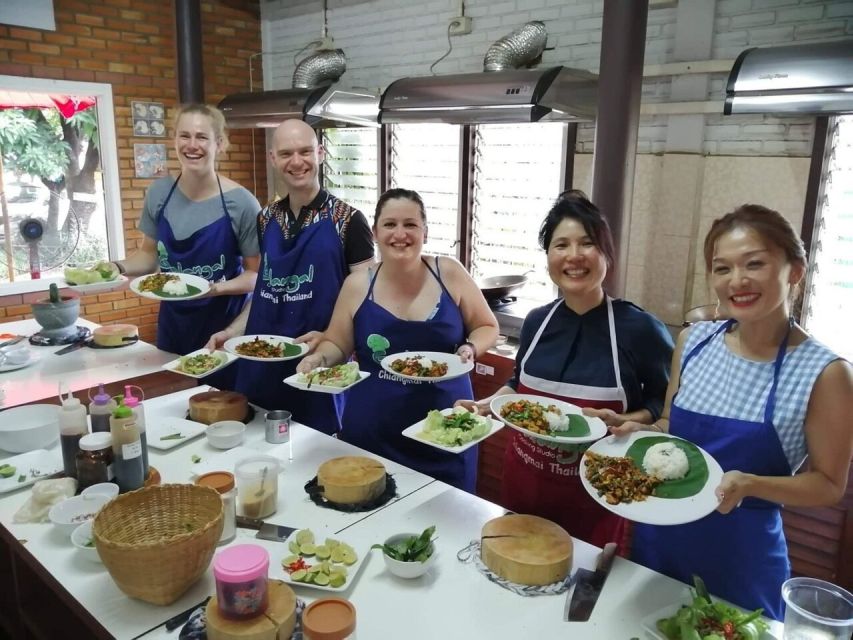
Thai cooking becomes much easier once you understand the ingredients. This Chiang Mai class begins at a local market and organic garden, then brings you into the kitchen to make dishes such as khao soi, Pad Thai, green curry, and Tom Yum.
I like the freedom to choose one dish from each category, and I like that instructors including New and Aoy take time to adjust recipes for vegetarian, vegan, Halal, gluten-free, and allergy needs. The main drawback is the pickup area: hotel transfers cover central Chiang Mai and selected nearby roads, not every address.
Key points at a glance
- Choose your own menu: Pick one stir-fry, soup, appetizer, and curry from a useful list of Thai classics.
- Start with local ingredients: See vegetables, herbs, noodles, curry ingredients, and other produce at a Chiang Mai market.
- Make curry paste by hand: The class gives you a practical look at how Thai curry gets its flavor.
- Expect plenty of food: Most sessions involve four prepared dishes, so arrive hungry and plan dinner around the class.
- Get hotel transfers: Pickup and return are included for many hotels in the old city and nearby districts.
- Take the recipes home: A PDF recipe book helps you repeat the dishes after returning home.
An evening built around four Thai dishes
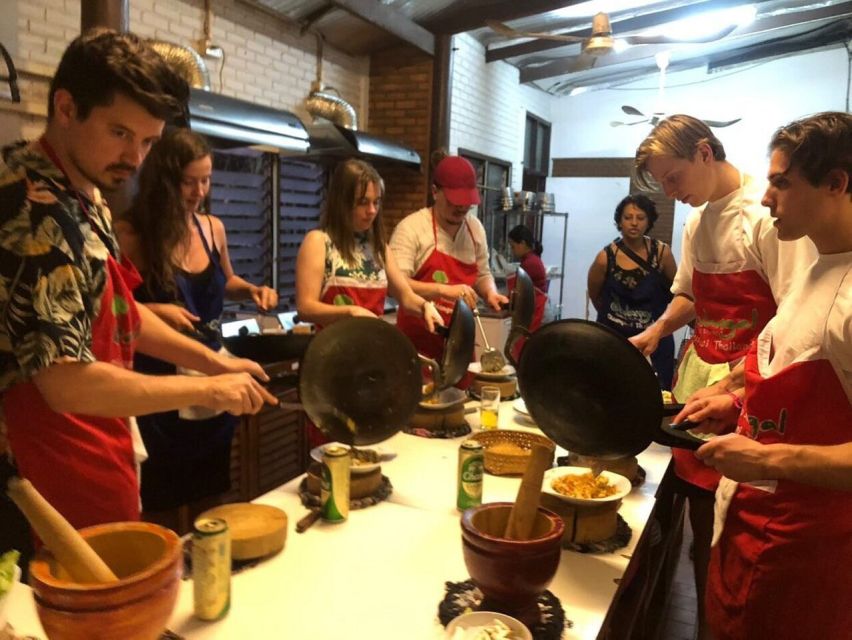
This is not a demonstration where you sit quietly and watch someone else cook. You choose dishes, prepare ingredients, follow instructions, and eat what you make. The class generally gives you one dish from each of four groups: stir-fry, soup, appetizer, and curry or curry paste.
The advertised material also refers to learning five Thai dishes. In practice, the detailed menu and recent experiences point to four main dishes, with curry paste making included as part of the curry lesson. That distinction matters if you are comparing cooking schools or counting how much food you will prepare.
Your choices may include Pad Thai, Pad See Ew, chicken with cashew nuts, or minced chicken with holy basil for the stir-fry. Soup options include Tom Yum Kung, Tom Kha Kai, vegetarian Tom Kha, or Tom Zap Kai.
The appetizer list covers Som Tam, spring rolls, Larb Kai, and glass noodle salad. For the final course, you can select from Massaman, green, Panang, red, yellow, or dry red curry, along with Khao Soi, Chiang Mai’s famous curry noodle dish.
This menu is a real strength. You are not forced to make a dish you dislike, and you can focus on food you want to recreate at home. If you have already eaten plenty of Pad Thai in Thailand, choosing Khao Soi or a curry paste lesson gives you a more regional angle.
More Cooking Classes in Chiang Mai
- Half-Day Thai Cooking Class at Organic Farm in Chiang Mai
★ 5.0 · 19,087 reviews - Chiang Mai: Cooking Class, Market & Thai Herbs Garden Tour
★ 4.9 · 4,824 reviews - Chiang Mai: Authentic Cooking Class with Market & Farm Visit
★ 4.9 · 4,546 reviews
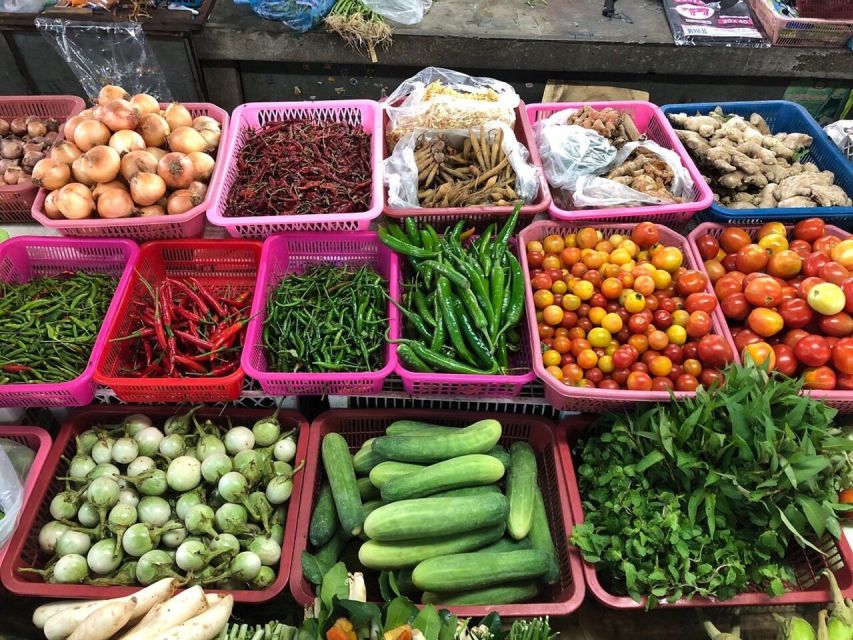
Market shopping before the kitchen
Pickup is scheduled in the late afternoon, generally between 3:15 and 3:45 p.m. The driver may arrive early because evening traffic in Chiang Mai can be slow. Once the group is assembled, you head to a local market to look at the ingredients used in the class.
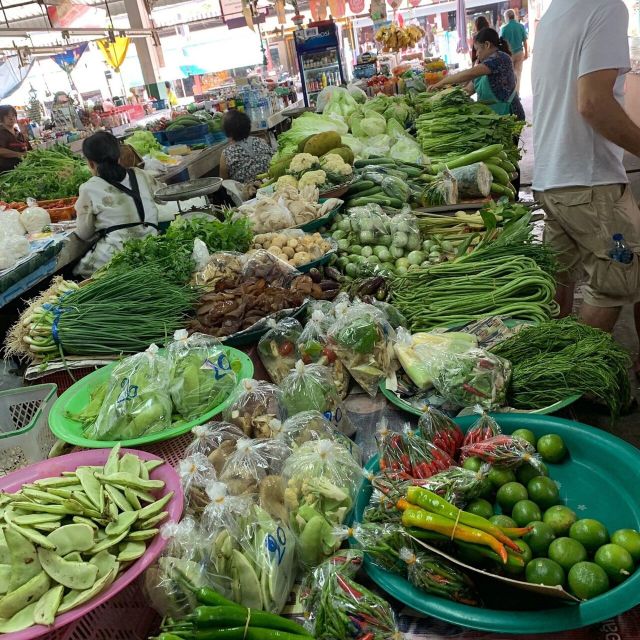
The market stop is not a long shopping expedition. Think of it as a guided introduction to Thai produce. Your instructor points out vegetables, herbs, and other ingredients, explains what they are used for, and gives you a chance to walk around and look for yourself.
I like this part because it gives the cooking a clear setting. Thai recipes often rely on ingredients that look unfamiliar when separated from a finished dish. Seeing them at the market, then using them in the kitchen, helps connect the names, smells, and flavors.
The market visit can depend on group interest and the evening’s arrangements. If you want more than a quick look, say so early. The schedule also needs to account for transport, traffic, and the cooking session itself.
A short stop at the organic garden
The group also visits an organic garden, where you can stroll among herbs and vegetables and see how some Thai ingredients are cultivated. This is a modest stop, not a full farm tour, but it adds useful context.
For a first look at Thai cooking, the garden helps explain why fresh herbs matter so much. It also gives you a break from the market and a more relaxed way to see ingredients before you start chopping and mixing.
Do not book this experience mainly for the garden. The cooking is the heart of the evening, while the garden and market provide background. Their value comes from making the recipes feel connected to local food rather than simply handing you premeasured ingredients.
Cooking in an air-conditioned studio
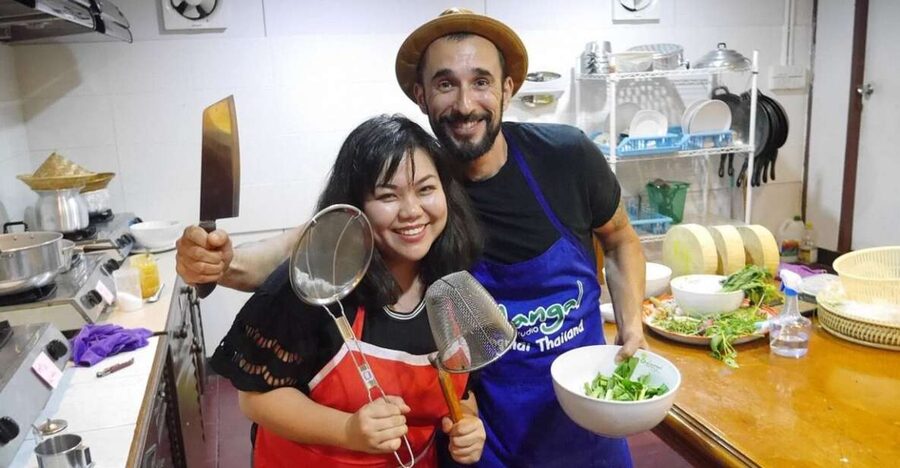
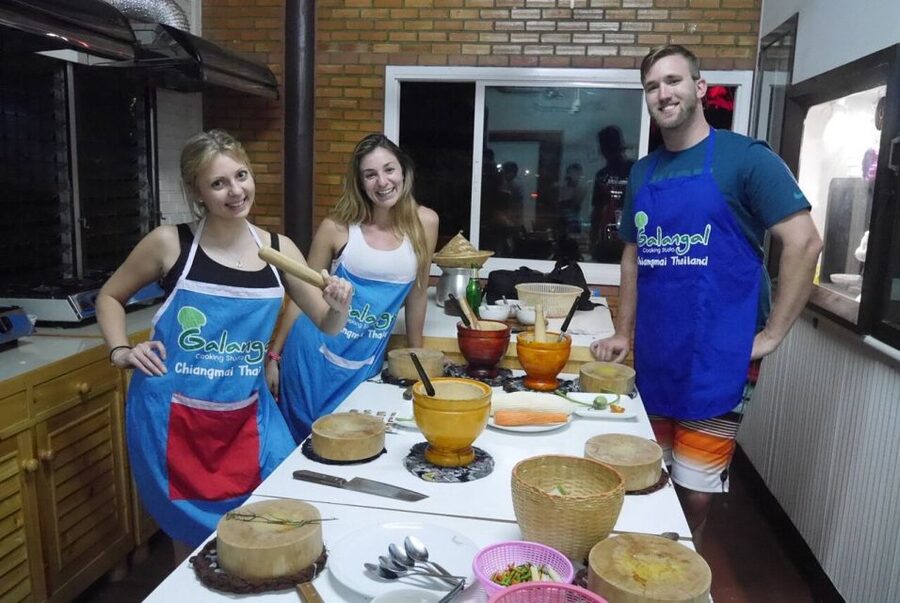
After the market and garden, you move to the cooking school. The kitchen and dining room are indoors and air-conditioned, which is welcome in Chiang Mai’s warm climate. All equipment, ingredients, water, tea, and coffee are included.
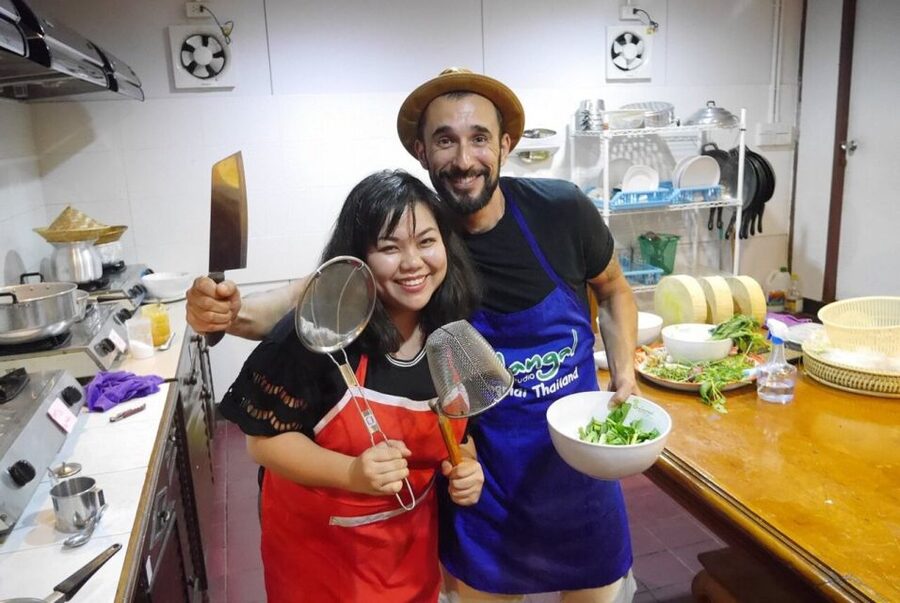
The class is designed for beginners. You do not need advanced knife skills or a long cooking background. The instructors break the process into manageable steps, explain what each ingredient does, and keep the group moving.
That does not mean the session is rushed. Several people who attended with little cooking experience found the process comfortable, and the instructors were praised for being patient and attentive. New is mentioned often for her friendly teaching style, while Aoy and Oi also lead sessions and help create a relaxed class.
The atmosphere appears to depend partly on group size. A larger group may include 10 to 12 people or more and can run from about 4 p.m. to 8:30 p.m. A smaller class may finish earlier. One participant even received a one-on-one session when no other student could attend, so the format can be flexible.
You should expect a social class rather than a private lesson by default. You cook alongside other people, compare menu choices, and sit down together to eat. That can make the evening more fun, though anyone seeking quiet, highly technical instruction may prefer a private cooking course.
More Thai cooking classes in Chiang Mai:
- Thai and Akha Cooking Class in Chiang Mai
★ 5.0 · 4,358 reviews - Chiang Mai: Cooking Class with Market and Pickup
★ 4.9 · 1,365 reviews - Chiang Mai: Cooking Class with Organic Farm at Mama Noi
★ 4.9 · 1,151 reviews - Full Day Thai Cooking at Farm (Chiang Mai)
★ 5.0 · 1,127 reviews
Choosing dishes that suit your taste
The menu is broad enough for most preferences. You can choose a seafood-based Tom Yum Kung, chicken-based Tom Kha Kai, or vegetarian Tom Kha Je. Stir-fry options include meat, noodles, cashews, and holy basil.
Dietary adjustments are a key benefit. Vegetarian, vegan, Halal, gluten-free, and allergy-conscious options are available, but you should communicate your needs when booking and again when meeting the instructor. The menu can be adjusted, as shown by the substitutions made for people who could not eat seafood or who followed a vegetarian diet.
If you have several allergies, bring your personal medication and explain the issue clearly before cooking begins. The class includes ingredients and instructions, but the supplied information does not promise a separate allergen-free kitchen.
A good approach is to choose a balanced menu. A noodle stir-fry, a soup, a salad or spring roll, and a curry give you four different techniques and flavors. If you choose several rich dishes, you may find the meal heavy, especially since portions can add up quickly.
The curry paste lesson is worth your attention
The curry course is more than opening a packet and adding coconut milk. You may learn to make curry paste and then use it in a dish such as green curry, Panang curry, red curry, Massaman curry, yellow curry, or Khao Soi.
This is one of the most useful parts to repeat at home. Curry paste teaches you how herbs, spices, aromatics, and heat work together. The class will not turn you into a Thai chef in one evening, but it can remove the mystery from a dish that often seems difficult.
Khao Soi is an especially good choice in Chiang Mai. It connects the class to the food of northern Thailand and gives you a recipe that is less ordinary than the standard international Thai menu. Pad Thai is easier to recognize and may be simpler to reproduce, while curry paste offers more insight into Thai cooking technique.
Ask your instructor which options best fit your cooking confidence and dietary needs. New and the other teachers are there to guide those decisions, not just to hand you a fixed worksheet.
Eating what you have made
At the end, you sit down in the dining room and eat the dishes prepared during the class. This is not a token tasting. The quantity can be substantial, so the advice to arrive with an empty stomach is practical.
Thai dinner often begins around 4 or 5 p.m., which explains the early schedule. By the time the class ends, you may have eaten four full dishes. Some sessions have packed leftovers for people to take away, but you should not assume that this is guaranteed or that every dish will travel well.
Eating together also gives you a chance to compare results. You can see how another person’s curry or stir-fry turned out and ask final questions while the techniques are still fresh. The meal is the reward, but it is also part of the lesson because you can taste the balance of salt, sourness, sweetness, spice, and coconut.
If you prefer mild food, tell the instructor before cooking. Thai dishes can be adjusted, but it is easier to control the heat before ingredients go into the pan.
What the $28 price really includes
At $28 per person, this is strong value if you use the full package. You receive hotel pickup and drop-off in the covered service area, a market visit, the garden stop, instruction, ingredients, equipment, drinks, and a recipe book in PDF form.
The food alone is not the only measure of value. You are also paying for several hours of guided activity, transport, and a skill you can use after your trip. Four dishes, especially when you choose them yourself, make the price compare well with an ordinary restaurant meal followed by a separate market tour.
The value drops if you are not interested in hands-on cooking or if you plan to eat lightly. You may also pay extra for an adult or child who only observes. Observer adults cost 500 Thai baht, while observer children aged 6 to 12 cost 350 Thai baht.
Most people should participate rather than watch. The class is built around making food, and a noncooking companion still pays an observer fee.
Hotel pickup and the Chiang Mai traffic factor
Transport is included for hotels in Chiang Mai’s old city, Santitham, and parts of Huay Keaw Road between Kad Suan Kaew and Maya Shopping Mall. Some addresses on Nimmanhaemin Road, Sirimongkrajan Road, Wat Ket Road, Chang Phueak, Chang Klan, and Chang Moi are also covered.
Coverage is not universal. The provider checks your accommodation and tells you if it falls outside the pickup area. In that case, you may need to reach the cooking school or market independently.
You should wait in the hotel lobby 5 to 10 minutes before the scheduled pickup. The driver may arrive before 3:45 p.m., and the vehicle will wait no longer than five minutes after the scheduled time. Keep your phone available and be ready early, especially if you are staying near a busy road.
Traffic can make the vehicle late, particularly when several hotels are included. That is a normal Chiang Mai evening issue, not a sign that the class has been forgotten. The included return transfer is still useful because you finish after dark and do not need to arrange a ride back.
The transport service receives a high score, with 86 percent of ratings giving it a perfect mark. Still, the narrow five-minute waiting rule means punctuality matters.
Who will enjoy this class most
I would choose this experience if you want a relaxed introduction to Thai food and prefer doing something active in the evening. It works well for couples, families with older children, solo visitors who enjoy meeting people, and people who want recipes they can use at home.
It is also a good fit for nervous cooks. The menu offers choices, and the instructors keep the steps clear. You do not need to arrive with special equipment or previous training.
Families can take part, and infant seats are available for pickup. The activity is wheelchair and stroller accessible, and the school is near public transportation. People with altitude sickness should not book, although altitude sickness is an unusual concern for a Chiang Mai cooking activity.
You may want another type of tour if your main goal is a long market exploration, a private chef lesson, or a serious professional cooking course. The market and garden are short parts of a five-hour food experience, not standalone tours.
Practical tips for a better evening
Arrive hungry, but not so hungry that you feel uncomfortable during the market visit. Four dishes can be a lot of food, and the meal comes after several hours of activity.
Wear clothes that are comfortable for cooking and walking. Bring any personal medication you need, and share dietary restrictions before the first ingredient is prepared.
Choose dishes with different levels of difficulty and different uses. Pad Thai is familiar, Som Tam teaches you about seasoning and texture, Tom Yum shows how sour and spicy flavors work, and curry paste gives you the most useful lesson for experimenting at home.
Keep your recipe PDF somewhere easy to find. The class moves quickly enough that you may not remember every measurement by the end of dinner. The recipes are the part of the experience that can continue working for you months later.
Smoking indoors, alcohol, and drugs are not allowed. English is the teaching language, and an English audio guide is included.
Should you book the Galangal evening class?
Book it if you want four dishes, a choice of menu, a short look at local ingredients, and a convenient hotel transfer for $28. The strongest part is the teaching: instructors such as New, Aoy, and Oi make the recipes approachable and adapt dishes when dietary needs are explained clearly.
I would be especially keen on this class for Khao Soi or curry paste, rather than choosing only the most familiar dishes. You will leave full, carrying practical recipes, and with a better sense of how Thai ingredients fit together.
Skip it if you dislike group activities, need a private culinary lesson, or expect a long farm and market tour. For most people visiting Chiang Mai, though, the mix of food, instruction, and transport makes this a sensible evening choice.
FAQ
How long does the Chiang Mai cooking class last?
The activity is scheduled for five hours. Larger groups may run from about 4 p.m. to 8:30 p.m., while smaller groups may finish earlier.
What time is hotel pickup?
Pickup is scheduled between 3:15 and 3:45 p.m. You should wait in your hotel lobby 5 to 10 minutes before the scheduled time because the vehicle may arrive early.
Which hotels are covered by the pickup service?
Pickup is offered throughout the old city, Santitham, and parts of Huay Keaw Road between Kad Suan Kaew and Maya Shopping Mall. Some locations in Nimmanhaemin Road, Sirimongkrajan Road, Wat Ket Road, Chang Phueak, Chang Klan, and Chang Moi are also covered.
Can I join if my hotel is outside the pickup area?
Yes, but you may need to arrange your own transport to the cooking school or market. The provider will check your address and give you the arrival details.
How many Thai dishes will I cook?
You can generally expect to prepare four main dishes, choosing one stir-fry, one soup, one appetizer, and one curry or curry paste. The activity information also refers to five dishes, so confirm the exact format if that detail is important to you.
Can I choose vegetarian or vegan dishes?
Yes. Vegetarian and vegan options are available, along with Halal and gluten-free choices. Allergy-related substitutions can also be arranged when you explain your needs.
Is hotel transfer included in the price?
Yes. Pickup and drop-off are included for covered hotel locations. The driver waits no longer than five minutes after the scheduled pickup time.
Can someone attend without cooking?
Yes, observers are welcome, but they must pay 500 Thai baht per adult or 350 Thai baht per child aged 6 to 12. Participation is likely the better value because the class centers on hands-on cooking.
More Shopping in Chiang Mai
- Chiang Mai Temples and Market Tuk-Tuk Evening Night Tour
★ 4.5 · 201 reviews - Half-Day Cooking Class with Market Tour
★ 5.0 · 163 reviews - Chiang Mai: Traditional Thai Cooking Class with Market Tour
★ 4.8 · 137 reviews - Chiang Mai: Morning Cooking Class with Market Visit
★ 4.9 · 81 reviews
More Markets in Chiang Mai
- Chiang Mai: Evening Local Street Food Market Tour
★ 4.8 · 604 reviews - Chiang Mai: Kalare Night Bazaar Boxing Stadium Muay Thai
★ 4.7 · 507 reviews - Evening Cooking Class in Organic Farm with Local Market Tour
★ 5.0 · 394 reviews - Chiang Mai: Elephants, Sticky Waterfalls, Market and Temple
★ 4.9 · 227 reviews
Just added around Chiang Mai
- Taste of Chiang Mai: Michelin Guide & Street Food Tour★ 4.9 · 159 reviews
- Red, Blue, White Temples & Hot Spring Trip from Chiang Mai★ 4.4 · 143 reviews
- From Chiang Mai: Mae Taeng Valley and Waterfalls Cycle Tour★ 4.9 · 159 reviews
- Long Neck Village, Silver Temple & Chiang Mai Top Sites★ 4.7 · 17 reviews
- Chiang Mai: Local Northern Thai Cooking Class at Grandma’s★ 5.0 · 33 reviews
- Chiang Mai: Khum Khantoke Northern Thai Cuisine and Show★ 4.3 · 38 reviews
- Private : Sticky Waterfall & Secret Temple & Karen Village.★ 5.0 · 9 reviews
- Half-day with CHIANGMAI ELEPHANT CARE program (12pm-6pm.)★ 5.0 · 27 reviews
Chiang Mai Tours, compared.
Half-Day Thai Cooking Class at Organic Farm in Chiang Mai
Read our review →
Elephant Sanctuary, Waterfall & Bamboo Rafting
Read our review →


Chiang Rai Temples, Karen Tribe and Hot Springs
Read our review →
Cooking Class, Market & Thai Herbs Garden Tour
Read our review →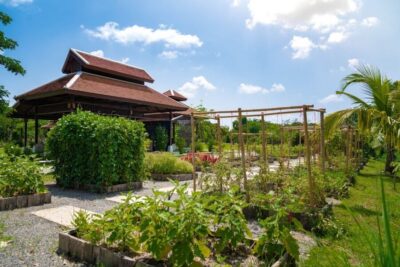
Authentic Cooking Class with Market & Farm Visit
Read our review →
Elephant Sanctuary Feeding Program Half-Day Tour
Read our review →Browse the lists this tour appears in