
Reviewed · CHIANG MAI TOURS
Old Town History and Culture Walking Tour at Chiang Mai
Chiang Mai’s old town makes the most sense on foot, and this tour links its three most useful starting points: the Three Kings Monument, Wat Phra Singh, and Wat Chedi Luang. You get a compact lesson in Lanna history, temple design, and Thai Buddhism without spending half the day in a vehicle.
I like the small group limit of eight, which should make questions easier and keep the walk from feeling like a parade. I also like the clear route: it begins at the Three Kings Monument and ends at Wat Chedi Luang, with entrance fees, bottled water, and an English-speaking guide included.
The main consideration is the guide. Several guides, including Khun Bim, have been praised for clear English and thoughtful explanations, but one visitor found the guide difficult to understand and the opening talk repetitive. Your experience may depend heavily on who leads the group that day.
Key points at a glance
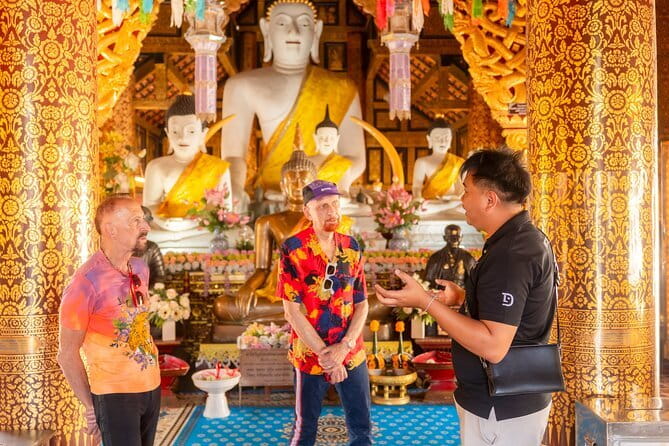
- Three major old-town sights in 2.5 hours: Start with King Mangrai’s story, then visit Wat Phra Singh and Wat Chedi Luang.
- A genuinely walkable route: The tour moves through central Chiang Mai on foot and finishes where the final temple visit takes place.
- Lanna architecture and art: Wat Phra Singh’s Lai Kam assembly hall and murals are central highlights.
- A chance to speak with monks: Wat Chedi Luang may include talks by monks and an optional blessing.
- Good value at $15: Admission fees, bottled water, insurance, and an English-speaking guide are included.
- Small-group format: The maximum of eight people is helpful in temple courtyards and during explanations.
Why this is a useful first look at Chiang Mai
Chiang Mai can seem easy to understand at first. The old town is compact, the streets are mostly manageable on foot, and temples appear around many corners. But the buildings make more sense once you know that this was the center of the Lanna Kingdom, founded by King Mangrai in the late 13th century.
This walk gives you that basic framework before the temples begin. You meet at the Three Kings Monument, where the guide explains King Mangrai and the monument’s place in Chiang Mai’s story. That opening matters because the city is not simply a collection of attractive temples. It was the capital of a northern Thai kingdom with its own style, traditions, and religious life.
At two and a half hours, the tour is long enough to offer context but short enough to fit around a morning or afternoon of independent sightseeing. You are not being asked to commit an entire day to a bus, a meal, and a distant attraction. The route stays in the old town and ends at one of its most important religious sites.
The tour currently carries a 4.8 out of 5 rating from 13 reviews, with 92 percent recommending it. That is a strong early signal, though the small number also means you should keep expectations sensible. The guide matters here more than fancy equipment or a complicated itinerary.
More history-led days in Chiang Mai:
- Chiang Mai: Historic Temples and City Guided Walking Tour
★ 4.7 · 650 reviews - Chiang Mai: Historic Old City Bike Tour – Morning or Night
★ 4.7 · 263 reviews - Chiang Mai: Historic Old City Bike Tour – Morning or Night
★ 5.0 · 202 reviews
Meeting King Mangrai at the Three Kings Monument
The Three Kings Monument is the right place to begin. It gives the guide a clear landmark and puts you in the center of Chiang Mai’s old town from the first minute.
The monument depicts three historical rulers, with King Mangrai in the middle. He was the first king of the Lanna Kingdom and the founder of Chiang Mai. The opening talk focuses on why he matters, giving you a basic timeline before you enter the temples.
You also receive a short safety briefing. That may sound routine, but it is useful on a walking tour, especially if you are visiting during a warm part of the day or crossing busy old-town streets. The meeting point is near public transportation, and the tour does not include hotel pickup, so you need to make your own way there.
I would arrive a little early. The monument is identified by a map location on Prapokklao Road, and the walk starts promptly. Since the group can be as small as eight people, arriving late could be more noticeable than it would on a large coach tour.
This stop lasts about 30 minutes, including the historical explanation and safety briefing. It is not meant to be a long monument visit. Think of it as the key that helps you read the next two temples.
Wat Phra Singh and the details of Lanna design
Wat Phra Singh is the first temple complex and receives about an hour. It dates to 1346 and is described as the second most important temple in Chiang Mai, after Wat Phra That Doi Suthep.
The value here is not just seeing another golden temple roof. Wat Phra Singh is a strong example of Lanna architecture, the regional style shaped by northern Thailand’s history and religious traditions. A guide can point out details that are easy to pass without context, especially if this is your first visit to Chiang Mai.
The Lai Kam assembly hall is a major focus. Its murals are among the most important visual features of the complex, and the tour gives you time to look rather than simply walk past, take a photo, and move on. I would pay close attention to the guide’s explanation of the paintings, their setting, and the role of the hall within the temple.
The pagoda also has a special connection for people born in the Year of the Dragon. That detail adds a personal touch to the visit. You do not need to follow the belief to appreciate how zodiac years, temples, and local religious practice can overlap in Thai culture.
Entrance is included, so you do not have to stop and handle a separate admission payment. The tour also includes travel insurance and bottled water. A snack of fried bananas has been provided on at least some tours, but it is not listed as a formal inclusion, so I would treat that as a pleasant possibility rather than something to count on.
One practical point: this is an active religious site, not only a historic attraction. Dress and behavior should be respectful, and your guide can help explain what is appropriate. The supplied information does not specify a dress code, so it is wise to choose modest clothing suitable for temple visits.
The walk to Wat Chedi Luang
After Wat Phra Singh, the group takes a short stroll to Wat Chedi Luang Varavihara. This is one of the tour’s best features because the move between the temples helps you understand the old town’s scale. You are not being whisked away and dropped into unrelated sites. The temples are connected by the city itself.
Wat Chedi Luang is associated with a 14th-century temple complex and is famous for its large chedi ruins. The site is about 600 years old, though parts of the structure have been restored. Restoration work in the 1990s is credited to UNESCO in the tour description.
The ruined chedi gives this stop a different mood from Wat Phra Singh. Wat Phra Singh is especially useful for architecture, murals, and polished temple spaces. Wat Chedi Luang offers a larger sense of age and scale, with the remains of a major religious structure dominating the grounds.
The temple is also known for once housing the remains of a major Buddhist image, adding to its importance in Chiang Mai’s religious story. The supplied tour details do not identify every object or structure you will discuss, so the precise emphasis may depend on the guide.
You have about an hour here. That should allow time to see the grounds, listen to explanations, and absorb the setting without racing through it. The tour ends at Wat Chedi Luang, which is convenient if you want to continue exploring the old town on your own afterward.
More walking tours in Chiang Mai:
- Chiang Mai: 3 Hour Old City and Temples Guided Walking Tour
★ 4.6 · 1,568 reviews - Chiang Mai: Temple And City Walking Tour Part I
★ 4.7 · 244 reviews - Chiang Mai: Local Food and Markets Guided Walking Tour
★ 4.3 · 175 reviews - Chiang Mai Untouched Elephant: Nature Walk & Waterfall Trek
★ 4.7 · 77 reviews
Meeting monks and choosing a blessing
One distinctive part of the final stop is the chance to listen to talks by monks. For many visitors, this can be more meaningful than another round of architectural facts. It offers a direct connection to present-day Theravada Buddhism, not just a look at old buildings.
The experience may also include the opportunity to receive a monk’s blessing for luck. The important detail is that participation is handled thoughtfully. You are asked if you want the blessing, rather than being pushed into a religious activity you may not understand or wish to join.
That choice makes the tour suitable for people with different beliefs. You can listen, ask questions, observe the ceremony, or decline the blessing. The guide’s role is especially important here. One strong account describes Khun Bim as a Thai guide with excellent English who helped explain differences between Thai Theravada Buddhism and other Buddhist traditions.
That is the sort of explanation I value on a cultural tour. You do not need to share the faith to learn how it shapes daily life, temple customs, and local ideas about good fortune. Still, the depth of this part can vary with timing, the monk available, and the guide leading your group.
What the guide can add, and where the tour may falter
The best version of this tour is guide-led rather than monument-led. You can visit all three locations on your own, especially with a map and a free afternoon. What you cannot easily reproduce is a clear explanation of why King Mangrai matters, how Lanna style differs from other Thai traditions, or how a monk’s blessing fits into local practice.
Several guides have made a strong impression. Khun Bim is specifically praised for excellent English and useful Buddhist explanations. Other positive accounts describe a friendly guide who kept the tour on time, maintained a comfortable pace, and provided enough information to stay interesting without turning the walk into a lecture.
That pacing is important. Two and a half hours can drag if every stop becomes a long speech. Here, the planned split of 30 minutes at the monument, one hour at Wat Phra Singh, and one hour at Wat Chedi Luang gives the visit a clear rhythm.
There is also a real warning. One guide, Kitty, was found difficult to understand, with too much repeated material at the start. The problem was not the route itself but communication and organization. If English comprehension is central to your decision, this is worth keeping in mind.
The small group can help, but it cannot fix a weak presentation. I would book this for the access to context and the chance to ask questions, not simply because three temple names appear on the schedule.
Is $15 good value?
At $15 per person, this is inexpensive for a guided city walk that includes admission to both ticketed temple stops. You also receive bottled water, travel insurance, and an English-speaking guide. The tour may include donations and a fried banana snack as well, although those extras are not clearly guaranteed in the formal inclusions.
The biggest value is time. You could walk the same route independently, but you would need to research King Mangrai, Lanna architecture, Wat Phra Singh’s murals, the history of Wat Chedi Luang, and the meaning of a possible monk blessing before arriving. If you already know those subjects, the tour may feel less necessary.
I see this as a good purchase for your first day or two in Chiang Mai. It gives you a foundation for later visits, and the final stop leaves you in a useful part of the old town. It is less compelling for someone who has already spent several days studying Chiang Mai’s temples or who prefers quiet, self-guided visits.
The price also makes the communication risk easier to accept than it would be on an expensive private tour. Still, a low price does not make unclear guiding enjoyable. The current 4.8 rating and 92 percent recommendation rate suggest the overall value is strong, but your guide remains the key variable.
Timing, group size, and practical planning
The advertised duration is approximately two hours and 30 minutes. The schedule adds up to about two and a half hours, with 30 minutes at the Three Kings Monument and roughly one hour each at Wat Phra Singh and Wat Chedi Luang.
The maximum group size is eight. That is a useful middle ground. You get more personal attention than on a large city tour, but you are not paying the price of a private guide.
The start point is the Three Kings Monument on Prapokklao Road in the Si Phum area of Chiang Mai. The endpoint is Wat Chedi Luang Varavihara, also on Prapokklao Road. Hotel pickup and drop-off are not included, so plan your route to the monument and arrange your own return from the final temple.
A mobile ticket is provided, and confirmation arrives at booking. Free cancellation is available if you cancel at least 24 hours before the local start time. Changes or cancellations made within 24 hours are not accepted for a refund.
The tour is listed as suitable for most people and near public transportation. It is still a walking activity through temple grounds, so you should be comfortable walking for the full duration. The supplied information does not give a detailed accessibility statement, so contact the provider if you have specific mobility needs.
Who should book this Chiang Mai walk?
I would recommend it to a first-time visitor who wants an easy introduction to the old town without committing to a full-day excursion. It also suits anyone curious about Buddhism, temple art, and northern Thai identity, especially if you prefer explanations from a local guide rather than a guidebook.
Families with older children may find the short route manageable, though the tour’s suitability for young children is not specifically stated. People who enjoy photography will have plenty to look at, but this is not a photography tour and the guide controls the pace.
It is also a good fit if you want a modestly priced orientation before exploring on your own. The start and finish points are practical, and the final temple is an easy place from which to continue your day.
I would hesitate if you dislike group walking, need a guaranteed particular guide, or already know Chiang Mai’s main temples well. I would also think twice if spoken English is difficult for you, since one poor communication experience can weaken the value of a history-focused tour.
Should you book it?
Book this tour if you want clear historical context, two major temples, and a possible conversation or blessing with monks for $15. The small group and included entrance fees make it a sensible introduction to Chiang Mai, while the short route keeps the commitment low.
Before booking, remember that the guide’s clarity can shape the whole experience. If you are happy with a compact group tour and want help reading the city’s temples, this is a strong value. If you prefer complete independence or need a guaranteed high level of English presentation, visit the same sites on your own and use this tour only if the guided context matters to you.
FAQ
How long does the Old Town History and Culture Walking Tour last?
The tour lasts approximately two hours and 30 minutes.
Where does the tour begin?
It begins at the Three Kings Monument on Prapokklao Road in Chiang Mai’s Si Phum area.
Where does the tour finish?
The tour finishes at Wat Chedi Luang Varavihara.
Which attractions are visited?
The route includes the Three Kings Monument, Wat Phra Singh, and Wat Chedi Luang Varavihara.
Are temple admission fees included?
Yes. Entrance fees for the included attractions are covered in the tour price.
Is hotel pickup included?
No. Hotel pickup and drop-off are not included.
Is the tour conducted in English?
Yes. An English-speaking guide leads the tour.
How many people can join the tour?
The tour has a maximum of eight participants.
Can I cancel for a full refund?
Yes, if you cancel at least 24 hours before the experience start time. Cancellations or changes made less than 24 hours before the local start time are not accepted for a refund.
Just added around Chiang Mai
- Wat Phra That Doi Suthep & Wat Pha lat Evening Tour & Guide★ 4.5 · 89 reviews
- Walk With Monks Collecting Alms(meeting point maybe change)★ 4.9 · 8 reviews
- Chiang Mai: Doi Inthanon Park Day Trip with Kiw Mae Pan Hike★ 4.6 · 75 reviews
- Chiang Mai Zipline White Water Rafting and Elephant Sanctuary★ 4.0 · 11 reviews
- Zipline+Sticky waterfall+Long Neck Village Private Tour★ 5.0 · 22 reviews
- Chiang Mai Airport Private Transfer – Hotel or Airport★ 4.5 · 51 reviews
- Trek to a Jungle Waterfall★ 5.0 · 14 reviews
- Zipline Adventure at Skyline Jungle Luge Chiang Mai★ 5.0 · 102 reviews
Chiang Mai Tours, compared.
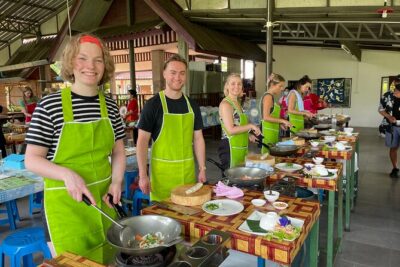
Half-Day Thai Cooking Class at Organic Farm in Chiang Mai
Read our review →
Elephant Sanctuary, Waterfall & Bamboo Rafting
Read our review →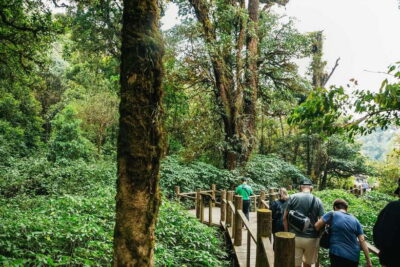
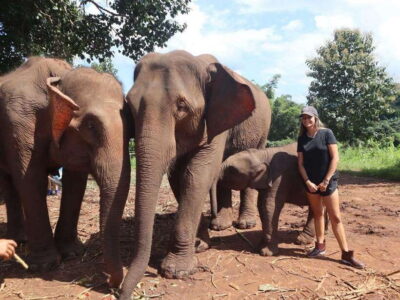

Chiang Rai Temples, Karen Tribe and Hot Springs
Read our review →
Cooking Class, Market & Thai Herbs Garden Tour
Read our review →
Authentic Cooking Class with Market & Farm Visit
Read our review →
Elephant Sanctuary Feeding Program Half-Day Tour
Read our review →Browse the lists this tour appears in