
Reviewed · CHIANG MAI TOURS
Chiang Mai: Historic Temples and City Guided Walking Tour
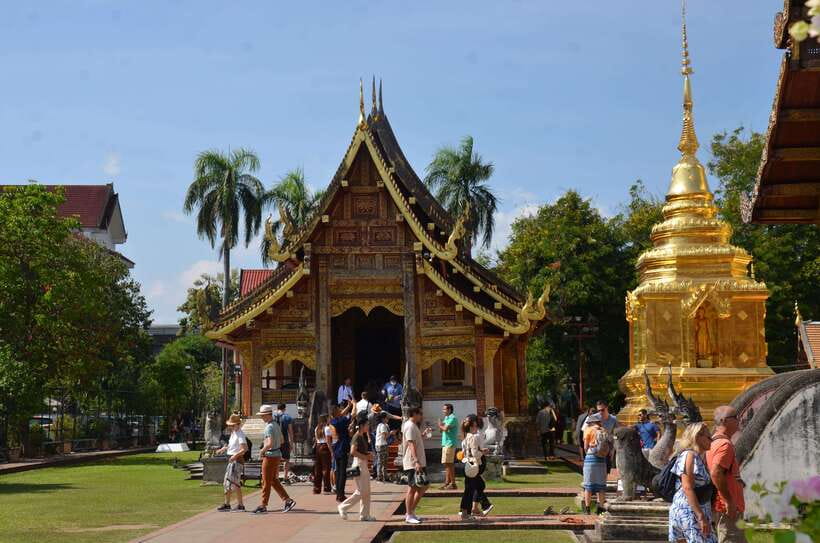
Chiang Mai’s best introduction may be on foot, moving from its oldest temple to its most famous ruined chedi while the city’s history comes into focus. This three-hour tour links Wat Chiang Man, Wat Phra Singh, Wat Phan Tao, and Wat Chedi Luang with the Three Kings Monument in the old city.
I like the small groups, capped at 10 people, and the easy pace reported by several guests. I also like the practical local touch: guides such as Jen, Pun, Danny, and Faan explain Buddhist customs, answer questions, suggest coffee shops and food, and sometimes help with photos. The main drawback is that temple entry fees cost extra, and the walk requires covered knees and shoulders in Thailand’s heat or rain.
Key points at a glance
- Four major temples in three hours: The route gives you a useful first look at Chiang Mai’s most important old-city sights.
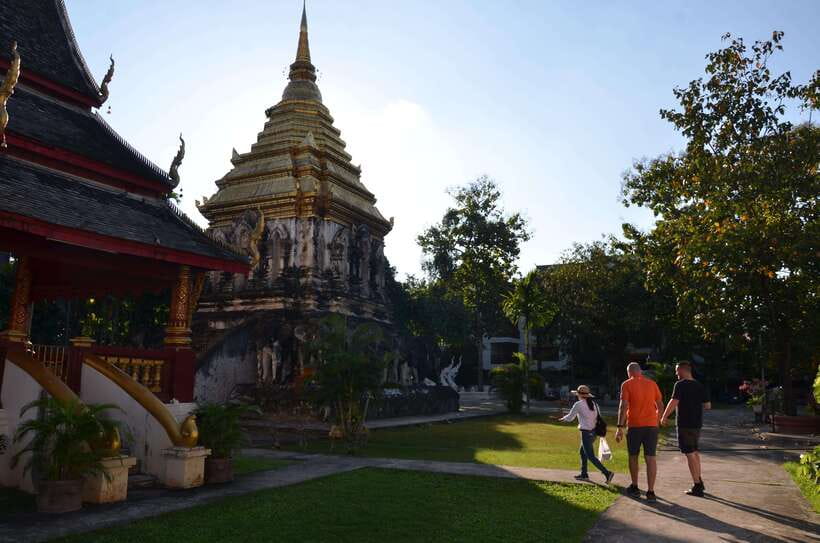
- Wat Chiang Man begins the story: Visit the city’s oldest temple, built in 1296.
- Lanna architecture takes center stage: Wat Phra Singh offers one of Thailand’s finest examples of classic northern Thai design.
- A rare teak building: Wat Phan Tao’s prayer hall is made almost entirely of teak and was once linked to a royal palace.
- The finish is Chiang Mai’s great ruin: Wat Chedi Luang brings you face to face with a huge chedi and a majestic standing Buddha.
- Good value for first-time visitors: At $21 per person, you pay for interpretation and structure, while bringing another 100 THB for the two listed entrance tickets.
Why this three-hour walk works so well
Chiang Mai’s old city is easy to explore in fragments. You can wander into one temple, snap a few pictures, and move on without understanding what you saw. A guide gives the buildings a framework: Lanna culture, Chiang Mai’s origins, Buddhist stories, royal connections, and the role of temples in local life.
The route also has a sensible shape. You start at Wat Chiang Man in the northeast of the old city, walk west through the historic center, pause at the Three Kings Monument, and continue to three of the area’s most important temples. You finish at Wat Chedi Luang, where it is easy to continue exploring on your own afterward.
This is not a bus tour with views through a window. You walk along city streets and smaller lanes, passing shops and cafés along the way. That makes the tour more useful for getting your bearings, especially if you have just arrived in Chiang Mai.
The group limit of 10 matters. You can hear the guide more easily, ask questions, and keep the group moving without the stop-and-start feel of a large sightseeing crowd. Some departures have been much smaller, with one guide leading only two, four, or six people.
More history-led days in Chiang Mai:
- Chiang Mai: Historic Old City Bike Tour – Morning or Night
★ 4.7 · 263 reviews - Chiang Mai: Private Historic Old City Bike Tour – Night
★ 4.7 · 143 reviews - Chiang Mai: Historical and Culture Exploration Walking Tour
★ 4.6 · 40 reviews
Starting at Wat Chiang Man, Chiang Mai’s oldest temple
Meet your guide at Wat Chiang Man and look for the Beyond Experience sign. The temple is more than a meeting point. Built in 1296, it is the first place on the route where Chiang Mai’s age becomes tangible.
You spend about 30 minutes here, with time for a guided visit, photographs, and questions. The guide explains the temple’s place in the city’s beginnings and points out details that are easy to miss when you visit alone.
This stop sets the tone for the rest of the walk. You are not simply counting temples. You are learning how to look at them, noticing the relationship between the prayer halls, Buddha images, decorative elements, and the wider Buddhist setting.
The meeting point does require a little care. One person had trouble finding the sign, but the guide helped by WhatsApp and directed the group to the right spot inside the temple grounds. I would arrive early and make sure your phone can receive messages.
The Three Kings Monument and the old city center
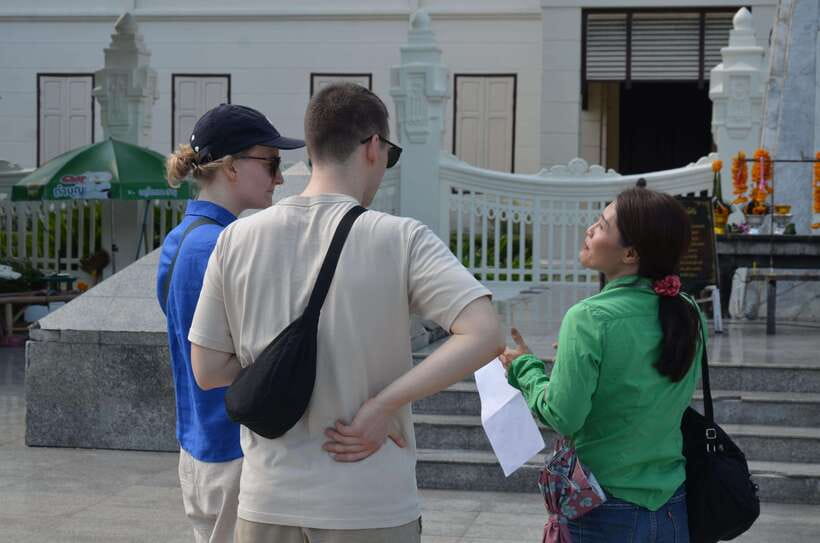
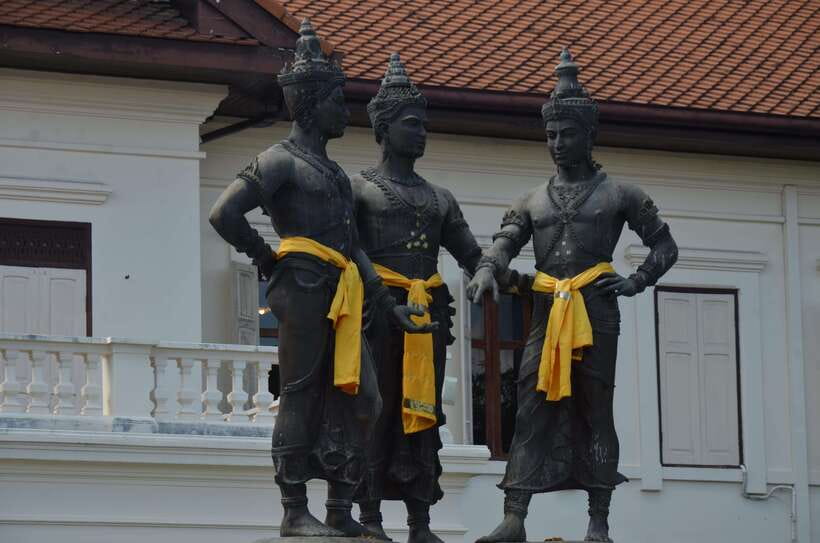
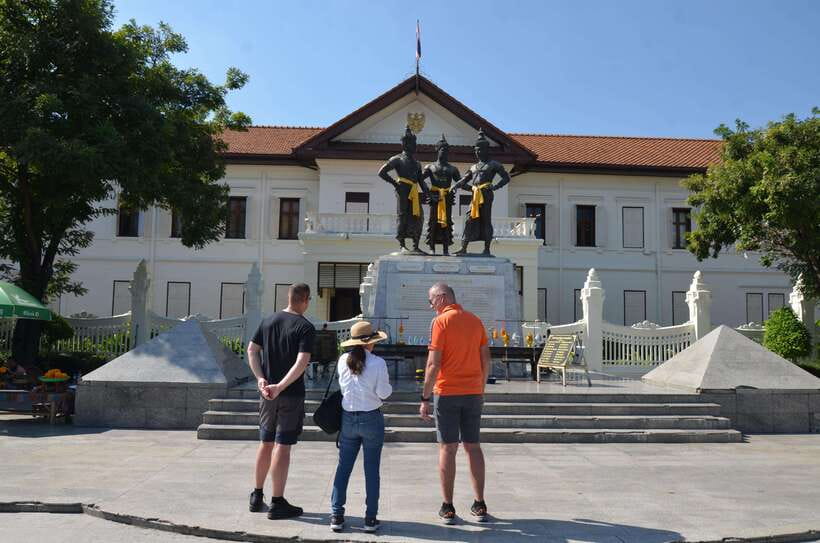
From Wat Chiang Man, the tour heads west to the Three Kings Monument. This is a large open square in the heart of Chiang Mai’s walled old town, and the 10-minute stop provides a useful change of pace after the first temple.
The monument helps place Chiang Mai’s founding story in a public setting rather than inside a religious compound. Your guide uses the stop to explain the city’s origins and the importance of the figures represented there.
You will not spend long here, so think of it as a short history lesson and photo stop rather than a full sightseeing visit. That brevity is sensible. The main appeal of this tour is the temples, and the monument works best as a link between the city’s civic story and its religious buildings.
The open square can also offer a little breathing room during the walk. Depending on the start time and weather, the sun may feel strong, so a hat and sunscreen are useful.
Wat Phra Singh and classic Lanna design
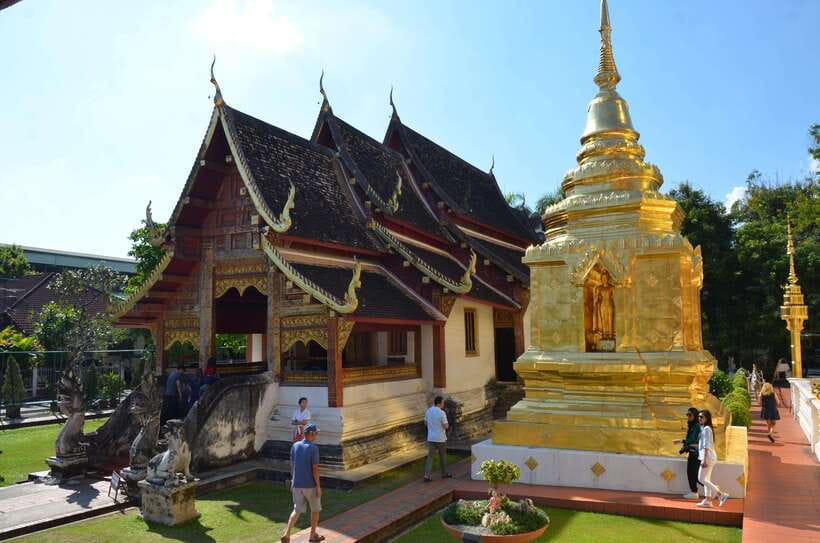
Wat Phra Singh receives about 40 minutes, one of the longest stops on the route. That is fitting. The temple is widely regarded as one of Thailand’s finest examples of classic Lanna architecture, the northern Thai style that gives Chiang Mai much of its visual character.
Here, the guide can help you read the design instead of treating it as a collection of attractive surfaces. You learn about the temple’s architecture, Buddhist meaning, and place in Chiang Mai’s culture. Guides such as Jen, Pun, and Danny have been praised for explaining temple details clearly and for connecting them to Thai culture and Buddhism.
This is also one of the two sites where entry costs extra. The stated fee is 50 THB. Carry cash, since the tour price does not include it.
You should dress for temple visits before you leave your hotel. Shorts, short skirts, sleeveless shirts, and uncovered shoulders or knees are not suitable for entering the temples. A scarf can help if you need extra coverage, but comfortable clothing that already meets the rule is simpler.
More walking tours in Chiang Mai:
- Chiang Mai: 3 Hour Old City and Temples Guided Walking Tour
★ 4.6 · 1,568 reviews - Chiang Mai: Temple And City Walking Tour Part I
★ 4.7 · 244 reviews - Chiang Mai: Local Food and Markets Guided Walking Tour
★ 4.3 · 175 reviews - Chiang Mai Untouched Elephant: Nature Walk & Waterfall Trek
★ 4.7 · 77 reviews
Wat Phan Tao, a quiet lesson in teak
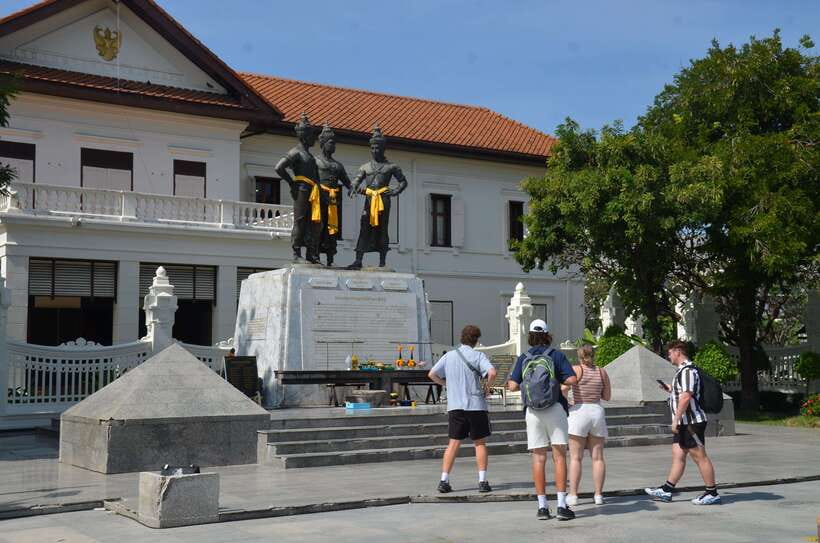
Wat Phan Tao is a smaller stop, lasting about 15 minutes, but it has a distinctive feature that makes it memorable. Its main ordination hall, or viharn, is built almost entirely of teak wood.
The building was originally part of a royal palace, and the hall contains a large teak throne once used by Chiang Mai’s rulers. That royal link gives the visit a different flavor from the stone and stucco structures elsewhere on the route.
Because the stop is brief, you should listen closely when the guide explains the building’s past. There may not be time for a long independent wander, but the focused visit works well in a three-hour schedule.
This is the sort of place where a local guide adds real value. A wooden hall can look simple beside a giant chedi, yet its materials and royal connection tell an important part of northern Thailand’s story. The contrast also keeps the itinerary from feeling repetitive.
Wat Chedi Luang, a powerful finish
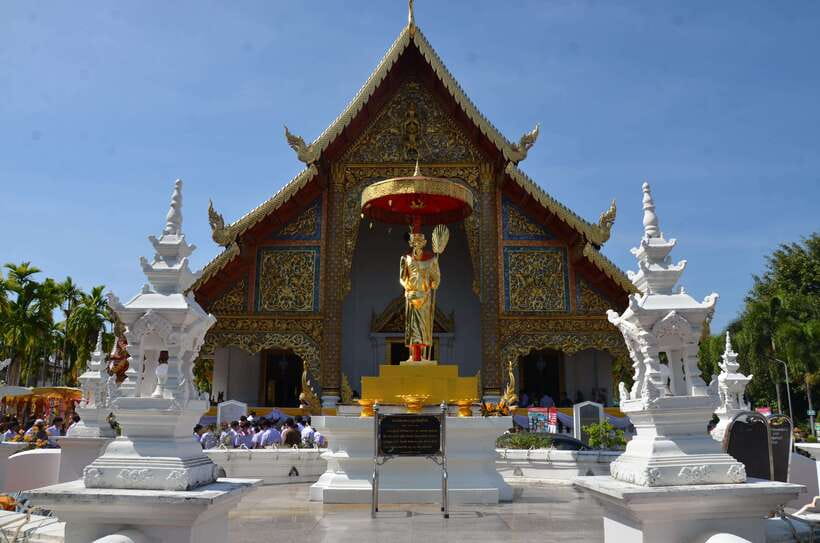
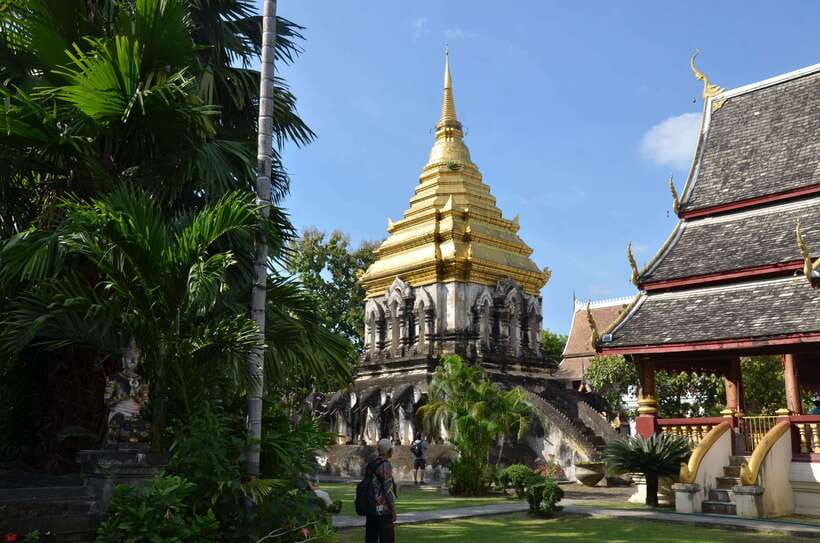
The tour ends at Wat Chedi Luang, with about 40 minutes for a guided visit. The ruined chedi is the route’s largest visual moment, and its damaged form gives the site a different mood from the more complete temples earlier in the morning.
Inside the main prayer hall, you see a majestic standing Buddha. The guide explains the site’s religious and historical importance, helping you connect the large structure outside with the active Buddhist place of worship inside.
Wat Chedi Luang is the second temple with an additional entry fee, listed as 50 THB. Together, the two admission charges total 100 THB, a small but important addition when you are comparing the $21 tour price with a self-guided visit.
The finishing point is Watchediluang Varaviharn. Since there is no return transport included, plan to continue from there on foot or arrange your next ride after the tour. The end point is useful for further old-city exploring, but you should not expect a hotel drop-off.
What the guides add to the temples
The strongest part of the tour is the human explanation. The listed language is English, and the guides use the stops to discuss Lanna history, Buddhist traditions, temple details, and local stories.
Different guides are named in the feedback, including Jen, Pun, Danny, Faan, John, Jackie, Jane, Gin, Ponky, and Twotwo. The repeated pattern is clear: the experience depends on the guide, and the guide team has earned praise for friendly presentation, clear English, patience, humor, and practical help.
Danny is described as a former monk of 12 years, which gave his explanations of Buddhism and temple customs a particularly useful personal context. Other guides have helped with coffee and food suggestions, including a recommendation for khao soi that one person later returned to try.
You should feel free to ask questions. The group size makes this easier, and the tour is not presented as a silent march between photo stops. Guides have taken time to answer questions, point out details, help with pictures, and adjust the pace for older members of the group.
Pace, weather, and physical effort
Three hours is enough time to see the main sights without turning the day into a full-day temple marathon. The walk is described as relaxed and well paced, with frequent opportunities to stop at temples, listen, and take photos.
Still, this is a walking tour. You should wear comfortable shoes and expect the heat to affect your energy, especially during warmer parts of the day. One of the clearest practical advantages is booking an early departure, when the temperature is more manageable.
Chiang Mai’s rainy season runs from July to mid-October. Bring an umbrella or raincoat during that period. The activity includes a bottle of water, but you should still prepare for sun, humidity, and sudden rain.
The tour is not suitable for pregnant women or people with back problems. That restriction matters because the experience involves several hours on foot, and the route does not include a vehicle between stops.
Is $21 a fair price?

At $21 per person, this is strong value if you want context rather than just access to temples. The price includes a local English-speaking guide, a three-hour route, a small group, and a bottle of water. You pay the listed 100 THB separately for entry to Wat Phra Singh and Wat Chedi Luang.
A self-guided visit can cost less, especially if you already know the old city and are happy to read signs or use your own guidebook. But the savings may not be worth it on your first day in Chiang Mai. The guide helps you understand what you are seeing, keeps the route organized, and adds local suggestions for cafés and food.
The value is best for first-time visitors, history fans, and anyone who wants a clear introduction before returning to favorite temples independently. If you prefer slow photography, quiet meditation, or extensive time inside one site, the fixed schedule may feel too brisk.
Temple manners and what to pack
You need to treat these as active religious places, not only monuments. Cover your shoulders and knees, wear comfortable clothes, and follow the guide’s instructions when entering halls or viewing Buddha images.
Pack:
- Comfortable shoes
- Sunscreen and a hat
- An umbrella or raincoat in the wet season
- Cash for the two 50 THB entrance fees
- A scarf for extra coverage
- A phone for meeting-point messages and photographs
Large bags and luggage are not allowed. Leave bulky items at your accommodation rather than bringing them to the meeting point.
Who should book this walking tour?
I would choose this for a first morning or afternoon in Chiang Mai. It gives you a practical map of the old city and introduces the main ideas you will keep seeing during the rest of your stay.
It is also a good fit for solo visitors who want company without joining a huge group, couples who like history, and families with older children who can manage three hours of walking. The group cap of 10 keeps the guide accessible.
You may want another plan if you have back problems, are pregnant, dislike walking in heat, or need a very slow schedule. It is also less suitable if your main goal is shopping, food tasting, or long private time at each temple. This is a history and architecture walk with brief photo stops, not a food tour.
Should you book it?
Book it if you want Chiang Mai’s temples to make sense, not just look beautiful. The route covers the city’s oldest temple, a central monument, classic Lanna design, a teak royal hall, and a huge ruined chedi. At $21, that is a sensible introduction, especially with a small group and a guide who can answer questions.
Choose an early start if you can, wear temple-ready clothes from the beginning, and carry 100 THB for admission. For a first visit to Chiang Mai, this is an efficient, low-impact way to get your bearings and learn enough to explore the old city with greater appreciation afterward.
FAQ
How long does the Chiang Mai temple walking tour last?
The tour lasts three hours.
Where does the tour begin?
It begins at Wat Chiang Man. Look for the Beyond Experience sign.
Where does the tour finish?
The tour finishes at Wat Chedi Luang, also listed as Watchediluang Varaviharn.
Which temples are included?
The route includes Wat Chiang Man, Wat Phra Singh, Wat Phan Tao, and Wat Chedi Luang.
Is the Three Kings Monument included?
Yes. The tour includes a guided 10-minute visit and photo stop at the Three Kings Monument.
Are temple entrance fees included?
No. Wat Phra Singh costs 50 THB and Wat Chedi Luang costs 50 THB. Wat Chiang Man and Wat Phan Tao are not listed with additional fees in the activity details.
What language is the tour offered in?
The tour is offered in English with a live guide.
What should I wear?
Wear comfortable clothing that covers your shoulders and knees when entering temples. Shorts, short skirts, and sleeveless shirts are not allowed for the temple visits.
Just added around Chiang Mai
- Taste of Chiang Mai: Michelin Guide & Street Food Tour★ 4.9 · 159 reviews
- Red, Blue, White Temples & Hot Spring Trip from Chiang Mai★ 4.4 · 143 reviews
- From Chiang Mai: Mae Taeng Valley and Waterfalls Cycle Tour★ 4.9 · 159 reviews
- Long Neck Village, Silver Temple & Chiang Mai Top Sites★ 4.7 · 17 reviews
- Chiang Mai: Local Northern Thai Cooking Class at Grandma’s★ 5.0 · 33 reviews
- Chiang Mai: Khum Khantoke Northern Thai Cuisine and Show★ 4.3 · 38 reviews
- Private : Sticky Waterfall & Secret Temple & Karen Village.★ 5.0 · 9 reviews
- Half-day with CHIANGMAI ELEPHANT CARE program (12pm-6pm.)★ 5.0 · 27 reviews
Chiang Mai Tours, compared.
Half-Day Thai Cooking Class at Organic Farm in Chiang Mai
Read our review →
Elephant Sanctuary, Waterfall & Bamboo Rafting
Read our review →

Chiang Rai Temples, Karen Tribe and Hot Springs
Read our review →
Cooking Class, Market & Thai Herbs Garden Tour
Read our review →
Authentic Cooking Class with Market & Farm Visit
Read our review →
Elephant Sanctuary Feeding Program Half-Day Tour
Read our review →Browse the lists this tour appears in