
Reviewed · CHIANG MAI TOURS
Small-Group Chiang Mai Evening Street Food Tour
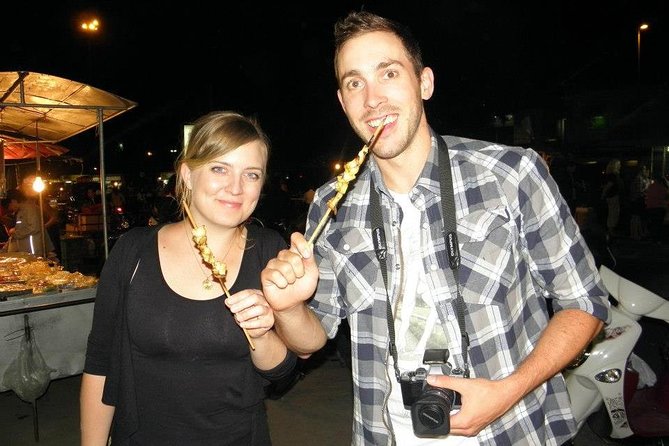
Chiang Mai’s best food lesson may come one small bite at a time. This evening tour takes you by songthaew, the red shared pickup trucks used around town, to markets and local food stops where you can try northern Thai dishes, noodles, sweets, dumplings, stewed pork, and more. Some outings include a restaurant and several markets, with as many as 20 tastings.
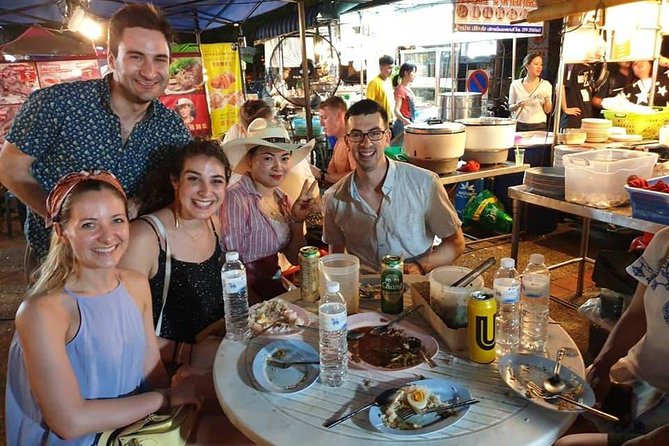
I like the small group of eight or fewer, which makes it easier to ask what an unfamiliar dish is and get help ordering. I also like the practical handout with food names and basic Thai phrases, since it helps you keep eating after the tour ends.
The main caution is that the exact route and guide can shape the night. Most outings sound well organized, but one account described a confused route, an SUV instead of the expected songthaew, and a tour that ran long. Dietary limits also matter: the tour is not suitable for vegetarians according to the booking information.
Key points at a glance
- Up to 20 or more tastings: Expect a serious dinner, not a few token samples.
- Northern Thai focus: Learn about Lanna food and how regional cooking differs around Thailand.
- Two evening markets: The advertised route combines walking with local transport between food areas.
- Guides who teach as they go: Goal, Jay, Chai, and Mr. T are among the guides praised for clear explanations and friendly care.
- Dinner and water included: You pay extra only for alcohol and personal purchases.
- Hotel pickup and drop-off: The tour starts around 7 p.m. and lasts about two and a half hours.
Why this tour works best when you arrive hungry
At $42.39 per person, this is priced as a full dinner with a local escort, transport, bottled water, and many food samples. That matters in Chiang Mai, where a visitor can spend an evening wandering from stall to stall without knowing what to order, how a dish is served, or which foods belong to northern Thailand.
The quantity is one of the strongest parts of the outing. Several descriptions point to roughly 18 to 20 dishes, and one evening included more than 20 tastes plus a small drink at the end. You should treat this as dinner rather than an appetizer before dinner.
I would eat lightly beforehand. The food comes in waves, and it is easy to fill up on the first savory dishes before the sweets and later stops arrive. One person who had eaten a late lunch found the amount difficult to manage, while another described ending the night in a food coma.
This is also a good first-evening activity in Chiang Mai. You get a basic map of the city’s food scene, see several areas after dark, and receive enough guidance to return to a market later on your own.
More Food Tours in Chiang Mai
- Chiang Mai: Evening Local Street Food Market Tour
★ 4.8 · 604 reviews - Northern Flavours Chiang Mai Food Tour with 15+ Tastings
★ 5.0 · 513 reviews - The 10 Tastings of Chiang Mai With Locals: Private Street Food Tour
★ 5.0 · 216 reviews
Starting at 7 p.m. with a local ride
The stated start time is 7 p.m., with pickup offered from Chiang Mai accommodations. The included transport is described as a private vehicle for hotel pickup and drop-off, while the market portion uses a shared songthaew, the familiar red pickup taxi.
That combination gives the evening a local feel without asking you to solve the city’s transport system at the start. The ride is not the main event, but it helps connect food areas and saves time that would otherwise be spent arranging taxis.
The exact vehicle experience deserves a little caution. The standard description promises songthaew travel, but one dissatisfied account said the group was placed in an SUV instead. That may have been an isolated service problem, but it is worth keeping in mind if the open-air local ride is a major reason you are booking.
The group limit is eight people. That is small enough for the guide to watch what you are eating, answer questions, and help several people order without turning every stop into a long conference.
At the first restaurant, start with regional context
The route can begin at a local restaurant before moving fully into the markets. This is a useful opening because a restaurant allows the guide to lay out several northern dishes at once and explain how food from Chiang Mai differs from cooking in other parts of Thailand.
Goal receives especially strong praise for explaining the influence of nearby countries and the food traditions of different Thai regions. Another account describes learning that northern food is often called Lanna food. Those details give you a better frame for the rest of the night: you are not just eating Thai food in general, but comparing the north with other parts of the country.
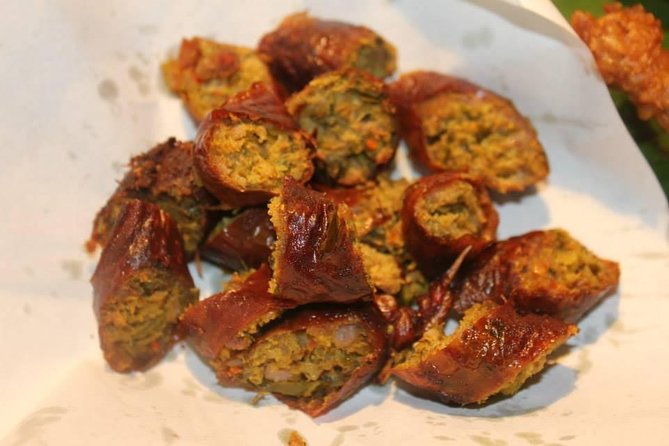
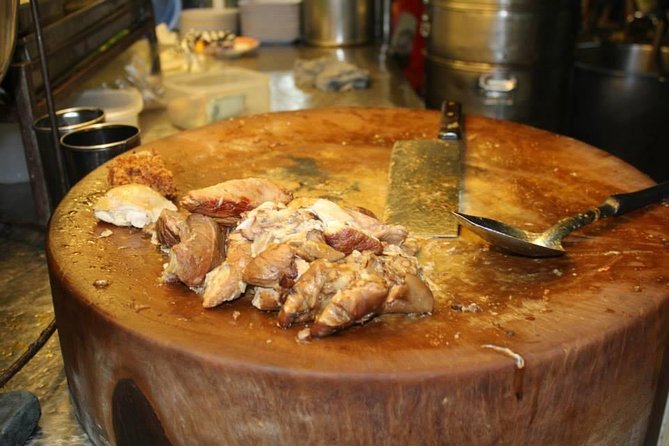
You might encounter kannom jin Chinese noodles, stewed pork, coconut dumplings, savory northern dishes, and sweets. The selection is broad rather than focused on one famous plate, so this stop works well if you want to compare textures and cooking methods.
The guide’s role is important here. A dish can look simple in a market tray, yet the story may lie in how it is steamed, stewed, grilled, fermented, or served with other ingredients. Guides such as Goal and Jay are praised for explaining preparation and regional differences instead of simply pointing at food and naming it.
The amount served at the opening stop can be generous. Pace yourself, especially if the guide presents a large array at the beginning.
Walking through the evening markets
After the first food stop, the tour moves through two evening markets according to the advertised route. Some outings have included three separate markets or even four food areas, so the precise number may vary with the guide, market conditions, and the night’s plan.
The market walking is where the tour earns its keep. You can look at unfamiliar trays and grills with someone who knows what is worth trying, how to eat it, and which flavors to expect. The guide can also help you order in Thai, a small skill that makes later market visits less awkward.
Expect a mixture of cooked dishes, snacks, desserts, and regional specialties rather than a single large meal. The listed examples include kannom jin Chinese noodles, coconut dumplings, stewed pork, northern Thai food, and sweets. You may also get both spicy and mild options at different stops.
The markets are not presented as polished dining rooms. Conditions can be crowded, noisy, dim, or disorganized depending on the evening. One person specifically suggested carrying a small flashlight, which is sensible for reading signs, seeing food clearly, or walking over uneven areas.
That low-key setting is part of the appeal, but it also means you should stay flexible. This is street food, not a fixed tasting menu with a printed schedule. If you prefer exact portions, formal seating, and a guaranteed list of dishes, a restaurant-based food tour may suit you better.
More street food walks in Chiang Mai:
- Taste of Chiang Mai: Michelin Guide & Street Food Tour
★ 4.9 · 159 reviews - Chiang Mai: Food Tour by Songtheaw Truck with 15+ Tastings
★ 4.9 · 157 reviews - Chiang Mai: Temples and Street Food Night Tour by Tuk Tuk
★ 4.3 · 81 reviews - Chiang Mai: Walking Food Tour
★ 4.8 · 15 reviews
Learning what to order in Thai
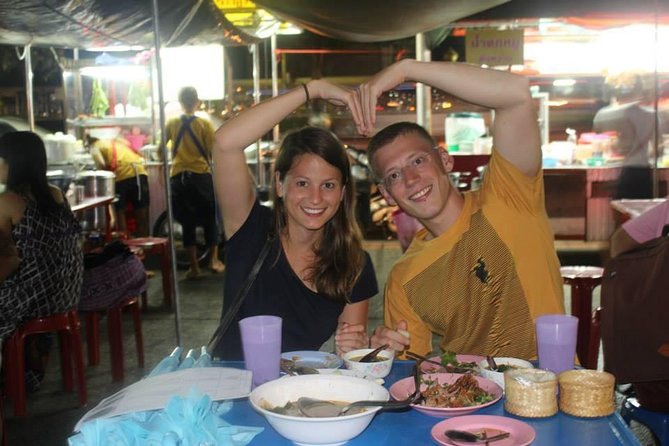
The Thai language lesson is brief and practical. You are not signing up for a class, but you do get help with basic food phrases and the names of popular dishes.
The included leaflet explains common street foods and gives you a reference for later meals. Jay is praised for providing a handout with key phrases and dish names, and that is one of the most useful takeaways from the evening. You can keep it in your bag and use it when you return to a market without a guide.
The best time to ask questions is at the stall. Ask what an ingredient is, how spicy the dish usually comes, and whether it is eaten alone or with something else. The small group makes this easier than a large coach outing, where a guide may have to repeat the same answer to everyone.
You also get a little confidence boost. Ordering food in Thai can feel intimidating when you do not know the name or pronunciation. With a local guide beside you, you can try the phrase, point to the dish, and then use the same method later in your visit.
How much food you actually get
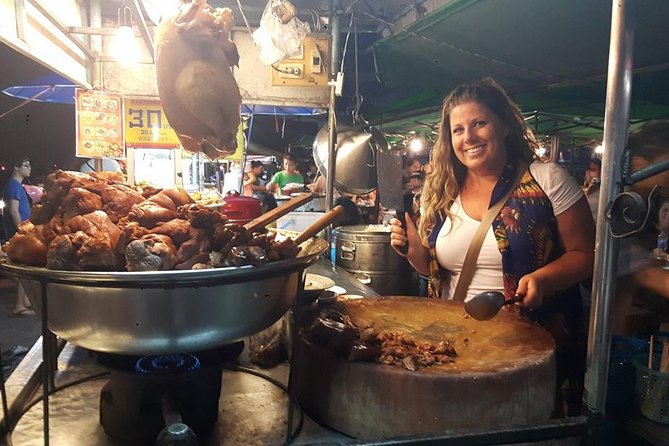
The tour includes dinner, food tastings, and drinking water. Alcohol is not included, though it can be purchased, and one reported evening finished with a small liquor tasting.
The food volume is unusually high for a two-and-a-half-hour activity. Accounts describe around 18 to 20 tastings, with at least one outing reaching more than 20 dishes. That can include small portions of mains, snacks, desserts, and regional specialties.
Do not assume every person will receive the same number of items. Street vendors may run out, a market may be quieter than expected, or a guide may adjust the route. The stated itinerary promises a wide range of food across two markets, not a fixed 20-course menu.
This is not ideal for strict vegetarians. The booking details say the tour is not suitable for vegetarians, even though one vegetarian participant found some choices available. If you avoid meat, fish, or animal products, tell the operator about your dietary needs before booking and understand that the tour may not be able to meet them.
Specific allergies and dietary restrictions should be given at booking. Do not rely on guessing from appearance at a busy stall.
The guides make the difference
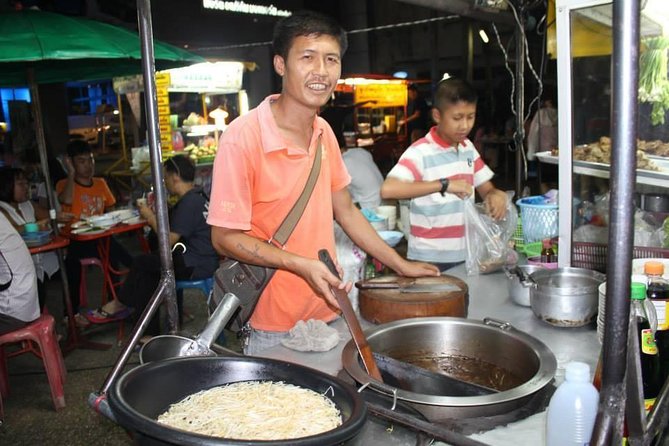
The most praised part of the outing is the guide’s care and food knowledge. Goal is repeatedly described as friendly, attentive, and strong at explaining food from different regions. Jay is praised for being personable and for supplying the useful phrase sheet. Chai is noted for politeness, city knowledge, and looking after the group. Mr. T is praised for calm handling of heavy traffic.
You should not expect one specific guide unless the operator confirms it. Still, these names give you a sense of the guide style the company aims for: personal, talkative, and involved in helping you taste food beyond the dishes you might choose alone.
A good guide also protects you from uncertainty. You can ask about unfamiliar ingredients, preparation, spice, and eating methods before committing to a portion. That is especially valuable if you are trying foods you would normally walk past.
There is one important balance point. One outing was described as chaotic, with unclear food choices, limited explanations, an unexpected vehicle, and a longer-than-advertised duration. The company apologized and said it would address the problem. The much more common pattern in the supplied material is positive, but the experience can depend heavily on the individual guide and evening conditions.
Is $42.39 a fair price?
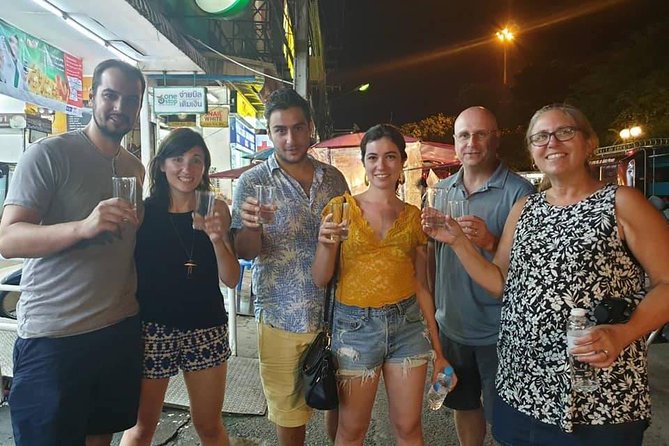
For Chiang Mai, $42.39 is not the cheapest way to eat. You could buy individual street dishes for much less if you already know where to go and what to order.
The value comes from combining several services in one evening: hotel pickup and return, a local guide, shared transport, bottled water, dinner, market access, translation help, and a large number of tastings. If you would otherwise book separate taxis, sample cautiously, and miss dishes because you do not know their names, the price is easier to justify.
The small group improves the value. Eight people or fewer means the guide can spend time answering questions and helping with orders. You are also covering several food areas in one night, something that would take more planning on your own.
I would book it for the first or second night of your Chiang Mai stay. Use the handout and your new food vocabulary to revisit the dishes you liked. If you are an experienced market eater who already knows Chiang Mai well, the cost may feel less attractive.
Who should book this evening food tour?
This tour suits you if you want to try many foods quickly, prefer local markets to formal dining rooms, and enjoy learning while you eat. It is especially useful for first-time visitors who want a friendly introduction to northern Thai food and basic ordering phrases.
It also works for cautious eaters who want a guide nearby when trying unfamiliar dishes. The guide can explain what is being served and help you choose between spicy and milder options when available.
You may want another tour if you are vegetarian, need tightly controlled food preparation, dislike shared transport, or want a fixed menu and exact timing. The evening involves walking, market conditions, and a high volume of food, so it is not a relaxed sit-down dinner.
Pickup is offered, mobile tickets are accepted, and most people can participate. The experience requires good weather and a minimum number of participants. If poor weather or low enrollment cancels the tour, you are offered another date, another experience, or a full refund.
Should you book it?
I would book this tour if your priority is variety, local market food, and an easy introduction to Chiang Mai’s northern cooking. The combination of a small group, many tastings, hotel transport, and guides such as Goal or Jay can make $42.39 good value.
Go in hungry, carry a small flashlight, and keep your schedule flexible. If you need vegetarian food, precise organization, or guaranteed songthaew transport, ask questions before paying or choose a more specialized food tour.
FAQ
What time does the Chiang Mai evening food tour start?
The tour starts at 7 p.m.
How long does the tour last?
The advertised duration is approximately 2 hours and 30 minutes.
How many people can join the group?
The group has a maximum of eight participants.
Is hotel pickup included?
Yes. Hotel pickup and drop-off are included by private vehicle.
Is food included in the price?
Yes. Food tastings and dinner are included, along with drinking water.
Are alcoholic drinks included?
No. Alcoholic drinks are not included, but they are available to purchase.
Is the tour suitable for vegetarians?
The booking information says the tour is not suitable for vegetarians. You should provide any dietary requirements when booking.
Does the tour use a songthaew?
The advertised market transport is a shared songthaew, the red pickup taxi commonly used in Chiang Mai. Hotel pickup and drop-off use a private vehicle.
What is the cancellation policy?
You can cancel at least 24 hours before the local start time for a full refund. Cancellations or changes made less than 24 hours before the start are not refunded or accepted. Weather or minimum-participant cancellations qualify for another date, another experience, or a full refund.
More Evenings Out in Chiang Mai
- Chiang Mai: Doi Suthep and Wat Umong Enchanting Evening Tour
★ 4.6 · 1,811 reviews - Chiang Mai: Evening Cooking Class and Local Market Visit
★ 4.9 · 648 reviews - Chiang Mai: Kalare Night Bazaar Boxing Stadium Muay Thai
★ 4.7 · 507 reviews - Best seller!! Amazing Night tour, Doi Suthep + Wat umong – Top Must visit!
★ 4.5 · 451 reviews
Just added around Chiang Mai
- Taste of Chiang Mai: Michelin Guide & Street Food Tour★ 4.9 · 159 reviews
- Red, Blue, White Temples & Hot Spring Trip from Chiang Mai★ 4.4 · 143 reviews
- From Chiang Mai: Mae Taeng Valley and Waterfalls Cycle Tour★ 4.9 · 159 reviews
- Long Neck Village, Silver Temple & Chiang Mai Top Sites★ 4.7 · 17 reviews
- Chiang Mai: Local Northern Thai Cooking Class at Grandma’s★ 5.0 · 33 reviews
- Chiang Mai: Khum Khantoke Northern Thai Cuisine and Show★ 4.3 · 38 reviews
- Private : Sticky Waterfall & Secret Temple & Karen Village.★ 5.0 · 9 reviews
- Half-day with CHIANGMAI ELEPHANT CARE program (12pm-6pm.)★ 5.0 · 27 reviews
Chiang Mai Tours, compared.
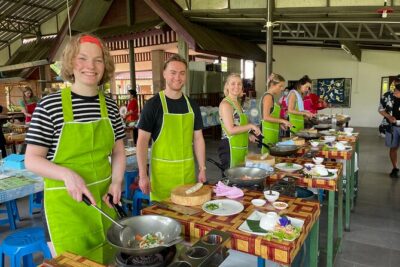
Half-Day Thai Cooking Class at Organic Farm in Chiang Mai
Read our review →
Elephant Sanctuary, Waterfall & Bamboo Rafting
Read our review →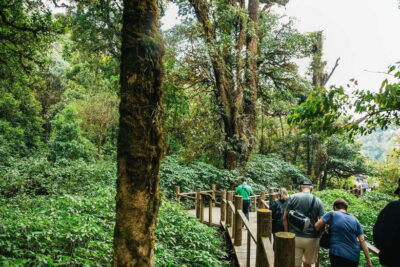


Chiang Rai Temples, Karen Tribe and Hot Springs
Read our review →
Cooking Class, Market & Thai Herbs Garden Tour
Read our review →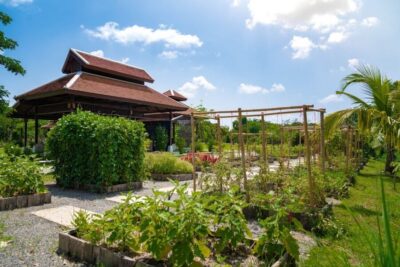
Authentic Cooking Class with Market & Farm Visit
Read our review →
Elephant Sanctuary Feeding Program Half-Day Tour
Read our review →Browse the lists this tour appears in