
Reviewed · CHIANG MAI TOURS
Chiang Mai: History & Mouth Watering Food Tour
Chiang Mai’s best introduction may be a bowl, a temple courtyard, and a ride across town in local transport. This three-hour tour links Lanna temples with local food, moving from the Three Kings Monument through the old city and on to Warorot Market, where your guide helps explain what you are eating and why it matters.
I like the small group limit of eight and the way the tour mixes ordinary city life with major sights. I also like the flexibility of having food tastings, a snack, a meal, drinks, transport, and temple admission included. The main catch is that this is a walking food tour, not a gentle stroll: expect 3 to 5 kilometers, and the food is not designed for vegetarians or people with strict dietary needs.
Key points to know before booking
- Three hours with a clear local focus: Start at the Three Kings Monument at 9:00 AM and finish around noon at Warorot Market.
- Food and temples share equal billing: You visit Lanna temples, a wet market, restaurants, and food stalls rather than spending the whole morning at one attraction.
- Small groups make questions easier: The tour accepts no more than eight participants, with private and shared options available.
- Expect plenty of walking: Comfortable shoes are essential, and an umbrella is useful in Chiang Mai’s changeable weather.
- Guides shape the experience: Pe, Lee, Lynn, Pen, and Lily have been praised for clear explanations, friendly service, and adapting tastings when possible.
- The ending is useful: You finish at Warorot Market, so you can keep exploring the market and old city after the guided portion ends.
Why this Chiang Mai tour works
I see this experience as a practical way to get your bearings in Chiang Mai. The route brings together three things that are easy to separate on your own: the old city’s Lanna religious sites, the everyday food economy, and local ways of getting around.
The tour begins at the Three Kings Monument, a central meeting point in the old city. From there, you walk to restaurants and markets, stopping along the way for food and explanations. The pace is meant to be unhurried, which matters in Chiang Mai’s warm climate and gives you time to notice ordinary details instead of rushing from one stop to the next.
The $67 price is reasonable if you want a guided introduction with several inclusions. You are not paying only for a meal. The fee covers an English-speaking guide, local transportation, admission fees, snacks, a meal, drinks, and accident insurance. The value is strongest when you want someone to choose food stops, explain temple customs, and handle the route.
It is less attractive if you already know Chiang Mai’s food scene, prefer to eat independently, or want a long temple tour with detailed architectural commentary at every stop. Three hours goes quickly, especially with 3 to 5 kilometers of walking.
More Food Tours in Chiang Mai
- Small-Group Chiang Mai Evening Street Food Tour
★ 4.5 · 826 reviews - Chiang Mai: Evening Local Street Food Market Tour
★ 4.8 · 604 reviews - Northern Flavours Chiang Mai Food Tour with 15+ Tastings
★ 5.0 · 513 reviews
Meeting the guide at the Three Kings Monument
The morning starts at 9:00 AM in front of the Three Kings Monument at 127/7 Prapokkloa Road. The listed starting point is also given as Three Kings Monument, 54 Ratvithi Road, so you should check the exact meeting instructions when booking and arrive a little early.
This is a sensible place to begin. The monument sits in Chiang Mai’s old city and gives the guide a natural setting for an introduction to local history. From here, the tour moves on foot rather than placing you straight into a vehicle.
Your guide is licensed and speaks Thai and English. Several guides have been singled out by name for different strengths. Pe has been praised for making background information entertaining. Lee has helped explain history and tradition in clear English. Lynn has adjusted tastings on the spot, including making choices more suitable for one vegetarian guest. Pen has taken dietary needs seriously, and Lily has been praised for stories and food recommendations.
Guide quality can always vary by date, but these details tell you what to hope for: not a lecture, but a person who connects places, ingredients, and local customs in plain language.
Wat Chedi Luang and Chiang Mai’s Lanna setting
Wat Chedi Luang is the main named temple stop, with about an hour set aside for a photo stop, sightseeing, walking, and a guided visit. It is one of the old city’s most important places to see, and it gives the food stops a useful cultural frame.
The tour is not only about eating something tasty and moving on. At the temple, you get a chance to understand the Lanna setting that shaped northern Thailand. Your guide introduces local culture while you walk through the site, and you can ask questions as you go.
One hour is enough for a meaningful visit without turning the morning into a full temple circuit. Still, you should keep your expectations in check. The supplied information names Wat Chedi Luang, while the schedule also refers to visits to temples in the plural. The exact number and order may vary, so do not book this if your main goal is a detailed survey of every major temple in Chiang Mai.
Dress matters. Short skirts and sleeveless shirts are not allowed, so wear clothing that covers your shoulders and knees. Comfortable footwear is more important than stylish footwear here. Temple paths, market lanes, and city streets make up much of the morning.
Walking toward Chiang Mai’s food stalls
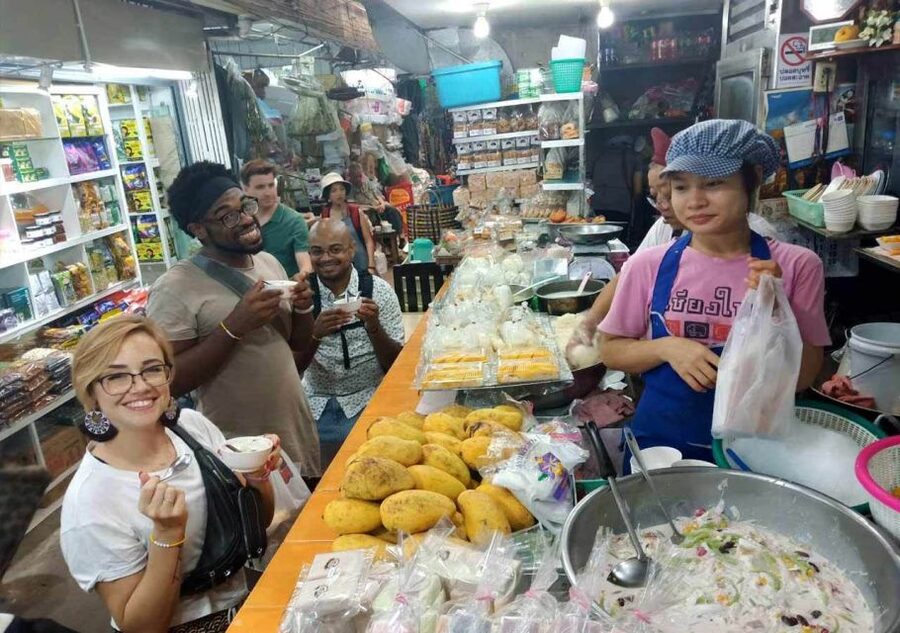
After the temple visit, the tour heads through the city by foot and local transportation. This is one of the most useful parts of the experience because you see Chiang Mai between the headline sights.
Walking lets you pause at restaurants and markets that you might not select from a map. You also get a better feel for distances and daily routines in the old city. The transport segment adds another local touch, and its cost is included, so you do not need to sort out each fare during the tour.
The morning is deliberately active. The total walking distance is expected to be 3 to 5 kilometers, and the route includes markets and food stops. Chiang Mai can feel hot even early in the day, so bring water if you normally need it, wear shoes with good support, and carry an umbrella. The umbrella is listed as something to bring, likely because it can help with sun as well as rain.
The slow pace helps, but this is not suitable for anyone looking for a seated tasting session. You will walk, stand, watch food being prepared, and move between locations.
More street food walks in Chiang Mai:
- The 10 Tastings of Chiang Mai With Locals: Private Street Food Tour
★ 5.0 · 216 reviews - Taste of Chiang Mai: Michelin Guide & Street Food Tour
★ 4.9 · 159 reviews - Chiang Mai: Food Tour by Songtheaw Truck with 15+ Tastings
★ 4.9 · 157 reviews - Chiang Mai: Temples and Street Food Night Tour by Tuk Tuk
★ 4.3 · 81 reviews
Warorot Market, the food center of the morning
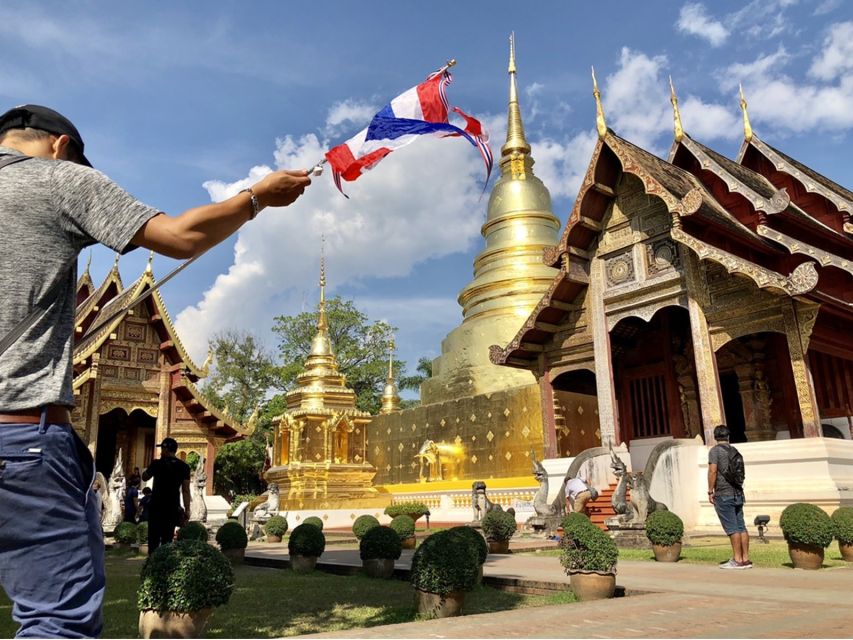
Warorot Market is the final stop and the main food setting. It is a working market rather than a polished food attraction, which is exactly why it can be useful. You get to see the place where locals shop and where northern Thai flavors are presented in everyday form.
The market portion is scheduled for about three hours in the detailed route, although the full activity lasts three hours from 9:00 AM to noon. Read that timing as an indication that Warorot Market is central to the experience, not as three additional hours after the temple visit.
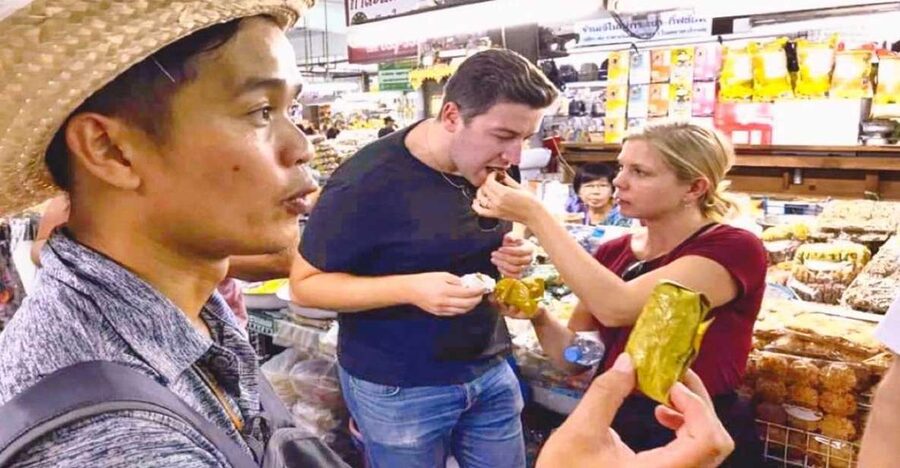
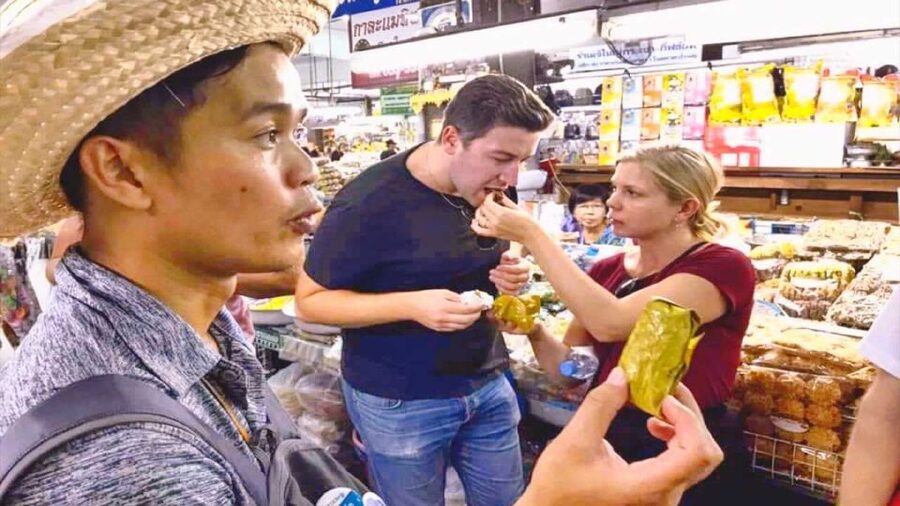
Your guide leads you through the food market and arranges tastings. The exact dishes are not promised in advance, so you should expect the selection to depend on what is available and suitable that day. The food may include snacks, a meal, and drinks, all covered by the tour. Alcohol is not included, and personal purchases are your responsibility.
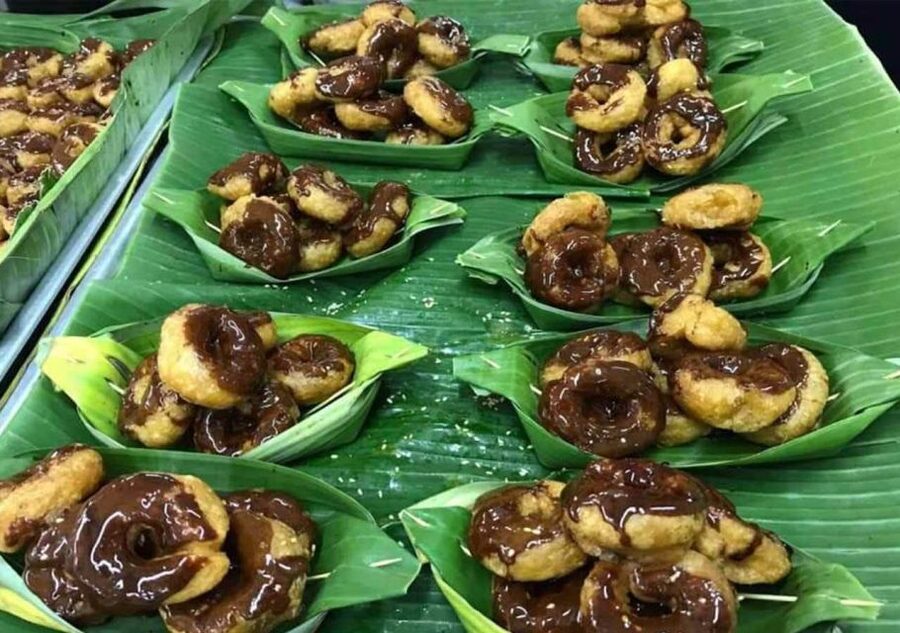
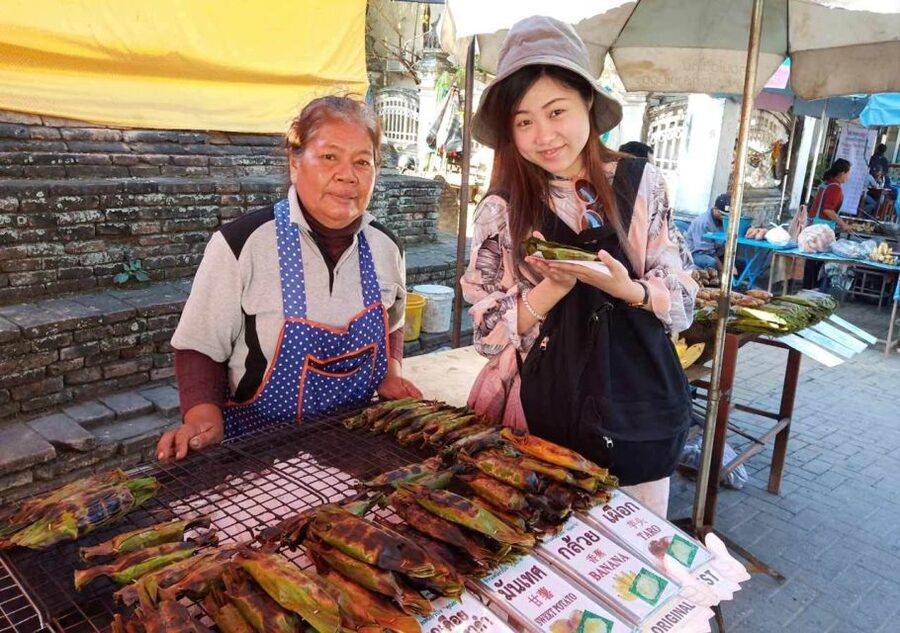
The strongest food detail from the tour’s past experiences is the variety. Guests have enjoyed trying several dishes rather than sitting down for one fixed restaurant meal. Sticky rice and jackfruit have been particular highlights, and one guide has taken guests to a coffee shop with a rooftop view of the city. That coffee stop appears to be part of a guide’s route rather than a guaranteed feature, so treat it as a welcome possibility, not a promised stop.
What you may taste, and who should skip it
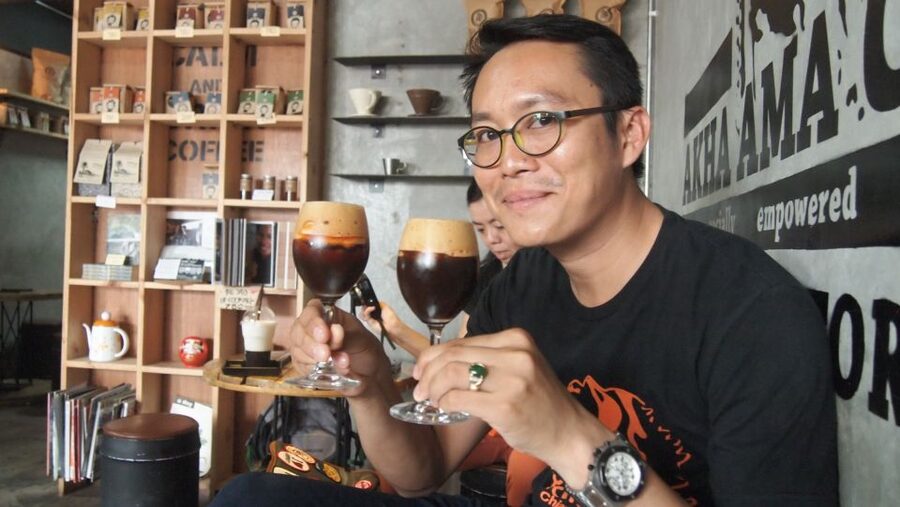
This tour is aimed at people who want local dishes and are happy to let a guide make suggestions. That makes it a good choice if you do not know what to order or want to try foods you might overlook on your own.
It is specifically not recommended for vegetarians and people with special dietary restrictions. That warning should guide your decision. One guest with vegetarian needs had tastings adjusted successfully, and another guide made careful choices after being told about dietary requirements. Still, the formal information says the tour is not suitable for vegetarians, so you should contact the provider before booking rather than assume substitutions will be available.
The same advice applies to allergies and strict restrictions. Food is central to the tour, and no detailed allergen or substitution policy is provided. If you have an important dietary concern, ask before paying.
Alcoholic drinks are not included. That is not a drawback for most morning visitors, but it is worth knowing if you expect a restaurant-based food tour with drinks beyond the listed snack, meal, and beverage.
A closer look at the guide-led experience
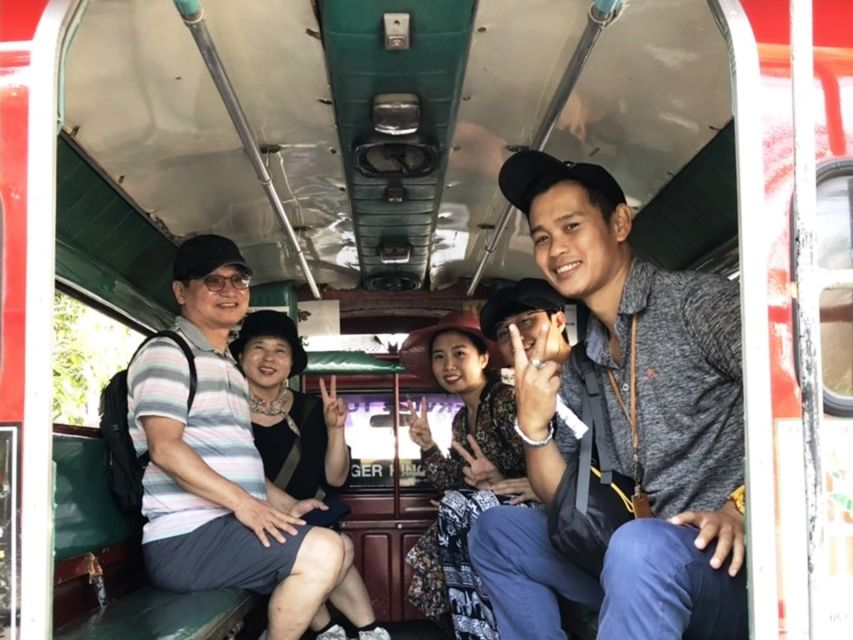
The guide is the difference between this being a series of snacks and being a useful introduction to Chiang Mai. A good guide can explain what is in a dish, point out how a market works, and connect the old city’s temples to local life.
The named guides offer a sense of the style you may encounter. Pe has been appreciated for lively background information. Lee has focused on history and tradition in a way that works for people who are not fully confident in English. Lynn has been flexible with food choices. Pen has been considerate about dietary needs, while Lily has brought stories and local food knowledge into the route.
You should still allow for variation. A small-group tour can be very personal when the group is small, but the tone depends on the guide and the mix of participants. The tour may operate as a shared group or private experience. A private booking gives you more room to ask for a particular pace or interest, while a shared group can be a pleasant way to meet other people.
One unusual point in the available feedback is a complaint from a guest who expected a private tour and felt the guide could have adapted more to personal interests. That is a useful reminder to confirm the group format you are booking. Private does not automatically mean every stop will be redesigned around your preferences.
The final stop at Warorot Market
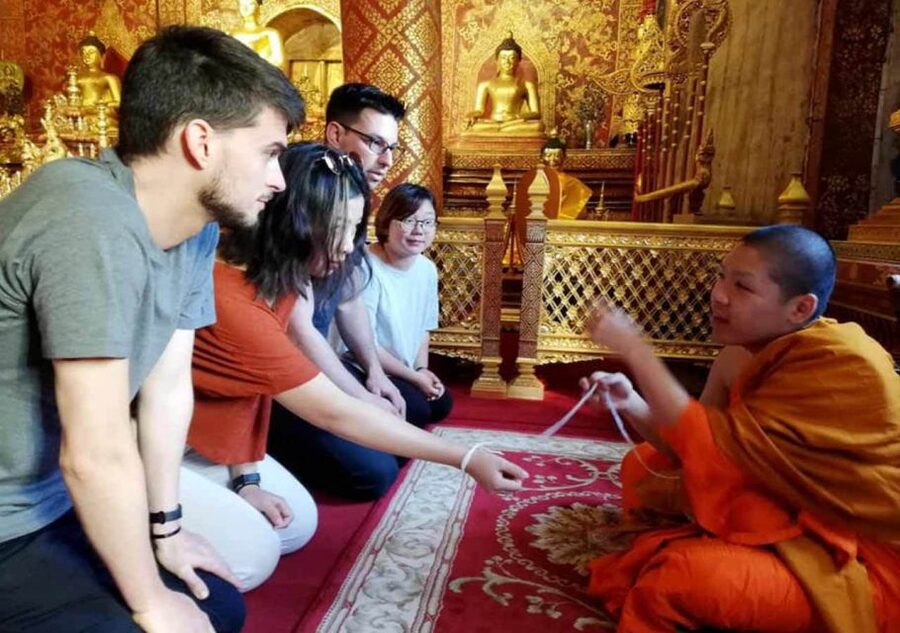
The tour ends at Warorot Market around noon. I like this arrangement because it does not send you back to the starting point before lunch. You can continue shopping, explore more of the market, or walk back toward the old city on your own.
The ending also gives you a practical chance to buy food or souvenirs independently, although personal purchases are not included. You will already have a guide’s introduction to the market, so the place should feel less confusing after the group departs.
If you have an afternoon activity across town, allow extra time after noon. The tour finishes in the old city area at Warorot Market, not at the Three Kings Monument. That is convenient for continued sightseeing but important for planning transport to your next stop.
Is $67 good value for three hours?
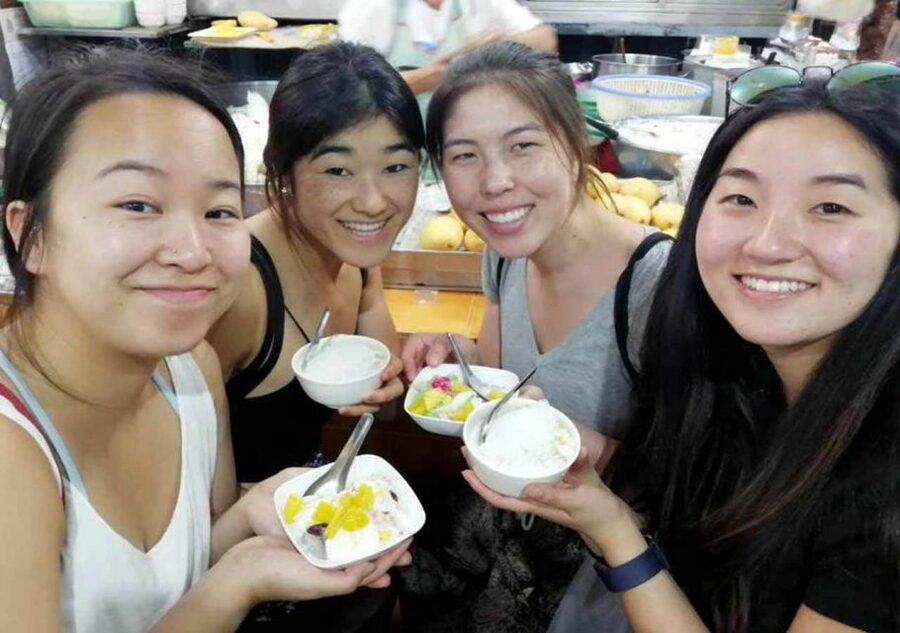
At $67 per person, this is not the cheapest way to eat in Chiang Mai. You could spend far less by visiting a market alone. The question is what you are buying beyond the food.
The fee includes:
- An English-speaking licensed guide
- Local transportation
- Snacks, a meal, and drinks
- Admission fees for the included places
- Accident insurance
That package makes the price easier to justify for a first day in Chiang Mai, especially if you want history explained in English and do not want to plan individual food stops. The small group limit of eight also gives the tour more value than a large bus outing.
The price is harder to justify for confident independent eaters who already know the old city and Warorot Market. You may also find the value limited if you cannot eat most of the food on offer.
Free cancellation up to 24 hours before the start and the reserve-now, pay-later option reduce the booking risk. These are useful planning features, but they do not change the core question: you should pay for the guided connection between food, temples, and local transport, not simply for a meal.
Who should book this experience?
I would recommend it to a first-time Chiang Mai visitor who wants a compact morning orientation. It suits you if you enjoy walking, like trying several foods, and want a guide to explain what you are seeing without spending a full day on a formal sightseeing tour.
It also works well for couples, friends, and small families with older children who can manage the distance. The private option may suit you if you want a more personal pace, while a shared group keeps the price structure straightforward and limits the number of people.
I would hesitate if you are vegetarian, have strict dietary restrictions, dislike market food, or need frequent rest periods. I would also skip it if you want a single subject handled in depth, such as temple architecture or advanced northern Thai cooking.
Bring comfortable shoes and an umbrella. Dress respectfully for the temples, and tell the provider about food needs before booking. Those simple steps will make a bigger difference than any other preparation.
Should you book the Chiang Mai History and Mouth Watering Food Tour?
Book it if you want to spend one active morning tasting local food, seeing Lanna temples, and learning how Chiang Mai works from a Thai and English-speaking guide. The best parts are the small group size, the included transport and food, and the chance to visit places you might not choose on your own.
Skip it if the vegetarian warning applies to you, if 3 to 5 kilometers of walking sounds tiring, or if you prefer to set your own food route. For the right visitor, $67 buys a useful introduction rather than just a meal, and finishing at Warorot Market leaves you in a good place to keep exploring.
FAQ
How long does the Chiang Mai food and history tour last?
The tour lasts three hours. It begins at 9:00 AM and ends around 12:00 PM in Chiang Mai’s old city at Warorot Market.
Where does the tour start?
You meet your licensed guide in front of the Three Kings Monument at 127/7 Prapokkloa Road in Chiang Mai. The starting information also refers to Three Kings Monument, 54 Ratvithi Road, so confirm the precise meeting instructions when booking.
Where does the tour finish?
The tour finishes at Warorot Market, also called Talat Warorot. You can continue exploring the market and old city after saying goodbye to your guide.
Is transportation included?
Yes. The local transportation fee is included in the $67 price, along with food, drinks, admission fees, an English-speaking guide, and accident insurance.
How much walking is involved?
You should expect 3 to 5 kilometers of walking during the tour. Comfortable walking shoes are recommended, and an umbrella is also listed as something to bring.
Can vegetarians or people with dietary restrictions join?
The tour is not recommended for vegetarians and is listed as unsuitable for vegetarians. If you have special dietary needs, contact the provider before booking because the food tastings are a central part of the experience.
More Historical Tours in Chiang Mai
- Chiang Mai: Historic Temples and City Guided Walking Tour
★ 4.7 · 650 reviews - Chiang Mai: Historic Old City Bike Tour – Morning or Night
★ 4.7 · 263 reviews - Chiang Mai: Private Historic Old City Bike Tour – Night
★ 4.7 · 143 reviews - Chiang Mai: Historical and Culture Exploration Walking Tour
★ 4.6 · 40 reviews
Just added around Chiang Mai
- Taste of Chiang Mai: Michelin Guide & Street Food Tour★ 4.9 · 159 reviews
- Red, Blue, White Temples & Hot Spring Trip from Chiang Mai★ 4.4 · 143 reviews
- From Chiang Mai: Mae Taeng Valley and Waterfalls Cycle Tour★ 4.9 · 159 reviews
- Long Neck Village, Silver Temple & Chiang Mai Top Sites★ 4.7 · 17 reviews
- Chiang Mai: Local Northern Thai Cooking Class at Grandma’s★ 5.0 · 33 reviews
- Chiang Mai: Khum Khantoke Northern Thai Cuisine and Show★ 4.3 · 38 reviews
- Private : Sticky Waterfall & Secret Temple & Karen Village.★ 5.0 · 9 reviews
- Half-day with CHIANGMAI ELEPHANT CARE program (12pm-6pm.)★ 5.0 · 27 reviews
Chiang Mai Tours, compared.
Half-Day Thai Cooking Class at Organic Farm in Chiang Mai
Read our review →
Elephant Sanctuary, Waterfall & Bamboo Rafting
Read our review →

Chiang Rai Temples, Karen Tribe and Hot Springs
Read our review →
Cooking Class, Market & Thai Herbs Garden Tour
Read our review →
Authentic Cooking Class with Market & Farm Visit
Read our review →
Elephant Sanctuary Feeding Program Half-Day Tour
Read our review →Browse the lists this tour appears in