
Reviewed · CHIANG MAI TOURS
Chiang Mai: Walking Food Tour
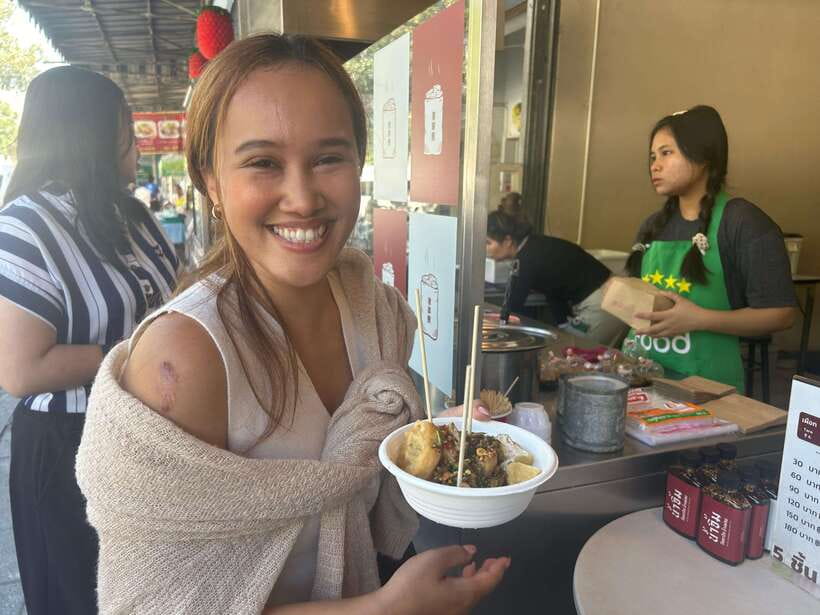
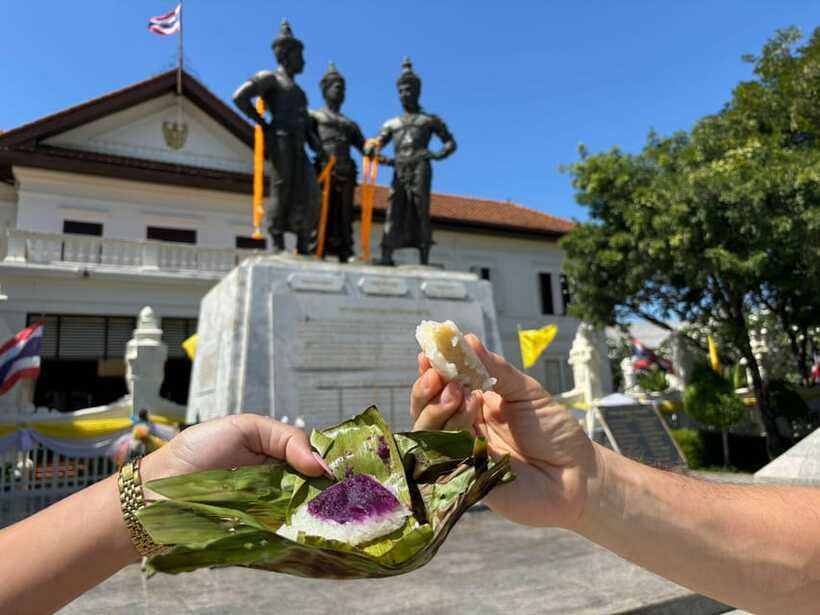
Northern Thai food is the star here, with khao soi, sai ua, larb moo, and sticky rice served across five food stops in Chiang Mai’s Old Town. The route begins at the Three Kings Monument and ends at Wat Lok Moli, so you get local flavor and temple time in one morning.
I like the mix of familiar Thai favorites and less obvious northern dishes, and I like that guides such as Varisa and Warat add stories about food, customs, and daily life. The main drawback is that the secret dish is not guaranteed to feel very secret, and anyone with dietary needs should contact the provider before booking.
Key points at a glance
- Five food venues in three hours: You eat your way through several small stops rather than sitting down for one long meal.
- Northern Thai specialties: Try larb kua, sai ua, and khao soi, dishes that give Chiang Mai its own food identity.
- Two temple visits: The route starts near the Three Kings Monument and finishes at Wat Lok Moli.
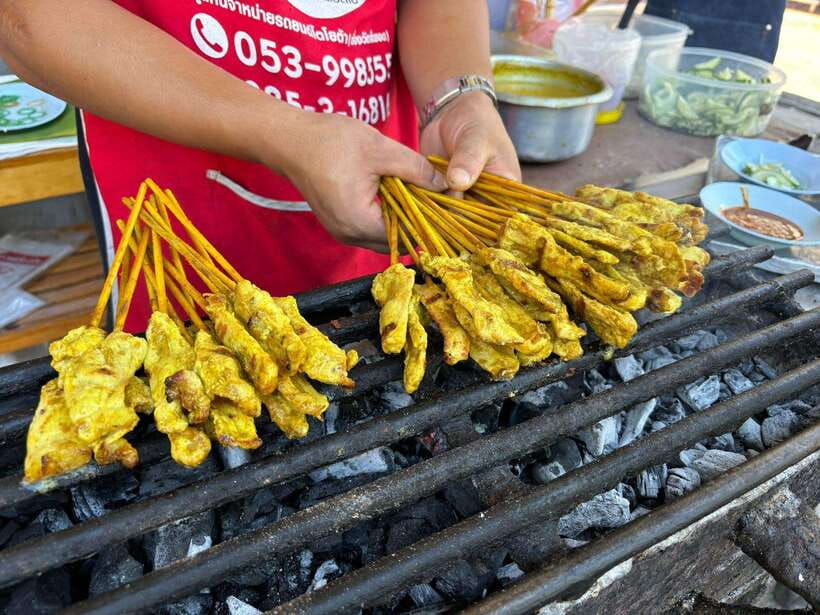
- A real breakfast start: Banana-leaf grilled sticky rice and chicken satay make this a substantial morning outing.
- Dessert with a local twist: Butterfly pea ice cream, bua loi rice balls, and coconut milk close the food tour.
- Simple meeting point: Look for the orange umbrella in front of the Three Kings Monument.
A breakfast walk through Chiang Mai’s Old Town
This is not just a list of dishes served at one restaurant. It is a walking route through Chiang Mai’s Old Town, with food used as your guide to the region. You meet in front of the Three Kings Monument, a central and easy-to-find landmark, then set off with an English-speaking guide.
The three-hour timing works well in the morning. You start with breakfast, continue through savory northern dishes, and finish with sweets and a temple. You will want comfortable shoes, a light bag, and room for several small portions. The tour includes water, a chilled lemongrass infusion, and Thai iced tea, but the amount of food means this is closer to a full meal than a quick tasting.
I especially like the route’s sense of place. You are not being driven from one restaurant to another. Instead, you walk through the Old Town and let the guide connect what you eat with Chiang Mai’s local traditions and history. Warat has been praised for explaining both food and local life, while Varisa is known for a friendly approach and for making sure nobody leaves hungry.
The group size is not stated, so you should not assume a private or very small tour. One useful point is that the guide can adjust to a smaller group when needed. That flexibility matters if you want to ask questions or spend more time discussing a dish.
More Food Tours in Chiang Mai
- Small-Group Chiang Mai Evening Street Food Tour
★ 4.5 · 826 reviews - Chiang Mai: Evening Local Street Food Market Tour
★ 4.8 · 604 reviews - Northern Flavours Chiang Mai Food Tour with 15+ Tastings
★ 5.0 · 513 reviews
Starting with banana-leaf sticky rice
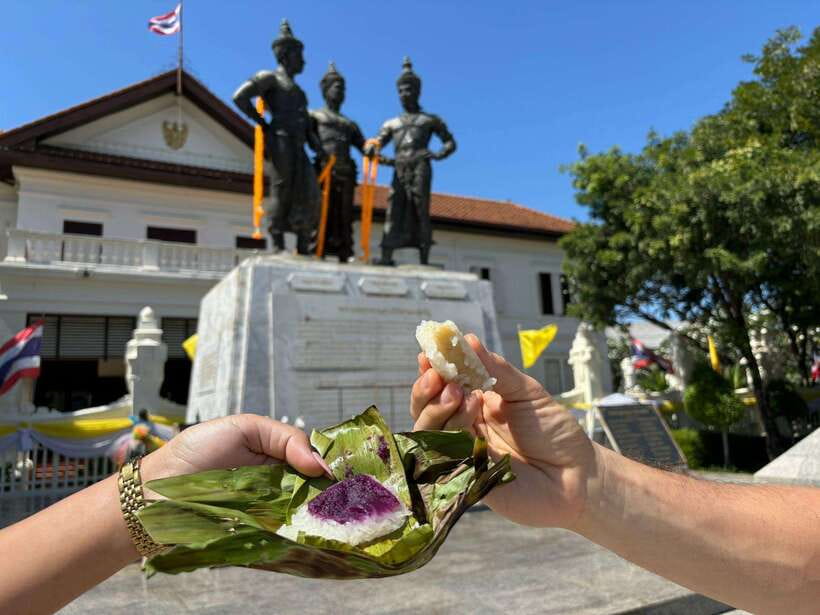
The first bite is a classic Thai breakfast: sticky rice grilled in a fragrant banana leaf. It is a modest dish, but it is a smart beginning. Sticky rice is central to northern Thai eating, and the banana leaf adds aroma while helping keep the rice warm.
This opening also sets the tone. You are not starting with a heavily sauced restaurant dish designed for tourists. You are beginning with something simple, portable, and tied to everyday eating. I would pay attention to the texture and fragrance here, since sticky rice in northern Thailand is often eaten by hand with savory foods.
The tour then moves to chicken satay with peanut sauce. Satay is familiar across Thailand, but the guide gives you a chance to compare this version with the kind often associated with Bangkok. The creamy peanut sauce brings sweetness and depth, while the grilled meat adds a smoky note.
For cautious eaters, satay is one of the easier dishes on the route. For adventurous eaters, it is a useful comparison point before the stronger northern flavors arrive. If you have a peanut allergy or another food restriction, contact the provider before booking. Specific dietary arrangements are not listed as part of the standard tour.
Larb, sai ua, and the northern Thai flavor profile
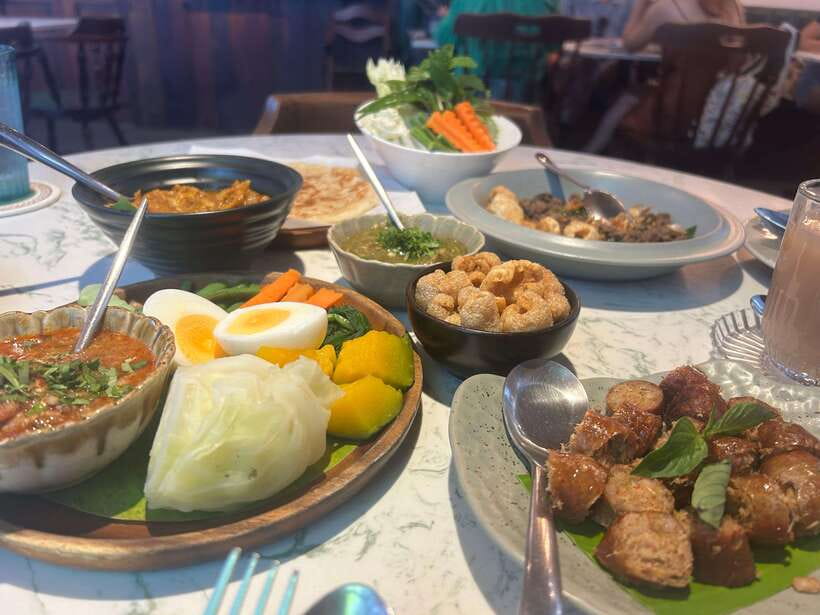
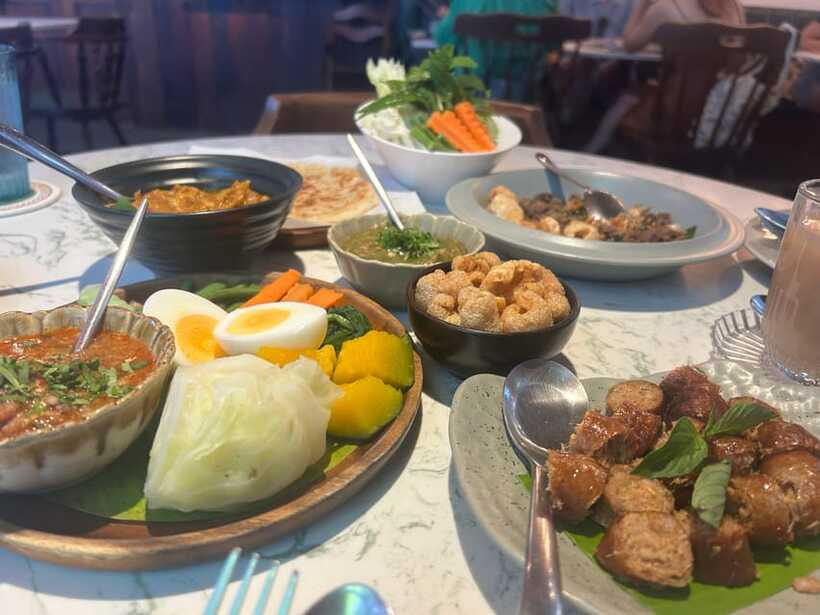
The middle section turns toward northern Thai cooking. You try larb kua, a spicy minced meat salad finished with roasted rice powder, along with sai ua, Chiang Mai’s famous northern sausage.
Larb in this setting is not the mild salad some people expect. The minced meat, herbs, spices, and toasted rice powder create a dry, fragrant mixture with a sharp edge. The roasted rice powder is important because it adds a faint crunch and nutty aroma. It also helps show how northern Thai cooking builds flavor from toasted ingredients, herbs, and spice rather than relying only on coconut milk.
Sai ua is another key dish. Northern Thai sausage usually carries a warm mix of herbs and spices, so it tastes quite different from a plain grilled sausage. It is one of the foods I would most want to try on this route because it is strongly associated with Chiang Mai and works well as a shared tasting.
The guide’s role matters most here. These dishes can be hard to identify if you meet them alone at a market stall. A guide can explain what you are eating, how it differs from food in central Thailand, and how the dishes fit into local habits. Warat’s ability to connect food with history and traditions is especially useful for this part of the walk.
The spice level may vary, and the tour does not promise custom heat levels. If you are sensitive to chili, ask your guide before tasting. You can also treat the included water and chilled lemongrass drink as useful palate resets.
Khao soi in an unforgettable setting
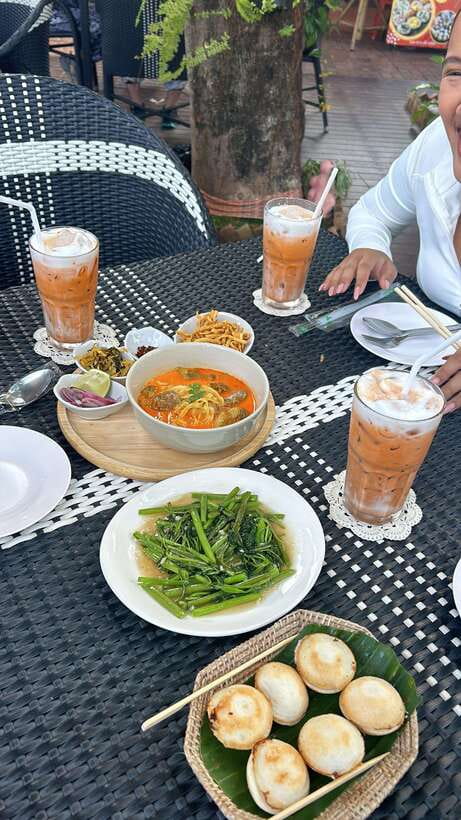
Khao soi is the centerpiece of the tour. This northern specialty combines soft noodles with a silky coconut curry broth, then adds a contrasting crisp noodle topping. It is creamy, spicy, and filling without feeling like a plain bowl of noodles.
You also receive stir-fried pak boong, or morning glory. Its leafy texture and savory seasoning provide a break from the richness of the curry. Thai iced tea supplies another contrast, with cold sweetness helping cool your mouth after the curry.
The setting for the khao soi stop is described as unforgettable, but no exact restaurant name is provided. That means you should expect the atmosphere to be part of the experience without planning around a particular famous venue. The food itself is the safer reason to book this tour.
Khao soi can be one of the most useful dishes to learn about in Chiang Mai. It shows the northern region’s links with broader mainland Southeast Asian cooking, while the coconut curry and fried noodles give it a clearly Thai character. You can find khao soi on your own, but tasting it with an explanation of what to notice makes the dish easier to appreciate.
This is also the point where the tour becomes a proper lunch. If you eat a large breakfast before meeting, you may find the later stops harder to enjoy. Start light, or treat the tour’s opening dishes as your breakfast.
More street food walks in Chiang Mai:
- The 10 Tastings of Chiang Mai With Locals: Private Street Food Tour
★ 5.0 · 216 reviews - Taste of Chiang Mai: Michelin Guide & Street Food Tour
★ 4.9 · 159 reviews - Chiang Mai: Food Tour by Songtheaw Truck with 15+ Tastings
★ 4.9 · 157 reviews - Chiang Mai: Temples and Street Food Night Tour by Tuk Tuk
★ 4.3 · 81 reviews
Coconut pancakes, ice cream, and bua loi
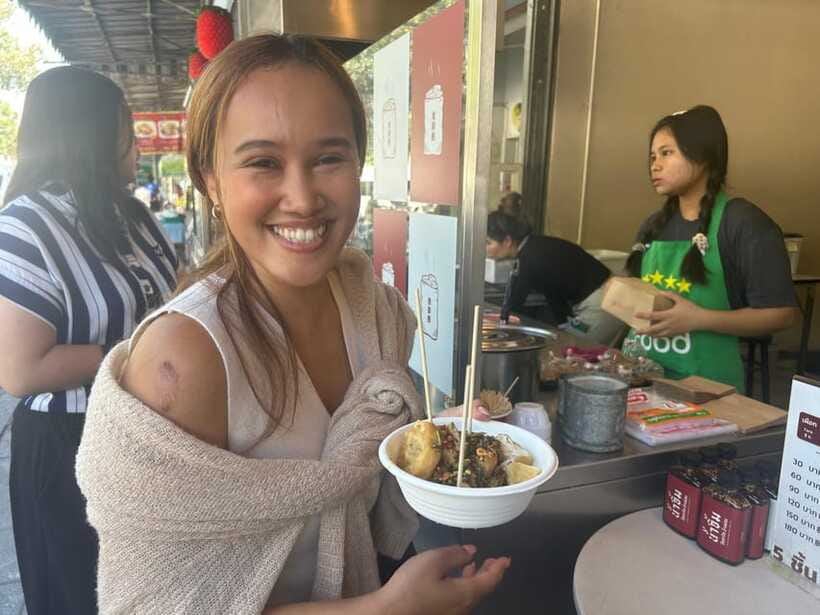
The route includes khanom krok, small coconut-rice pancakes that can be sweet or savory. They are usually valued for their crisp edges and soft centers, and they give the tour another texture before dessert.
The final sweets take a more playful turn. You receive vegan butterfly pea flower ice cream paired with rice balls in coconut cream, known as bua loi. Butterfly pea flower is prized for its blue color, while bua loi brings soft rice balls and a creamy coconut base.
This ending is useful for people who want a dessert option without dairy in the ice cream itself. The full dessert pairing still includes coconut cream, so do not treat it as an entirely dairy-free guarantee unless the guide confirms the ingredients. The food information only identifies the ice cream as vegan.
The chilled lemongrass infusion and Thai iced tea add two different kinds of refreshment during the morning. Water is included too, which is welcome in Chiang Mai’s warm climate. Still, the tour does not list hotel pickup or drop-off, so you need to arrange your own way to the meeting point and back after the final temple.
From the Three Kings Monument to Wat Lok Moli
The walk begins at the Three Kings Monument, where you look for an orange umbrella. This is a practical meeting point in the Old Town, and it gives the guide a clear landmark for the start.
Before the food stops get underway, you step into a temple described as a quiet or less obvious part of the route. The exact temple name is not provided, so I would not book this tour expecting a full temple circuit or a detailed architectural visit. Instead, think of it as a short cultural pause that frames the food walk.
The tour finishes at Wat Lok Moli, one of Chiang Mai’s most charming temples. Ending there gives the morning a calm final note after several food tastings. It also means you can continue exploring the Old Town on your own from a meaningful stop rather than being dropped at a generic restaurant.
Temple etiquette still applies. Dress respectfully and follow any instructions from the guide. The activity is listed as wheelchair accessible, but this is a walking route through an old urban district, so it is sensible to confirm route details with the provider if you have specific mobility concerns.
What the $53 price includes
At $53 per person, this is not the cheapest way to eat in Chiang Mai. Local markets and food courts can cost much less if you are comfortable choosing dishes, handling language differences, and finding the right stalls yourself.
The value comes from the range and structure. You receive a walking tour, an English-speaking guide, food at five venues, drinks, a dessert course, and a secret dish. The menu covers breakfast, grilled food, spicy salad, sausage, vegetables, noodles, pancakes, ice cream, and coconut sweets. Buying all of that separately would take time and some trial and error.
I see this as a good first-day or second-day activity. It helps you learn the names of northern dishes early in your stay, so you can order with more confidence later. It also gives you a practical sense of how Chiang Mai’s food differs from Bangkok’s.
The price is harder to justify if you already know the city’s food scene, speak Thai, or prefer to spend a morning eating at your own pace. You are paying for guidance, interpretation, and convenience, not only for the food itself.
The secret dish and the limits of surprise
The tour promises a secret dish revealed only during the walk. That can add a pleasant bit of suspense, especially if you enjoy letting the guide choose something outside your normal order.
Keep your expectations measured. The precise dish is not disclosed, and one account found the secret item less surprising than expected. I would treat it as an extra tasting rather than the main reason to book. The stronger case is the complete northern Thai menu and the chance to learn how the dishes fit together.
Because the menu includes meat, peanuts, coconut, rice, and possible spice, dietary planning is important. Contact the provider before booking with any specific requirement. The tour does not promise substitutions or list a vegetarian, halal, gluten-free, or allergy-friendly menu.
Who will enjoy this food walk most
I would recommend this tour to you if you want a guided introduction to Chiang Mai food without spending half a day researching restaurants. It suits first-time visitors, curious eaters, and anyone who likes learning the story behind a dish.
It is also a good fit if you want a morning activity that combines food with Old Town sights. You receive several temple and neighborhood impressions without committing to a long history tour.
Families and mixed groups may appreciate the range of flavors, though strong spice and unfamiliar textures could be difficult for some children. The food comes in multiple courses, so selective eaters may find a few safe choices, such as sticky rice, satay, or ice cream, but the tour is built around trying local specialties.
I would be more cautious if you need strict dietary control, dislike walking, or want a private culinary class. The tour is accessible, but exact walking distances and group size are not specified. Ask before booking if either point is important to you.
The booking terms are useful for uncertain plans. You can reserve now and pay later, and cancellation is free up to 24 hours before the start for a full refund. Starting times vary, so check availability for your date.
Should you book the Chiang Mai Walking Food Tour?
Book it if you want a well-fed introduction to northern Thai cooking, especially khao soi, sai ua, and larb kua, with a guide who can explain local food and life in clear English. The combination of five venues, Old Town walking, temple stops, drinks, and dessert makes the $53 fee reasonable for a first taste of Chiang Mai.
Skip it if you prefer cheap self-guided eating, need a fully confirmed specialty diet, or want a detailed temple tour. The secret dish may not surprise everyone, and the exact venues are not named in advance.
For most curious eaters, I would choose this early in a Chiang Mai stay. Come hungry, wear comfortable shoes, bring water-friendly patience for spice, and meet the orange umbrella at the Three Kings Monument.
FAQ
How long does the Chiang Mai Walking Food Tour last?
The tour lasts three hours.
Where does the tour meet?
Meet your guide in front of the Three Kings Monument in Chiang Mai’s Old Town. Look for an orange umbrella.
Where does the tour finish?
The walking route finishes at Wat Lok Moli.
What language is the tour conducted in?
The live guide speaks English.
Is hotel pickup and drop-off included?
No. Hotel pickup and drop-off are not included.
Is the tour wheelchair accessible?
Yes, the activity is listed as wheelchair accessible.
What food and drinks are included?
Included items are banana-leaf sticky rice, chicken satay with peanut sauce, larb kua, sai ua, stir-fried pak boong, khao soi, khanom krok, butterfly pea ice cream with rice balls in coconut cream, a secret dish, chilled lemongrass infusion, Thai iced tea, and water.
Can I cancel the tour for a refund?
Yes. You can cancel up to 24 hours in advance for a full refund. You can also reserve now and pay later.
More Walking Tours in Chiang Mai
- Chiang Mai: 3 Hour Old City and Temples Guided Walking Tour
★ 4.6 · 1,568 reviews - Chiang Mai: Historic Temples and City Guided Walking Tour
★ 4.7 · 650 reviews - Chiang Mai: Temple And City Walking Tour Part I
★ 4.7 · 244 reviews - Chiang Mai: Local Food and Markets Guided Walking Tour
★ 4.3 · 175 reviews
Just added around Chiang Mai
- Taste of Chiang Mai: Michelin Guide & Street Food Tour★ 4.9 · 159 reviews
- Red, Blue, White Temples & Hot Spring Trip from Chiang Mai★ 4.4 · 143 reviews
- From Chiang Mai: Mae Taeng Valley and Waterfalls Cycle Tour★ 4.9 · 159 reviews
- Long Neck Village, Silver Temple & Chiang Mai Top Sites★ 4.7 · 17 reviews
- Chiang Mai: Local Northern Thai Cooking Class at Grandma’s★ 5.0 · 33 reviews
- Chiang Mai: Khum Khantoke Northern Thai Cuisine and Show★ 4.3 · 38 reviews
- Private : Sticky Waterfall & Secret Temple & Karen Village.★ 5.0 · 9 reviews
- Half-day with CHIANGMAI ELEPHANT CARE program (12pm-6pm.)★ 5.0 · 27 reviews
Chiang Mai Tours, compared.
Half-Day Thai Cooking Class at Organic Farm in Chiang Mai
Read our review →
Elephant Sanctuary, Waterfall & Bamboo Rafting
Read our review →

Chiang Rai Temples, Karen Tribe and Hot Springs
Read our review →
Cooking Class, Market & Thai Herbs Garden Tour
Read our review →
Authentic Cooking Class with Market & Farm Visit
Read our review →
Elephant Sanctuary Feeding Program Half-Day Tour
Read our review →Browse the lists this tour appears in